
As a researcher deeply involved in industrial pollution control, I have witnessed firsthand the critical role that sand casting services play in global manufacturing. These services form the backbone of industries such as automotive and machinery, providing cost-effective and versatile metal casting solutions. However, the environmental impact, particularly air pollution, poses a significant challenge. In this article, I will explore how analytical pyrolysis technology can revolutionize sand casting services by enabling precise assessment and reduction of volatile organic compounds (VOCs) and hazardous air pollutants (HAPs). By simulating the thermal decomposition of raw materials used in sand casting services, we can develop cleaner production methods, enhance sustainability, and meet stringent regulatory standards. Throughout this discussion, I will emphasize the importance of integrating advanced analytical techniques to improve sand casting services worldwide.
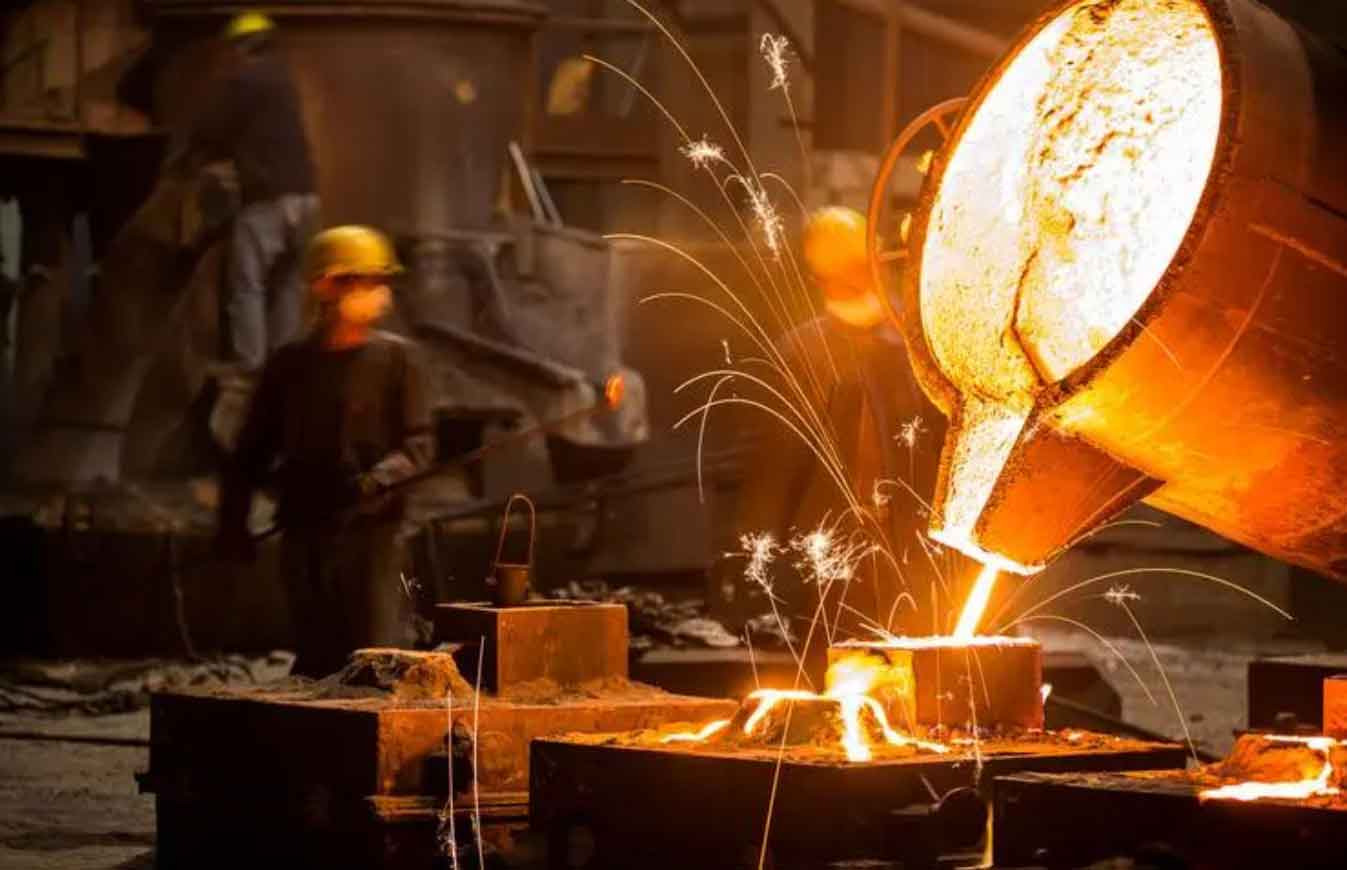
Sand casting services are ubiquitous, accounting for 70–80% of global casting production due to their low cost and simplicity. Yet, they generate substantial air emissions, including CO, CO₂, and a complex mix of VOCs and HAPs. During the casting process, when molten metal is poured into sand molds, organic binders and additives like coal dust undergo pyrolysis under high-temperature, oxygen-deficient conditions. This releases pollutants such as benzene, toluene, phenol, and polycyclic aromatic hydrocarbons (PAHs), many of which are classified as HAPs by environmental agencies. For sand casting services to thrive sustainably, it is imperative to address these emissions through innovative technologies.
Analytical pyrolysis offers a powerful tool for simulating these thermal conditions in a controlled laboratory setting. By rapidly heating samples to temperatures akin to those in sand casting services (e.g., 920°C in milliseconds), we can replicate the pyrolysis reactions that occur during metal pouring. The emissions are then analyzed using gas chromatography coupled with flame ionization detection and mass spectrometry (GC-FID/MS), providing detailed profiles of VOC and HAP compositions. This approach allows for rapid screening of raw materials—such as phenolic urethane binders, coal dust, and newer alternatives like protein-based binders—without the need for extensive, costly trials in operational foundries. For sand casting services, this means faster development of cleaner materials and more informed decision-making.
In my work, I have applied analytical pyrolysis to various materials commonly used in sand casting services. For instance, traditional phenolic urethane binders and bituminous coal dust were tested alongside innovative options like non-naphthalene phenolic urethane binders and animal protein-based binders. Samples were prepared according to standard foundry practices: binders were mixed with silica sand, formed into cores, and then crushed into granules for analysis. The pyrolysis was conducted using a Curie-point pyrolyzer, which heats samples within 0.1–0.2 seconds to 920°C, holding for 3 seconds to mimic the brief, intense heating in sand casting services. The resulting emissions were directly injected into a GC-FID/MS system, ensuring minimal sample loss and accurate detection of even trace pollutants.
The data from analytical pyrolysis reveal striking similarities to emissions from actual sand casting processes. Both sets of emissions are dominated by benzene, toluene, and phenol, with significant contributions from PAHs and other HAPs. This alignment validates analytical pyrolysis as a reliable proxy for assessing air pollution in sand casting services. To quantify these findings, I have compiled results into tables and developed formulas to model emission factors. For example, the total HAP emissions (E_total) from a material can be expressed as a sum of individual pollutant contributions:
$$E_{\text{total}} = \sum_{i=1}^{n} C_i \times M_i$$
where \(C_i\) is the concentration of pollutant \(i\) (in mg/g) and \(M_i\) is the mass of material used (in g). This formula helps sand casting services estimate emissions based on pyrolysis data. Below is a table comparing key HAP emissions from different materials used in sand casting services, as derived from analytical pyrolysis and actual casting tests:
| HAP Compound | Bituminous Coal (mg/g) | Phenolic Urethane Binder (mg/g) | Non-naphthalene Binder (mg/g) | Protein-based Binder (mg/g) |
|---|---|---|---|---|
| Benzene | 25.95 | 47.13 | 82.69 | 8.48 |
| Toluene | 17.01 | 10.39 | 22.36 | 6.26 |
| Phenol | 2.72 | 53.07 | 55.07 | 0.59 |
| Naphthalene | 3.13 | 12.70 | 6.08 | 0.59 |
| Total PAHs | 6.76 | 46.83 | 10.94 | 1.18 |
This table underscores the variability in emissions across materials. For sand casting services, switching from traditional binders to alternatives like protein-based binders can reduce HAP emissions by over 90%, as shown in the protein-based binder column. Similarly, non-naphthalene binders cut PAH emissions by more than 50%, highlighting the potential for cleaner sand casting services. The relative changes observed in analytical pyrolysis closely match those from actual casting, confirming its predictive power. To further illustrate, the emission reduction ratio (R) for a new material can be calculated as:
$$R = \left(1 – \frac{E_{\text{new}}}{E_{\text{traditional}}}\right) \times 100\%$$
where \(E_{\text{new}}\) and \(E_{\text{traditional}}\) are emission factors for new and traditional materials, respectively. For sand casting services, this ratio provides a quick metric for evaluating greener options.
Beyond tabular data, analytical pyrolysis enables deep insights into emission mechanisms. The pyrolysis of organic binders involves complex thermal degradation pathways that can be modeled using kinetic equations. For instance, the rate of VOC formation during pyrolysis often follows an Arrhenius-type relationship:
$$k = A e^{-\frac{E_a}{RT}}$$
where \(k\) is the rate constant, \(A\) is the pre-exponential factor, \(E_a\) is the activation energy, \(R\) is the gas constant, and \(T\) is the temperature in Kelvin. By fitting pyrolysis data to such models, sand casting services can optimize process temperatures to minimize pollutant generation. Additionally, the distribution of emissions between gaseous and condensed phases is critical; analytical pyrolysis captures total emissions, whereas actual casting tests may miss PAHs that adsorb onto dust particles. This comprehensive view aids sand casting services in developing holistic pollution control strategies.
The integration of analytical pyrolysis into sand casting services extends beyond material selection. It can guide the design of emission control systems, such as scrubbers or thermal oxidizers, by providing detailed pollutant profiles. For example, if pyrolysis shows high benzene emissions, sand casting services can prioritize abatement technologies targeting aromatic compounds. Moreover, this technology supports regulatory compliance by generating accurate emission inventories without disruptive testing in production foundries. As global standards tighten, sand casting services must adopt proactive measures, and analytical pyrolysis offers a scalable solution for continuous improvement.
Looking ahead, the future of sand casting services hinges on innovation and sustainability. Analytical pyrolysis can be coupled with other advanced techniques, like life cycle assessment (LCA), to evaluate the environmental footprint of casting processes holistically. For instance, LCA models incorporate emission data from pyrolysis to quantify impacts on air quality, human health, and climate change. This integrated approach empowers sand casting services to make data-driven decisions that balance economic and ecological goals. Furthermore, as new bio-based binders and additives emerge, analytical pyrolysis will be indispensable for rapid screening and optimization, ensuring that sand casting services remain competitive and compliant.
In conclusion, analytical pyrolysis is a transformative technology for sand casting services, enabling precise characterization of air pollutants and facilitating the adoption of cleaner materials. By simulating casting conditions in the lab, it reduces the time, cost, and uncertainty associated with traditional testing methods. The strong correlation between pyrolysis results and actual emissions validates its use for emission inventory development and comparative assessments. As I continue to research in this field, I am confident that widespread adoption of analytical pyrolysis will drive significant environmental improvements in sand casting services worldwide. Through collaborative efforts between researchers, foundries, and policymakers, we can advance sand casting services toward a greener, more sustainable future—where high-quality metal casting coexists with pristine air quality.