
The relentless pursuit of higher thermal efficiency and reduced emissions in modern diesel engines places increasingly severe demands on critical components, particularly the cylinder head. Operating under elevated combustion temperatures and peak firing pressures, the cylinder head material must exhibit exceptional tensile strength, superior high-temperature fatigue resistance, and reliable thermal stability. For decades, alloyed grey iron has been the material of choice for this demanding application. Its inherent properties—excellent castability for complex geometries, good machinability, and superior damping capacity due to the graphite flake structure—make it uniquely suited. The performance envelope of standard grey iron is expanded through micro-alloying, with elements like chromium, copper, molybdenum, and tin added to strengthen the metallic matrix, enhance wear resistance, and improve thermal fatigue life.
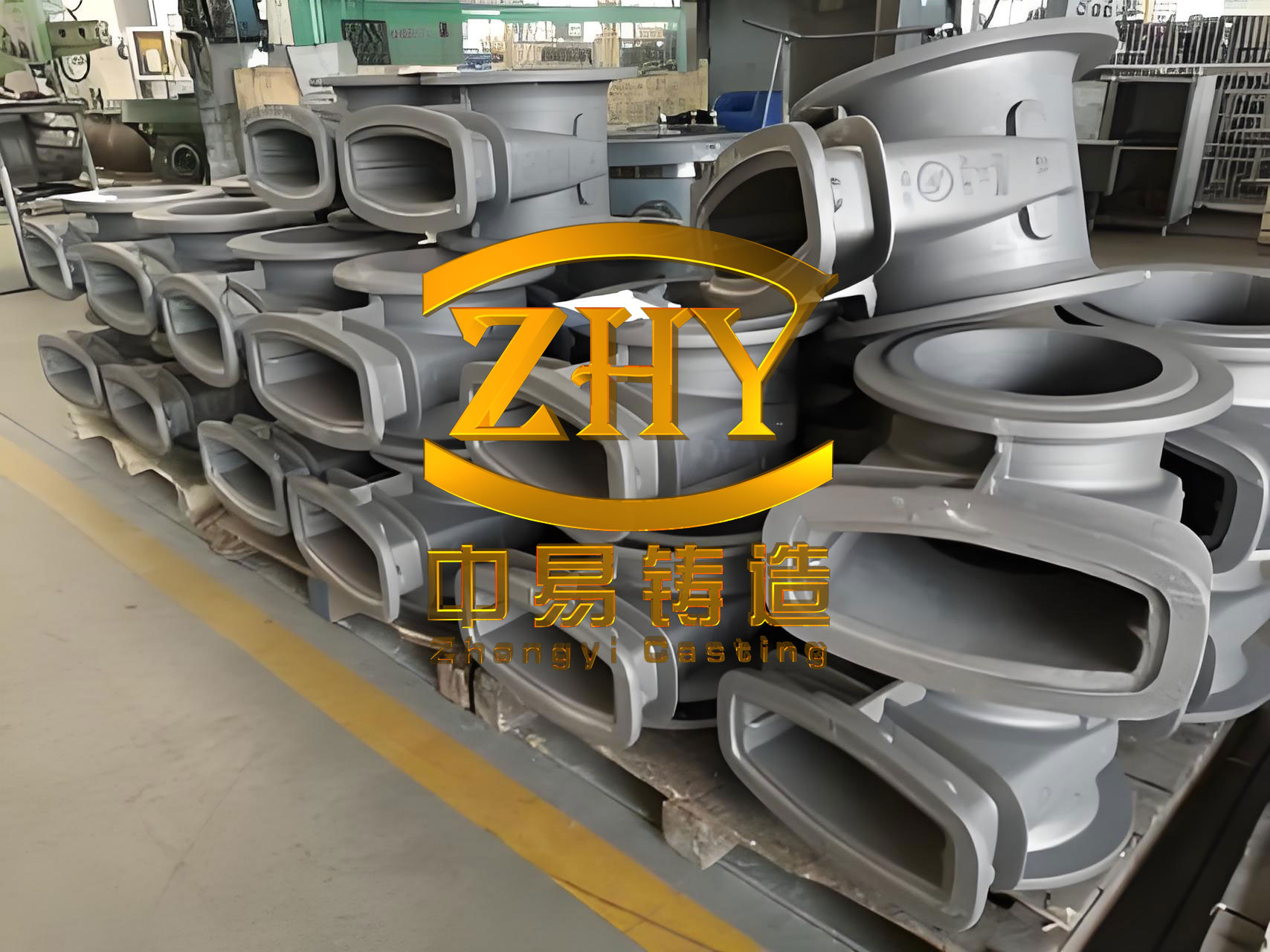
Among these, molybdenum has been a cornerstone alloying element for high-grade grey iron cylinder head castings. It significantly improves strength and hardness, particularly at elevated temperatures, by promoting a finer pearlitic structure and increasing hardenability. However, its adoption comes with a significant economic drawback: ferro-molybdenum prices are notoriously volatile and have remained at historically high levels, driven by complex geopolitical and supply chain factors. This volatility introduces substantial cost uncertainty and financial risk for foundries engaged in high-volume production of engine components. In contrast, ferro-niobium offers a compelling alternative, characterized by remarkably stable pricing and a secure, long-term supply chain. This economic disparity motivates a detailed technical and economic investigation into the partial or full substitution of molybdenum with niobium in grey iron cylinder head castings. This article delves into the underlying metallurgical principles, presents a systematic methodology for implementation, and analyzes the resulting mechanical properties and cost benefits, establishing a robust framework for cost-effective alloy design in high-performance grey iron casting.
Metallurgical Principles of Niobium and Molybdenum in Grey Iron
The effectiveness of any substitution strategy hinges on a deep understanding of the individual and comparative roles of the alloying elements. Both niobium and molybdenum are potent strengtheners for grey iron, but they operate through overlapping yet distinct mechanisms that influence the microstructure at multiple scales.
Microstructural Refinement and Strengthening Mechanisms: The primary strengthening mechanism shared by both elements is microstructural refinement. In the context of grey iron casting, this refinement occurs across three key microstructural features: the eutectic cell size, the pearlite interlamellar spacing, and the graphite morphology.
- Niobium (Nb): Niobium is a strong carbide-forming element. During the solidification of grey iron, niobium preferentially forms fine, stable carbides (NbC) that act as potent heterogeneous nucleation sites for the austenite phase. This significantly refines the eutectic cell structure. Furthermore, niobium in solid solution within the austenite retards the diffusion of carbon during the subsequent eutectoid transformation, leading to a marked decrease in the interlamellar spacing of the pearlite matrix. Niobium has also been observed to modify graphite morphology, promoting shorter and more randomly oriented graphite flakes, which can slightly improve mechanical properties despite maintaining a flake graphite structure. The combined effect is a substantial increase in tensile strength and hardness. The strengthening efficiency, $\Delta \sigma_{Nb}$, can be conceptually related to these refinements through relationships akin to the Hall-Petch effect for grain size and a inverse relationship with interlamellar spacing ($\lambda$):
$$\Delta \sigma_{Nb} \propto k_{cell} \cdot (d_{cell})^{-1/2} + k_{\lambda} \cdot (\lambda)^{-1}$$
where $d_{cell}$ is the eutectic cell diameter and $k_{cell}$ and $k_{\lambda}$ are constants. - Molybdenum (Mo): Molybdenum is largely a solid-solution strengthener and a strong promoter of pearlite. It segregates to the austenite during solidification and, like niobium, slows carbon diffusion during the eutectoid reaction, resulting in a finer pearlite structure. Mo also increases the hardenability of the iron, making it more resistant to the formation of ferrite, especially in heavier section castings where cooling rates are slower. Its effect on eutectic cell refinement is generally considered less pronounced than that of niobium.
The following table summarizes and compares their primary roles:
| Element | Primary Role | Effect on Eutectic Cells | Effect on Pearlite | Other Effects |
|---|---|---|---|---|
| Niobium (Nb) | Carbide former, Refiner | Strong refinement (nucleant) | Significantly reduces interlamellar spacing | May modify graphite length; improves thermal fatigue resistance. |
| Molybdenum (Mo) | Solid solution strengthener, Pearlite promoter | Moderate refinement | Reduces interlamellar spacing; stabilizes pearlite | Increases hardenability; improves high-temperature strength. |
The Substitution Ratio (Nb:Mo): Published research, including data from the American Foundry Society, indicates that the strengthening potency of niobium on a per-weight-percent basis is higher than that of molybdenum in grey iron. This forms the theoretical foundation for a substitution ratio where a smaller amount of niobium can replace a larger amount of molybdenum while maintaining equivalent mechanical performance. A ratio of Nb:Mo = 0.7:1 has been empirically validated in industrial trials. This means that to replace 0.30% Mo, approximately 0.21% Nb is required. This ratio is critical for the economic justification, as it directly translates to lower total alloy addition mass, compounded by the typical price advantage of ferro-niobium.
Methodology for Industrial Implementation
The transition from laboratory theory to foundry floor practice requires a meticulously controlled and systematic approach. The goal is to implement the niobium substitution with minimal disruption to existing grey iron casting processes while ensuring consistency and quality.
1. Raw Material Selection and Control: Consistency begins with raw materials. Any variation in charge materials can obscure the effects of the alloying change.
- Base Iron & Scrap: High-purity pig iron (e.g., Z10/Z14 grades) and carefully sourced, low-alloy steel scrap (e.g., Q235) are essential to maintain low and consistent levels of trace elements that might interfere with niobium’s effects.
- Returns: Only returns from non-molybdenum-alloyed heats should be used to prevent the uncontrolled build-up of molybdenum, which would invalidate the substitution experiment.
- Alloy Additives: High-quality, graphitic, low-nitrogen carburizers ensure clean iron. The key alloys are:
- Ferro-Niobium: To ensure high and consistent recovery, a grade with 65-70% Nb and a fine particle size (<5 mm) is recommended for easy dissolution in the induction furnace bath.
- Ferro-Molybdenum (for baseline): Similarly, a standard 60-65% Mo grade with fine sizing is used for the control heats.
2. Melt Practice and Alloy Addition: The process follows standard operating procedures for medium-frequency coreless induction furnace melting.
- Charge the furnace with the predetermined mix of pig iron, scrap, and returns.
- Melt down completely and superheat to approximately 1500-1520°C.
- Perform preliminary slag removal and take a baseline spectral analysis.
- Alloy Addition: For the niobium trial, the calculated amount of ferro-niobium is added directly into the furnace bath. The fine size and the vigorous electromagnetic stirring in the induction furnace promote rapid dissolution and homogenization.
$$W_{FeNb} = \frac{(W_{melt} \times [\%Nb]_{target})}{\eta_{Nb} \times [\%Nb]_{FeNb}}$$
Where $W_{FeNb}$ is the weight of ferro-niobium to add, $W_{melt}$ is the melt weight, $[\%Nb]_{target}$ is the desired niobium content in the iron (e.g., 0.20%), $\eta_{Nb}$ is the expected recovery (typically 90-95%), and $[\%Nb]_{FeNb}$ is the Nb content in the alloy (e.g., 0.65). - Hold the melt at temperature (1520-1540°C) for 10-15 minutes after addition to ensure complete dissolution and homogenization.
- Take a final furnace sample for spectral analysis to confirm chemistry.
- Tap the furnace at a temperature suitable for the casting process (~1480°C).
- Perform ladle inoculation as per standard practice (e.g., with FeSi).
- Cast the cylinder heads using the existing mold and gating system (e.g., vertical pouring, one mold per two castings). Pouring temperature should be tightly controlled (~1390°C).
3. Chemical Composition Design: The chemical composition for the trial is designed to isolate the effect of the Nb-for-Mo substitution. All other elements are held within the standard production range for HT300-grade grey iron. The target compositions are summarized below:
| Element | Standard Mo-Bearing (Control) | Nb-Substituted (Trial) | Rationale |
|---|---|---|---|
| C | 3.28 – 3.33% | 3.28 – 3.33% | Controls graphite amount and fluidity. |
| Si | 1.75 – 1.85% | 1.75 – 1.85% | Promotes graphitization, adjusts matrix. |
| Mn | 0.70 – 0.80% | 0.70 – 0.80% | Counteracts S, stabilizes pearlite. |
| S | 0.06 – 0.12% | 0.06 – 0.12% | Inoculation potency, machinability. |
| P | ≤ 0.06% | ≤ 0.06% | Minimized to avoid phosphide eutectic. |
| Sn | 0.06 – 0.08% | 0.06 – 0.08% | Strong pearlite promoter. |
| Mo | 0.25 – 0.30% | — | Baseline strengthening element. |
| Nb | — | 0.16 – 0.21% | Substitute at Nb:Mo ~ 0.7:1 ratio. |
Results, Analysis, and Economic Impact
The industrial trial, producing over 5,000 cylinder head castings to date, yielded comprehensive data on process performance, material properties, and cost.
1. Process and Microstructure:
- Alloy Recovery: Niobium recovery from the fine ferro-niobium added to the induction furnace was excellent, consistently measured between 90-95%. This high and predictable recovery simplifies process control for grey iron casting.
- Microstructural Analysis: Metallographic examination of the Nb-alloyed cylinder head samples revealed a fully pearlitic matrix (96%) with minimal carbides (1.6%). The graphite structure was uniformly Type A, with a flake size corresponding to a rating of 4. This indicates that the niobium addition did not adversely affect graphite formation or promote undesirable graphite shapes or excessive carbide formation, which is crucial for machinability and thermal shock resistance. The microstructure was indistinguishable in quality from the standard Mo-bearing grade, confirming the efficacy of the substitution.
2. Mechanical and Functional Properties: Destructive testing on sections cut from the cast cylinder heads provided the following data:
| Property | Standard Mo-Bearing Casting | Nb-Substituted Casting | Specification Requirement (HT300) |
|---|---|---|---|
| Tensile Strength (MPa) | 280 – 310 | 270 – 310 | ≥ 300 (specimen); ≥ 250 (typical body) |
| Hardness (HBW) | 205 – 220 | 202 – 213 | Approx. 190 – 220 |
| Pressure Tightness | Pass (No Leakage) | Pass (No Leakage) | No leakage at test pressure |
The mechanical properties of the niobium-substituted grey iron casting are fully equivalent to, and in some cases slightly superior to, those of the molybdenum-bearing counterpart. All castings passed rigorous hydrostatic pressure tests, verifying the integrity of the casting process and the material’s soundness. Field performance tracking over one year of service has shown zero failures related to material performance, providing strong validation for the substitution.
3. Comprehensive Cost-Benefit Analysis: The economic rationale is the driving force behind this substitution. The analysis must consider both direct material costs and indirect benefits.
- Direct Alloy Cost Savings: This is the most straightforward calculation. Assuming a nominal melt and using recent price differentials:
- Target: Replace 0.30% Mo with 0.21% Nb (Ratio 0.7:1).
- For 1 tonne of liquid iron:
$$Weight_{Mo} = 1000 kg \times 0.0030 = 3.0 kg \text{ of Mo}$$
$$Weight_{FeMo} = \frac{3.0 kg}{0.60} = 5.0 kg \text{ of 60% FeMo}$$
$$Weight_{Nb} = 1000 kg \times 0.0021 = 2.1 kg \text{ of Nb}$$
$$Weight_{FeNb} = \frac{2.1 kg}{0.65} = 3.23 kg \text{ of 65% FeNb}$$ - With FeMo at PriceMo and FeNb at PriceNb, the cost saving per tonne is:
$$\Delta Cost = (5.0 \times Price_{Mo}) – (3.23 \times Price_{Nb})$$
Given the historical stability and frequent discount of PriceNb relative to the volatile and high PriceMo, the saving is significant and persistent.
- Indirect Economic Benefits:
- Supply Chain De-risking: Reduced dependence on a single, geopolitically sensitive raw material (Mo).
- Process Stability: Consistent alloy pricing improves budgetary forecasting and product costing accuracy.
- Inventory Management: Potential to simplify raw material inventory by standardizing on a fewer number of alloy additives.
The successful implementation of this substitution strategy in high-volume production of critical engine components demonstrates that strategic micro-alloying with niobium presents a technically sound and economically superior pathway for advanced grey iron casting. It aligns material science innovation with pragmatic financial management, offering foundries a viable method to maintain competitiveness in a cost-sensitive and performance-driven market.