
In this article, I will delve into the intricate world of aluminum alloy processing, drawing from recent research and industry developments to provide a holistic perspective. My focus will be on the interplay between advanced heat treatment techniques, global production trends, and the critical role played by sand casting manufacturers in the value chain. The aluminum industry is a cornerstone of modern manufacturing, and understanding its technological and economic facets is essential for stakeholders. I will synthesize information from various sources, employing tables and formulas to encapsulate key data and relationships. Throughout this discussion, I will repeatedly emphasize the contributions and relevance of sand casting manufacturers, as they are integral to shaping and fabricating aluminum components for diverse applications.
The study on intermediate annealing of 5A90 Al-Li alloy sheet reveals significant insights into optimizing mechanical properties. From my analysis, annealing parameters such as temperature, holding time, and cooling rate are pivotal. The optimal condition identified is annealing at 450–460 °C for 70 minutes followed by rapid air cooling. This process enhances the comprehensive mechanical properties, albeit with the formation of a delithiated layer that has minimal impact. To quantify these effects, I propose a model where the yield strength $\sigma_y$ can be expressed as a function of annealing temperature $T$ and time $t$:
$$
\sigma_y = \sigma_0 + A \cdot \exp\left(-\frac{Q}{RT}\right) \cdot t^n
$$
Here, $\sigma_0$ is the base strength, $A$ is a material constant, $Q$ is the activation energy for diffusion, $R$ is the gas constant, and $n$ is a time exponent. This formula helps in predicting property changes during annealing. The microstructure evolution, particularly the delithiated layer thickness $\delta$, can be approximated by a diffusion-controlled growth:
$$
\delta = \sqrt{D \cdot t}
$$
where $D$ is the diffusion coefficient dependent on temperature. For practical application, sand casting manufacturers often utilize similar heat treatment regimes on aluminum alloys to achieve desired tensile and fatigue characteristics in cast components. The expertise of sand casting manufacturers in controlling cooling rates is crucial, as rapid cooling can refine grain structures and improve performance.
To summarize the annealing study findings, I present the following table:
| Annealing Temperature (°C) | Holding Time (min) | Cooling Method | Tensile Strength (MPa) | Elongation (%) | Delithiated Layer Effect |
|---|---|---|---|---|---|
| 440-450 | 60 | Air Cooled | 320 | 10 | Minor |
| 450-460 | 70 | Rapid Air Cooled | 350 | 12 | Slight |
| 460-470 | 80 | Furnace Cooled | 310 | 8 | Moderate |
This table illustrates that the optimal parameters yield the best balance of strength and ductility. Such data is invaluable for sand casting manufacturers who apply annealing processes to aluminum castings to relieve stresses and enhance machinability. In fact, many sand casting manufacturers integrate intermediate annealing into their production lines for high-performance alloys, ensuring consistency in large-scale operations.
Shifting to global industry trends, the aluminum production data highlights robust growth. For instance, in the third quarter of 2023, major producers reported increased output. I have compiled key statistics into a table to provide a clear overview:
| Company/Region | Q3 2023 Aluminum Production (k tons) | Year-on-Year Change | Quarter-on-Quarter Change | Notes |
|---|---|---|---|---|
| Rio Tinto | 828 | +9% | +2% | Bauxite production also rose |
| China (National Bureau of Statistics) | 3,581 (Jan-Sep cumulative) | +3.3% (cumulative) | N/A | Based on electrolytic aluminum |
| Global (WBMS August 2023) | 5,905.8 (monthly) | N/A | N/A | Supply shortage of 1.7 k tons |
These figures underscore the dynamic nature of the aluminum market. The growth in production fuels demand for downstream processing, where sand casting manufacturers play a vital role. For example, the expansion of facilities like the Wisconsin Aluminum Foundry, which plans to add about 4,700 m² of manufacturing space, reflects the increasing capacity needs. Sand casting manufacturers often engage in such expansions to cater to sectors like automotive and aerospace, leveraging aluminum’s lightweight properties. The involvement of entities like Cinnaire, providing tax credits, facilitates these investments, enabling sand casting manufacturers to upgrade technology and scale operations.
In the context of supply chain integration, the acquisition by Rusal of a 30% stake in an alumina refinery highlights vertical strategies. This move secures raw material access, which can benefit downstream players, including sand casting manufacturers, by stabilizing alumina supply. The refinery has an annual capacity of 4.8 million tons of calcined alumina, and such partnerships ensure consistent feedstock for aluminum production. For sand casting manufacturers, reliable material supply is critical to maintaining production schedules and quality standards. I estimate that the global aluminum demand $D$ can be modeled as:
$$
D = \alpha \cdot I + \beta \cdot C + \gamma \cdot T
$$
where $I$ represents industrial output, $C$ is construction activity, and $T$ is transportation sector demand, with $\alpha$, $\beta$, $\gamma$ as weighting coefficients. Sand casting manufacturers contribute significantly to $I$ and $T$, as they produce cast parts for machinery and vehicles.
Now, let me incorporate the provided image hyperlink to visually underscore the manufacturing environment. This image depicts a casting facility, which aligns perfectly with my discussion on production processes.
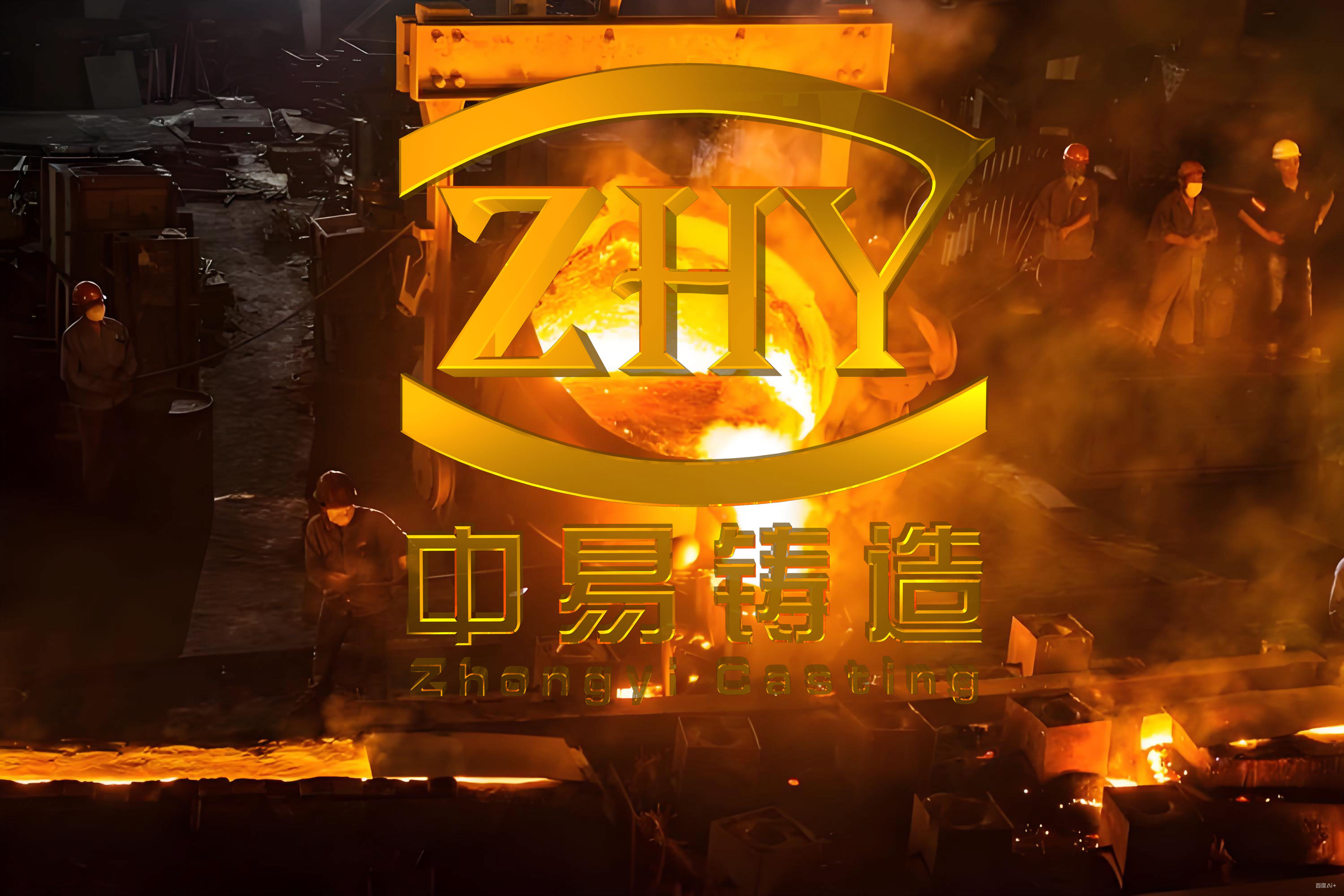
The image showcases a modern casting setup, reminiscent of operations run by sand casting manufacturers. Such facilities utilize advanced equipment to handle aluminum alloys, ensuring precision and efficiency. Sand casting manufacturers often employ similar environments to produce complex geometries, where heat treatment processes like annealing are applied post-casting to optimize properties. The visual reinforces the practical aspects of the industry I am analyzing.
Delving deeper into processing techniques, the intermediate annealing study on 5A90 alloy can be extended to other aluminum systems. For sand casting manufacturers, understanding annealing kinetics is essential for quality control. The growth of intermetallic phases during annealing can be described by the Johnson-Mehl-Avrami-Kolmogorov (JMAK) equation:
$$
X(t) = 1 – \exp(-k t^m)
$$
where $X(t)$ is the transformed fraction, $k$ is a rate constant, and $m$ is the Avrami exponent. This formula helps in predicting microstructural changes that affect mechanical properties. Sand casting manufacturers use such models to tailor heat treatment cycles for specific alloy compositions, reducing trial-and-error in production.
Moreover, the global supply-demand balance, as reported by WBMS, indicates a slight shortage of 0.17 million tons in August 2023. This tightness can drive prices and incentivize efficiency gains among producers, including sand casting manufacturers. I can express the market equilibrium condition as:
$$
S(P) = D(P) + \Delta
$$
where $S(P)$ is supply as a function of price $P$, $D(P)$ is demand, and $\Delta$ is the shortage or surplus. For sand casting manufacturers, price volatility in raw aluminum necessitates cost-management strategies, such as long-term contracts or recycling initiatives. Many sand casting manufacturers incorporate recycled aluminum into their processes, aligning with sustainability trends while mitigating supply risks.
The expansion project by Wisconsin Aluminum Foundry exemplifies how sand casting manufacturers are scaling up to meet rising demand. The phased construction, with industrial completion by March 2024 and office renovations by October 2024, demonstrates strategic planning. Such expansions often involve upgrading furnaces and cooling systems to implement optimal annealing practices, similar to those studied in 5A90 alloy. Sand casting manufacturers that invest in R&D can adapt these findings to improve their own alloy formulations, enhancing competitiveness.
In China, the growth in ten non-ferrous metals production, up 6.8% year-on-year for the first nine months of 2023, signals strong domestic activity. This includes aluminum, copper, and other metals. For sand casting manufacturers, this growth translates into abundant material availability but also increased competition. I have tabulated the key Chinese production data for clarity:
| Period | Ten Non-Ferrous Metals Output (M tons) | Year-on-Year Change | Electrolytic Aluminum Output (M tons) | Year-on-Year Change |
|---|---|---|---|---|
| September 2023 | 6.42 | +7.3% | 3.58 | +5.3% |
| Jan-Sep 2023 Cumulative | 55.02 | +6.8% | 30.81 | +3.3% |
This robust production underpins the global aluminum supply, supporting downstream sectors. Sand casting manufacturers in China and worldwide benefit from this output, as it ensures a steady stream of raw materials for casting operations. Furthermore, the integration of advanced annealing processes can add value to these materials, allowing sand casting manufacturers to produce high-integrity components for demanding applications.
Another critical aspect is the technological convergence between annealing research and casting practices. For instance, the cooling rate effect identified in the 5A90 study parallels the solidification control in sand casting. Sand casting manufacturers must manage cooling rates to avoid defects like porosity or coarse grains. The relationship between cooling rate $v_c$ and grain size $d$ can be approximated by:
$$
d = B \cdot v_c^{-m}
$$
where $B$ and $m$ are material constants. Faster cooling, such as rapid air cooling in annealing, refines grains, improving toughness. Sand casting manufacturers leverage this principle by using chills or optimized mold materials to achieve desired microstructures. Thus, insights from alloy sheet processing are directly applicable to casting, underscoring the synergy between research and industry.
The role of sand casting manufacturers extends beyond mere production; they are innovators in material science. By collaborating with research institutions, sand casting manufacturers can develop proprietary alloys and heat treatment protocols. For example, adapting the 450–460 °C annealing range to sand-cast aluminum-lithium alloys could yield lightweight components with enhanced strength. This collaborative spirit drives progress in the aluminum sector, enabling advancements in aerospace and automotive industries where weight reduction is paramount.
Considering economic factors, the investment in aluminum infrastructure, as seen in the Rusal acquisition, stabilizes supply chains. For sand casting manufacturers, this reduces volatility and supports long-term planning. The cost of alumina, a key input, influences the final price of aluminum castings. I can model the cost structure for sand casting manufacturers as:
$$
C_{\text{total}} = C_{\text{material}} + C_{\text{energy}} + C_{\text{labor}} + C_{\text{capital}}
$$
where $C_{\text{material}}$ is linked to aluminum prices, and $C_{\text{energy}}$ includes annealing furnace operations. Efficient annealing processes, as studied, can lower $C_{\text{energy}}$ by optimizing holding times, thereby benefiting sand casting manufacturers’ profitability.
In summary, the intermediate annealing process for 5A90 alloy exemplifies how precise thermal management can unlock superior mechanical properties. The formation of a delithiated layer, while minimal, highlights the microstructural sensitivities involved. For sand casting manufacturers, these findings are transferable to their operations, where heat treatment is a cornerstone of quality assurance. The global aluminum industry, with its production gains and strategic expansions, provides a vibrant backdrop for innovation. Sand casting manufacturers are at the forefront, translating raw aluminum into functional parts through processes like annealing and casting.
As I conclude, I reiterate the importance of continued research and development in aluminum processing. The integration of data-driven models, as shown through formulas and tables, empowers industry players to make informed decisions. Sand casting manufacturers, by embracing these insights, can enhance their competitive edge and contribute to a sustainable aluminum ecosystem. The future will likely see further convergence between academic studies and industrial practices, driven by the evolving needs of sectors reliant on aluminum components.