
In my years of experience in the foundry industry, I have frequently encountered issues related to the metallurgical quality of grey iron casting, particularly concerning the pearlite content at the surface. The reliability and service life of grey iron casting components are heavily dependent on their microstructural integrity, and a deficiency in surface pearlite can lead to reduced tensile strength, diminished effective wall thickness, and the formation of fracture initiation sites. This article delves into the root causes of low pearlite content in the surface layers of grey iron casting and presents comprehensive process improvements derived from systematic experimentation. My focus is on elucidating the interplay between graphite morphology stabilization and pearlite formation, with the ultimate goal of enhancing the performance standards of grey iron casting products.
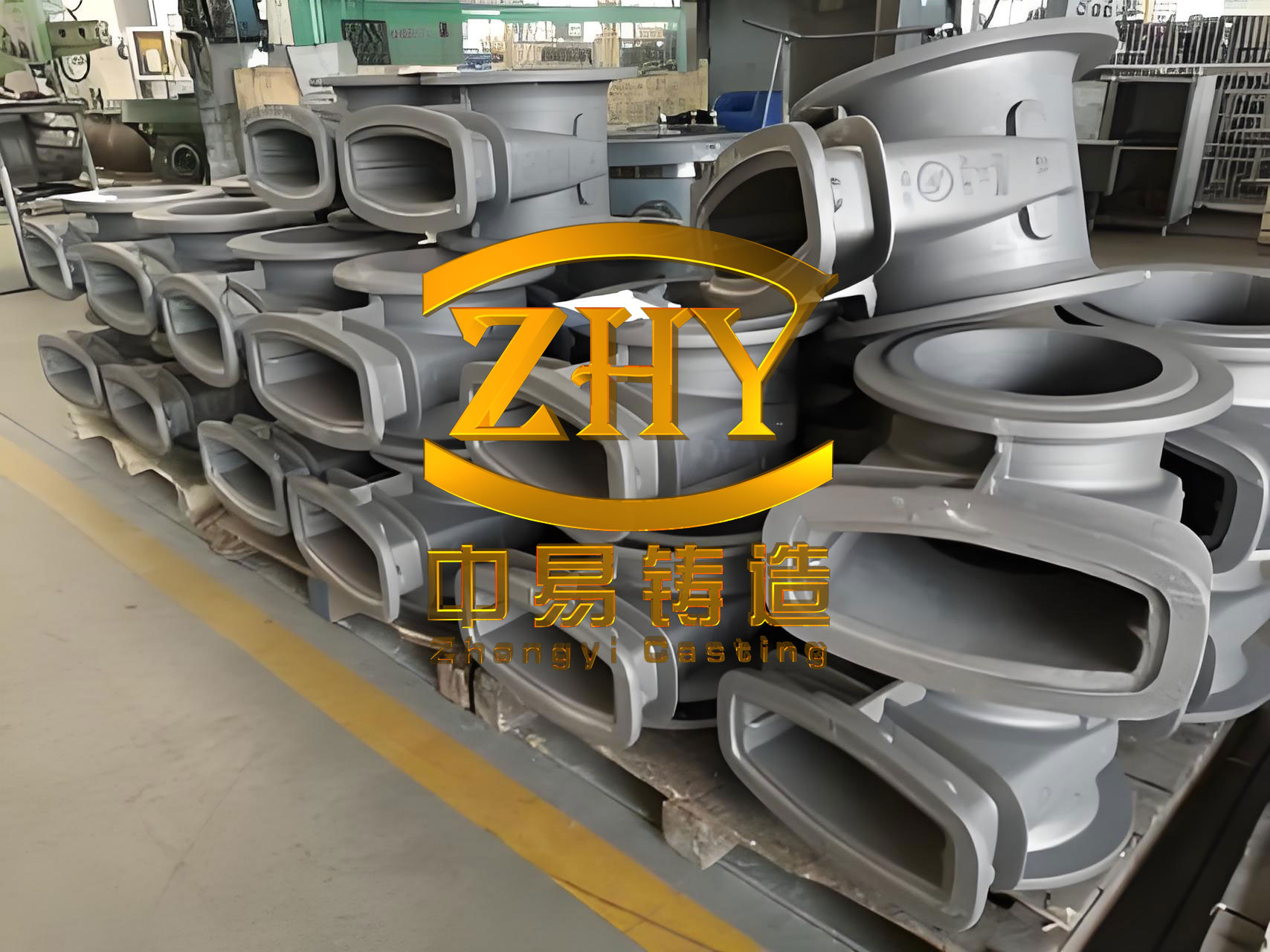
The fundamental problem manifests when the pearlite content in the surface region (typically 1-2 mm thick) of a grey iron casting is significantly lower than in the core. For instance, in a production scenario involving a pump body with a mass of 17 kg and an average wall thickness of 10 mm, made of HT250 grade grey iron casting, the core exhibited a pearlite content of 90-98%, while the surface layer showed only 70-80%. This disparity fails to meet the stringent requirement of >90% pearlite for critical surfaces. Such a condition compromises the mechanical robustness of the grey iron casting, making it prone to premature failure under operational stresses. It is a common observation that graphite morphology plays a pivotal role; uniform Type A graphite is generally associated with high pearlite, whereas undercooled Type D or E graphite correlates with lower pearlite. However, exceptions exist where even with >50% Type A graphite, pearlite content can remain sub-optimal. This indicates that graphite morphology is a contributory but not sole determinant, necessitating a dual approach targeting both graphite improvement and pearlite stabilization for grey iron casting.
To understand the phenomena, a deep dive into the solidification and transformation kinetics of grey iron casting is essential. The surface layer of a grey iron casting cools at a markedly higher rate than the core due to direct contact with the molding sand. This accelerated cooling increases the undercooling, $\Delta T$, at the solidification front. The critical radius for nucleation, $r^*$, for graphite is given by the classical nucleation theory:
$$ r^* = \frac{2\gamma_{SL}}{\Delta G_v} $$
where $\gamma_{SL}$ is the solid-liquid interfacial energy and $\Delta G_v$ is the volumetric Gibbs free energy change, which is a function of undercooling. For greater undercooling, $\Delta G_v$ increases, leading to a smaller $r^*$. Consequently, the number of effective nucleation sites for graphite increases exponentially, resulting in a finer and more numerous graphite population. At sufficiently high undercooling, this promotes the formation of undercooled graphite types (D/E) rather than the desirable Type A. During the subsequent eutectoid transformation, these finely dispersed graphite particles act as abundant sites for carbon diffusion from austenite, thereby depleting carbon available for pearlite formation and favoring ferrite formation. This is a primary reason for the pearlite deficit in the surface region of grey iron casting.
Furthermore, the chemistry of the grey iron casting melt profoundly influences both graphite morphology and matrix structure. The carbon equivalent (CE), defined as $CE = \%C + 0.33(\%Si) + 0.33(\%P) – 0.027(\%Mn)$, is typically controlled around 4.0% for grades like HT250. However, the ratio of silicon to carbon, the Si/C ratio, emerges as a critical parameter. Silicon is a potent graphitizer, but in the context of surface cooling, a high Si/C ratio can exacerbate undercooling effects. A lower Si/C ratio, while maintaining the same CE, implies a higher carbon content. Carbon has a higher diffusion coefficient and contributes to a larger graphite nucleation barrier being overcome differently. This can be conceptualized through the stability parameter for graphite growth. The modified stability function, $S$, for grey iron casting can be expressed as:
$$ S = k_1 \cdot (\%C) – k_2 \cdot (\%Si) \cdot \exp\left(-\frac{Q}{RT}\right) $$
where $k_1$ and $k_2$ are constants, $Q$ is an activation energy, $R$ is the gas constant, and $T$ is temperature. A lower Si/C ratio increases $S$, favoring the development of larger, well-distributed Type A graphite over undercooled types. This, in turn, reduces the number density of graphite particles during eutectoid transformation, facilitating a higher proportion of pearlite in the grey iron casting matrix.
Another crucial aspect is inoculation. Inoculation in grey iron casting involves the addition of minor elements like Ca, Ba, Zr, or Sr to provide heterogeneous nucleation sites for graphite. Enhanced inoculation reduces the effective undercooling required for graphite precipitation, shifting solidification closer to the equilibrium eutectic temperature. The effect can be modeled by the inoculated undercooling, $\Delta T_i$:
$$ \Delta T_i = \Delta T_0 – \beta \cdot I $$
where $\Delta T_0$ is the undercooling without inoculation, $\beta$ is a potency factor, and $I$ is the inoculation intensity (a function of inoculant type and amount). A lower $\Delta T_i$ suppresses undercooled graphite formation, promoting Type A graphite. Moreover, a double inoculation practice—adding inoculant both during tapping and during pouring—ensures a more uniform distribution of nuclei throughout the grey iron casting melt, counteracting nucleation fade and benefiting surface layers specifically.
Alloying elements play a definitive role in stabilizing pearlite. Tin (Sn) is a particularly effective pearlite promoter in grey iron casting. It segregates at the austenite grain boundaries and interfaces, lowering the austenite-to-ferrite transformation kinetics and raising the eutectoid temperature. The thermodynamic effect of Sn can be approximated by its effect on the activity of carbon, $a_C$, in austenite. The presence of Sn increases $a_C$, making carbon less available for diffusion to graphite, thus favoring the lamellar carbide formation in pearlite. The quantitative influence on pearlite fraction, $F_P$, can be described empirically:
$$ F_P = F_{P0} + \alpha_{Sn} \cdot (\%Sn) $$
where $F_{P0}$ is the base pearlite fraction and $\alpha_{Sn}$ is a coefficient (positive). However, Sn must be limited to below 0.1% to avoid the formation of brittle intermetallic phases at grain boundaries, which would degrade the toughness of the grey iron casting. Other elements like Copper (Cu) and Chromium (Cr) also promote pearlite but have different side-effects; Cu up to 0.5% enhances pearlite without excessive chilling, while Cr above 0.35% can promote carbides and shrinkage porosity.
To systematically address the issue, I designed and executed a series of experiments focused on modifying process parameters for grey iron casting production. The baseline process involved green sand molding using an automated molding line, melting in a 1-ton medium frequency induction furnace, and controlling chemistry via spectroscopy and carbon/sulfur analysis. The key variables manipulated were the Si/C ratio, inoculation practice, and Sn addition. The response variables included surface and core pearlite content, tensile strength, hardness, and graphite morphology. A detailed summary of the experimental matrix and results is presented in the following tables.
| Experiment ID | Si/C Ratio Target | Inoculation Practice | Sn Addition (wt.%) | Other Fixed Parameters |
|---|---|---|---|---|
| Exp-1 (Baseline) | 0.70 | Single: 0.4% at tap | 0 | CE≈4.0%, Tap temp: 1480-1520°C, Sand moisture: 3.2-3.5% |
| Exp-2 | 0.55 | Single: 0.4% at tap | 0 | Same as above |
| Exp-3 | 0.55 | Double: 0.3% at tap + 0.1% during pouring | 0 | Same as above |
| Exp-4 | 0.55 | Double: 0.3% at tap + 0.1% during pouring | 0.062 | Same as above |
The sampling protocol was rigorous: for each batch, the first grey iron casting produced after process adjustment was selected after shakeout and cleaning. Test specimens for hardness, metallography, and tensile strength were extracted from identical locations on the casting to ensure comparability. The metallographic samples were prepared, etched, and examined under an optical microscope to quantify pearlite percentage and graphite characteristics according to standard charts. Hardness was measured using a Brinell hardness tester, and tensile tests were conducted on separately cast test bars.
| Exp ID | Chemical Composition (wt.%) | Si/C Ratio | Sn (wt.%) | Inoculation Count | Graphite Morphology (Surface) Type A % | Graphite Length Grade | Pearlite Content (%) Surface | Pearlite Content (%) Core | Tensile Strength (MPa) | Hardness (HB) | Qualitative Remarks |
|---|---|---|---|---|---|---|---|---|---|---|---|
| Exp-1 | C: 3.26, Si: 2.29 | 0.70 | 0 | 1 | <50 | – | 70-80 | >90 | 223 | 207 | Baseline: Low surface pearlite, mixed graphite |
| Exp-2 | C: 3.30, Si: 1.81 | 0.55 | 0 | 1 | <50 | – | 70-80 | >90 | 245 | 217 | Lower Si/C improved strength but not surface pearlite significantly |
| Exp-3 | C: 3.32, Si: 1.87 | 0.56 | 0 | 2 | <70 | 6 | 75-85 | >90 | 235 | 213 | Enhanced inoculation slightly improved surface pearlite and graphite |
| Exp-4 | C: 3.29, Si: 1.85 | 0.56 | 0.062 | 2 | >70 | 5 | >90 | >90 | 265 | 214 | Combined approach achieved target surface pearlite and high strength |
The data clearly demonstrates the synergistic effect of the implemented measures. In Exp-1 (baseline), the high Si/C ratio of 0.70 resulted in poor surface pearlite despite a reasonable core value. Merely lowering the Si/C to 0.55 (Exp-2) increased tensile strength but did not substantially elevate surface pearlite, indicating that graphite morphology alone was insufficient. Exp-3, with double inoculation, showed a marginal improvement in surface pearlite (75-85%) and a better graphite structure (Type A <70%, length grade 6). The breakthrough occurred in Exp-4, where the combination of low Si/C (0.56), double inoculation, and the addition of 0.062% Sn yielded a surface pearlite content exceeding 90%, coupled with the highest tensile strength of 265 MPa and satisfactory hardness. The graphite morphology was predominantly Type A (>70%) with a finer length grade (5), indicating a uniform and favorable distribution.
Let’s analyze these results through a more theoretical lens. The improvement in grey iron casting surface pearlite can be attributed to the cumulative impact on the eutectoid transformation kinetics. The pearlite transformation fraction, $X_P$, as a function of time, $t$, at a given temperature can be described by the Johnson-Mehl-Avrami-Kolmogorov (JMAK) equation:
$$ X_P = 1 – \exp(-k t^n) $$
where $k$ is a rate constant dependent on nucleation and growth rates, and $n$ is the Avrami exponent. The process modifications affect $k$. For instance, a lower Si/C ratio and enhanced inoculation reduce the number of graphite nucleation sites, thereby decreasing the carbon diffusion sink during eutectoid transformation. This effectively increases the driving force for pearlite nucleation. The addition of Sn increases $k$ by segregating and reducing the interfacial mobility for ferrite growth, thus promoting the cooperative growth of ferrite and cementite. The combined rate constant, $k_{comb}$, can be conceptualized as:
$$ k_{comb} = k_0 \cdot f(Si/C) \cdot g(I) \cdot h(Sn) $$
where $f$, $g$, and $h$ are enhancing functions, with $f$ decreasing with Si/C, $g$ increasing with inoculation intensity $I$, and $h$ increasing with Sn content up to a limit.
Moreover, the hardness and strength of grey iron casting are directly correlated with the pearlite content. The empirical relationship between tensile strength, $\sigma_u$, and pearlite fraction, $F_P$, for grey iron casting can be expressed as:
$$ \sigma_u = \sigma_0 + m \cdot F_P $$
where $\sigma_0$ is the strength base from the graphite matrix and $m$ is a strengthening coefficient. The data from Exp-4 fits this well, showing a high $\sigma_u$ corresponding to high $F_P$. The hardness also stabilizes within a desirable range, indicating no excessive chilling or softening.
The graphite length grade is another critical metric. A lower grade number indicates longer graphite flakes, which are typical of well-inoculated grey iron casting with reduced undercooling. The transition from grade 6 (Exp-3) to grade 5 (Exp-4) signifies improved graphite morphology due to the combined effects. The aspect ratio of graphite, $AR = L/D$, where $L$ is length and $D$ is thickness, influences stress concentration. Higher $AR$ (longer flakes) can be beneficial for damping capacity but may reduce strength slightly; however, in our case, the overall strength increased due to the dominant effect of high pearlite.
It is also instructive to consider the thermal profile during solidification of the grey iron casting. The temperature gradient, $G$, and cooling rate, $\dot{T}$, at the surface can be estimated using Fourier’s law and boundary conditions. For a sand mold, the heat transfer coefficient, $h_{interface}$, governs the cooling. A simplified model for surface temperature, $T_s(t)$, is:
$$ T_s(t) = T_{pour} – \frac{2 h_{interface} (T_{pour} – T_{mold})}{\sqrt{\pi \kappa \rho c}} \sqrt{t} $$
where $T_{pour}$ is pouring temperature, $T_{mold}$ is mold initial temperature, $\kappa$ is thermal diffusivity, $\rho$ is density, and $c$ is specific heat of the grey iron casting. A faster cooling (higher $\dot{T}$) leads to greater undercooling. Process controls like consistent sand moisture (3.2-3.5%) help stabilize $h_{interface}$, but the inherent gradient remains. Our modifications mitigate the microstructural consequences of this gradient.
Beyond the immediate parameters, the quality of raw materials for grey iron casting—like pig iron, steel scrap, and returns—also affects consistency. High levels of trace elements like Ti or Al can influence inoculation efficacy. Therefore, maintaining a clean charge and monitoring trace elements is part of a holistic quality strategy for grey iron casting production.
In conclusion, the challenge of low surface pearlite content in grey iron casting is multifaceted, rooted in the rapid cooling-induced undercooling that promotes unfavorable graphite morphology and suppresses pearlite formation. My experimental investigation confirms that a singular approach is often inadequate. A synergistic strategy comprising a reduced Si/C ratio (around 0.55-0.56), intensified inoculation via double addition of Ca-Ba-Zr inoculant, and alloying with a small amount of tin (approximately 0.06%) effectively raises the surface pearlite content to meet specifications above 90% for critical grey iron casting components. This combination not only improves pearlite but also refines graphite structure and enhances tensile strength, thereby boosting the overall reliability and durability of the grey iron casting. Future work could explore real-time cooling curve analysis to fine-tune these parameters dynamically, further optimizing the process for different geometries of grey iron casting. The principles established here provide a robust framework for foundries aiming to elevate the quality of their grey iron casting products in the face of stringent performance demands.