
In the field of metal casting, ductile iron stands out due to its exceptional mechanical properties and cost-effectiveness, making it a preferred material for critical components in automotive, machinery, and engine applications. However, its widespread use is often challenged by inherent casting defects, particularly shrinkage in casting and slag inclusions, which can compromise structural integrity and performance. This article, written from a first-person perspective as part of a foundry engineering team, delves into a detailed case study involving a QT450-10 ductile iron turbocharger housing. We explore the root causes of these defects, present comprehensive analytical methodologies, and describe systematic improvements that successfully mitigated shrinkage in casting and slag-related issues. Our goal is to provide an in-depth technical discourse that extends beyond standard summaries, incorporating quantitative analyses, simulations, and practical insights to guide foundry practitioners.
Ductile iron’s solidification behavior is characterized by a mushy or pasty mode, where a broad solid-liquid coexistence zone exists during cooling. This morphology predisposes the material to shrinkage in casting defects, primarily due to inadequate feeding and volumetric contraction. The shrinkage in casting manifests as porosity or cavities, often localized in hot spots or thick sections, leading to leakage paths under pressure testing. Concurrently, slag inclusions—oxides, sulfides, or other non-metallic particles—can form from improper melting, pouring, or mold reactions, further degrading quality. Understanding these phenomena requires a multi-faceted approach, combining metallurgical principles, process engineering, and advanced diagnostics. In our experience, addressing shrinkage in casting and slag defects is not merely about patching symptoms but involves holistic process optimization.
The turbocharger housing in question, with a weight of 500 kg, features a complex geometry: a main body wall thickness of 12 mm and two flanges each 50 mm thick. This disparity in section thickness creates pronounced thermal gradients, making the flanges susceptible to shrinkage in casting. Material specifications demand QT450-10 grade, with microstructural requirements including nodularity above Grade 3, graphite size 6-7, tensile strength ≥450 MPa, elongation ≥10%, and hardness 140-180 HB. The base matrix should be predominantly ferritic. Additionally, the casting must meet ultrasonic testing (UT) Level 2 standards and pass air-tightness pressure tests after machining, with zero tolerance for leakage. These stringent criteria necessitate a defect-free internal structure, free from both shrinkage in casting and inclusions.
Initially, our production process employed a furan resin sand system with a two-part mold and horizontal pouring orientation. The gating system consisted of three ceramic tubes (Ø20 mm) for bottom pouring, combined with multiple ingates at the parting line. To address potential shrinkage in casting in the thick flanges, we used chilling plates in the lower mold and four dark insulating risers (Ø80 mm × 110 mm) with graphite chills in the upper mold. Six 10 PPM filters (80 mm × 80 mm × 22 mm) were placed at the junctions between the runner and ingates. The melting process involved a 2-ton medium-frequency induction furnace, with charge composition of 20% pig iron, 60% scrap steel, and 20% returns. Carbon and silicon were adjusted using carburizers and silicon carbide, targeting the chemical composition outlined in Table 1. After superheating to 1500–1520°C and holding for 3–5 minutes, slag was removed, and treatment was performed via a covered ladle with 1.0% La-based nodularizer, 0.3% high-barium inoculant, and 0.4% 75% ferrosilicon. Covering agent was 0.3% 25SiFe. Pouring temperature ranged from 1370 to 1400°C, with post-inoculation using sulfur-oxygen inoculant at 0.07–0.1% during pouring, and a pouring time of 20–25 seconds.
| CE | C | Si | Mn | P | S | Mg |
|---|---|---|---|---|---|---|
| 4.5–4.6 | 3.7–3.8 | 2.5–2.6 | <0.4 | ≤0.03 | ≤0.015 | ≤0.05 |
During low-volume production, this process yielded acceptable results. However, upon scaling to mass production, severe defects emerged on the backside of the lower flange after machining: scattered black spots, varying in size, which often led to leakage during pressure tests, resulting in rejection rates up to 30%. Initial assessments suggested shrinkage in casting, but further analysis revealed a more complex issue. We conducted energy-dispersive spectroscopy (EDS) on defective samples, which indicated high oxygen content (exceeding 50% in some areas) alongside elements like fluorine, pointing to oxide-based slag inclusions rather than pure shrinkage in casting. This discrepancy prompted a deeper investigation into the mechanisms of defect formation.
The presence of fluorine suggested contamination from unburned residues of insulating riser sleeves, which could be reintroduced via returns. Oxygen enrichment implied secondary oxidation during mold filling or from moisture in the mold cavity. The original gating design, combining bottom pouring with parting-line ingates, likely caused turbulent flow and air entrainment, exacerbating oxidation. Computational fluid dynamics (CFD) simulations confirmed this, showing chaotic flow patterns and vortex formation (see Figure 5 in original text). To quantify the risk of shrinkage in casting, we considered the volumetric shrinkage associated with ductile iron solidification. The total volume change can be expressed as:
$$ \Delta V = V_{liquid} \times (\alpha_{liquid} + \alpha_{solid}) + V_{casting} \times \beta $$
where $\Delta V$ is the total shrinkage volume, $V_{liquid}$ is the initial liquid volume, $\alpha_{liquid}$ and $\alpha_{solid}$ are thermal contraction coefficients for liquid and solid phases, respectively, $V_{casting}$ is the casting volume, and $\beta$ is the solidification shrinkage factor (typically 4–6% for ductile iron). For the thick flanges, inadequate riser feeding could lead to localized shrinkage in casting, described by:
$$ V_{shrinkage} = A_{hotspot} \times \beta \times f(t) $$
where $A_{hotspot}$ is the cross-sectional area of the thermal center, and $f(t)$ is a time-dependent function accounting for cooling rates. This mathematical framework helped us prioritize feeding optimization.
To address these intertwined defects, we implemented a multi-pronged improvement strategy. First, we redesigned the gating system based on Campbell’s principles for rapid, tranquil filling. The new system adopted a fully bottom-gated, open configuration with four 100 mm × 100 mm 10 PPM filters in the runner. The parting-line ingates were eliminated, replaced by multiple dispersed bottom ingates. Additionally, three conical dark insulating risers (70 mm × 100 mm) were placed in the lower flange cavity to trap initial dirty metal and enhance feeding, directly targeting shrinkage in casting. This redesign aimed to minimize turbulence and reduce reoxidation, thereby curbing slag formation.
Second, we revised production protocols. To eliminate fluorine contamination, all return materials were subjected to shot blasting before remelting. Furthermore, to combat moisture-induced oxidation, the mold cavity and chills were dried using hot air blowers after mold assembly, maintaining a cavity temperature above 80°C for 1–2 hours before pouring. This reduced the likelihood of secondary slag formation. We also fine-tuned melting parameters, as summarized in Table 2, to improve metallurgical quality.
| Parameter | Original Value | Optimized Value | Rationale |
|---|---|---|---|
| Gating Type | Mixed bottom/parting-line | Fully bottom-gated | Reduce turbulence and air entrainment |
| Filters | 6 small filters | 4 large filters | Better slag capture and flow distribution |
| Riser Design | Upper flange only | Added lower flange risers | Enhanced feeding for shrinkage in casting |
| Mold Drying | None | Hot air to >80°C | Minimize moisture and oxidation |
| Returns Treatment | As-is | Shot blasting | Remove contaminant residues |
| Pouring Temperature | 1370–1400°C | 1380–1390°C | Balance fluidity and shrinkage in casting |
The effectiveness of these modifications was evaluated through both simulation and physical testing. Numerical simulations of the optimized gating showed streamlined flow with minimal vorticity, predicting reduced slag entrapment. To assess shrinkage in casting, we used thermal modulus calculations for the flanges. The thermal modulus $M$ is given by:
$$ M = \frac{V}{A} $$
where $V$ is volume and $A$ is surface area. For the lower flange, $M$ was approximately 12.5 cm, indicating a high risk of shrinkage in casting. By incorporating risers with adequate feeding capacity, the required feed metal volume $V_{feed}$ was estimated as:
$$ V_{feed} = V_{shrinkage} \times \rho_{iron} \times C_f $$
where $\rho_{iron}$ is density and $C_f$ is a feeding efficiency factor (typically 0.8–0.9). Our design ensured $V_{feed}$ exceeded the calculated shrinkage in casting volume.
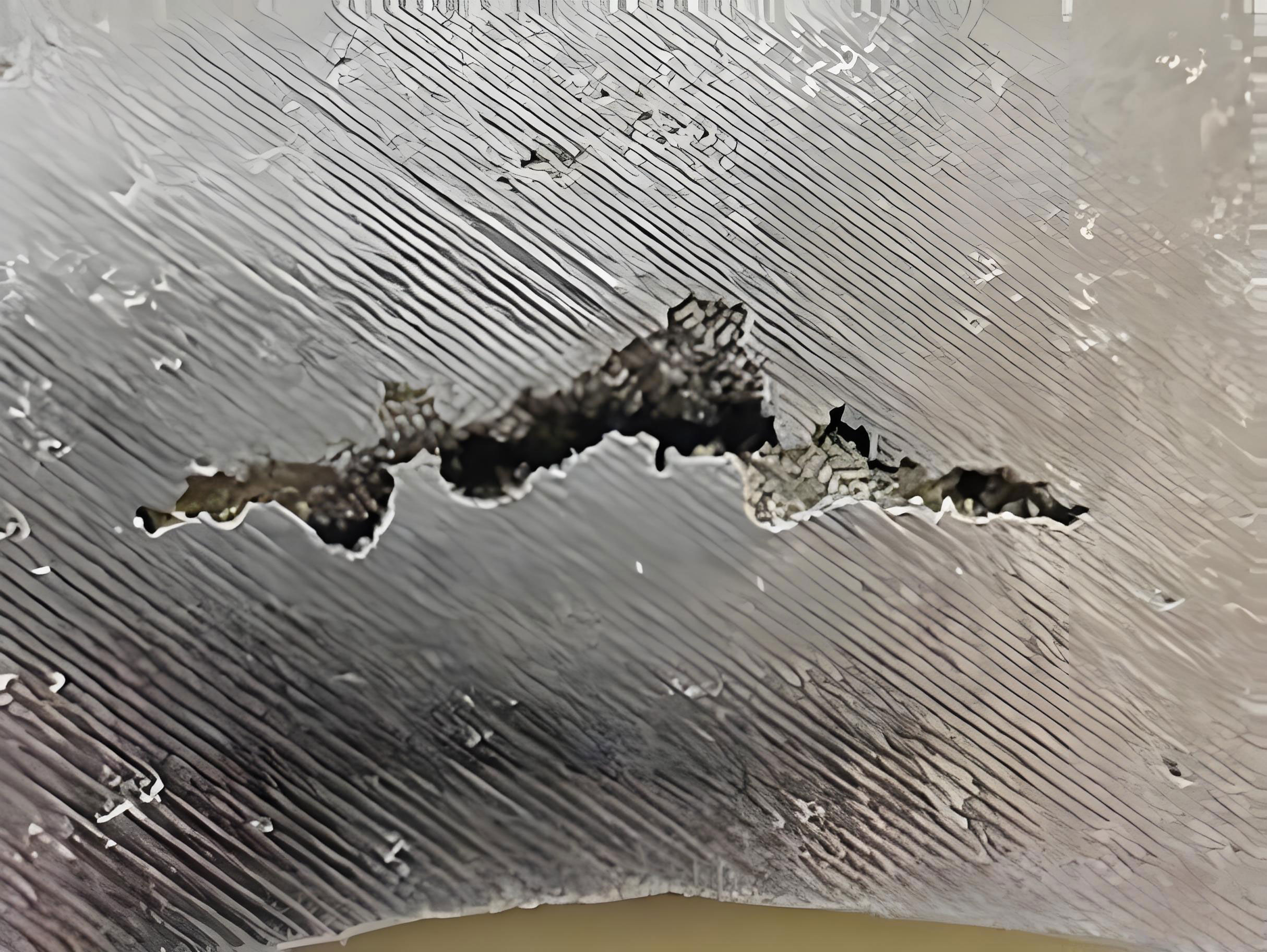
After implementing the optimized process, we produced a batch of 10 castings. All underwent UT inspection, revealing no indications of shrinkage in casting or slag defects. Subsequent machining by the customer confirmed clean surfaces without black spots, and all units passed pressure tests. Encouraged by these results, we scaled up to over 100 castings, consistently achieving near-zero rejection rates. This success underscores the importance of addressing both shrinkage in casting and slag defects in tandem, as they often share common root causes like improper gating and mold conditions.
Beyond this case, we have generalized the learnings into a framework for ductile iron casting quality assurance. Key factors include: (1) Gating design must prioritize laminar flow to prevent oxidation; (2) Feeding systems should be based on thermal analysis to combat shrinkage in casting; (3) Mold and core dryness is critical to avoid gas and slag defects; (4) Raw material control, especially returns, can preclude contamination. We also advocate for integrated use of simulation tools, such as MAGMA or ProCAST, to predict shrinkage in casting zones using criteria like Niyama’s criterion:
$$ G / \sqrt{\dot{T}} > K $$
where $G$ is temperature gradient, $\dot{T}$ is cooling rate, and $K$ is a material constant. Values below the threshold indicate high risk of shrinkage in casting. Similarly, EDS analysis is invaluable for defect characterization, distinguishing between shrinkage in casting and inclusions.
In conclusion, shrinkage in casting and slag defects in ductile iron castings are multifaceted challenges that demand systematic solutions. Our experience with the turbocharger housing demonstrates that through rigorous analysis, process redesign, and attention to detail, significant quality improvements are attainable. The interplay between metallurgy, fluid dynamics, and thermal management must be carefully balanced to minimize shrinkage in casting and ensure sound castings. As foundries advance, embracing digital tools and continuous improvement methodologies will be essential to sustain competitiveness and meet ever-tightening quality standards. Future work may explore real-time monitoring of pouring parameters or advanced inoculants to further reduce shrinkage in casting tendencies, but the fundamentals of good foundry practice remain paramount.