
As a lead engineer specializing in thermal processing and quality technology for engine components, I have been deeply involved in the strategic development of a specific engine series, herein referred to as Engine A. The cylinder block, a critical high-strength grey iron casting, has been a focal point for continuous improvement. While years of dedicated R&D and process exploration have yielded a product with overall stable quality, persistent challenges require targeted攻关. Among these, “water leakage” stands out as a paramount quality issue demanding resolution. This article details the comprehensive quality improvement activities undertaken to address water leakage defects in the Engine A grey iron castings.
The economic impact of this defect is significant. Leakage is only detected after the castings have undergone extensive processing, including machining, and subsequent pressure tests (air and water). By this late stage, substantial costs related to casting, material handling, machining, and partial assembly have already been incurred. Scrap losses are consequently high. An analysis of quality statistics from a full production year revealed that scrap losses attributable to water leakage accounted for a staggering 45% of the total scrap loss for Engine A blocks. This underscored the urgent need to solve this problem to achieve cost reduction and efficiency gains for the enterprise.
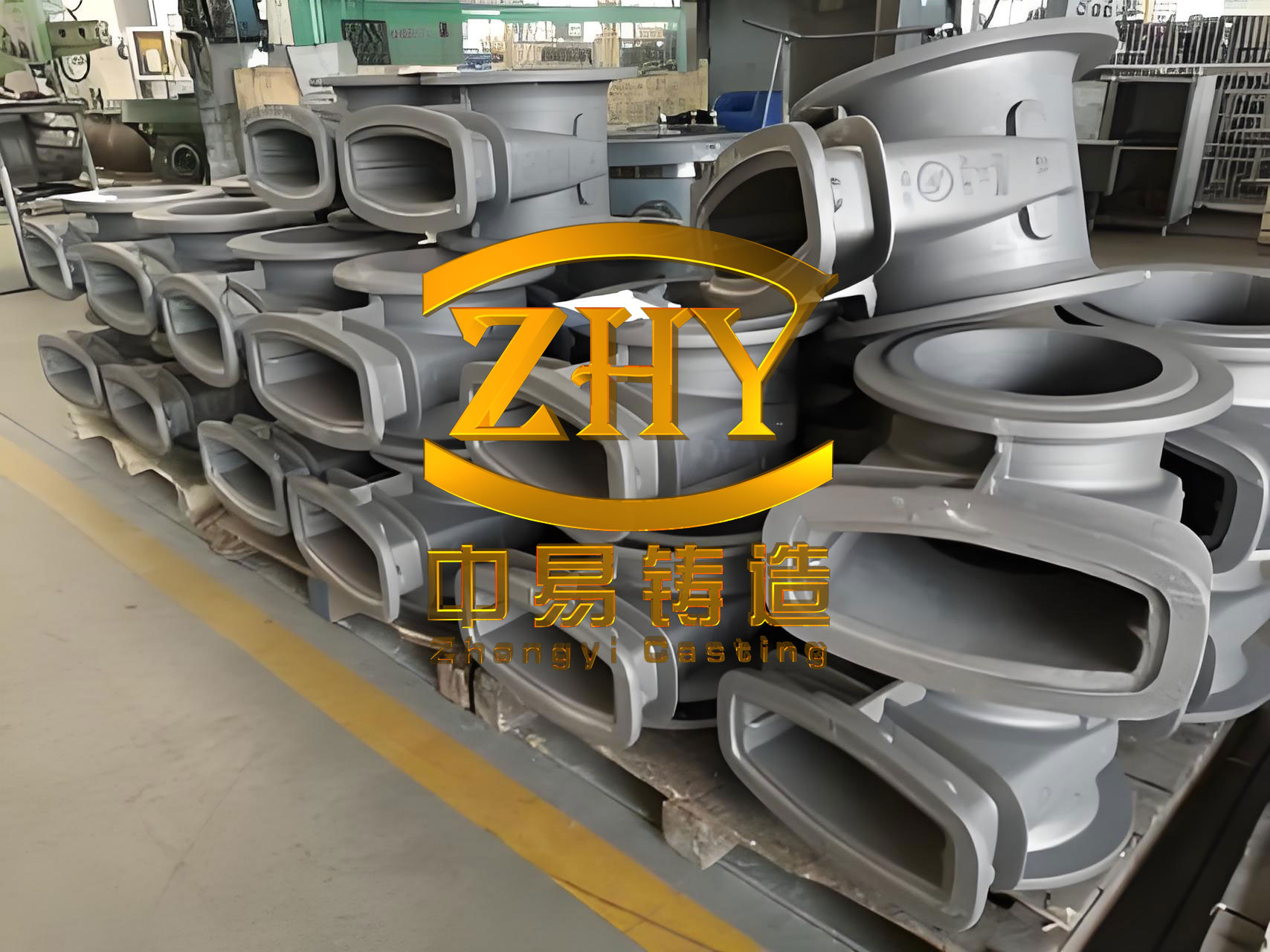
The production of these high-strength grey iron castings involves sophisticated foundry techniques. The Engine A block is a thin-walled, high-strength casting with approximate dimensions of 940 mm × 392 mm × 427 mm. The water jacket cores are produced using hot-box core shooting machines, while other sand cores utilize cold-box processes. Molding is conducted on an automated high-pressure molding line, and a stepped gating system is employed to ensure平稳的充型 (steady filling).
Problem Description and Defect Characterization
A statistical review of all leaking blocks from the studied year indicated an unacceptably high leakage rate of 3.3%. The distribution of leakage points was analyzed, revealing three primary locations: the tappet bore area (38%), the ø6 mm oil gallery holes (32%), and the ø20 mm oil gallery holes (18%). The remaining 12% were attributed to other miscellaneous locations. Repeated dissection and Scanning Electron Microscope (SEM) analysis of faulty castings were performed to qualitatively identify the root causes. The defects in the ø6 mm and ø20 mm oil holes were classified as nitrogen blowholes. The leakage in the tappet bore area was traced to poor fusion between the grey iron matrix and internally placed metallic chills or core supports.
| Leakage Location | Percentage Contribution | Identified Defect Type |
|---|---|---|
| Tappet Bore Area | 38% | Poor Fusion (Core Support/Chill) |
| ø6 mm Oil Gallery | 32% | Nitrogen Blowhole |
| ø20 mm Oil Gallery | 18% | Nitrogen Blowhole |
| Other Areas | 12% | Varied |
Root Cause Analysis and Corrective Actions
1. Leakage at ø6 mm Oil Gallery Holes
The ø6 mm oil hole is drilled into a solid cylindrical section approximately 20 mm in diameter, formed by the intersection of the water jacket core and the tappet core. This region possesses a higher volume-to-surface-area ratio (i.e., a higher modulus) compared to the adjacent water jacket walls, making it a localized hotspot that solidifies more slowly. Such areas are prone to shrinkage porosity and gas defects like nitrogen blowholes in grey iron castings. Dissection confirmed the presence of interconnected nitrogen blowholes between the drilled hole surface and the water jacket cavity. The fundamental cause was linked to the nitrogen content in the base iron.
During the solidification of grey iron castings, the solubility of nitrogen decreases as temperature falls. When the nitrogen content in the molten iron exceeds its solubility limit at a given stage, nitrogen gas precipitates out, forming blowholes that can lead to leakage paths. The relationship between nitrogen solubility and temperature can be conceptually represented as:
$$ S_N = k \cdot e^{(-\frac{\Delta H}{RT})} $$
where $S_N$ is the solubility of nitrogen, $k$ is a constant, $\Delta H$ is the heat of solution, $R$ is the gas constant, and $T$ is the temperature. As $T$ decreases during solidification, $S_N$ decreases, leading to potential gas evolution if the initial content is high.
To mitigate this, a ferrotitanium (FeTi) addition process was implemented. Titanium has a high affinity for nitrogen. Upon dissolution in the iron melt, it reacts to form stable titanium nitride (TiN) inclusions:
$$ Ti_{(in\ Fe)} + N_{(in\ Fe)} \rightarrow TiN_{(s)} $$
This reaction effectively “fixes” a portion of the dissolved nitrogen into solid TiN particles, thereby reducing the amount of free nitrogen available to form blowholes during solidification. This is a critical process control measure for high-integrity grey iron castings.
In parallel, a secondary engineering solution was deployed. A thin-walled cylindrical metallic chill sleeve was designed and positioned within the water jacket core at the location of the future ø6 mm oil hole. This sleeve serves a dual purpose: firstly, it promotes directional solidification by extracting heat rapidly, reducing the local solidification time and the window for defect formation; secondly, it acts as a physical barrier. Even if a subsurface nitrogen pore forms in the adjacent grey iron, the well-fused chill sleeve can prevent it from creating a through-leakage path to the water jacket. The combination of these measures—metallurgical control via FeTi addition and foundry engineering via chills—reduced the leakage rate at this location by 43%.
2. Leakage at ø20 mm Oil Gallery Holes
This leakage occurred in a thick-section region comprising the main and vertical oil galleries, which are cast as solid sections and later drilled. This area is a major thermal center, solidifying last. The slow solidification, combined with potential nitrogen content, created conditions favorable for the formation of large nitrogen blowholes, as confirmed by SEM analysis. The initial countermeasure involved placing a chill in the mold at this location. However, analysis showed that the blowhole defects sometimes extended beyond the area covered by the original chill design.
The solution involved a two-pronged approach, again focusing on the inherent properties of the grey iron castings. Firstly, the FeTi addition process, as described above, was rigorously applied to lower the active nitrogen content systemically. Secondly, the design of the chill for this region was optimized. The new chill was contoured to follow the shape of the water jacket core more closely, thereby extending its protective coverage and ensuring that any potential defect zone near the water jacket wall was effectively shielded by the rapidly solidified, sound metal layer adjacent to the chill. This design optimization, coupled with nitrogen control, led to a dramatic 74% reduction in leakage at the ø20 mm oil hole location.
3. Leakage at Tappet Bore Area
Investigation identified two distinct failure modes leading to tappet bore leakage in these grey iron castings:
Mode A: Poor Fusion of Core Supports. Metallic core supports (chill-like objects) are used internally to hold complex sand cores in position during pouring. Leakage occurred due to incomplete metallurgical bonding between these supports and the surrounding grey iron matrix.追溯 analysis linked this to low pouring temperatures. The core supports, made of low-carbon steel with a tin coating, have a strong chilling effect. At lower pouring temperatures, the thermal gradient is too steep, preventing proper melting and diffusion at the interface, leading to a micro-gap. Furthermore, research indicates that oxygen can segregate at the interface of tin-coated supports, potentially exacerbating the fusion problem.
Mode B: Poor Fusion of the ø6 mm Hole Chill Sleeve. In some cases, the thin-walled chill sleeve itself failed to fuse perfectly with the block, creating a direct leak path between the water jacket and the tappet gallery.
Corrective actions were derived from systematic process验证:
For Pouring Temperature: A designed experiment was conducted, casting groups of blocks at different temperature ranges. Internal inspection via borescope revealed a clear correlation. The fusion quality was unacceptable below 1410°C, improved significantly between 1410°C and 1423°C, and was optimal in this range. Pouring above 1423°C caused the supports to melt completely, leading to core movement and misalignment. Therefore, the optimal pouring temperature window for these grey iron castings was established as 1410°C – 1423°C.
| Pouring Temperature Range (°C) | Number of Castings | Castings with Poor Support Fusion | Observation |
|---|---|---|---|
| 1396 – 1399 | 6 | 6 | Unacceptable |
| 1400 – 1403 | 6 | 5 | Unacceptable |
| 1404 – 1407 | 6 | 4 | Unacceptable |
| 1408 – 1411 | 6 | 3 | Marginal |
| 1412 – 1415 | 6 | 1 | Acceptable |
| 1416 – 1419 | 6 | 0 | Acceptable |
| 1420 – 1423 | 6 | 0 | Acceptable |
| 1424 – 1427 | 6 | 0 (but supports melted) | Unacceptable (Core Shift) |
For Component Design: The geometry of both the core supports and the chill sleeve was modified. The supports’ contact surface area was reduced (e.g., diameter decreased from 15.88 mm to 12.7 mm) to lessen their chilling severity. The pattern of vent holes on their faces was also repositioned closer to the central支撑柱 to facilitate gas escape from the critical fusion interface. Similarly, the thickness of the ø6 mm hole chill sleeve was reduced from 1.5 mm to 1.2 mm to improve its chances of complete fusion with the parent grey iron.
The implementation of these combined measures—tight control of pouring temperature within the defined window and optimization of internal chill/support geometries—resulted in a 44% reduction in leakage originating from the tappet bore area.
Overall Impact and Conclusion
The systematic, multi-faceted improvement program targeting the specific failure modes in these high-strength grey iron castings yielded significant results. The overall water leakage rate was successfully reduced from the initial 3.3% to 1.95%, representing a total reduction of 40.9%. This achievement was predicated on a deep understanding of the interaction between material properties, process parameters, and component design in the context of grey iron castings.
The key technical conclusions are summarized as follows:
- Nitrogen Control is Fundamental: For high-strength grey iron castings prone to gas defects, controlling the active nitrogen content in the base iron is crucial. The addition of ferrotitanium (FeTi) is an effective metallurgical method to reduce nitrogen porosity risk by forming stable TiN compounds, as described by the reaction $ Ti + N \rightarrow TiN $.
- Thermal Management is Critical: Pouring temperature exerts a profound influence on the quality of grey iron castings, particularly regarding the fusion of internal chills and supports. An optimal window must be determined and strictly controlled to ensure sound metallurgical bonding without causing other defects like core shift.
- Engineering Solutions Complement Metallurgy: The strategic use of chills is a powerful tool in foundry engineering for grey iron castings. They not only promote favorable solidification patterns but can also act as barriers against defect propagation. The design, dimensions, and placement of these chills require careful optimization based on defect analysis.
The journey to improve the quality of these grey iron castings underscores the importance of a holistic approach. It is not merely a foundry or a metallurgy problem but an integration of material science, thermal dynamics, and mechanical design. The continuous pursuit of such integrated solutions is essential for advancing the reliability and performance of complex, high-demand grey iron castings in modern engine applications. The lessons learned regarding nitrogen control, thermal parameters, and the judicious use of chills provide a valuable framework for addressing similar integrity challenges in other grades and geometries of grey iron castings.