
In recent decades, nodular cast iron has emerged as a high-strength casting metal material with significant advantages over steel, such as superior castability and lower cost. As the production and performance of nodular cast iron continue to expand, it has successfully replaced forged and cast steel in many applications, becoming a promising structural material. The mechanical properties of metals are closely tied to their metallographic structures; specifically, the microstructural characteristics dictate the mechanical behavior. Nodular cast iron is no exception, and thus, studying its metallography is a prerequisite for understanding and optimizing its performance. In this article, I will share insights from our factory’s experience with producing QT450-10A castings, focusing on two common defects: micro-shrinkage and slag-induced porosity. Through microscopic and energy spectrum analysis, we can distinguish these defects and implement effective preventive measures to enhance casting quality and reduce scrap rates.
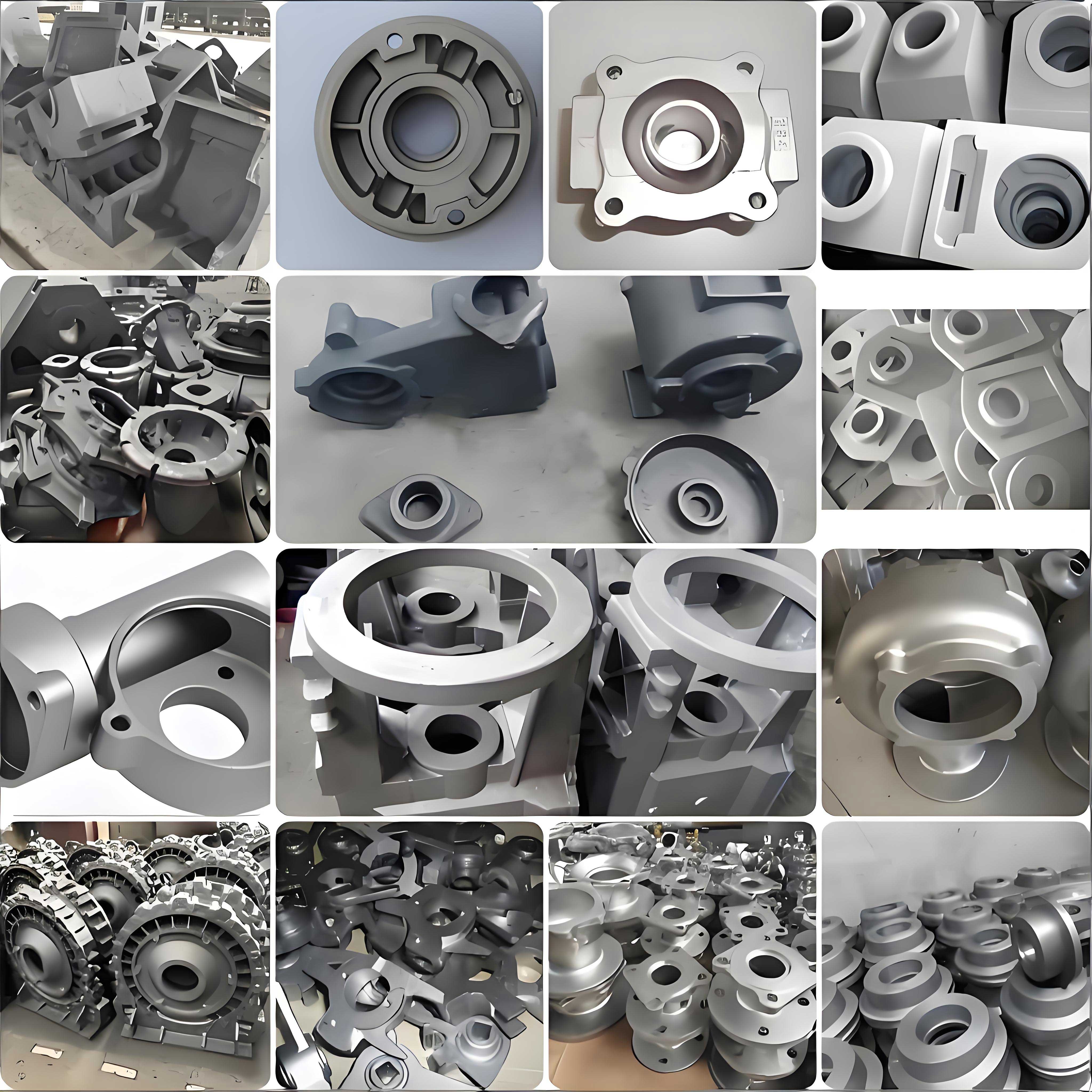
The importance of nodular cast iron lies in its unique microstructure, where graphite exists in spheroidal form, imparting high ductility and strength. However, during solidification, various defects can arise, compromising integrity. A thorough analysis using techniques like metallographic microscopy and energy-dispersive X-ray spectroscopy (EDS) is essential to identify root causes. This article delves into the microstructural features, formation mechanisms, and prevention strategies for micro-shrinkage and slag-induced porosity, incorporating tables and formulas to summarize key points. By understanding these aspects, we can better control the casting process and improve the reliability of nodular cast iron components.
Before discussing defects, it is crucial to review the fundamentals of nodular cast iron. The material’s properties depend on factors such as carbon equivalent (CE), alloying elements, and solidification conditions. The carbon equivalent, a parameter that influences fluidity and shrinkage, can be expressed as:
$$ CE = \%C + 0.33(\%Si + \%P) $$
For nodular cast iron, maintaining an optimal CE range, typically between 4.4% and 4.7%, is vital to balance graphite expansion and contraction during solidification. Deviations can lead to defects like micro-shrinkage. Additionally, the role of alloying elements like magnesium (Mg), which is used for spheroidization, must be carefully controlled, as residual magnesium affects shrinkage tendencies. The relationship between microstructure and defects is complex, often requiring empirical data and theoretical models to optimize.
Micro-Shrinkage in Nodular Cast Iron
Micro-shrinkage, also known as micro-porosity, is a common defect in nodular cast iron that appears as small, irregular voids under magnification. These voids are often mistaken for graphite flakes or other imperfections, leading to misdiagnosis. In our observations, micro-shrinkage manifests as discontinuous or continuous features along eutectic cell boundaries, resembling片状 structures in metallographic images. Energy spectrum analysis reveals a乳突状 three-dimensional morphology, distinguishing it from other defects.
Microstructural Characteristics
Under a metallographic microscope at 200× magnification, micro-shrinkage appears as angular or片状 patterns, sometimes interconnected. This can be confused with poor spheroidization, but EDS mapping shows elevated levels of elements like oxygen and magnesium at defect sites, indicating a different origin. The void morphology is乳突状, suggesting localized contraction during solidification. To quantify this, we can relate the porosity volume fraction to process parameters using empirical formulas. For instance, the shrinkage volume $V_s$ can be estimated as:
$$ V_s = \alpha \cdot \Delta T \cdot V_0 $$
where $\alpha$ is the thermal contraction coefficient, $\Delta T$ is the temperature drop during solidification, and $V_0$ is the initial volume. In nodular cast iron, the expansion from graphite precipitation can offset some shrinkage, but insufficient expansion leads to micro-shrinkage. The balance depends on CE and cooling rates.
Formation Causes
Micro-shrinkage forms during the final stages of solidification when residual liquid iron between dendrites fails to receive adequate feeding. Several factors contribute to this phenomenon in nodular cast iron:
- Low Carbon Equivalent (CE): When CE is below the optimal range, graphite expansion is insufficient to compensate for volumetric contraction. The required CE can be calculated using the formula above, and deviations increase shrinkage risk.
- High Alloy Content: Elements like copper (Cu), manganese (Mn), chromium (Cr), phosphorus (P), and residual magnesium (Mg) elevate shrinkage tendencies. Their effects are summarized in Table 1.
- Inadequate Mold Strength: Weak sand molds deform under metallostatic pressure, enlarging sections and creating unfed hot spots.
- Poor Gating and Risering Design: Incorrect placement of risers or chills fails to address thermal centers, leading to shrinkage voids.
- Insufficient or Excessive Inoculation: Inoculation affects undercooling and graphite morphology; improper practices can exacerbate shrinkage.
To elaborate, the role of alloy elements can be modeled using interaction coefficients. For example, the shrinkage propensity $S_p$ might be expressed as:
$$ S_p = k_1 \cdot [\%Mg] + k_2 \cdot [\%Cu] + k_3 \cdot [\%Mn] + k_4 \cdot [\%P] $$
where $k_1, k_2, k_3, k_4$ are empirical constants derived from casting trials. Our factory data suggests that controlling these elements within strict limits is crucial.
| Element | Recommended Range (wt%) | Effect on Shrinkage | Mechanism |
|---|---|---|---|
| Manganese (Mn) | < 0.5 | Increases | Promotes carbide formation, reducing graphite expansion |
| Phosphorus (P) | < 0.03 | Increases | Forms low-melting phosphides, worsening feeding |
| Copper (Cu) | < 0.6 | Moderate increase | Enhances pearlite formation, altering solidification path |
| Chromium (Cr) | < 0.1 | Significant increase | Stabilizes carbides, increasing contraction |
| Residual Mg | 0.03–0.05 | Critical | Excess Mg raises surface tension, impairing feeding |
Preventive Measures
Based on our analysis, we implemented several strategies to mitigate micro-shrinkage in nodular cast iron castings:
- Optimize Carbon Equivalent: Adjust CE according to casting thickness, aiming for 4.4–4.7% using the formula $CE = \%C + 0.33(\%Si + \%P)$. For thick sections, higher CE may be tolerated to boost graphite expansion.
- Control Alloy Composition: Use high-quality raw materials to minimize harmful elements. Residual magnesium should be maintained at 0.03–0.05% via precise spheroidization. The relationship between sulfur (S) content and Mg addition can be described as:
$$ \%Mg_{added} = a \cdot \%S_{initial} + b $$
where $a$ and $b$ are constants based on alloy type. Our trials indicate $a \approx 0.1$ and $b \approx 0.02$ for typical nodular cast iron.
- Enhance Mold Rigidity: Employ high-strength铸铁 sandboxes and compact sand properly. Mold surface strength should be tested, with a target of 0.8–1.2 MPa for green sand molds.
- Improve Thermal Management: Design gating systems with chills and risers to eliminate hot spots. The riser volume $V_r$ can be calculated using Chvorinov’s rule:
$$ V_r = \frac{V_c \cdot \beta}{1 – \beta} $$
where $V_c$ is the casting volume, and $\beta$ is the solidification shrinkage factor (typically 0.04–0.06 for nodular cast iron).
- Optimize Inoculation: Apply multiple inoculation methods (e.g., ladle, stream, and late inoculation) to reduce undercooling. Total silicon increase from inoculation should be 0.6–0.9%, with instantaneous inoculation at 0.05–0.1%.
These measures have significantly reduced micro-shrinkage defects in our nodular cast iron production, improving yield and mechanical properties.
Slag-Induced Porosity in Nodular Cast Iron
Slag-induced porosity, often called slag blowholes, is another prevalent defect that can be confused with micro-shrinkage. Under metallographic examination at 150×, it appears as块状 or片状 cavities, similar to shrinkage or graphite clusters. However, EDS analysis shows smooth,空洞 morphologies with distinct chemical signatures, including enrichments in oxygen, magnesium, sulfur, and calcium. This defect primarily stems from slag entrapment and gas reactions during melting and pouring.
Microstructural Features
At higher magnifications, slag porosity presents as isolated or interconnected voids with smooth walls, unlike the乳突状 structure of micro-shrinkage. EDS point analysis, as summarized in Table 2, reveals elevated concentrations of slag-forming elements at defect sites compared to sound areas. For instance, oxygen content can be 2–4 times higher, indicating oxidation products. The porosity volume fraction $V_p$ due to slag can be correlated with gas content using Sieverts’ law:
$$ [H] = k_H \cdot \sqrt{P_{H_2}} $$
where $[H]$ is hydrogen concentration in the melt, $k_H$ is the equilibrium constant, and $P_{H_2}$ is the partial pressure of hydrogen. Slag inclusions act as nucleation sites for gas bubbles, exacerbating porosity.
| Spectrum Point | C | O | Mg | Si | S | Ca | Mn | Fe |
|---|---|---|---|---|---|---|---|---|
| Defect Point 1 | 4.08 | 2.89 | 0.19 | 2.17 | 0.10 | 0.22 | 0.74 | Balance |
| Defect Point 2 | 4.35 | 4.36 | 0.25 | 1.50 | 0.14 | 0.31 | 0.35 | Balance |
| Defect Point 3 | 3.95 | 2.25 | 0.14 | 0.45 | 0.15 | 0.03 | 0.40 | Balance |
| Sound Area | 3.73 | 0.00 | 0.00 | 1.67 | 0.00 | 0.00 | 0.58 | Balance |
Root Causes
The formation of slag-induced porosity in nodular cast iron involves multiple factors related to melting, treatment, and pouring:
- High Moisture in Charge Materials: Wet raw materials release water vapor, which dissociates into hydrogen and oxygen, reacting with magnesium to form oxides and gases.
- High Sulfur or Moisture in Molding Sand: Resin sand with excessive sulfur or water reacts with magnesium at the metal-mold interface, generating sulfides and gaseous products.
- Excessive Spheroidizer Addition: Over-treatment with magnesium-based alloys increases residual Mg, promoting reactions with亲镁 elements like oxygen and sulfur.
- Use of Damp or Unheated Additives: Cold or humid spheroidizers and inoculants introduce moisture, leading to gas evolution.
- Inadequate Slag Removal: Poor slag skimming before pouring allows inclusions to enter the mold cavity.
- Faulty Gating Design: Non-tapered or turbulent gating systems fail to filter slag, entrapping it in the casting.
- Improper Mold Assembly: Gaps in the gating system permit metal ingress without filtration.
- Interrupted Pouring: Discontinuous pouring prevents gate filling, reducing slag-trapping efficiency.
The kinetics of slag formation can be described by reaction rate equations. For example, the oxidation of magnesium in nodular cast iron follows:
$$ 2Mg + O_2 \rightarrow 2MgO $$
with a rate constant $k$ dependent on temperature and concentration. The amount of slag $M_{slag}$ produced can be estimated as:
$$ M_{slag} = \int_0^t k \cdot [Mg] \cdot [O] \, dt $$
where $[Mg]$ and $[O]$ are instantaneous concentrations. Controlling these parameters is key to minimizing slag.
Prevention Strategies
To combat slag-induced porosity, we adopted comprehensive measures in our nodular cast iron foundry:
- Dry Raw Materials: Preheat charge materials, spheroidizers, inoculants, and alloys to above 200°C to eliminate moisture. The drying efficiency $\eta_d$ can be expressed as:
$$ \eta_d = 1 – \frac{W_f}{W_i} $$
where $W_i$ and $W_f$ are initial and final moisture weights. Aim for $\eta_d > 0.95$.
- Optimize Melting and Treatment: Use转移 ladles for spheroidization, allowing 1–2 minutes of stillness after melting for slag flotation. Preheat treatment ladles to over 600°C to reduce thermal shock and gas pickup.
- Control Sulfur Levels: Select low-sulfur raw materials to keep base iron sulfur below 0.015%. The required Mg addition for spheroidization is given by:
$$ \%Mg_{req} = 0.76 \cdot \%S + 0.03 $$
based on empirical data for nodular cast iron.
- Moderate Spheroidizer Usage: Adjust additions to achieve residual Mg of 0.03–0.05%, minimizing excess that could form slag.
- Improve Sand Quality: Regularly refresh recycled sand and monitor sulfur content, keeping it below 0.1% for resin-bonded sands.
- Design Effective Gating: Implement tapered, well-proportioned gating systems with filters or slag traps. The gating ratio (sprue:runner:gate) should be 1:2:1.5 for nodular cast iron to ensure laminar flow.
- Ensure Proper Mold Sealing: Check assembly to eliminate leaks, and use seals or coatings at parting lines.
- Maintain Continuous Pouring: Train operators for steady pouring to keep gates full and maximize slag removal.
These steps have markedly reduced slag-related defects, enhancing the surface quality and integrity of our nodular cast iron castings.
Advanced Analysis Techniques for Nodular Cast Iron Defects
Beyond basic microscopy, advanced methods like scanning electron microscopy (SEM), computed tomography (CT), and thermodynamic simulations are invaluable for defect analysis in nodular cast iron. For instance, CT scanning can visualize three-dimensional porosity networks, while thermodynamic software like Thermo-Calc can predict phase formation and shrinkage tendencies. The solidification sequence of nodular cast iron can be modeled using the Scheil-Gulliver equation:
$$ C_s = k \cdot C_0 \cdot (1 – f_s)^{k-1} $$
where $C_s$ is the solid composition, $C_0$ is the initial composition, $k$ is the partition coefficient, and $f_s$ is the solid fraction. Such models help optimize composition to avoid defects. Additionally, statistical process control (SPC) charts can monitor key parameters like CE and residual Mg, ensuring consistency in nodular cast iron production.
Comparative Study of Defects in Nodular Cast Iron
To further elucidate differences between micro-shrinkage and slag-induced porosity, Table 3 summarizes their characteristics, causes, and prevention. This comparative approach aids in rapid diagnosis and corrective actions.
| Aspect | Micro-Shrinkage | Slag-Induced Porosity |
|---|---|---|
| Microscopic Appearance | Angular,乳突状 voids at eutectic boundaries | Smooth,空洞 voids with slag inclusions |
| EDS Signature | Moderate O, Mg; similar to matrix | High O, Mg, S, Ca at defects |
| Primary Causes | Low CE, high alloys, poor feeding | Moisture, high S, excessive Mg, slag entrapment |
| Prevention Focus | Optimize CE, mold strength, risering | Dry materials, control S, improve gating |
| Impact on Properties | Reduces fatigue strength, increases stress concentration | Weakens surface, promotes corrosion initiation |
The mechanical performance degradation due to defects can be quantified using fracture mechanics. For example, the stress intensity factor $K_I$ for a pore of radius $a$ under tensile stress $\sigma$ is:
$$ K_I = \sigma \sqrt{\pi a} $$
Thus, larger pores from slag or shrinkage significantly reduce load-bearing capacity in nodular cast iron components.
Future Directions in Nodular Cast Iron Quality Control
As nodular cast iron applications grow, ongoing research aims to refine defect prevention. Emerging technologies include real-time monitoring of melt chemistry using spectrometers, automated pouring systems, and AI-based defect prediction. For instance, machine learning models can correlate process variables (e.g., temperature, composition) with defect occurrence, enabling proactive adjustments. The general form of such a model for nodular cast iron might be:
$$ P_{defect} = f(CE, [Mg], T_{pour}, t_{solidify}, \ldots) $$
where $P_{defect}$ is the probability of defects, and $f$ is a nonlinear function learned from data. Implementing these advancements will further elevate the quality and reliability of nodular cast iron.
Conclusion
In summary, nodular cast iron is a versatile material whose quality hinges on understanding and mitigating defects like micro-shrinkage and slag-induced porosity. Through detailed metallographic and energy spectrum analysis, we can distinguish these defects and identify their root causes. Key preventive measures involve optimizing carbon equivalent, controlling alloy elements, enhancing mold rigidity, improving gating design, and ensuring dry, high-quality materials. By applying these strategies, along with advanced analytical techniques and comparative frameworks, foundries can effectively reduce scrap rates and produce high-integrity nodular cast iron castings. Continuous innovation in process control and monitoring will further drive the success of nodular cast iron in demanding applications, solidifying its role as a premier engineering material.
The journey from defect analysis to prevention underscores the importance of a systematic approach in metallurgy. As we refine our practices, the potential of nodular cast iron continues to expand, offering sustainable and cost-effective solutions across industries. I encourage fellow engineers and researchers to share insights and collaborate on advancing nodular cast iron technology for future generations.