
In the field of wind power generation, the reliability of gearbox components is paramount for efficient and safe operation. As an engineer specializing in steel casting processes, I have encountered a critical issue in the production of first-stage planetary carriers for wind turbine gearboxes. These steel casting components are integral to the transmission system, designed to withstand low-speed, high-load, variable-torque conditions. With planetary transmission failures accounting for approximately 40% of gearbox malfunctions, ensuring the quality of steel casting planetary carriers is essential. This article details my investigation into a suspected crack defect found in the input bearing bore of a steel casting planetary carrier, the analytical methods employed, and the subsequent process improvements implemented to resolve the issue.
The steel casting planetary carrier in question has an average wall thickness of around 100 mm and is fabricated from low-alloy steel. Its mechanical properties are specified as tensile strength (σb) ≥ 830 MPa, yield strength (σs) ≥ 700 MPa, elongation (δ5) ≥ 12%, and impact energy (AKv) at -40°C ≥ 27 J. Quality standards require internal integrity to meet EN12680-2 Grade II or better for critical areas, with non-critical areas not exceeding Grade III, and surface quality to achieve EN1369 Grade II for critical regions. During assembly, a linear defect resembling a crack was observed on the inner wall of the input bearing bore, approximately 130 mm in length. Initial magnetic particle inspection revealed discontinuous magnetic indications, suggesting that the defect was not a true crack but rather an anomaly requiring further analysis.
To characterize the defect, I conducted a comprehensive failure analysis. First, chemical composition was assessed from samples near the defect area. The results, summarized in Table 1, confirm that the steel casting meets the required specifications for low-alloy steel, with no deviations that might explain the defect.
| Element | C | Si | Mn | P | S | Cr | Ni | Mo |
|---|---|---|---|---|---|---|---|---|
| Measured Value | 0.21 | 0.47 | 0.88 | 0.016 | 0.012 | 0.56 | 0.70 | 0.42 |
| Specification Range | 0.17–0.22 | ≤0.60 | 0.80–1.20 | ≤0.02 | ≤0.015 | 0.40–0.90 | 0.60–1.00 | 0.40–0.70 |
Metallographic examination was performed on five specimens extracted from the defect region. The base microstructure consisted of tempered sorbite with minor ferrite, and non-metallic inclusions were within acceptable limits (e.g., Type I and III fine series at Grade 2). Hardness measurements averaged 249 HBW, consistent with specifications. However, in specimens 1–3, a distinct segregation band approximately 1 mm wide and over 10 mm deep was identified. This band exhibited a microstructure of tempered sorbite, contrasting with the tempered sorbite-plus-ferrite matrix in normal areas. Microhardness (HV0.3) values were higher in the segregation band (361, 358, 369) compared to normal regions (287, 253, 265), indicating compositional differences. Additionally, micro-shrinkage pores were observed within the segregation band, explaining the magnetic indications.
To quantify the compositional variation, energy-dispersive spectroscopy (EDS) was utilized. The EDS analysis, presented in Table 2, shows elevated levels of chromium, manganese, and nickel in the segregation band relative to normal areas, confirming that the defect is a macro-segregation zone enriched in alloying elements, likely forming carbides during solidification.
| Location | Si | Cr | Mn | Fe | Ni |
|---|---|---|---|---|---|
| Segregation Band | 0.77 | 0.87 | 1.26 | 96.21 | 0.88 |
| Normal Area | 0.49 | 0.62 | 0.86 | 97.29 | 0.74 |
The formation of macro-segregation in steel casting is closely tied to solidification behavior. For low-alloy steels with wide freezing ranges,糊状凝固 (mushy solidification) can occur, leading to solute redistribution and segregation. The solidification time and temperature gradient are critical factors. To analyze this, I employed Magma simulation software to model the casting process. The initial steel casting design featured top risers and blind risers within the core to feed the bearing regions. Simulation results indicated adequate feeding for key areas, but the temperature field distribution revealed issues. In the input bearing bore, the temperature gradient was insufficient, promoting a mushy solidification mode. The solidification time at the bore root was approximately 5000 seconds, significantly longer than the 1500 seconds in other sections. This prolonged solidification, combined with a low temperature gradient, fostered macro-segregation and micro-shrinkage, as described by the following solidification model:
$$ \frac{\partial T}{\partial t} = \alpha \nabla^2 T + \frac{L}{c_p} \frac{\partial f_s}{\partial t} $$
where \( T \) is temperature, \( t \) is time, \( \alpha \) is thermal diffusivity, \( L \) is latent heat, \( c_p \) is specific heat, and \( f_s \) is solid fraction. In mushy zones, the solute redistribution can be expressed using the Scheil equation for micro-segregation:
$$ C_s = k C_0 (1 – f_s)^{k-1} $$
where \( C_s \) is solute concentration in the solid, \( k \) is the partition coefficient, and \( C_0 \) is initial concentration. For macro-segregation, fluid flow during solidification exacerbates solute transport, leading to banded defects.
Based on this analysis, I implemented process improvements to mitigate segregation in the steel casting. The key modifications were:
- Addition of External Chills: A ring of external chills was placed around the input bearing bore exterior. This enhanced cooling, reduced the feeding distance from risers, and shortened solidification time. The chill design can be optimized using the following heat transfer equation:
$$ Q = h A (T_{cast} – T_{chill}) $$
where \( Q \) is heat flux, \( h \) is heat transfer coefficient, \( A \) is area, \( T_{cast} \) is casting temperature, and \( T_{chill} \) is chill temperature.
- Core Material Modification: The core for the bore interior was redesigned with a 30–50 mm surface layer of chromite sand, which has higher thermal conductivity than conventional silica sand, improving heat dissipation. The thermal conductivity contrast is given by:
$$ k_{eff} = \phi k_{chromite} + (1 – \phi) k_{binder} $$
where \( k_{eff} \) is effective thermal conductivity, \( \phi \) is volume fraction of chromite sand, and \( k_{binder} \) is binder conductivity.
- Pouring Temperature Control: For thick-section steel casting, the pouring temperature was strictly controlled to 1550–1565°C, minimizing superheat and reducing local solidification times.
To validate these changes, I re-simulated the steel casting process with Magma. The updated temperature field, shown in Figure 1, demonstrates a steeper temperature gradient conducive to directional solidification. The solidification time at the bore root decreased to around 4000 seconds, a reduction of over 1000 seconds. This improvement aligns with the criterion for minimizing segregation, where the local solidification time \( t_f \) should be minimized to reduce solute diffusion:
$$ t_f = \frac{\Delta T}{G \cdot R} $$
where \( \Delta T \) is freezing range, \( G \) is temperature gradient, and \( R \) is solidification rate. Lower \( t_f \) values suppress macro-segregation.
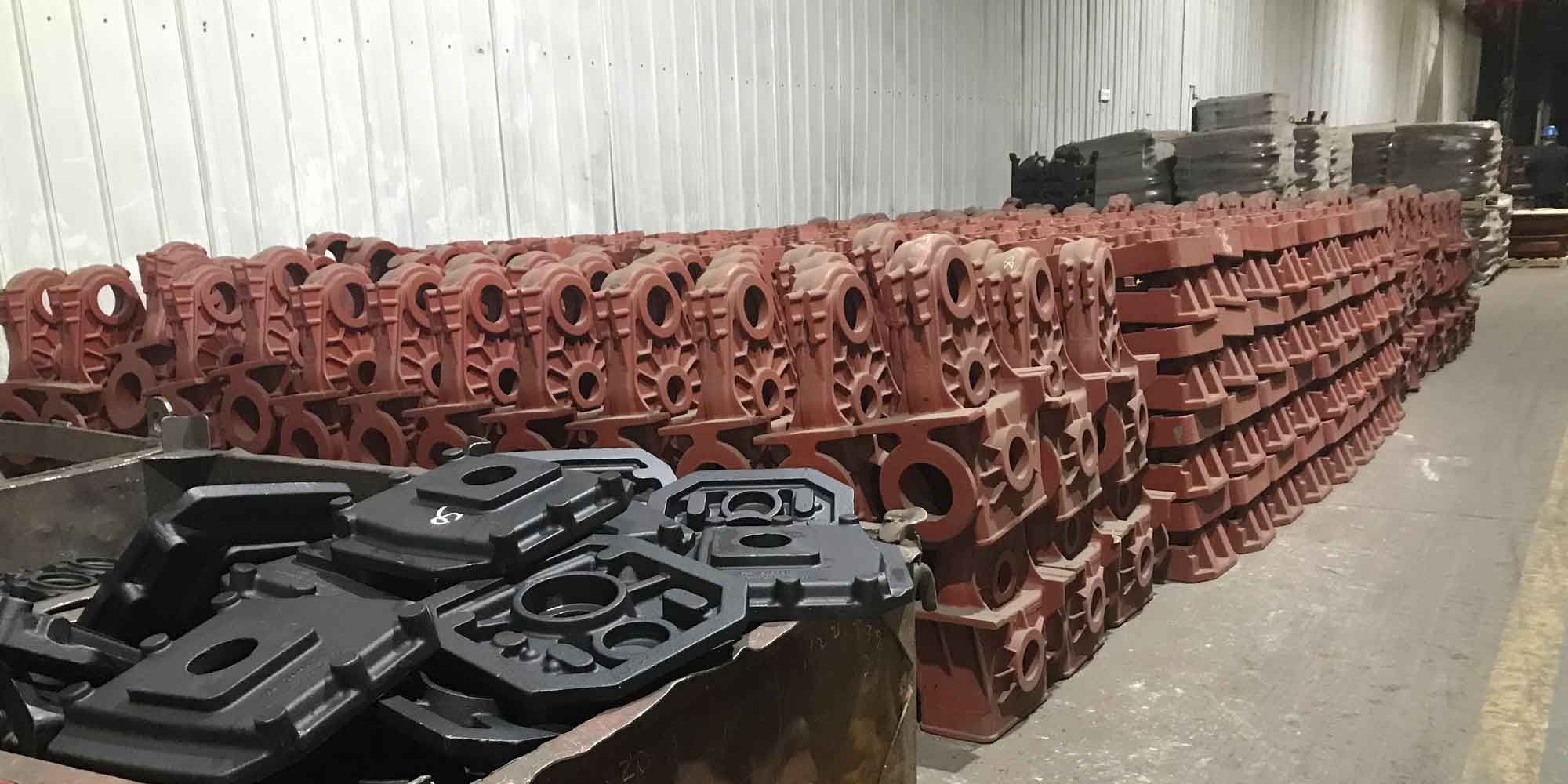
The improved steel casting process was applied to the production of 16 planetary carriers. Post-casting inspection, including magnetic particle testing of the bore surfaces, revealed no macro-segregation defects, confirming the effectiveness of the modifications. This success underscores the importance of integrating simulation tools like Magma into steel casting practices to predict and rectify solidification-related issues.
In conclusion, the suspected crack defect in the steel casting planetary carrier was identified as a macro-segregation band resulting from unfavorable solidification conditions. Through detailed analysis involving chemical, metallographic, and spectroscopic techniques, coupled with computational simulation, the root cause was traced to inadequate cooling and prolonged solidification in the bore region. By optimizing chill design, core materials, and pouring parameters, the steel casting process was enhanced to eliminate segregation. This case highlights how advanced analytical methods can drive quality improvements in steel casting for critical applications like wind energy. Future work could explore real-time monitoring during steel casting solidification to further refine process control.
To generalize these findings, I propose a framework for defect prevention in steel casting components. Table 3 summarizes key parameters and their target ranges for minimizing segregation in thick-section steel casting.
| Parameter | Symbol | Target Range | Rationale |
|---|---|---|---|
| Pouring Temperature | T_p | 1550–1565°C | Reduces superheat and solidification time |
| Temperature Gradient | G | > 10°C/cm | Promotes directional solidification |
| Local Solidification Time | t_f | < 4000 s | Limits solute diffusion and segregation |
| Chill Efficiency | h | 500–1000 W/m²K | Enhances cooling rate |
| Core Thermal Conductivity | k_core | > 2 W/mK | Improves heat extraction |
Furthermore, the role of alloy composition in steel casting cannot be overlooked. For low-alloy steels, the propensity for segregation can be estimated using the carbon equivalent (CE) formula:
$$ CE = C + \frac{Mn}{6} + \frac{Cr + Mo + V}{5} + \frac{Ni + Cu}{15} $$
Higher CE values increase the risk of segregation; thus, controlling alloying elements within specified limits is crucial. In this steel casting, the CE was calculated as approximately 0.45, which is moderate but requires careful process management.
In summary, this investigation demonstrates a systematic approach to defect analysis in steel casting. By combining empirical testing with simulation, I successfully transformed a quality issue into a process improvement opportunity. The lessons learned are applicable to other heavy-section steel casting components in demanding industries, ensuring reliability and performance. As steel casting technology evolves, continuous refinement of these methods will be essential for advancing manufacturing excellence.