
As a foundry engineer with extensive experience in metal casting, I have frequently encountered and addressed various casting defects in ductile iron production. Ductile iron, known for its superior mechanical properties such as high strength, toughness, and wear resistance, is widely used in manufacturing critical components like crankshafts, camshafts, and flanges for diesel engines, automobiles, and tractors. However, the production process is often marred by several casting defects that can significantly impact the performance and yield of castings. These casting defects, including shrinkage porosity, shrinkage cavities, slag inclusions, poor nodularization, and degraded spheroidization, are common challenges that require thorough understanding and preventive measures. In this article, I will delve into the characteristics, causes, and mitigation strategies for these casting defects, drawing from practical insights and industrial practices. The goal is to provide a comprehensive guide that highlights the importance of controlling process parameters and material compositions to minimize these casting defects and enhance casting quality.
Casting defects in ductile iron can arise from multiple factors, ranging from chemical composition imbalances to improper gating and risering design. By analyzing each defect in detail, we can develop effective countermeasures. I will structure this discussion around the most prevalent casting defects, incorporating formulas and tables to summarize key relationships and data. This approach not only clarifies complex interactions but also serves as a quick reference for practitioners. Throughout this article, the term “casting defects” will be emphasized to underscore its relevance in foundry operations. Let’s begin by exploring shrinkage-related casting defects, which are among the most troublesome issues in ductile iron casting.
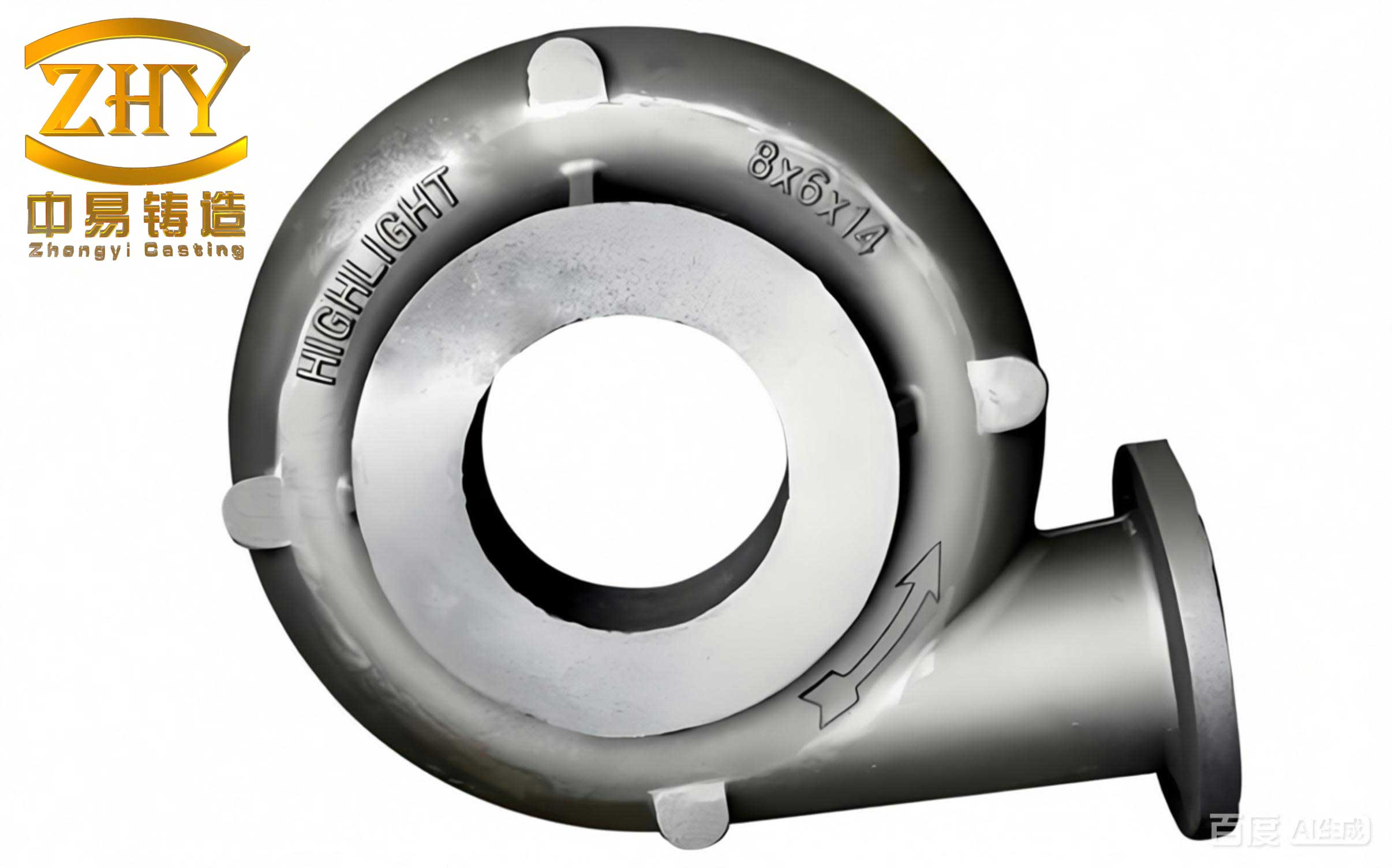
Shrinkage porosity and shrinkage cavities are common casting defects characterized by internal voids or rough surfaces that can lead to leakage during pressure tests. These casting defects typically result from inadequate feeding during solidification. The carbon equivalent (CE) plays a crucial role in mitigating these casting defects, as it influences graphite expansion and fluidity. The carbon equivalent is calculated using the formula: $$CE = C + \frac{1}{7}Si$$ where C is the carbon content and Si is the silicon content. Empirical evidence suggests that to avoid shrinkage-related casting defects, the condition $$CE \geq 3.9\%$$ should be maintained. Additionally, phosphorus content must be controlled, as high levels widen the solidification range and promote shrinkage. Specifically, the phosphorus content should be kept below 0.08%. Residual elements like magnesium and rare earth (RE) can also exacerbate these casting defects by increasing the tendency for chilling. Therefore, it is essential to optimize their levels. The following table summarizes key factors affecting shrinkage casting defects:
| Factor | Optimal Range | Effect on Casting Defects |
|---|---|---|
| Carbon Equivalent (CE) | ≥ 3.9% | Reduces shrinkage by enhancing graphite expansion |
| Phosphorus (P) | < 0.08% | Lower levels minimize shrinkage porosity |
| Residual Magnesium (Mg) | Controlled low | High levels increase shrinkage tendency |
| Residual Rare Earth (RE) | Controlled low | Excessive amounts promote shrinkage casting defects |
| Pouring Temperature | ~1350°C | Balances fluidity and liquid contraction |
To prevent these casting defects, several measures can be implemented. First, maintain a high carbon equivalent while reducing phosphorus and residual magnesium/rare earth contents. Second, design gating systems and risers effectively to ensure proper feeding; this may involve using chills or internal chills in thick sections. Third, control inoculation practices: primary inoculation should be limited to 0.4%–0.6%, and instantaneous stream inoculation to 0.05%–0.15%. Finally, avoid iron oxidation by keeping furnace slag iron oxide below 5% (preferably under 3%) and minimizing high-temperature retention in electric furnaces. These steps collectively reduce the incidence of shrinkage casting defects.
Poor nodularization and degraded spheroidization are other critical casting defects that affect the graphite morphology in ductile iron. These casting defects manifest as gray-black fractures with reduced mechanical properties, where graphite appears flaky or vermicular under microscopic examination. The root causes often relate to insufficient residual magnesium and rare earth contents, or excessive sulfur interference. Sulfur is a strong anti-nodularizing element; when its content exceeds 0.1%, even ample nodularizing agents may fail to achieve full spheroidization. The relationship between sulfur content and nodularizer addition can be expressed as: $$Mg_{req} = k \cdot S_{initial}$$ where $Mg_{req}$ is the required magnesium addition, $S_{initial}$ is the initial sulfur content, and $k$ is a factor dependent on process conditions. Typically, the nodularizer addition is kept around 1.8%–2.2%. Additionally, high carbon equivalent (especially high silicon) can impair nodularization, while thick sections and prolonged liquid retention lead to magnesium loss and graphite degeneration. Pouring temperature is also vital: too high causes oxidation and magnesium loss, while too low prevents proper dissolution of nodularizers. The table below outlines factors influencing these casting defects:
| Factor | Recommendation | Impact on Casting Defects |
|---|---|---|
| Sulfur Content (S) | < 0.02% | Essential for effective nodularization |
| Nodularizer Addition | 1.8%–2.2% | Ensures adequate residual Mg and RE |
| Carbon Equivalent | Controlled | High CE may cause poor nodularization |
| Pouring Temperature | Optimized | Affects Mg recovery and oxidation |
| Section Thickness | Managed with chills | Thick sections promote degradation |
Preventive measures for these casting defects include strict control of iron composition, with desulfurization to keep sulfur below 0.02%. Ensure sufficient residual magnesium and rare earth by adjusting nodularizer addition. Shorten the holding time after nodularization to minimize magnesium loss. Design gating systems and risers to reduce pouring time and oxidation. Enhance inoculation to promote graphite nucleation. By addressing these aspects, the risk of poor nodularization and degraded spheroidization casting defects can be significantly lowered.
Graphite floating is a casting defect characterized by dark patches on the upper surfaces of castings, where graphite balls aggregate due to buoyancy. This defect severely compromises mechanical properties, such as strength and toughness. It primarily occurs when the carbon equivalent exceeds the eutectic point, causing early graphite precipitation and flotation. The tendency for graphite floating increases with higher carbon equivalent, thicker sections, lower residual magnesium, and higher pouring temperatures. Mathematically, the risk can be modeled as: $$GF_{risk} \propto \frac{CE – CE_{eutectic}}{T_{pour} \cdot \sqrt{t}}$$ where $GF_{risk}$ is the graphite floating risk, $CE_{eutectic}$ is the eutectic carbon equivalent, $T_{pour}$ is the pouring temperature, and $t$ is the section thickness. To prevent this casting defect, control the carbon equivalent within 4.3%–4.7%, with lower values for thick sections. Accelerate cooling using chills in heavy areas, and consider adding anti-graphitizing elements like molybdenum. Additionally, limit rare earth content in nodularizers, as high levels can exacerbate graphite floating. The following table summarizes key control parameters:
| Parameter | Target Range | Role in Preventing Casting Defects |
|---|---|---|
| Carbon Equivalent | 4.3%–4.7% | Prevents excessive graphite precipitation |
| Section Thickness | Managed with chills | Reduces flotation time |
| Rare Earth Content | Moderate | Minimizes graphite distortion |
| Cooling Rate | Enhanced | Suppresses graphite flotation |
Slag inclusions are non-metallic casting defects composed of compounds like magnesium sulfide, manganese sulfide, and oxides, appearing as dark, non-lustrous areas on fractures. These casting defects often accumulate at upper surfaces, core undersides, and dead zones. They stem from oxides and sulfides of silicon, magnesium, and rare earths. To mitigate slag inclusion casting defects, reduce silicon and sulfur contents—sulfur should be below 0.02%. Control residual magnesium and rare earth to avoid excessive oxide formation. Pouring temperature is critical; as shown in industry data, temperatures above 1300°C drastically reduce slag formation. The relationship can be approximated by: $$Slag_{index} = A \cdot e^{-B \cdot T_{pour}}$$ where $Slag_{index}$ quantifies slag tendency, $T_{pour}$ is pouring temperature, and A and B are constants. Design gating systems with slag-trapping features to ensure calm filling. Implement secondary desulfurization if needed. The table below highlights preventive strategies:
| Strategy | Details | Effect on Casting Defects |
|---|---|---|
| Reduce Sulfur | < 0.02% via desulfurization | Lowers sulfide formation |
| Control Silicon | Minimize addition | Reduces oxide sources |
| Pouring Temperature | > 1300°C | Decreases slag adherence |
| Gating Design | Slag-trapping mechanisms | Prevents slag entry into mold |
Subsurface pinholes are common casting defects in ductile iron, appearing as small pores 1–3 mm in diameter just beneath the casting surface (2–3 mm deep). These casting defects become visible after heat treatment or machining. Causes include high residual magnesium, high sulfur content, low pouring temperatures, turbulent filling, high mold moisture, and reactions between mold moisture and additives like aluminum. For instance, the reaction $$2Al + 3H_2O \rightarrow Al_2O_3 + 3H_2$$ generates hydrogen that can penetrate the casting. Similarly, magnesium vapor and magnesium sulfide react with water vapor: $$Mg + H_2O \rightarrow MgO + 2[H]$$ and $$MgS + H_2O \rightarrow MgO + H_2S$$ producing gases that cause subsurface pinholes. To prevent these casting defects, increase pouring temperature and speed, control additive amounts (e.g., inoculant aluminum below 1.5%), minimize mold moisture, and use cover fluxes like cryolite powder during pouring. The risk can be quantified as: $$Pinhole_{risk} = C \cdot \frac{Mg_{res} \cdot S}{T_{pour} \cdot \sqrt{H_2O_{mold}}}$$ where $C$ is a constant, $Mg_{res}$ is residual magnesium, $S$ is sulfur content, $T_{pour}$ is pouring temperature, and $H_2O_{mold}$ is mold moisture. The table summarizes key measures:
| Measure | Implementation | Impact on Casting Defects |
|---|---|---|
| Pouring Temperature | Increase appropriately | Reduces gas solubility |
| Mold Moisture | Keep low | Minimizes gas generation |
| Inoculant Aluminum | < 1.5% | Prevents hydrogen reaction |
| Cover Flux | Cryolite powder | Shields iron from oxidation |
In conclusion, addressing casting defects in ductile iron requires a holistic approach that integrates composition control, process optimization, and design improvements. Each casting defect—shrinkage porosity, poor nodularization, graphite floating, slag inclusions, and subsurface pinholes—has unique characteristics and root causes, but they often interrelate through factors like carbon equivalent, residual elements, and pouring parameters. By applying the formulas and tables discussed, foundries can systematically reduce these casting defects. For instance, maintaining $$CE \geq 3.9\%$$ and $$S < 0.02\%$$, along with optimized gating and temperature control, forms a robust defense against multiple casting defects. Continuous monitoring and adaptation are essential, as casting defects can vary with raw material changes and production conditions. As a practitioner, I emphasize the importance of preventive measures over corrective actions, as they not only enhance yield but also ensure the reliability of ductile iron components in demanding applications. Through diligent application of these principles, the incidence of casting defects can be minimized, leading to higher-quality castings and improved operational efficiency.
Reflecting on my experience, I have seen that casting defects often stem from subtle imbalances rather than single factors. Therefore, a comprehensive understanding of the interactions between chemistry, thermodynamics, and fluid dynamics is crucial. For example, the relationship between carbon equivalent and shrinkage can be further explored using solidification modeling, where the fraction solid $f_s$ influences porosity formation: $$Porosity \propto \int_{0}^{1} (1 – f_s) \, dT$$ Similarly, for nodularization, the kinetics of graphite growth can be described by $$r = k \cdot t^{1/2}$$ where $r$ is graphite radius, $k$ is a rate constant, and $t$ is time. Integrating such models into daily practice helps predict and prevent casting defects. Additionally, statistical process control (SPC) charts can track key variables like magnesium recovery and pouring temperature, providing early warnings for potential casting defects. Ultimately, combating casting defects is an ongoing journey that blends science with craftsmanship, and by sharing insights like these, we contribute to advancing the foundry industry’s capabilities and quality standards.