
Since 2013, the development of 620°C high-efficiency ultra-supercritical (USC) power generation technology has gained significant momentum globally, with China leading in the number of operational units. As reheat steam temperatures rise to 620°C, the reheat system faces more severe service conditions, rendering traditional 12% Cr martensitic heat-resistant steels inadequate for key turbine components like inner cylinders and main steam valves. Consequently, advanced materials such as CB2 steel castings have been adopted due to their superior performance. In this article, I will elaborate on the manufacturing processes, material characteristics, and quality assessment of CB2 steel castings, drawing from extensive research and analysis. The focus is on understanding the intricacies of steel casting production and performance, emphasizing the importance of quality control in high-temperature applications.
The manufacturing of CB2 steel castings involves a complex series of steps, each critical to ensuring the final product’s integrity. The process begins with casting design, where simulation software like ProCAST or MAGMA is used to model fluid flow and solidification, predicting defects such as shrinkage porosity. This is followed by melting and pouring, where precise control of alloying elements is paramount. The chemical composition of CB2 steel, as shown in Table 1, includes multiple elements like Cr, Mo, Co, B, and N, which must be carefully managed to avoid issues like BN inclusion formation. After casting, heat treatment—comprising normalization and tempering—is essential to develop the desired tempered martensitic microstructure. Finally, repair welding using matching WB2 filler material may be performed to address any casting defects, with strict pre-heat and post-weld heat treatment protocols. Throughout this process, the goal is to produce high-integrity steel castings that meet rigorous mechanical and thermal property requirements.
| Element | Range | Importance |
|---|---|---|
| C | 0.10-0.14 | Strengthening via carbide formation |
| Cr | 8.5-9.5 | Oxidation resistance |
| Mo | 1.5-1.9 | Solid solution strengthening |
| Co | 0.8-1.2 | Suppresses δ-ferrite, enhances creep strength |
| B | 0.001-0.002 | Stabilizes carbides, improves creep resistance |
| N | 0.010-0.020 | Forms MX carbonitrides for precipitation hardening |
| Nb | 0.06-0.10 | Refines grains, contributes to MX phases |
| V | 0.15-0.25 | Enhances precipitation hardening |
The alloy design principles behind CB2 steel castings are rooted in optimizing high-temperature strength and microstructural stability. The base composition is derived from 9-12% Cr steels, with modifications to include Co and trace B. The addition of Co helps suppress the formation of δ-ferrite, a detrimental phase that can reduce toughness and creep resistance, while B plays a crucial role in stabilizing M23C6 carbides against coarsening. The strengthening mechanisms can be described using precipitation hardening models, where the contribution from fine dispersoids is quantified. For instance, the Orowan strengthening mechanism due to precipitates can be expressed as:
$$\Delta \sigma_p = \frac{0.8 G b}{\pi \sqrt{1-\nu}} \cdot \frac{1}{\lambda} \ln\left(\frac{\lambda}{2b}\right)$$
where $\Delta \sigma_p$ is the increase in yield strength, $G$ is the shear modulus, $b$ is the Burgers vector, $\nu$ is Poisson’s ratio, and $\lambda$ is the inter-precipitate spacing. In CB2 steel castings, the predominant precipitates are M23C6 carbides and MX carbonitrides, which impede dislocation movement and grain boundary sliding. The microstructure after heat treatment consists of tempered martensite laths with high dislocation density, providing a balance of strength and ductility. The evolution of these phases during long-term exposure at 620°C is critical, as coarsening of Laves phases can degrade creep performance. Thus, the alloying strategy aims to minimize elements like Mn, Ni, and Si that promote harmful phase formation, ensuring the steel casting retains its properties over extended service periods.
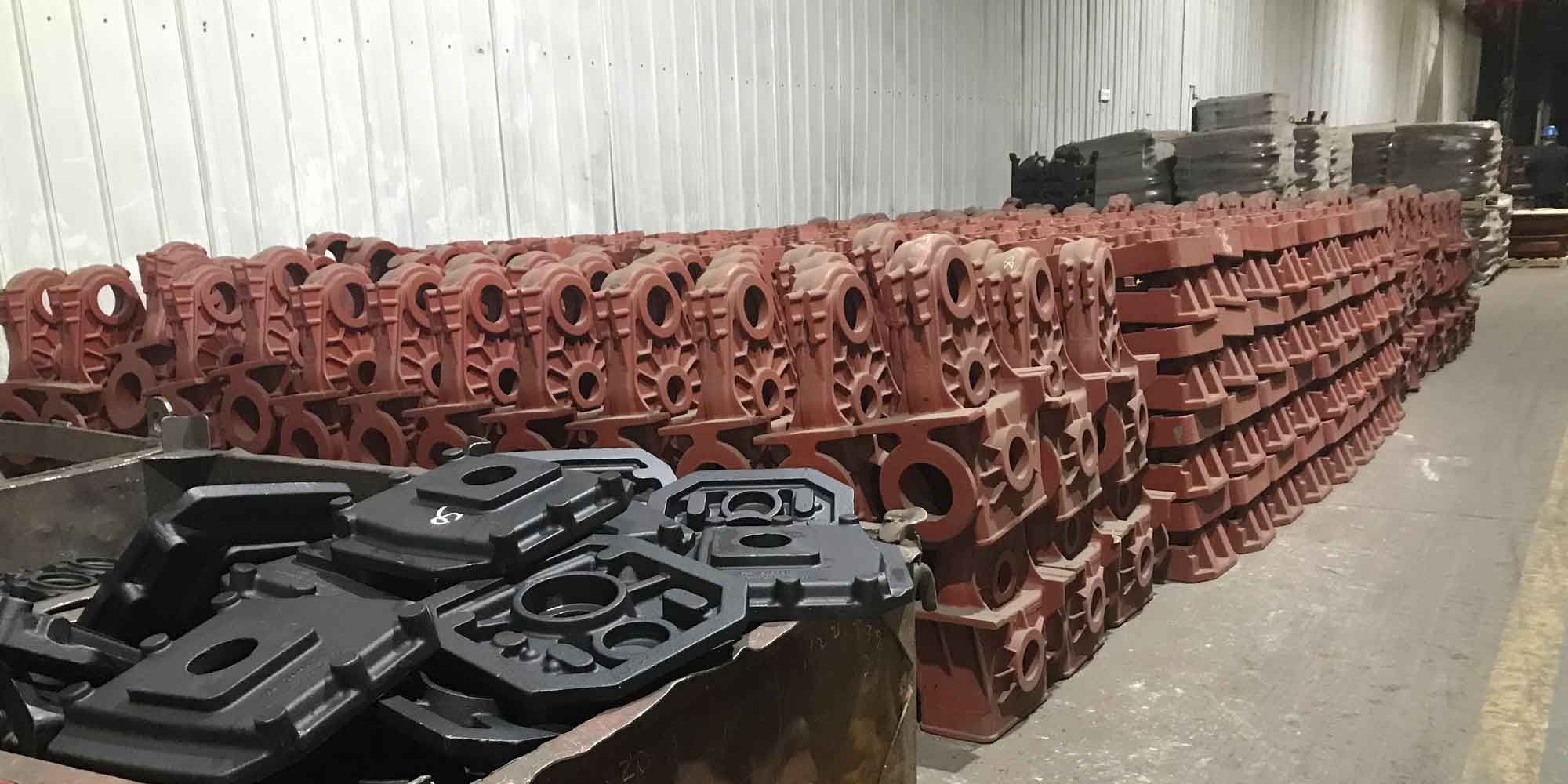
The manufacturing quality of steel castings is heavily influenced by process parameters, and a comparative analysis between domestic and imported CB2 steel castings reveals both similarities and differences. In terms of chemical composition, as summarized in Table 2, both types generally adhere to specified ranges, but domestic castings sometimes show higher variability in Mn, Ni, and N contents. This can affect the N/B ratio, which is crucial for avoiding BN inclusions that reduce effective B content and weaken creep strength. The relationship between N and B can be modeled to optimize their concentrations:
$$\text{Optimal N/B ratio} = k \cdot \sqrt{\frac{T}{t}}$$
where $k$ is a material constant, $T$ is temperature, and $t$ is time. Controlling this ratio is essential in steel casting production to maximize the benefits of boron addition.
| Element | Domestic Average (%) | Imported Average (%) | Acceptable Range (%) |
|---|---|---|---|
| Cr | 9.10 | 9.12 | 8.5-9.5 |
| Mo | 1.72 | 1.74 | 1.5-1.9 |
| Co | 0.95 | 0.98 | 0.8-1.2 |
| B | 0.0013 | 0.0012 | 0.001-0.002 |
| N | 0.018 | 0.015 | 0.010-0.020 |
| Mn | 0.85 | 0.79 | ≤0.90 |
| Ni | 0.20 | 0.16 | ≤0.30 |
Mechanical properties of CB2 steel castings, including tensile strength, yield strength, and impact toughness, are comparable between domestic and imported products, as shown in Table 3. At room temperature, tensile strength typically exceeds 700 MPa, with yield strength around 550 MPa, while elongation values are above 15%. However, impact toughness can vary, often ranging from 30 J to 80 J, influenced by factors like grain size and inclusion content. The high-temperature performance is a key advantage, with creep rupture strength at 620°C for 105 hours estimated at 85 MPa, surpassing earlier grades like GX12CrMoWVNbN10-1-1. This can be expressed using Larson-Miller parameter (LMP) models for creep life prediction:
$$\text{LMP} = T \cdot (\log t + C)$$
where $T$ is absolute temperature, $t$ is time to rupture, and $C$ is a constant (typically 20 for such steels). For CB2 steel castings, the LMP curve indicates superior stability under stress at elevated temperatures, making them ideal for turbine components.
| Property | Domestic Average | Imported Average | Typical Requirement |
|---|---|---|---|
| Tensile Strength (MPa) | 720 | 715 | ≥650 |
| Yield Strength (MPa) | 560 | 555 | ≥450 |
| Elongation (%) | 18 | 19 | ≥15 |
| Impact Energy (J) | 45 | 50 | ≥27 |
| Hardness (HBW) | 220 | 215 | 180-250 |
Microstructural analysis reveals that both domestic and imported CB2 steel castings exhibit tempered martensite, but differences exist in grain size, δ-ferrite content, and non-metallic inclusions. Domestic castings often show finer grain sizes (ASTM 10-12) compared to imported ones (ASTM 8-10), which can influence creep resistance, as coarser grains may enhance high-temperature strength by reducing grain boundary area. The volume fraction of δ-ferrite, a phase that can degrade properties, is typically lower in imported castings due to better control of Cr equivalent, calculated as:
$$\text{Cr}_{eq} = \%\text{Cr} + 6\%\text{Si} + 4\%\text{Mo} + 1.5\%\text{W} + 11\%\text{V} + 5\%\text{Nb} – 40\%\text{C} – 2\%\text{Mn} – 4\%\text{Ni} – 2\%\text{Co} + 30\%\text{N}$$
Maintaining a low Creq minimizes δ-ferrite formation, a critical aspect in steel casting quality. Non-metallic inclusions, such as oxides, sulfides, and nitrides, are more prevalent in domestic castings, with sizes up to 50 μm, whereas imported products show finer and fewer inclusions. This disparity stems from variations in melting practices, such as deoxidation efficiency and slag control, highlighting the importance of process optimization in steel casting manufacture.
The heat treatment of CB2 steel castings is a decisive factor in achieving the desired microstructure. Normalization at 1100-1130°C followed by air cooling produces a fully martensitic structure, which is then tempered at 730-750°C to relieve stresses and enhance toughness. The kinetics of phase transformations during heat treatment can be described using Avrami equations:
$$f = 1 – \exp(-k t^n)$$
where $f$ is the transformed fraction, $k$ is a rate constant, $t$ is time, and $n$ is the Avrami exponent. For martensite formation in steel castings, rapid cooling is essential to avoid pearlite or bainite formation, ensuring high strength. Post-weld heat treatment for repair welds involves similar tempering cycles to restore properties, emphasizing the need for stringent thermal management in steel casting fabrication.
Long-term performance of CB2 steel castings under service conditions depends on microstructural stability. During exposure at 620°C, precipitates like M23C6 and MX evolve, with coarsening rates governed by Ostwald ripening:
$$r^3 – r_0^3 = K t$$
where $r$ is the average precipitate radius, $r_0$ is the initial radius, $K$ is a temperature-dependent constant, and $t$ is time. The addition of B retards coarsening of M23C6, thereby preserving dislocation pinning and enhancing creep life. This underscores the alloy design rationale for CB2 steel castings, where synergistic effects of multiple elements yield superior high-temperature capabilities.
In conclusion, CB2 steel castings are pivotal for 620°C high-efficiency USC power units, offering enhanced creep resistance and mechanical properties. The manufacturing process, from casting design to heat treatment, requires meticulous control to ensure quality. While domestic and imported steel castings show comparable chemical and mechanical profiles, areas like inclusion control, δ-ferrite suppression, and grain size management need attention in domestic production. Future efforts should focus on standardizing specifications for steel castings, incorporating advanced melting techniques, and optimizing heat treatment protocols to bridge gaps. This analysis provides a foundation for quality assessment and technical guidance in the procurement and application of CB2 steel castings, reinforcing their role in advancing power generation technology.