
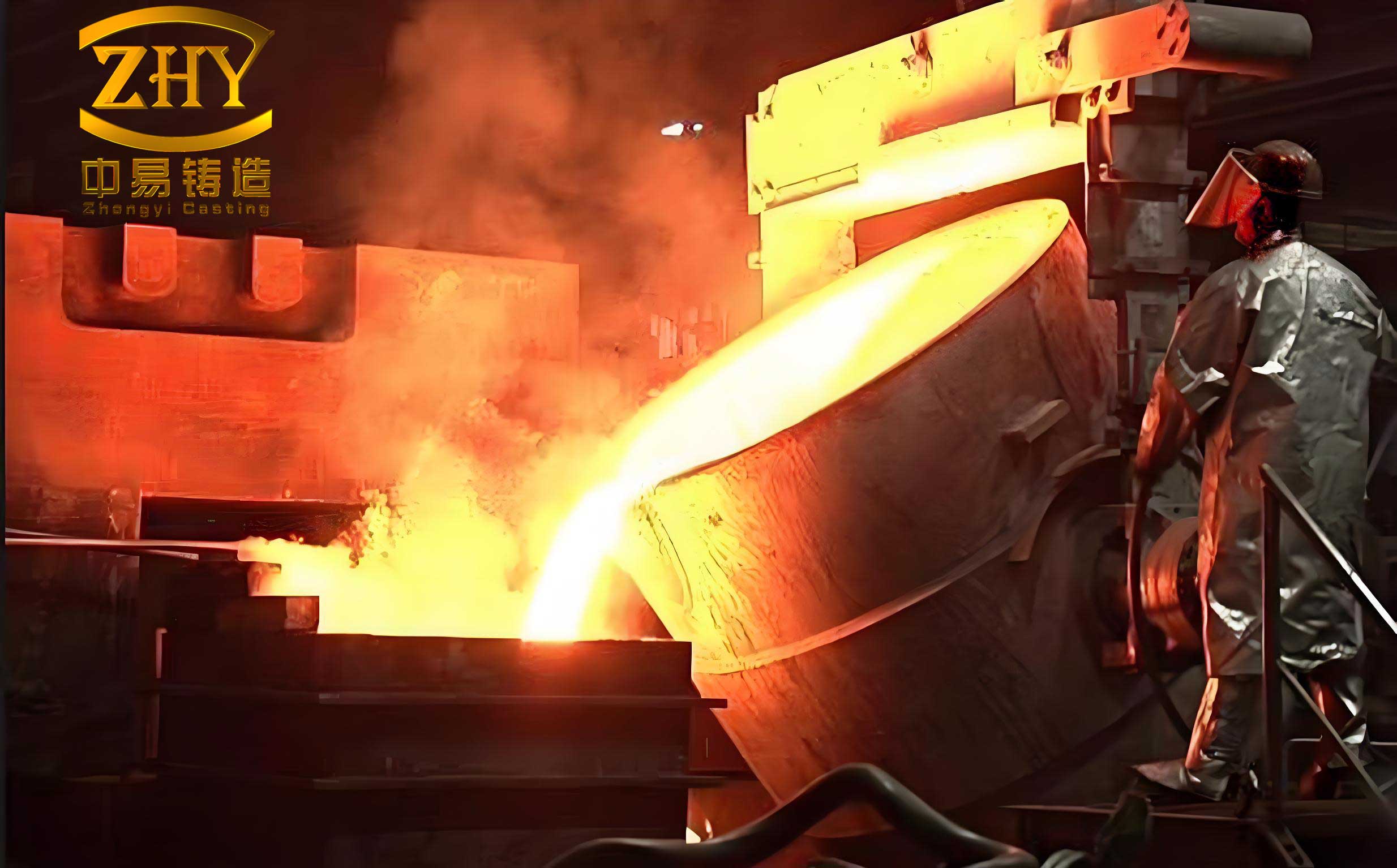
In my extensive involvement with manganese steel casting foundry operations, I have consistently observed that the production of high manganese steel cones, such as concave and mantle components for cone crushers, presents significant challenges. These components are critical in industries like highway construction, where they process hard rocks like granite and basalt. However, premature failures, including cracking, severe wear, and catastrophic fractures, often plague these castings, leading to costly downtime and reduced operational efficiency. This article delves into the root causes of these failures, drawing from direct investigations and analyses within a typical manganese steel casting foundry environment. I will explore the multifaceted issues—ranging from chemical composition deviations and microstructural anomalies to casting defects—and propose actionable solutions. Throughout, I emphasize that robust quality management, strict adherence to process protocols, and enhanced on-site controls are indispensable for stabilizing and improving product quality in any manganese steel casting foundry. To visualize the context, consider the following image that highlights high manganese steel castings in action:
The performance of high manganese steel cones hinges on their ability to undergo work-hardening under impact, friction, and compression during service. This process forms a hard, wear-resistant surface while maintaining a tough, ductile core. The interplay of strength, hardness, and toughness dictates durability, and these properties are intrinsically linked to the material’s chemical makeup, microstructure, and casting integrity. In many manganese steel casting foundry settings, lapses in these areas lead to premature failures. Below, I outline common failure modes, analyze their origins, and present data-driven insights using tables and formulas to underscore key points. My goal is to provide a comprehensive resource for practitioners in the manganese steel casting foundry industry, fostering a deeper understanding of how to mitigate these issues and extend component lifespan.
Common Failure Modes of High Manganese Steel Cones
Based on my observations, failures in high manganese steel cones manifest in several distinct patterns, each indicative of underlying process deficiencies. These modes are not isolated but often interrelated, stemming from systemic problems in the manganese steel casting foundry workflow. To encapsulate these, I present a summary table that categorizes the failures, their characteristics, and typical service life reduction.
| Failure Mode | Description | Observed Service Life Reduction | Likely Primary Cause |
|---|---|---|---|
| Complete Circumferential Cracking | The cone fractures along its entire circumference, often with detachment of lifting lugs, leading to sudden breakdown. | Less than 1/3 of expected life | Excessive carbon content or impurity segregation |
| End Cracking | Longitudinal cracks develop at the base, sometimes intersecting with transverse cracks, compromising structural integrity. | Around 50% of expected life | Poor cleaning practices or thermal stresses during welding |
| Cracking Near Riser | Penetrating cracks appear in thick sections adjacent to risers, despite sufficient wall thickness. | Variable, often early failure | Microstructural defects like shrinkage or impurity concentration |
| Severe Overall Wear | Uniform or localized excessive wear, with deep grooves or凹陷, without significant cracking. | Significantly below normal benchmarks | Inadequate carbon and chromium levels or poor work-hardening capability |
These failure modes highlight the critical need for precision in every stage of the manganese steel casting foundry process. For instance, complete circumferential cracking often traces back to metallurgical inconsistencies, while end cracking may arise from post-casting operations. In the following sections, I dissect the technical reasons behind these failures, emphasizing how a manganese steel casting foundry can address them through systematic improvements.
Root Cause Analysis: Chemical Composition Deviations
Chemical composition is the cornerstone of high manganese steel performance. In the manganese steel casting foundry I studied, common grades like Mn13Cr2 and Mn18Cr2 were produced using medium-frequency induction furnaces. However, erratic material sourcing and lax control led to severe composition flaws. The table below outlines the target ranges versus observed deviations and their impacts.
| Element | Target Range (Mn13Cr2 Example) | Observed Deviation | Consequence on Cone Performance |
|---|---|---|---|
| Carbon (C) | 1.2–1.3% (for large cones) | Up to 1.48% | Increased brittleness, risk of cracking under impact |
| Phosphorus (P) | ≤ 0.06% (per GB/T 5680-2010) | Exceeded 0.09% in some cases | Formation of brittle phosphide eutectics, reducing toughness |
| Tin (Sn) | Not intended (impurity) | Over 0.1% due to contaminated scrap | Low-melting phases causing embrittlement in riser zones |
| Chromium (Cr) | ~2% for enhanced strength | As low as 0.61% | Reduced yield strength and work-hardening capacity |
| Rare Earth (RE) | Trace amounts (e.g., 0.2 kg/100 kg steel) | Over-addition up to 2 kg/100 kg steel | Excessive inclusions and grain boundary embrittlement |
The impact of these deviations is profound. For example, phosphorus is a notorious detrimental element in high manganese steel. Its low solubility in austenite leads to segregation at grain boundaries, forming brittle eutectics that serve as crack initiation sites. The relationship between cone crusher life (T in hours) and composition can be expressed as:
$$T = 507.5 – 340 \times C\% + 28 \times Mn\% – 121 \times Si\% – 2200 \times P\%$$
This formula, derived from empirical studies in the manganese steel casting foundry context, quantifies the severe penalty of phosphorus: each 0.01% increase in P reduces life by approximately 22 hours, underscoring the need for stringent control. Similarly, carbon excess elevates hardness but compromises ductility, while chromium deficiency undermines wear resistance. The inadvertent inclusion of tin, from misidentified scrap, introduces low-melting phases that segregate to thermal centers like risers, promoting cracking. These issues stem from inadequate scrap sorting, inconsistent charge calculations, and poor melt practice in the manganese steel casting foundry—all of which are manageable with disciplined protocols.
Microstructural and Casting Defects: A Detailed Examination
Beyond chemistry, the internal quality of castings determines their service behavior. In the manganese steel casting foundry, defects like shrinkage porosity, gas holes, inclusions, and coarse grains were prevalent in failed cones. These defects act as stress concentrators, accelerating wear and crack propagation. I categorize them below with their origins and effects.
| Defect Type | Typical Location | Causes in Manganese Steel Casting Foundry | Impact on Cone Integrity |
|---|---|---|---|
| Shrinkage Porosity | Riser roots, thick sections, working surfaces | Inadequate riser design, low pouring temperature, poor feeding | Reduces load-bearing area, initiates cracks under cyclic loading |
| Gas Holes and Inclusions | Randomly distributed, often in fracture surfaces | Unclean charge materials, insufficient deoxidation, un-baked ladles | Lowers impact toughness, creates weak points for failure |
| Coarse Austenite Grains | Throughout matrix, especially in slow-cooling zones | High pouring temperatures, lack of grain refiners, improper heat treatment | Decreases toughness and work-hardening response | Carbide Precipitation | Grain boundaries and within grains | Suboptimal solution heat treatment (water toughening) | Embrittles material, reducing resistance to impact fatigue |
To quantify the effect of defects, consider the stress concentration factor (Kt) associated with a pore or inclusion, which can be approximated for spherical defects as:
$$K_t \approx 1 + 2\sqrt{\frac{a}{\rho}}$$
where ‘a’ is the defect size and ‘ρ’ is the radius of curvature. In high manganese steel cones, defects often exceed critical sizes, leading to localized stress peaks that exceed the material’s fatigue limit. Moreover, coarse grains diminish toughness; the Hall-Petch relationship highlights how yield strength (σy) relates to grain size (d):
$$\sigma_y = \sigma_0 + k_y d^{-1/2}$$
Here, σ0 and ky are constants. Larger grains (higher d) reduce σy, making the cone more prone to deformation and wear. In the manganese steel casting foundry, these defects arise from poor melt handling—such as using contaminated scrap without pre-cleaning, inadequate slag cover, or rushed pouring—and from negligent heat treatment practices. For instance, water toughening must rapidly cool the steel from solution temperature to retain a homogeneous austenite matrix; delays or high water temperatures result in carbide re-precipitation, as seen in many failed cones.
Heat Treatment and Post-Casting Processes: Critical Oversights
Heat treatment, specifically water toughening, is vital for achieving the desired austenitic structure in high manganese steel. In the manganese steel casting foundry, inconsistencies here directly contributed to failures. The process involves heating to 1050–1100°C, holding to dissolve carbides, then quenching in water. Key parameters include heating rate, soaking time, and quenching speed. Deviations lead to retained carbides or coarse grains. I outline optimal versus problematic practices below.
| Process Parameter | Optimal Condition | Common Lapses in Manganese Steel Casting Foundry | Resultant Microstructural Flaw |
|---|---|---|---|
| Solution Temperature | 1050–1100°C, depending on section size | Overheating or underheating due to uncalibrated furnaces | Excessive grain growth or undissolved carbides |
| Quenching Delay | Under 45 seconds from furnace to water | Delays up to several minutes due to logistical issues | Carbide precipitation along grain boundaries |
| Water Temperature | Below 30°C before quenching, below 60°C after | Inadequate cooling systems, water reuse without temperature control | Reduced cooling rate, leading to partial transformation |
| Post-Casting Cleaning | Controlled cutting and welding with pre/post-heat | Unregulated oxy-fuel cutting, use of non-matching electrodes | Heat-affected zone cracks, stress concentrations |
The kinetics of carbide dissolution can be described by the Arrhenius equation, where the rate constant k depends on temperature T:
$$k = A e^{-E_a/(RT)}$$
Here, A is a pre-exponential factor, Ea is activation energy, and R is the gas constant. Insufficient soaking time or low temperature reduces k, leaving carbides undissolved. Additionally, post-casting operations like riser removal and weld repair, if done haphazardly, introduce thermal stresses. For example, welding without proper preheat can form hard martensitic zones in the heat-affected area, promoting crack initiation. In the manganese steel casting foundry I assessed, such practices were routine, exacerbating failure risks.
Proposed Solutions and Quality Management Framework
Addressing these failures requires a holistic approach centered on rigorous quality control. For any manganese steel casting foundry, implementing the following measures can dramatically improve cone durability. I present these in a structured table, linking each solution to specific failure causes.
| Area of Improvement | Specific Actions | Expected Outcome | Key Performance Indicator (KPI) |
|---|---|---|---|
| Chemical Composition Control | Implement spectrometric analysis for all charge materials; establish strict scrap segregation; use computerized charge calculations; perform ladle analysis for every heat. | Consistent composition within narrow bounds, minimizing P, Sn, and C outliers. | Percentage of heats meeting specs (target >99%) |
| Melting and Pouring Practices | Enforce slag cover during melting; pre-clean all scrap; use calibrated deoxidation (Al addition); preheat ladles to 800°C; control pouring temperature via pyrometers. | Reduced gas and inclusion content; improved fluidity and feeding. | Inclusion count per unit area (ASTM E45) |
| Gating and Riser Design | Employ simulation software to optimize riser placement and size; use chills or metallic molds for faster solidification; ensure proper gating ratios. | Minimized shrinkage porosity; denser castings. | Reduction in scrap rate due to shrinkage (target <5%) |
| Heat Treatment Precision | Automate furnace controls with temperature profiling; install quick-transfer systems for quenching; monitor water temperature with chillers. | Fully austenitic matrix with fine grains; absence of grain boundary carbides. | Hardness uniformity (target 200-220 HB as-cast) and microstructural rating |
| Post-Casting Operations | Train staff in controlled cutting and welding; use matching high manganese steel electrodes; apply preheat and post-weld heat treatment; implement NDT for crack detection. | Elimination of repair-induced defects; enhanced surface integrity. | Weld repair rejection rate (target <2%) |
| Quality Management Systems | Adopt ISO 9001 or TS 16949 frameworks; conduct regular audits; foster a quality culture with incentives; document all process deviations. | Sustainable improvement in overall product reliability and customer satisfaction. | Overall equipment effectiveness (OEE) and mean time between failures (MTBF) |
These solutions are grounded in fundamental principles. For instance, the use of chills enhances solidification rate, reducing grain size. The effect can be modeled using the Chvorinov’s rule for solidification time (t):
$$t = B \left( \frac{V}{A} \right)^2$$
where V is volume, A is surface area, and B is a mold constant. By increasing A through chills, t decreases, yielding finer grains. Additionally, statistical process control (SPC) can monitor composition trends; control charts for carbon and phosphorus, with upper and lower limits, help detect drifts early. In the manganese steel casting foundry context, investing in such systems pays dividends through longer cone life and reduced warranty claims.
Conclusion: Toward Excellence in Manganese Steel Casting Foundry Operations
Through this analysis, I have highlighted that the premature failure of high manganese steel cones is rarely due to insurmountable technical barriers but rather to manageable lapses in process control and quality awareness. Each failure mode—from complete cracking to severe wear—traces back to identifiable issues in chemistry, microstructure, or casting practice. The manganese steel casting foundry must prioritize precision at every step: from scrap selection and melting to heat treatment and finishing. By embracing data-driven methods, such as the formulas and tables presented here, foundries can quantify risks and optimize processes. For example, adhering to the life prediction formula encourages tighter phosphorus control, while microstructural models guide heat treatment settings. Ultimately, success hinges on cultivating a culture where quality is ingrained, procedures are strictly followed, and continuous improvement is pursued. In doing so, the manganese steel casting foundry not only enhances cone durability but also strengthens its competitiveness in the demanding market for wear-resistant castings. Remember, the journey toward reliability starts with a commitment to excellence in every cast component.