
In my extensive experience in equipment management and maintenance, I have encountered numerous cases where shell castings, particularly those made from aluminum alloys, are critical components in various industrial systems. These shell castings often serve as housings for filters, pumps, and other machinery, where structural integrity and leak-tightness are paramount. However, leakage issues in such shell castings can lead to operational failures, safety hazards, and increased maintenance costs. This article delves into a detailed investigation of leakage problems in aluminum alloy shell castings, drawing from a specific case study to provide insights into detection methods, root cause analysis, and preventive measures. The focus will be on the pervasive issue of porosity defects, which are common in shell castings, and how process optimization can mitigate these defects. Throughout this discussion, I will emphasize the importance of rigorous quality control in the production of shell castings, using tables and formulas to summarize key concepts and data. The ultimate goal is to enhance the reliability and performance of shell castings in demanding applications.
The shell casting in question is a multi-cylinder pump body classified as a Class II casting, fabricated using sand casting techniques with ZL105 aluminum alloy material in the T6 heat treatment state. Such shell castings are typically subjected to stringent technical requirements, including surface finishing via shot blasting to remove burrs and flash, and the absence of defects like cold shuts, cracks, shrinkage cavities, and penetrative imperfections. Internal defects such as porosity, inclusions, and micro-shrinkage must comply with standards like GB/T 9438—2013 for aluminum alloy castings. Despite these specifications, leakage was observed during service, prompting a comprehensive analysis. The leakage was traced to a junction between large and small cylindrical sections of the shell casting, a region prone to defects due to its geometry. This scenario underscores the challenges in manufacturing robust shell castings, where even minor process deviations can lead to significant failures.
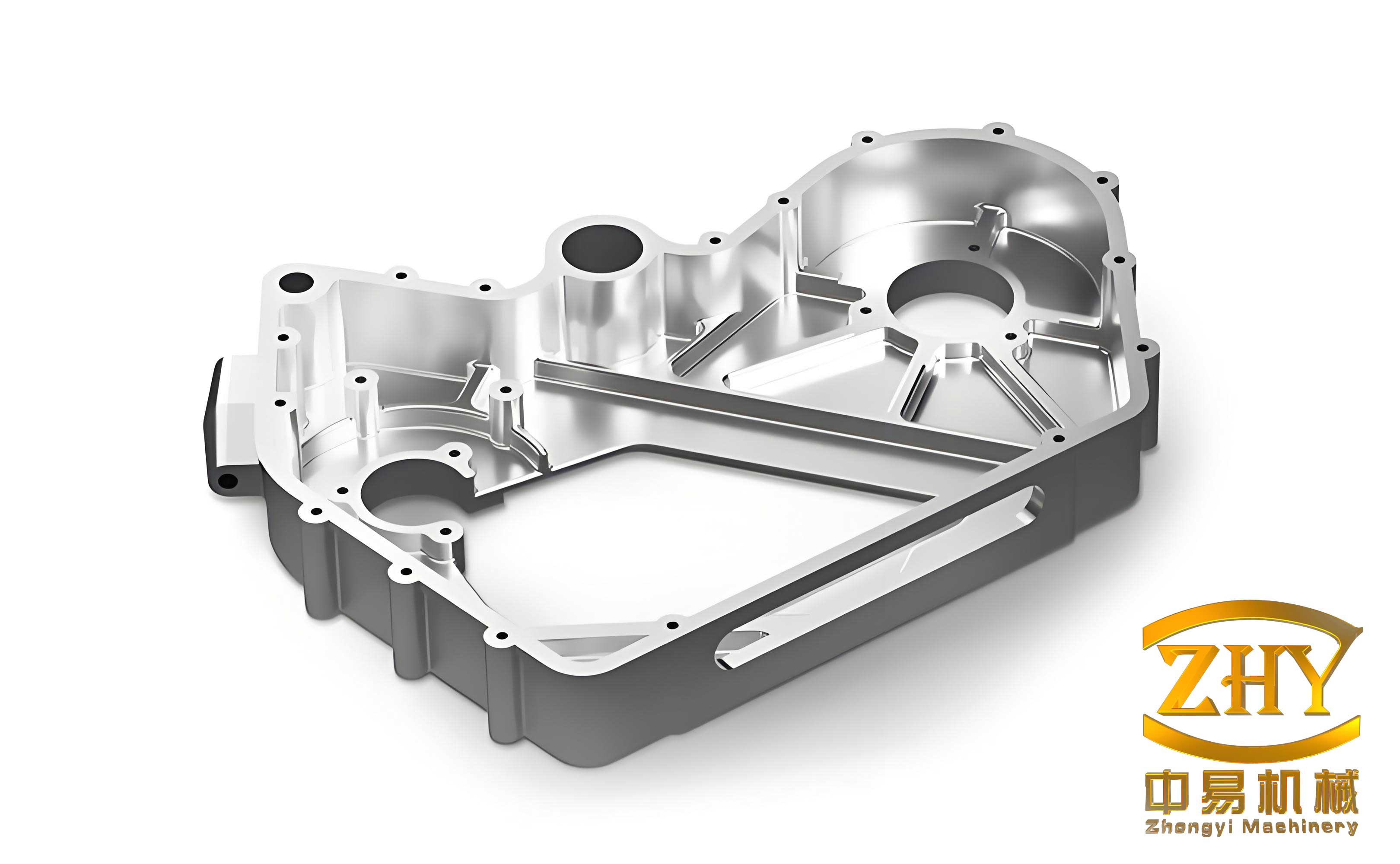
To systematically address the leakage, we conducted a series of non-destructive and destructive tests. First, a pressure test was performed by injecting compressed air at 0.90 MPa into the sealed shell casting and maintaining the pressure for 10 minutes. Soapy water was applied to the external surface to identify leakage points through bubble formation. The test revealed a single leakage site at the wall thickness transition zone, with a pressure drop of 0.05 MPa over the duration, indicating a slow but consistent leak. This initial finding directed further inspection efforts. Subsequently, the leakage area was sectioned for detailed examination. X-ray radiography was employed to assess internal defects, revealing porous regions approximately 30 mm × 30 mm in size near the leakage point. According to standard reference images, the porosity level was graded as Level 2, which meets the Class II casting requirements but still signifies a potential flaw. Dye penetrant inspection confirmed the presence of微小孔洞 on both inner and outer surfaces, leading to the conclusion that the defect was penetrative porosity. The results from these tests are summarized in Table 1, highlighting the multi-faceted approach needed to evaluate shell castings.
| Test Method | Procedure | Observation | Result |
|---|---|---|---|
| Pressure Test | 0.90 MPa air pressure, soapy water application | Bubbles at wall junction; pressure drop of 0.05 MPa | Single leakage point identified |
| X-ray Radiography | Sectioned sample imaging | Porous area ~30 mm × 30 mm; Level 2 porosity | Internal porosity conforms to standards but is penetrative |
| Dye Penetrant Inspection | Surface application of dye | Micro-pores on inner and outer surfaces | Penetrative porosity confirmed |
The leakage root cause was attributed to porosity defects, specifically macroscopic porosity arising from solidification shrinkage. In casting processes, molten metal is poured into a mold and solidifies under external forces. As the metal cools, the liquid near the mold walls solidifies first, while the central sections solidify later. Most metals, including aluminum alloys, undergo volumetric shrinkage during solidification, expressed mathematically as:
$$ \Delta V = V_0 \cdot \beta \cdot \Delta T $$
where \(\Delta V\) is the volume change, \(V_0\) is the initial volume, \(\beta\) is the coefficient of volumetric shrinkage, and \(\Delta T\) is the temperature change during solidification. If this shrinkage is not compensated by liquid metal feeding, it results in voids categorized as either concentrated shrinkage pores or dispersed porosity. In shell castings, regions with thicker walls, known as hot spots or thermal junctions, are particularly susceptible. The leakage site in our case was such a thermal junction, where slower cooling rates promote porosity formation. Porosity in shell castings can be classified into macroscopic porosity (visible to the naked eye) and microscopic porosity (requiring magnification), with the latter often stemming from dendrite formation during solidification. The interplay between cooling rate and porosity can be described using the Niyama criterion, a predictive model for shrinkage porosity:
$$ G / \sqrt{\dot{T}} \leq C $$
where \(G\) is the temperature gradient, \(\dot{T}\) is the cooling rate, and \(C\) is a material-dependent constant. Lower values of this ratio indicate a higher risk of porosity, emphasizing the need for controlled cooling in shell castings.
To mitigate porosity in shell castings, foundry practices often employ risers for feeding or chills to accelerate cooling. However, in complex shell castings with intricate internal geometries, such as narrow cavities, these methods may be impractical. Instead, heat dissipation fins are integrated into the design to enhance cooling at hot spots. These fins increase the surface area for heat transfer, promoting faster solidification of a surface shell that can support internal contraction and facilitate feeding under pressure differentials. The effectiveness of fins depends on their surface area \(A_f\) and the heat transfer coefficient \(h\), with the heat flux \(q\) given by:
$$ q = h \cdot A_f \cdot (T_m – T_a) $$
where \(T_m\) is the metal temperature and \(T_a\) is the ambient temperature. In our shell casting, fins were added to the internal cavity at the wall junction. However, a process issue emerged during the coating application on sand molds. To prevent sand inclusion and improve surface finish, coatings are applied to mold surfaces. For shell castings with thin fins, the narrow cavities can lead to coating accumulation, which may inhibit complete fin formation during pouring. This reduces the effective surface area \(A_f\), impairing heat dissipation and slowing cooling at the hot spot. Consequently, the localized cooling rate \(\dot{T}\) decreases, exacerbating porosity risk as per the Niyama criterion. The relationship between coating thickness \(d_c\) and fin effectiveness can be approximated by:
$$ A_{f,eff} = A_f \cdot (1 – \alpha \cdot d_c) $$
where \(\alpha\) is a reduction factor, and \(A_{f,eff}\) is the effective surface area. This highlights how minor process deviations in shell castings can have cascading effects on defect formation.
To validate this analysis, we replicated the issue through physical samples and simulation software, given the high cost and long lead times of full-scale shell castings. Two test samples, A and B, were produced using sand molds with fins. Sample A had a properly coated mold without accumulation, while Sample B intentionally had coating堆积 in the fin cavities. After pouring, X-ray inspection showed that Sample A had fully formed fins and no porosity, whereas Sample B exhibited残缺 fins and detectable porosity. This direct comparison underscores the critical role of coating control in shell castings. The results are summarized in Table 2, quantifying the impact on defect formation.
| Sample | Coating Condition | Fin Formation | Porosity Detected | Defect Level |
|---|---|---|---|---|
| A | Smooth, no accumulation | Complete | None | 0 |
| B | Accumulation in narrow cavities | Partial | Present | 2 |
Furthermore, casting simulation software was used to model the solidification process under both conditions. The software computed porosity distribution based on thermal parameters. For the case with well-formed fins (simulating Sample A), the simulation showed minimal porosity risk, with no red or yellow zones indicating defects. In contrast, for the case with incomplete fins (simulating Sample B), the output displayed significant porosity concentrations (yellow and red zones) precisely at the thermal junction. The simulation leveraged finite element analysis to solve the heat transfer equation during solidification:
$$ \rho c_p \frac{\partial T}{\partial t} = \nabla \cdot (k \nabla T) + L \frac{\partial f_s}{\partial t} $$
where \(\rho\) is density, \(c_p\) is specific heat, \(k\) is thermal conductivity, \(L\) is latent heat, and \(f_s\) is solid fraction. The porosity formation was predicted using criteria like the Niyama model, reinforcing that coating-induced fin imperfections directly lead to penetrative porosity in shell castings. This dual approach of physical and virtual testing robustly confirms the root cause.
Beyond this specific case, the principles learned can be generalized to improve the quality of shell castings across industries. For instance, optimizing coating viscosity and application techniques can prevent accumulation in narrow cavities. Additionally, designing fins with adequate thickness and spacing can enhance manufacturability. The economic impact of such defects in shell castings is substantial, as leakage can cause system downtime and repair costs. Implementing statistical process control (SPC) for coating thickness, measured as \(d_c\), can reduce variability. A proposed control limit for shell castings might be:
$$ d_c \leq d_{max} = \frac{1 – \eta}{\alpha} $$
where \(\eta\) is a target effectiveness ratio for fins. Moreover, advanced non-destructive testing (NDT) methods, such as computed tomography (CT) scanning, can provide 3D visualization of internal defects in shell castings, enabling proactive quality assurance. In summary, the leakage in aluminum alloy shell castings was traced to penetrative porosity at a thermal junction, exacerbated by coating accumulation that impaired fin-based cooling. Through rigorous testing and simulation, we validated that process controls in coating application are crucial for defect prevention. This analysis not only resolves the immediate issue but also offers a framework for enhancing the reliability of shell castings in critical applications. Future work could explore alloy modifications or alternative cooling methods to further optimize shell castings performance.
Reflecting on this investigation, I emphasize that shell castings are integral to many engineering systems, and their failure modes often stem from subtle manufacturing nuances. By adopting a data-driven approach—combining empirical tests, theoretical models, and simulations—we can significantly uplift the quality standards for shell castings. The integration of formulas like the Niyama criterion and heat transfer equations provides a quantitative basis for process optimization, while tables summarize key findings for practical reference. As industries increasingly demand high-performance shell castings, continuous improvement in foundry practices will be essential to mitigate defects and ensure longevity. This case study serves as a testament to the importance of meticulous analysis in equipment management and maintenance, particularly for components as vital as shell castings.