
As a materials engineer specializing in automotive components, my focus is on the critical evaluation and enhancement of materials used in powertrain systems. The engine cylinder block, serving as the foundational structure housing the crankshaft, cylinders, and coolant passages, is subjected to a complex regime of thermal and mechanical stresses. For decades, grey iron casting has been the material of choice for this application, prized for its excellent castability, inherent damping capacity, machinability, and cost-effectiveness. The performance of this grey iron casting is intrinsically linked to its microstructure, which is predominantly governed by its chemical composition and solidification conditions. This article presents a detailed, first-person investigation into the influence of key compositional and processing parameters on the microstructure and resultant mechanical properties of alloyed grey iron casting for cylinder blocks, expanding upon foundational studies with extended variable analysis.
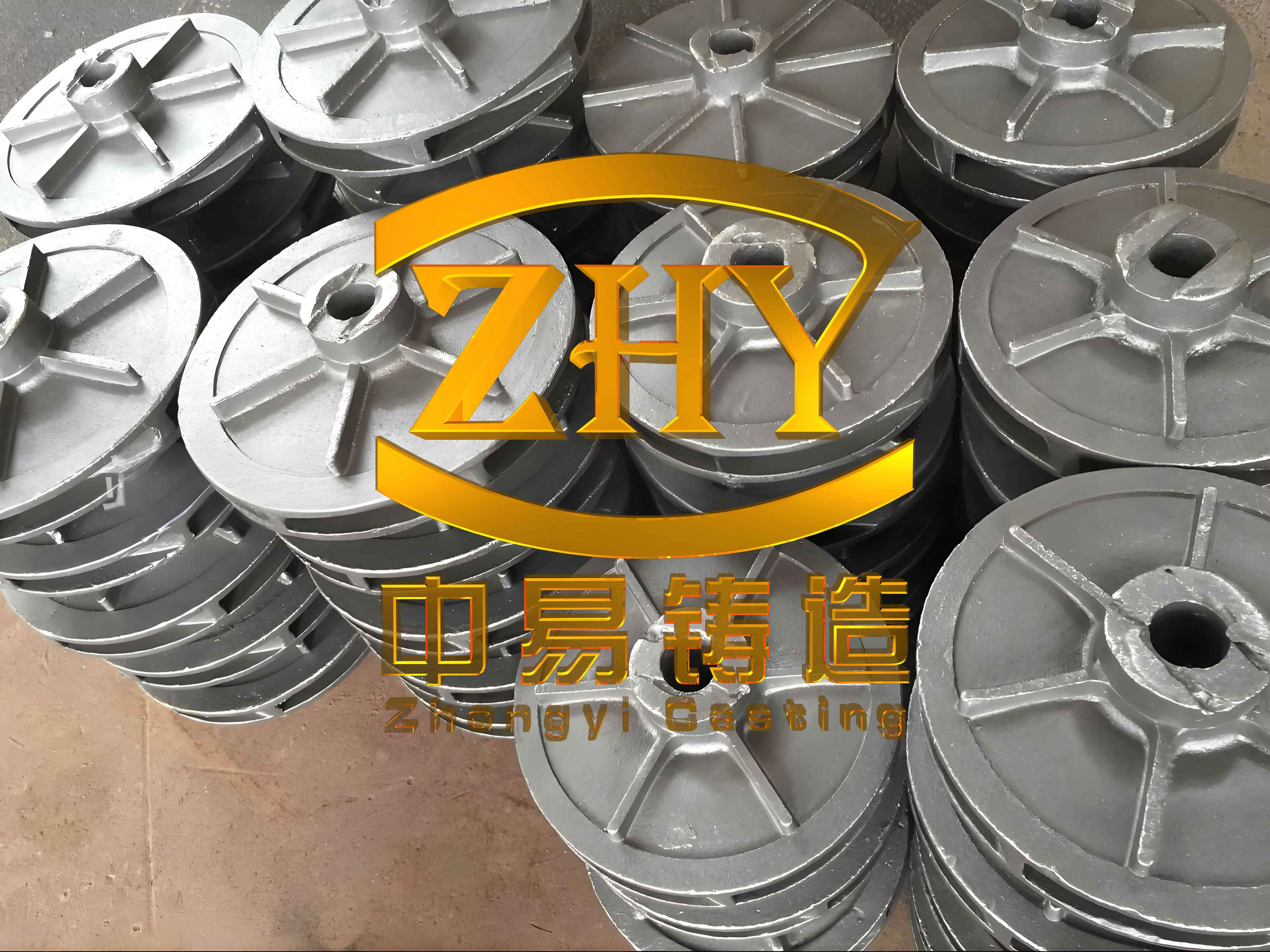
The fundamental characteristic of a grey iron casting is the presence of graphite flakes within a metallic matrix. These flakes, while providing good damping and thermal conductivity, act as internal stress concentrators and inherent voids. Therefore, the size, distribution, and morphology of these graphite flakes, coupled with the structure of the metal matrix (typically pearlitic, ferritic, or a mixture), dictate the overall strength, ductility, and wear resistance. Alloying elements such as Copper (Cu), Nickel (Ni), and Chromium (Cr) are frequently added to strengthen the matrix, promote pearlite formation, and enhance hardness. However, the balance of these elements with the foundational carbon (C) and silicon (Si) content—often expressed as Carbon Equivalent (CE)—is paramount. This study systematically explores this balance.
Experimental Design and Methodology for Grey Iron Casting
To thoroughly investigate the structure-property relationships, a designed experiment was executed. The base alloy system selected was a Ni-Cu-Cr alloyed grey iron, providing a robust starting point for high-performance applications. The experimental matrix was expanded beyond a single variable to understand interactions.
1. Melting and Sample Preparation:
All heats were prepared using a medium-frequency induction furnace. Precise quantities of high-purity pig iron, steel scrap, and proprietary carburizer were charged to achieve the target chemistries. Alloying elements were added as pure metals or master alloys during the melt. The molten metal was superheated to 1520°C, held for homogenization, and then tapped at 1500°C. A post-inoculation treatment was consistently applied using a ferrosilicon-based inoculant to ensure controlled graphite nucleation. The metal was poured into standard keel-block sand molds to produce castings for tensile testing (per ASTM A48) and separately into stepped-cone molds for microstructural analysis across different cooling rates.
2. Chemical Composition Matrix:
The primary variable was carbon content, as it most directly influences graphite formation. Secondary variables of silicon and chromium were also adjusted to observe their effect on matrix structure and hardenability. The detailed compositional matrix for the eight distinct grey iron casting conditions studied is presented in Table 1.
| Sample ID | C | Si | Mn | Cu | Ni | Cr | CE* |
|---|---|---|---|---|---|---|---|
| G1 | 2.45 | 1.95 | 1.01 | 6.25 | 13.25 | 1.86 | 3.16 |
| G2 | 2.55 | 1.95 | 1.01 | 6.25 | 13.25 | 1.86 | 3.26 |
| G3 | 2.65 | 1.95 | 1.01 | 6.25 | 13.25 | 1.86 | 3.36 |
| G4 | 2.75 | 1.95 | 1.01 | 6.25 | 13.25 | 1.86 | 3.46 |
| G5 | 2.65 | 2.25 | 1.01 | 6.25 | 13.25 | 1.86 | 3.51 |
| G6 | 2.65 | 1.65 | 1.01 | 6.25 | 13.25 | 1.86 | 3.26 |
| G7 | 2.65 | 1.95 | 1.01 | 6.25 | 13.25 | 2.30 | 3.36 |
| G8 | 2.65 | 1.95 | 1.01 | 6.25 | 13.25 | 1.40 | 3.36 |
* Carbon Equivalent calculated as: CE = %C + 0.33(%Si) + 0.33(%P) – 0.027(%Mn). For simplicity, P is assumed constant at 0.05%.
3. Heat Treatment:
A subset of samples from condition G3 was subjected to a stress-relief annealing heat treatment to evaluate its impact on dimensional stability and mechanical properties. The cycle involved heating to 550°C, holding for 2 hours, and furnace cooling.
4. Microstructural and Mechanical Characterization:
Samples for metallography were sectioned, mounted, ground, polished, and etched with 2% Nital. Quantitative image analysis was performed to determine graphite nodule count, flake length, and inter-flake spacing. The matrix was examined for pearlite colony size and the presence of carbides. Mechanical testing included tensile tests on machined specimens, Brinell hardness measurements, and calculated modulus of elasticity from stress-strain curves.
Results and Analysis: Interplay of Composition and Structure in Grey Iron Casting
The investigation yielded clear correlations between the chemistry of the grey iron casting, its resulting microstructure, and its macroscopic properties.
1. Influence of Carbon Content on Graphite Morphology
Consistent with established theory, carbon is the primary graphitizing element. In the series G1-G4, with increasing carbon from 2.45 wt.% to 2.75 wt.%, a systematic evolution in graphite structure was observed. The higher carbon content provides a greater driving force for graphite precipitation and growth. Quantitative analysis revealed the following trends, which can be summarized by an empirical relationship for the mean graphite flake length (L, in μm):
$$L = k_1 \cdot (\%C)^2 + k_2$$
where \(k_1\) and \(k_2\) are constants dependent on inoculation efficiency and cooling rate. For our conditions, the data fit yielded:
$$L \approx 125 \cdot (\%C)^2 – 580 \cdot (\%C) + 680$$
Simultaneously, the number of graphite flakes per unit area (N, in mm⁻²) decreased, and the average inter-flake spacing (λ, in μm) narrowed. The spacing can be approximated as inversely proportional to the square root of the flake count:
$$\lambda \propto \frac{1}{\sqrt{N}}$$
This microstructural refinement directly impacts the load-bearing cross-section of the metallic matrix.
2. Effect of Silicon and Chromium on Matrix Structure
Silicon, a strong graphitizer, also strengthens the ferrite phase. Comparing samples G3, G5, and G6, increasing silicon coarsened the graphite slightly but promoted a finer pearlitic structure in the matrix due to its effect on shifting the eutectoid point. Chromium, a potent carbide stabilizer, was varied in samples G3, G7, and G8. Higher chromium content (G7) led to the formation of small, dispersed chromium carbides within the pearlite matrix, significantly increasing hardness but potentially reducing thermal conductivity and machinability of the grey iron casting.
3. Comprehensive Mechanical Property Analysis
The tensile strength, hardness, and estimated damping capacity for key conditions are consolidated in Table 2. The strength of a grey iron casting is often modeled as a function of the graphite parameters and matrix strength.
| Sample ID | Tensile Strength (MPa) | Yield Strength (0.2% Offset, MPa) | Brinell Hardness (HBW) | Modulus of Elasticity (GPa) | Estimated Damping Capacity* |
|---|---|---|---|---|---|
| G1 (2.45C) | 237 | 205 | 217 | 118 | Medium-High |
| G2 (2.55C) | 215 | 188 | 205 | 115 | High |
| G3 (2.65C) | 198 | 172 | 195 | 112 | High |
| G4 (2.75C) | 185 | 160 | 183 | 108 | Very High |
| G5 (High Si) | 205 | 180 | 210 | 110 | High |
| G7 (High Cr) | 225 | 198 | 245 | 120 | Medium |
| G3 (Annealed) | 180 | 155 | 170 | 105 | Very High |
*Damping capacity is qualitatively estimated based on graphite volume and morphology.
The data confirms the dominant effect of carbon. The tensile strength (σᵤ) shows a near-linear decline with increasing carbon equivalent in this range. A linear regression of the G1-G4 data provides a predictive equation:
$$σ_u \approx -340 \cdot (CE) + 1310 \quad \text{(for CE between 3.16 and 3.46)}$$
This translates to a strength reduction of approximately 28-30 MPa per 0.1 wt.% increase in carbon content, aligning with the initial study’s findings.
The modulus of elasticity (E) also decreases with higher carbon/graphite content, as graphite has a much lower modulus than the iron matrix. This relationship can be described by a rule-of-mixtures model modified for the flake geometry:
$$E_{casting} = E_{matrix} \cdot (1 – V_g) \cdot \eta$$
where \(V_g\) is the volume fraction of graphite and \(\eta\) is a factor ( < 1) accounting for the stress-concentrating effect of flake morphology.
4. The Role of Heat Treatment
Stress-relief annealing of sample G3 resulted in the expected slight decrease in tensile strength and hardness, as seen in Table 2. This is due to the spheroidization of pearlite and relief of internal casting stresses. The primary benefit for a grey iron casting component like a cylinder block is improved dimensional stability during machining and in service, not strength enhancement. The process can be modeled as a thermal activation process where the reduction in yield strength (Δσ) is a function of time (t) and temperature (T):
$$\Delta \sigma \propto \exp\left(-\frac{Q}{RT}\right) \cdot \sqrt{t}$$
where Q is an activation energy and R is the gas constant.
Discussion: Optimizing Grey Iron Casting for Cylinder Block Performance
The selection of the optimal grey iron casting composition is a multi-objective optimization problem. The results clearly delineate the trade-offs:
- High Strength & Wear Resistance: Favored by lower carbon content (e.g., ~2.45-2.55 wt.% C) and the presence of chromium. This maximizes the metallic matrix fraction and introduces hardening carbides. The grey iron casting exhibits superior tensile strength and hardness, suitable for highly loaded or turbocharged engines.
- High Damping & Machinability: Favored by higher carbon equivalent (~2.65-2.75 wt.% C) and lower chromium. The increased, well-distributed graphite flakes improve vibration damping—critical for Noise, Vibration, and Harshness (NVH) performance—and facilitate easier machining. The corresponding reduction in tensile strength must be accounted for in design.
- Dimensional Stability: Mandates a stress-relief heat treatment, accepting a modest strength penalty for guaranteed precision in the final machined grey iron casting component.
The ideal composition must balance these factors against production economics (e.g., alloy cost, scrap rates). For modern high-performance diesel or high-output gasoline engines, a leaner alloy like G1 or a chromium-modified version like G7 might be specified. For mainstream applications prioritizing cost and NVH, a composition near G3 offers an excellent balance.
Conclusion
This comprehensive analysis underscores the profound and predictable influence of composition on the microstructure-property relationships in alloyed grey iron casting for engine blocks. Carbon content remains the foremost variable, dictating graphite morphology and linearly inversely affecting tensile strength within the studied range. Secondary elements like silicon and chromium provide crucial levers for fine-tuning the matrix structure, offering pathways to enhance strength through pearlite refinement or carbide formation. The performance of a grey iron casting is not defined by a single metric but by a tailored combination of strength, damping, thermal conductivity, and manufacturability. Therefore, the specification for a cylinder block grey iron casting must be a deliberate choice based on a clear hierarchy of engine performance requirements, ensuring the material’s inherent characteristics are aligned with the functional demands of the application for optimal reliability and efficiency.