
My analysis of the investment casting process reveals a significant, often overlooked environmental challenge: the generation of persistent and problematic odors. While widely lauded as a “green casting” technology compared to traditional sand casting methods due to its precision and minimal waste, the investment casting process is not entirely free from emissions. Particulate matter has historically been the primary focus of environmental controls, and with modern abatement technologies, this issue is largely managed. However, odor emissions have emerged as a critical concern, frequently leading to community complaints. To address this effectively, a comprehensive understanding of the odor sources within the investment casting process, their chemical nature, emission patterns, and viable treatment technologies is essential. This paper synthesizes findings from a detailed investigation into these aspects, providing a scientific basis for environmental management and process improvement.
The core of the investment casting process involves creating a ceramic shell around a wax pattern, which is then melted out (“dewaxed”) to leave a cavity for molten metal. The predominant shell-making systems in use are based on water-glass or silica sol binders. The standard process flow is as follows:
- Pattern Making: Injection of casting wax to form the expendable pattern.
- Shell Building: Successive dipping of the wax assembly into ceramic slurries and stuccos to build a robust shell.
- Dewaxing: Removal of the wax pattern from the ceramic shell, typically using steam or flash fire.
- Shell Firing (Calcining): High-temperature firing of the empty shell to burn out residual wax and develop shell strength.
- Metal Melting & Pouring.
- Knock-out & Descaling: Removal of the ceramic shell from the solidified casting.
- Finishing: Cutting, grinding, shot blasting, and inspection.
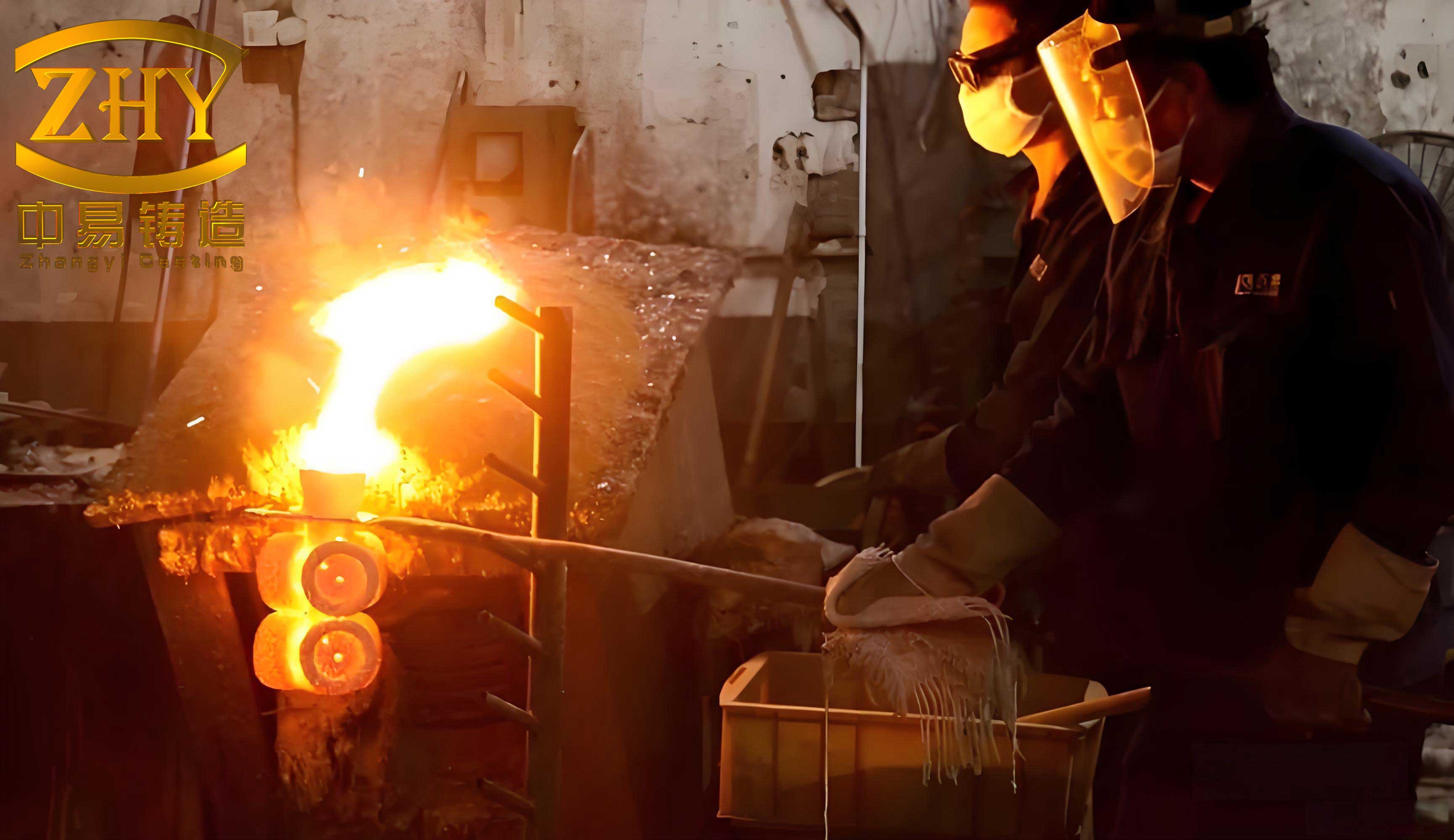
While national standards like China’s GB39726-2020 regulate pollutants such as particulates, SO2, NOx, and specific organic compounds from painting operations, they lack explicit limits for odorants or comprehensive non-methane organic emissions from core process steps like dewaxing and firing. This regulatory gap has contributed to the underestimation of the odor problem in the investment casting industry.
My investigation at a cluster of over 30 investment casting facilities identified the primary emission sources, as summarized in the table below. It becomes immediately clear that odor is intrinsically linked to the thermal treatment of the wax patterns.
| Process Step | Primary Emission Factors | Odor Intensity |
|---|---|---|
| Wax Pattern Injection | Particulates, Odor (wax fumes) | Low (diluted by high ventilation volume) |
| Shell Building | Dust | Negligible |
| Dewaxing (Steam Autoclave) | Particulates, Intense Odor (condensed wax/organics) | Very High (short, concentrated bursts) |
| Shell Firing/Calcining | Particulates, Very Intense Odor (pyrolysis & combustion products) | Extremely High (initial phase) |
| Metal Melting & Pouring | Particulates, fumes | Low (metallic/oxidic smell) |
| Knock-out, Cutting, Grinding | Dust, particulates | Negligible |
The root cause lies in the composition of investment casting waxes, typically blends of paraffin wax with polymer additives (e.g., EVA, PE, PP) to improve mechanical properties. During dewaxing (100-150°C) and the initial stage of shell firing (up to ~1100°C), these materials undergo melting, vaporization, and incomplete combustion. The resulting emissions are a complex mixture of: carbon black soot, aerosolized wax/resin oil mists, volatile and semi-volatile organic compounds (VOCs/SVOCs) from thermal decomposition, and complete combustion products like CO2 and H2O. The characteristic “waxy,” “burnt,” and “acrid” odors are attributable to the spectrum of organic pyrolysis products. The emission profile differs significantly between dewaxing and firing.
Dewaxing Emissions: In steam autoclave dewaxing, the shell is subjected to pressurized steam, melting and flushing out the bulk wax. The process is batch-based and closed. Upon completion, the pressure is released, and a large volume of steam, laden with emulsified/entrained wax droplets and volatilized organics, is vented in a short, intense burst (30-40 seconds). This results in a high instantaneous concentration of pollutants with a strong waxy odor. Measured data from a typical autoclave release is shown below:
| Parameter | Value | Notes |
|---|---|---|
| Autoclave Pressure at Release | 0.6 MPa | Conditions for a single burst. |
| Autoclave Volume | 4 m³ | |
| Vent Duration | 33 s | |
| Standard Flow Rate during Vent | ~2471 Nm³/h | |
| Vent Gas Temperature | 92 °C | Measured pollutant concentrations in the vent stream. |
| Non-Methane Hydrocarbons (NMHC) | 145 mg/m³ | |
| Odor Concentration | 4235 (dimensionless) | Very high odor level. |
Shell Firing Emissions: After dewaxing, a thin residue of wax remains on the inner shell surface. During the initial heating phase in the firing furnace, this residue rapidly volatilizes and undergoes incomplete combustion before the temperature is high enough for complete oxidation. This generates dense smoke containing soot, unburnt and partially cracked organic vapors, creating a very pungent, smoky odor. Emission testing at the furnace outlet reveals that the vast majority of pollutants are released in the first 15 minutes of the approximately 45-minute cycle.
| Time after Door Closure (min) | Gas Temperature (°C) | NMHC (mg/m³) | Odor Concentration |
|---|---|---|---|
| 2 | 245.7 | 4535 | 5215 |
| 5 | 366.4 | 5215 | 4230 |
| 10 | 132.8 | 4230 | 3365 |
| 15 | 36.24 | 3365 | 1603 |
| 30 | 29.12 | 1603 | 1427 |
| 40 | 18.16 | 1427 | – |
Average standard flow rate during sampling: 852 Nm³/h at 162°C.
The concentration decay can be modeled with an exponential decay function, where the emission rate $E(t)$ at time $t$ is:
$$ E(t) = E_0 \cdot e^{-kt} $$
where $E_0$ is the initial emission rate and $k$ is the decay constant specific to the furnace and wax loading. The high initial values confirm that shell firing is the most potent odor source in the investment casting process.
Odor Control Strategy and Performance Evaluation
Based on the emission characteristics, targeted abatement strategies were developed and tested for both dewaxing and firing emissions.
1. Dewaxing Steam Treatment: The initial approach was a simple water scrubber to condense steam and wash out entrained organics. Performance was suboptimal for two reasons: the short, high-velocity burst limited gas-liquid contact time, and the scrubber water quickly became saturated and warm (≈60°C), causing re-volatilization of collected organics. The removal efficiency for odor was low.
The solution involved adding a shell-and-tube condenser upstream of the scrubber. The condenser indirectly cools the steam burst, achieving two critical functions: it significantly reduces the gas volume and temperature (condensing a large portion of water vapor and high-molecular-weight organics), and it reduces the gas velocity. The cooled, lower-volume stream then enters the water scrubber for final polishing. The performance improvement is dramatic, as shown in the comparative data:
| Treatment System | Inlet Conditions | Outlet Conditions | |||||
|---|---|---|---|---|---|---|---|
| Flow (Nm³/h) | Temp. (°C) | NMHC (mg/m³) | Odor | Temp. (°C) | NMHC (mg/m³) | Odor | |
| Water Scrubber Only | 2561 | 95 | 156 | 4027 | 52 | 234* | 2865 |
| Condenser + Water Scrubber | 2432 | 90 | 142 | 3798 | 34 | 64.3 | 1089 |
*The apparent increase in NMHC for the scrubber-only case is attributed to the re-volatilization from warm scrubber water and concentration effects from water vapor removal.
The data indicates that the primary odor carriers in dewaxing steam are condensable wax/oil aerosols and heavier organics, which are effectively removed by the combined冷凝+洗涤 system.
2. Shell Firing Emissions Treatment: A water scrubber alone reduced particulate matter but was insufficient for odor control, as lighter, non-condensable VOCs passed through. Adding a wet electrostatic precipitator (WESP) downstream dramatically improved particulate and aerosol removal, which also significantly reduced the associated “smoky/burnt” odor component. However, significant concentrations of NMHC remained.
| Time (min) | Water Scrubber Outlet | Water Scrubber + WESP Outlet | ||||
|---|---|---|---|---|---|---|
| NMHC (mg/m³) | Odor | Temp. (°C) | NMHC (mg/m³) | Odor | Temp. (°C) | |
| 5 | 272 | 4746 | 215.2 | 236.8 | 2709 | 180.3 |
| 10 | 107.2 | 3675 | 148 | 122.4 | 2626 | 130.1 |
| 15 | 23.36 | 2532 | 38 | 16.88 | 2447 | 38.24 |
| 30 | 22.48 | 1272 | 29.8 | 15.42 | 1276 | 26.16 |
While the WESP greatly aids in removing odor-causing particulates, the residual NMHC (primarily lighter VOCs) still presents an odor issue. The need for a final polishing step is clear.
3. Advanced Treatment via Adsorption: Given the relatively low gas temperature (<40°C) after the scrubber and WESP, an activated carbon adsorption system was implemented as a final stage. A mesh demister was installed upstream to prevent moisture carryover. The fixed-bed carbon adsorber, with a filtering velocity of 0.5 m/s and a bed depth of 30 cm using carbon with an iodine value of 800 mg/g, demonstrated excellent performance in capturing the remaining VOCs and eliminating the final traces of odor.
| Sampling Time (min) | Carbon Bed Inlet NMHC (mg/m³) | Carbon Bed Inlet Odor | Carbon Bed Outlet NMHC (mg/m³) | Carbon Bed Outlet Odor |
|---|---|---|---|---|
| 5 | 304 | 2862 | 65.3 | 683 |
| 10 | 128.6 | 2732 | 32.6 | 606 |
| 15 | 36.5 | 2605 | 12.4 | 572 |
The adsorption process on activated carbon can be described by models like the Freundlich isotherm:
$$ q_e = K_F \cdot C_e^{1/n} $$
where $q_e$ is the amount adsorbed per mass of carbon (mg/g), $C_e$ is the equilibrium concentration in the gas phase (mg/m³), and $K_F$ and $n$ are constants. The system effectively drives $C_e$ in the outlet to very low levels, correspondingly reducing the odor concentration to near-ambient levels.
Conclusion and Scientific Basis for Management
This systematic investigation into the investment casting process provides a clear scientific and technical basis for odor management:
- Primary Odor Sources are Identified: The major odor emissions in the investment casting process originate from the thermal treatment of wax patterns, specifically the dewaxing and shell firing/calcining stages. The characteristic odors result from the pyrolysis and incomplete combustion of paraffin-polymer wax blends.
- Emission Profiles are Quantified: Dewaxing releases a short, high-concentration burst of steam laden with condensable organics. Shell firing produces its most intense smoke and odor during the initial 15-minute heating phase, with pollutant concentrations following an exponential decay.
- Effective Treatment Trains are Defined:
- For Dewaxing Steam: A combination of a shell-and-tube condenser (for volume/temperature reduction and primary condensation) followed by a water scrubber is highly effective. This addresses the condensable fraction responsible for the waxy odor.
- For Shell Firing Emissions: A multi-stage system is necessary. A water scrubber removes coarse particles and cools the gas. A wet electrostatic precipitator (WESP) is critical for removing sub-micron aerosols and soot, which carry a significant portion of the odor. Finally, an activated carbon adsorption bed polishes the stream by removing the remaining non-condensable VOCs, achieving comprehensive odor control.
The implementation of these tailored abatement strategies transforms the environmental profile of the investment casting process. By moving beyond particulate control to address the complex mix of odorants, foundries can genuinely mitigate community impact and align with the principles of “green” manufacturing. This analysis provides environmental managers and process engineers with a validated, practical framework for tackling the persistent challenge of odors in the investment casting industry.