
As a practitioner in the field of foundry engineering, I have extensively explored innovative methods to enhance the production of machine tool castings. Among these, the resin sand expanded polystyrene (EPS) casting process, often referred to as the lost foam or full mold process, has demonstrated unique advantages for manufacturing large-scale machine tool components such as bed, columns, bases, and housings. These machine tool castings are typically made from gray iron grades like HT200 to HT350, featuring intricate internal geometries and wall thicknesses ranging from 12 to 30 mm. However, traditional sand casting methods involving resin sand molding present challenges, including high模具 costs, dimensional inaccuracies due to core assembly, and increased cleaning labor from flash formation. The resin sand EPC process mitigates these issues by eliminating the need for cores and complex patterns, offering superior surface finish, dimensional accuracy, and reduced machining allowances. Yet, it introduces its own set of drawbacks, such as high pouring temperatures required to decompose foam patterns, risks of gas and slag defects from pattern pyrolysis, and environmental concerns from harmful emissions. A critical advancement in this context is the adoption of paper gating systems, which replace conventional foam or ceramic gating systems. This article delves into my practical experience with paper gating tubes in resin sand EPC processes for machine tool castings, highlighting their benefits, application methodologies, and economic impacts.
The production of machine tool castings via resin sand EPC involves creating a foam pattern that replicates the final part, coating it with a refractory wash, embedding it in unbonded sand, and pouring molten metal to displace the pattern. The gating system plays a pivotal role in ensuring smooth metal flow and minimizing defects. Traditionally, gating systems were made from the same foam material as the pattern or from ceramic tubes. Foam gating exacerbates gas generation and cooling, while ceramic gating, though refractory, is brittle, heavy, and prone to inclusion defects from erosion. Paper gating tubes, composed of recycled paper and specialized additives, offer a lightweight, flexible, and eco-friendly alternative. My focus has been on optimizing this technology for large machine tool castings, which require robust gating designs to handle high metal volumes and complex geometries.
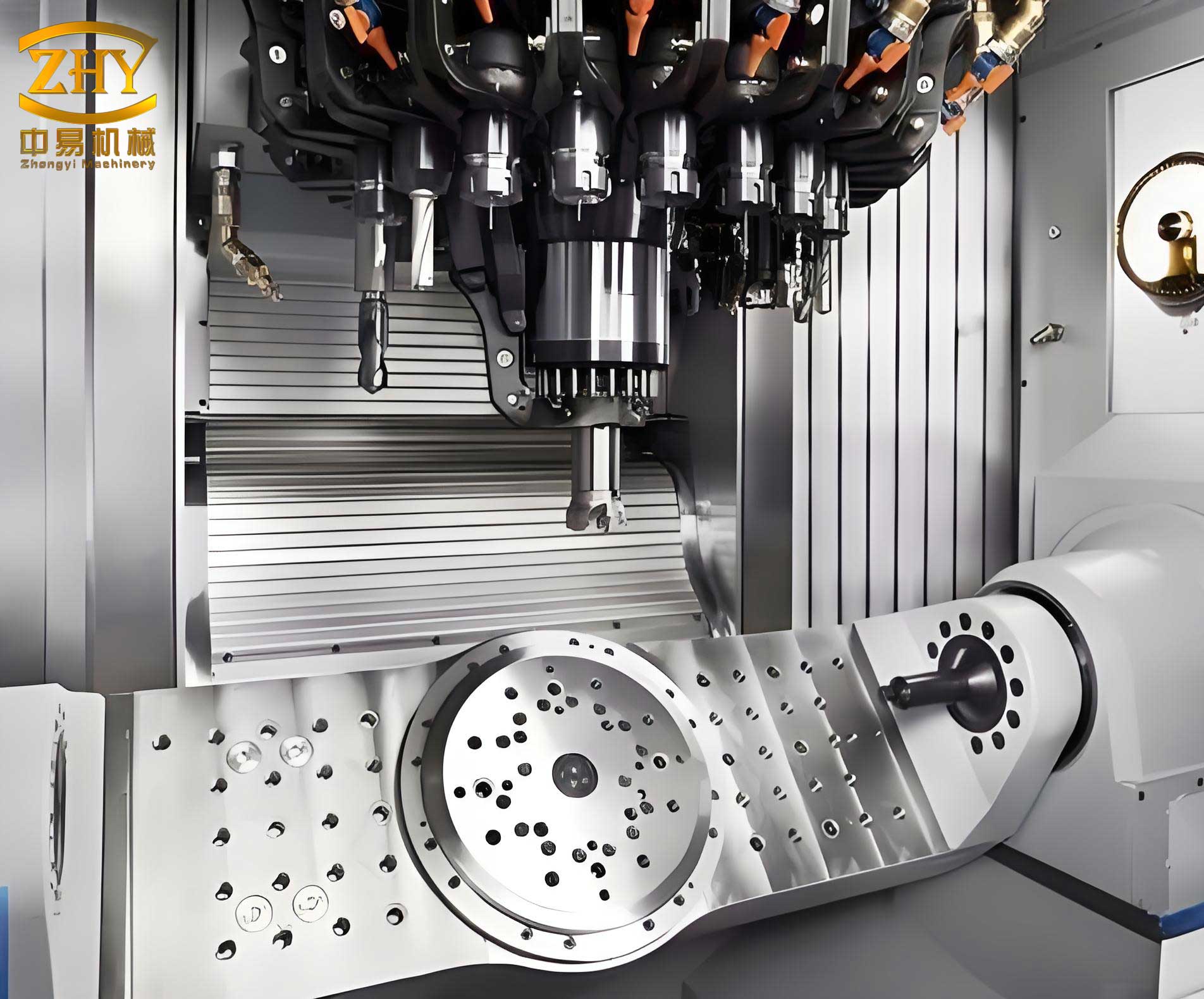
Machine tool castings, such as lathe beds and立柱, are characterized by their substantial size and structural complexity. In resin sand EPC, these components benefit from the absence of draft angles and parting lines, but the process demands careful control over pouring parameters. The decomposition of foam patterns consumes latent heat, necessitating higher pouring temperatures, which can be expressed through the energy balance equation: $$Q_{total} = m_{metal} \cdot c_{p,metal} \cdot (T_{pour} – T_{solid}) + m_{foam} \cdot \Delta H_{pyrolysis}$$ where \(Q_{total}\) is the total heat required, \(m_{metal}\) and \(m_{foam}\) are the masses of metal and foam, \(c_{p,metal}\) is the specific heat of metal, \(T_{pour}\) and \(T_{solid}\) are pouring and solidification temperatures, and \(\Delta H_{pyrolysis}\) is the enthalpy of foam decomposition. For foam gating systems, this heat loss is exacerbated, leading to thermal deficits that increase defect risks. Paper gating tubes, with their insulating properties, reduce heat transfer to the surroundings, effectively maintaining metal temperature and improving fluidity. This is crucial for machine tool castings, where long flow paths and thin sections require sustained thermal energy.
The application of paper gating tubes in resin sand EPC for machine tool castings follows a streamlined workflow. Initially, a foam pattern of the casting is fabricated, including integral gating channels if using foam, but in this approach, paper tubes replace these channels. The process flowchart encompasses pattern creation, coating, sand filling, and pouring, with paper gating assembly integrated before sand compaction. Key steps involve selecting appropriate tube diameters based on casting weight and gating ratios, cutting tubes to length with simple hand saws, and connecting components via承插 (embedded) or套入 (socket) methods. For instance, a typical gating system for a large machine tool bed might include multiple直浇道 (sprue tubes),横浇道 (runner tubes), and内浇道 (ingates), all assembled from paper tubes. The connections are secured with adhesives or耐火泥条 (refractory strips) to prevent leakage. During sand filling, the mold must be compacted sufficiently to support the tubes without damaging them, as illustrated in practice where proper compaction ensures tube integrity post-pouring. The entire system is then coated and dried alongside the pattern, ensuring a seamless interface.
To quantify the advantages of paper gating systems, I have compiled comparative data from foundry trials. Table 1 summarizes the properties of paper, ceramic, and foam gating tubes relevant to machine tool castings production:
| Property | Paper Gating Tube | Ceramic Gating Tube | Foam Gating Tube |
|---|---|---|---|
| Weight (per unit length) | Light (≈0.1 kg/m) | Heavy (≈1.0 kg/m) | Very Light (≈0.05 kg/m) |
| Thermal Conductivity | Low (Insulating) | High (Heat Sink) | Very Low (Pyrolysis) |
| Ease of Cutting | High (Hand Saw) | Low (Special Tools) | High (Hot Wire) |
| Risk of Inclusions | Low (Carbonizes) | Medium (Erosion) | High (Slag Formation) |
| Environmental Impact | Biodegradable | Non-degradable | Emits VOCs |
| Assembly Time | Short (≈5 min/system) | Long (≈15 min/system) | Medium (≈10 min/system) |
The use of paper gating tubes directly addresses common defects in machine tool castings, such as slag inclusion and sand wash. By minimizing heat loss and providing a smooth flow path, metal turbulence is reduced, which can be modeled using Bernoulli’s principle for incompressible flow: $$P_1 + \frac{1}{2}\rho v_1^2 + \rho g h_1 = P_2 + \frac{1}{2}\rho v_2^2 + \rho g h_2$$ where \(P\) is pressure, \(\rho\) is density, \(v\) is velocity, \(g\) is gravity, and \(h\) is height. In gating design for machine tool castings, maintaining constant pressure gradients prevents air aspiration and slag entrapment. Paper tubes, with their consistent inner surfaces, facilitate laminar flow, whereas foam gating can cause disruptions due to gas evolution. Additionally, the carbonization of paper tubes leaves minimal residue, reducing post-casting清理 efforts. Empirical results from a foundry producing machine tool bed castings show a significant drop in defect rates after switching to paper gating systems, as detailed in Table 2:
| Defect Type | With Ceramic Gating (%) | With Paper Gating (%) | Reduction (%) |
|---|---|---|---|
| Slag Inclusion | 4.2 | 1.1 | 73.8 |
| Sand Inclusion | 3.5 | 0.8 | 77.1 |
| Gas Porosity | 5.0 | 2.0 | 60.0 |
| Dimensional Error | 2.8 | 1.5 | 46.4 |
These improvements stem from the inherent properties of paper gating tubes. Their lightweight nature simplifies handling and assembly, cutting labor requirements by up to two-thirds compared to ceramic systems. For example, a complex gating setup for a machine tool column that previously needed three workers can now be assembled by one operator, enhancing productivity. Moreover, the ease of cutting paper tubes eliminates the noise and dust associated with ceramic tube sawing, fostering a safer work environment. From a thermal perspective, the insulating effect of paper helps maintain metal superheat, which is vital for filling thin-walled sections in machine tool castings. The heat retention can be approximated by considering the thermal resistance of the tube wall: $$R_{tube} = \frac{t}{kA}$$ where \(t\) is wall thickness, \(k\) is thermal conductivity, and \(A\) is surface area. Lower \(k\) values in paper tubes result in higher \(R_{tube}\), reducing heat flux and preserving metal temperature.
In practice, the connection techniques for paper gating tubes are versatile. The承插 method involves inserting a tube end into a socket, often with adhesive, creating a robust joint. For interfacing with foam patterns, the套入 method allows tubes to slide over pattern extensions, ensuring alignment. Additionally,截面胶粘 (cross-section bonding) with玻璃丝布 (fiberglass mesh) reinforcement can be used for butt joints, while耐火泥条 seals gaps at浇口杯 (pouring cup) interfaces. These methods ensure leak-proof systems that withstand metal pressure during pouring, critical for large machine tool castings where metal heads can exceed several meters. The gating design often employs multiple sprue tubes to distribute metal evenly, adhering to principles of progressive solidification. For instance, a machine tool base casting weighing over 5 tons might use four sprue tubes connected via paper runners, with flow rates calculated using the continuity equation: $$Q = A \cdot v$$ where \(Q\) is volumetric flow rate, \(A\) is cross-sectional area, and \(v\) is velocity. Proper sizing prevents excessive velocity that could erode the mold or tube walls.
The economic benefits of paper gating systems for machine tool castings are substantial. By reducing defect rates, scrap costs are lowered, and the streamlined process shortens production cycles. A cost-benefit analysis can be expressed as: $$Savings = (C_{scrap,old} – C_{scrap,new}) + (T_{labor,old} – T_{labor,new}) \cdot R_{labor} – C_{paper}$$ where \(C_{scrap}\) is scrap cost, \(T_{labor}\) is assembly time, \(R_{labor}\) is labor rate, and \(C_{paper}\) is the cost of paper tubes. In one case study, a foundry reported a 15% reduction in total production cost per machine tool casting after adopting paper gating, attributed to fewer rejects and faster setup. Environmental gains also align with sustainability goals, as paper tubes are derived from recycled materials and decompose after use, unlike ceramic debris that contaminates sand recycling systems. This is particularly important for resin sand EPC, where sand reclamation is energy-intensive.
Despite these advantages, the adoption of paper gating tubes faces hurdles, primarily higher initial costs compared to foam. However, advancements in manufacturing are driving prices down, and the long-term savings justify the investment. Future research could focus on optimizing tube compositions for enhanced耐火度 (refractoriness) and strength, potentially using additives like alumina or silica. Mathematical modeling of heat transfer and fluid flow in paper gating systems could further refine designs for specific machine tool castings. For example, computational fluid dynamics (CFD) simulations can predict temperature distributions using the heat equation: $$\frac{\partial T}{\partial t} = \alpha \nabla^2 T$$ where \(\alpha\) is thermal diffusivity. Integrating such tools with empirical data will accelerate innovation.
In conclusion, paper gating systems represent a transformative technology for resin sand EPC processes in producing high-quality machine tool castings. Their lightweight, insulating, and eco-friendly properties address key challenges of traditional gating methods, leading to fewer defects, lower labor costs, and improved environmental performance. As the foundry industry evolves, the widespread implementation of paper gating tubes will likely become standard, driven by economic and regulatory pressures. For engineers and manufacturers focused on machine tool castings, embracing this innovation offers a path to greater competitiveness and sustainability, ensuring that large-scale components meet stringent quality standards while minimizing ecological impact.