
In the manufacturing of machine tool castings, the requirements for appearance and dimensional accuracy are extremely stringent, particularly in material selection and the precision of joint dimensions. Over recent years, the manufacturing industry has entered an unprecedented phase of development, with significant advancements in the production level of machine tool castings. Various models and functionalities of machine tools have emerged, leading consumers to impose stricter quality demands. However, during the casting process, various errors often occur, resulting in quality incidents that hinder production progress. Therefore, summarizing past experiences and continuously improving casting techniques are crucial steps to enhance the quality of machine tool castings. In this article, I will delve into the common defects in machine tool castings and provide detailed technical process countermeasures, leveraging my expertise in foundry engineering. The focus will be on practical solutions, supported by tables and formulas, to ensure high-quality production of machine tool castings.
The complexity of machine tool castings arises from their need for high wear resistance, stability, and excellent vibration damping, while maintaining a compact structure. This often leads to intricate designs with internal cavities formed by cores, which, if not properly managed, can result in defects. As a foundry engineer, I have observed that defects like core lifting, cracking, and deformation are prevalent in machine tool castings, and addressing them requires a holistic approach. Below, I will explore each defect in detail, offering insights into their causes and effective countermeasures. Throughout this discussion, the term “machine tool casting” will be emphasized to highlight its significance in the manufacturing sector.
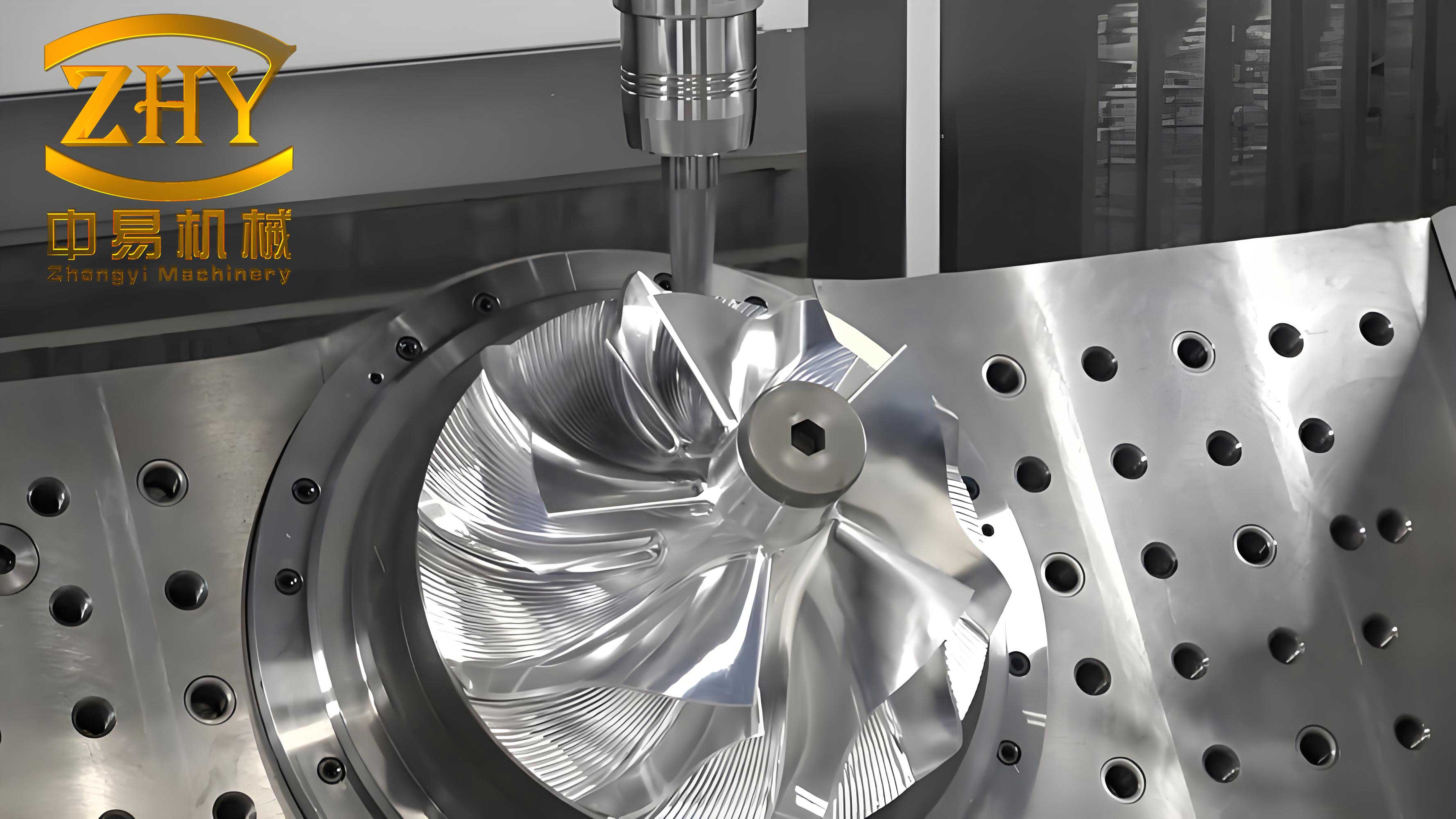
Core lifting in machine tool castings is a common issue due to the use of cores to create internal cavities. These cores are supported by chaplets, and improper handling can lead to displacement during pouring. To mitigate this, I recommend the following process countermeasures. First, the chaplets should be made of cast iron rods, with diameters selected to provide sufficient support under high-temperature molten iron while ensuring good fusion with the melt. The diameter-to-wall-thickness ratio should be approximately 1:4 to maximize fusion area. Second, the gating system should be designed to avoid direct冲击 of the molten metal on the chaplets. Third, adjusting the pouring temperature within acceptable limits can help reduce core lifting. To summarize, Table 1 outlines the key countermeasures for core lifting in machine tool castings.
| Defect | Cause | Process Countermeasure | Key Parameters |
|---|---|---|---|
| Core Lifting | Inadequate core support or improper gating | Use cast iron chaplets with diameter-to-wall-thickness ratio of 1:4; avoid direct冲击 in gating; adjust pouring temperature | Chaplet diameter $$d_c$$, wall thickness $$t_w$$, ratio $$rac{d_c}{t_w} \approx 0.25$$ |
| Cracking | Stress concentration at thick-thin junctions | Add reinforcement ribs; use inoculants; apply simultaneous solidification;延长 box cooling time; perform stress relief annealing | Stress $$\sigma$$, thermal gradient $$ abla T$$,圆角半径 $$r$$ |
| Deformation | Large length-to-width ratio leading to bending | Apply reverse camber of 2-4‰; ensure uniform clamping force; use multiple gating points; apply artificial aging for minor变形 | Camber $$C$$, length $$L$$, width $$W$$, ratio $$rac{L}{W}$$ |
Cracking in machine tool castings often occurs at junctions between thick and thin sections or at sharp corners, due to stress concentration. From my experience, the following countermeasures are effective. First, reinforcement ribs can be added at thick-thin junctions; if they affect dimensions, they can be removed after rough machining. For corners, increasing the fillet radius reduces stress. Second, using inoculants for孕育 treatment enhances the strength and crack resistance of the machine tool casting. Third, the gating system should follow the principle of simultaneous solidification to ensure rapid filling. Fourth, extending the in-box cooling time can prevent cracking, but it must be adjusted seasonally. Fifth, stress relief annealing is essential for castings prone to cracking, ensuring uniform heating and force application. The stress at a junction can be estimated using the formula: $$\sigma = E \alpha \Delta T$$, where $$E$$ is Young’s modulus, $$\alpha$$ is the coefficient of thermal expansion, and $$\Delta T$$ is the temperature difference. This highlights the importance of controlling thermal gradients in machine tool castings.
Deformation in machine tool castings, particularly those with large length-to-width ratios, leads to dimensional inaccuracies and scrap. To address this, I propose several countermeasures. First, applying a reverse camber during patternmaking, typically between 2‰ and 4‰, compensates for expected deformation. The camber $$C$$ can be calculated as $$C = k \cdot L$$, where $$k$$ is the camber factor (0.002 to 0.004) and $$L$$ is the casting length. Second, uniform clamping force in molding is crucial; for large castings using pit molding, even压箱力 must be maintained. Third, designing the gating system with multiple inlets, such as at both ends, ensures simultaneous pouring and reduces thermal distortion. Fourth, artificial aging heat treatment can correct minor deformations. Table 2 provides a summary of deformation control measures for machine tool castings.
| Aspect | Recommendation | Formula/Parameter |
|---|---|---|
| Reverse Camber | Apply 2-4‰ based on casting structure | $$C = k \cdot L$$, with $$k = 0.002 ext{ to } 0.004$$ |
| Clamping Force | Ensure uniformity in all directions | Force $$F_c$$ per unit area, balanced distribution |
| Gating System | Use multiple inlets for simultaneous filling | Pouring time $$t_p$$, flow rate $$Q$$, $$t_p = rac{V}{Q}$$ |
| Heat Treatment | Artificial aging for stress relief | Temperature $$T_a$$, time $$t_a$$, cooling rate $$rac{dT}{dt}$$ |
The guideway area of a machine tool casting is critical, requiring strict adherence to material and dimensional standards. After precision machining, no defects are allowed, as any issue typically results in scrap. In my practice, I have encountered defects like shrinkage porosity, hardness inadequacy, gas holes, and sand inclusions in guideways. For shrinkage and hardness issues, material selection is key. Opt for a high-silicon, low-carbon iron melt with appropriate carbon equivalent to ensure hardness. If hardness is insufficient, low-alloy treatments can be applied. The carbon equivalent $$CE$$ can be expressed as $$CE = C + rac{Si + P}{3}$$, and for machine tool castings, a $$CE$$ of 3.8 to 4.2 is often suitable. Pouring temperature should be controlled; avoid pouring immediately at high temperatures, instead allowing a slight temperature drop. External chills are effective for controlling shrinkage, with thickness约为 30-40% of the guideway’s thermal节 diameter. The width can be 8 cm, 10 cm, or 12 cm, and length should be 0.5-1 cm shorter than the guideway width. Chills should be placed on sides or bottom, not on top. Table 3 summarizes guideway defect countermeasures.
| Defect Type | Cause | Process Countermeasure | Parameters |
|---|---|---|---|
| Shrinkage Porosity | Inadequate feeding or improper cooling | Use external chills; control carbon equivalent; adjust pouring temperature | Chill thickness $$t_{ch} = 0.3d_h ext{ to } 0.4d_h$$, where $$d_h$$ is thermal节 diameter |
| Hardness Inadequacy | Low carbon equivalent or improper alloying | Select high-silicon, low-carbon melt; apply low-alloy treatment | Carbon equivalent $$CE = C + rac{Si + P}{3}$$, target $$CE \approx 4.0$$ |
| Gas Holes | Nitrogen in resin or moisture in coatings | Control resin nitrogen content; dry coatings thoroughly; pre-heat before合箱 | Resin addition ≤1%, nitrogen content <0.1% |
| Sand Inclusions | Sand erosion or improper gating | Design gating to avoid sand entrainment; place guideways at bottom of mold | Gating velocity $$v_g$$, sand strength $$\sigma_s$$, $$v_g < ext{critical value}$$ |
Gas holes and sand inclusions are particularly problematic when using furan cold-set resins for molding machine tool castings. Subsurface gas holes often appear after rough machining, while sand inclusions are visible on the surface. To prevent these, I advise controlling the nitrogen content in the resin, keeping it low, and limiting resin addition to around 1%. When using water-based coatings, thorough drying is essential; in winter, pre-heating before closing the mold prevents condensation. The gating system should be designed to minimize turbulence and sand erosion, typically by positioning the guideway at the bottom of the mold. The probability of gas hole formation can be related to the nitrogen content $$N$$ and pouring temperature $$T_p$$ through an empirical formula: $$P_{gas} = k_1 N + k_2 e^{-E_a/RT_p}$$, where $$k_1$$ and $$k_2$$ are constants, $$E_a$$ is activation energy, and $$R$$ is the gas constant. This underscores the need for precise process control in machine tool casting production.
In addition to these specific defects, general process optimizations can enhance the quality of machine tool castings. For instance, the use of simulation software to predict solidification patterns and stress distribution is invaluable. The solidification time $$t_s$$ for a casting can be estimated using Chvorinov’s rule: $$t_s = B \left( rac{V}{A} ight)^2$$, where $$B$$ is a mold constant, $$V$$ is volume, and $$A$$ is surface area. Applying this to machine tool castings helps in designing risers and chills effectively. Moreover, statistical process control (SPC) can monitor key parameters like pouring temperature, mold hardness, and chemical composition, ensuring consistency. Table 4 presents an SPC framework for machine tool casting processes.
| Process Parameter | Target Range | Monitoring Frequency | Corrective Action |
|---|---|---|---|
| Pouring Temperature | 1350°C to 1400°C | Per heat | Adjust furnace settings or ladle preheat |
| Mold Hardness | 80-90 on Shore scale | Per mold | Modify sand compaction or binder ratio |
| Carbon Equivalent | 3.8 to 4.2 | Per melt | Adjust charge materials or inoculant addition |
| Cooling Time in Box | 4-8 hours (seasonally adjusted) | Per casting | Change insulation or cooling rate |
Heat treatment plays a pivotal role in mitigating residual stresses and improving mechanical properties of machine tool castings. Stress relief annealing involves heating the casting to a temperature below the critical point, holding, and slowly cooling. The stress reduction can be modeled as $$\sigma_r = \sigma_0 e^{-t/ au}$$, where $$\sigma_0$$ is initial stress, $$t$$ is time, and $$ au$$ is a time constant dependent on temperature. For machine tool castings, a typical annealing cycle is 500-550°C for 4-6 hours, followed by furnace cooling. This process enhances dimensional stability and reduces the risk of cracking in service.
Material science aspects are also crucial for machine tool castings. The use of inoculants like ferrosilicon or rare earth elements modifies the graphite morphology in cast iron, improving strength and thermal conductivity. The inoculation effect can be quantified by the graphite nodule count $$N_g$$, which relates to mechanical properties via $$ sigma_{uts} = \alpha + \beta \log N_g$$, where $$ sigma_{uts}$$ is ultimate tensile strength, and $$\alpha$$, $$\beta$$ are material constants. Selecting the right alloy composition, such as adding chromium or molybdenum for hardness, is essential for guideways. The hardness $$H$$ can be expressed as $$H = H_0 + k_C C + k_{Mo} Mo$$, where $$H_0$$ is base hardness, and $$k_C$$, $$k_{Mo}$$ are coefficients for carbon and molybdenum content. These formulas guide material design for high-performance machine tool castings.
Gating system design is another critical factor. The principles include minimizing turbulence, ensuring rapid filling, and promoting directional solidification. The gating ratio (sprue:runner:ingate) for machine tool castings is often 1:2:1.5 to balance flow. The flow velocity $$v$$ in the ingate can be calculated using Bernoulli’s principle: $$v = \sqrt{2gh}$$, where $$g$$ is gravity and $$h$$ is the effective head height. Controlling this velocity prevents mold erosion and gas entrapment. Additionally, using filters in the gating system can reduce inclusions, especially for complex machine tool castings with thin sections.
Environmental and operational factors also impact the quality of machine tool castings. For example, humidity in the foundry can affect sand mold properties, leading to gas defects. The moisture content $$M$$ in molding sand should be maintained at 3-5% for optimal performance. Seasonal adjustments, as mentioned earlier, are necessary for cooling times; in winter, longer in-box cooling may be required to avoid thermal shock. The relationship between ambient temperature $$T_a$$ and cooling time $$t_c$$ can be approximated as $$t_c = t_{c0} (1 + \gamma (T_a – T_0))$$, where $$t_{c0}$$ is reference cooling time, $$T_0$$ is reference temperature, and $$\gamma$$ is a coefficient. This ensures consistent quality of machine tool castings year-round.
In conclusion, avoiding defects in machine tool castings requires a comprehensive understanding of casting processes and meticulous application of technical countermeasures. From core lifting to guideway imperfections, each defect has specific solutions that involve material selection, gating design, temperature control, and heat treatment. By implementing the strategies discussed—such as using appropriate chaplets, applying reverse camber, controlling resin nitrogen, and optimizing cooling times—foundries can significantly improve the quality of machine tool castings. Furthermore, integrating simulation and SPC enhances process reliability. As the demand for high-precision machine tools grows, continuous improvement in casting techniques is essential. I believe that through these efforts, the manufacturing industry can produce superior machine tool castings that meet stringent quality standards, thereby boosting competitiveness and fostering innovation.
To reiterate, the key to success lies in a holistic approach that addresses every stage of the casting process. Whether it’s preventing cracking through stress relief or avoiding gas holes with proper drying, attention to detail is paramount. The formulas and tables provided in this article serve as practical tools for engineers and technicians involved in machine tool casting production. By adhering to these guidelines and continuously refining processes, we can minimize defects and achieve excellence in the casting of machine tool components. The journey toward flawless machine tool castings is ongoing, but with the right technical countermeasures, it is certainly attainable.