
We initiated our research on boron-containing wear-resistant cast iron several years ago, focusing on its development and application in machine tool castings. Our work has involved extensive experimentation to understand the relationship between boron content and the microstructure, mechanical properties, and processing characteristics of these castings. Through trials and production implementation in our facility, we have successfully applied boron cast iron to various machine tool components, leading to full-scale production. This material has proven to be an excellent alternative to high-phosphorus cast iron, offering superior performance, simplified processing, and cost-effectiveness. The widespread adoption of boron cast iron in machine tool castings has enabled us to enhance product quality, reduce scrap rates, and achieve significant cost savings while maintaining stable material properties.
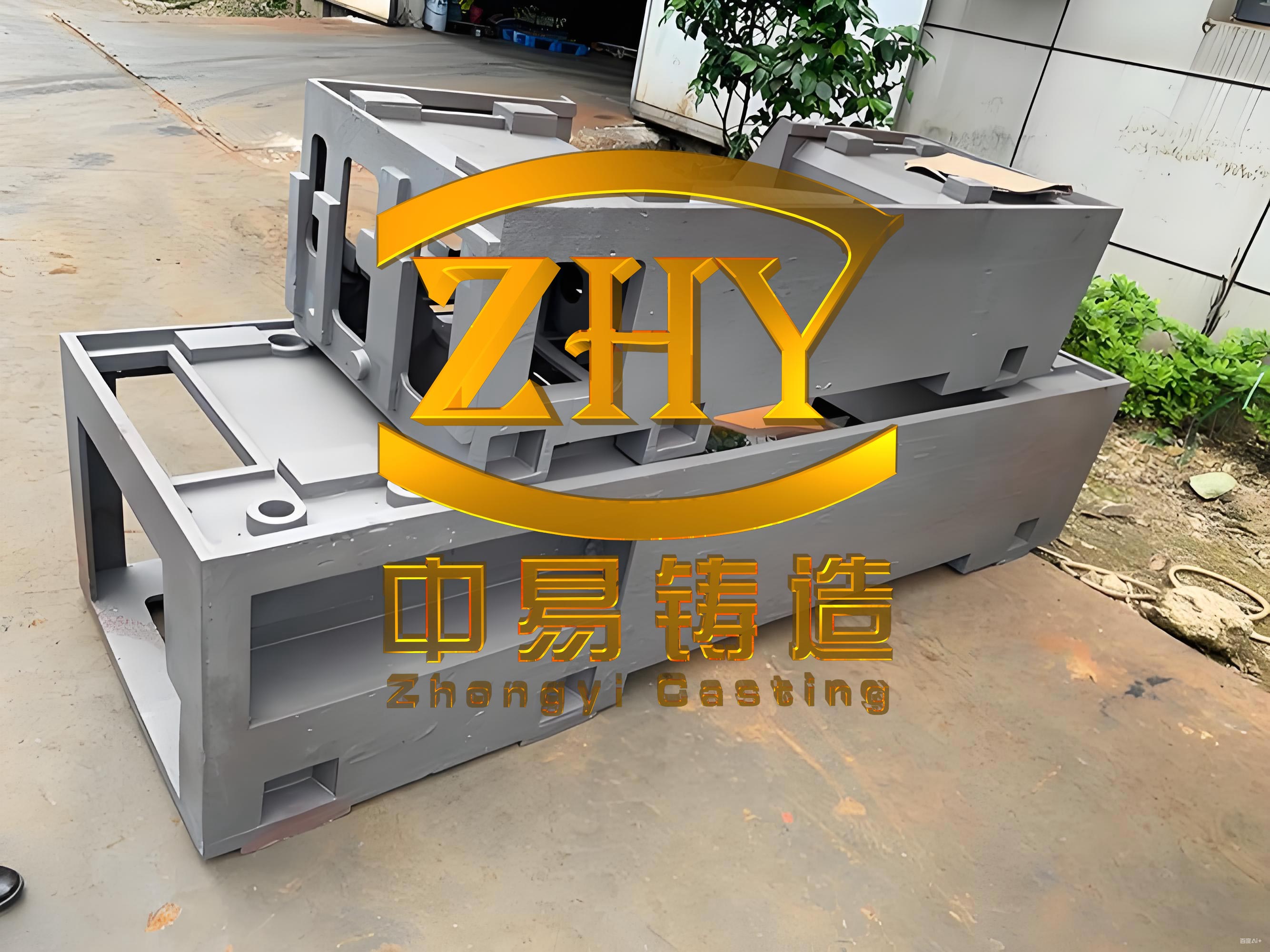
Our investigations into boron cast iron for machine tool castings began with optimizing the melting and addition processes. We found that using boron iron as the boron source is particularly suitable for machine tool castings produced in cupola furnaces. The boron is added at the front of the furnace, where predetermined amounts of boron iron, with a block size of approximately 20-50 mm, are introduced into the tap hole along with inoculants. After skimming the slag, the molten iron is ready for pouring. Our experiments demonstrated that with a tap temperature above 1400°C and a treatment batch size of at least 0.5 tons, the absorption rate of boron from boron iron exceeds 80%, while when using borax, the absorption rate is over 50%. This high and stable absorption rate allows for precise control of boron content in machine tool castings, ensuring consistent quality. When remelting boron cast iron, the boron loss is less than 10%, and proper slag removal is crucial to avoid casting defects. Additionally, boron addition increases the chill tendency, necessitating adjustments in carbon equivalent and higher inoculation levels to counteract this effect.
| Boron Source | Addition Method | Absorption Rate (%) | Recommended Tap Temperature (°C) |
|---|---|---|---|
| Boron Iron | Added in front of furnace with inoculants | > 80 | > 1400 |
| Borax | Added in front of furnace with inoculants | > 50 | > 1400 |
The casting properties of boron cast iron are critical for producing high-quality machine tool castings. We evaluated fluidity and linear shrinkage, comparing boron cast iron with conventional gray cast iron. Our tests involved measuring the spiral flow length at various pouring temperatures and determining the linear shrinkage rates. The results indicate that the addition of trace amounts of boron does not significantly alter the casting properties, making it feasible to use existing foundry practices for machine tool castings. For instance, at a pouring temperature of 1400°C, the spiral flow length of boron cast iron is comparable to that of gray cast iron, ensuring good mold filling. Linear shrinkage measurements show minimal differences, with boron cast iron exhibiting slightly higher values, but within acceptable ranges for complex machine tool castings. Furthermore, we assessed the section sensitivity by casting step-shaped test blocks with thicknesses of 10 mm, 20 mm, and 30 mm. Hardness tests and microstructural observations revealed that boron cast iron provides more uniform hardness and microstructure across different sections compared to gray cast iron, which is advantageous for intricate machine tool castings where consistent properties are essential.
| Material | Pouring Temperature (°C) | Spiral Flow Length (mm) | Linear Shrinkage (%) |
|---|---|---|---|
| Boron Cast Iron | 1400 | 420 | 1.15 |
| Gray Cast Iron | 1400 | 410 | 1.10 |
| Boron Cast Iron | 1350 | 380 | 1.20 |
| Gray Cast Iron | 1350 | 370 | 1.15 |
| Material | Thickness (mm) | Hardness (HB) | Microstructure Uniformity |
|---|---|---|---|
| Boron Cast Iron | 10 | 220 | High |
| Boron Cast Iron | 20 | 218 | High |
| Boron Cast Iron | 30 | 215 | High |
| Gray Cast Iron | 10 | 190 | Medium |
| Gray Cast Iron | 20 | 185 | Medium |
| Gray Cast Iron | 30 | 180 | Low |
The microstructure and mechanical properties of boron cast iron are pivotal for its performance in machine tool castings. We observed that boron addition leads to the formation of boride phases, which interact with the pearlitic matrix. Specifically, a low-carbon ferrite layer forms at the interface between borides and pearlite, enhancing the overall properties of machine tool castings. The borides can be categorized into three types: boron carbides, boron-containing compounds, and ternary eutectic compounds. However, when the phosphorus-to-boron ratio is less than 2, the formation of detrimental ternary compounds is minimized, which is typical in machine tool castings with low phosphorus content. At low carbon equivalents and insufficient inoculation, boron-containing ledeburite may appear, degrading properties, so it must be avoided. Boron refines the pearlite structure and increases its microhardness; for example, the microhardness of pearlite in gray cast iron is approximately 250 HV, while in boron cast iron, it rises to 300 HV. This refinement contributes to improved hardness and strength. The mechanical properties, including tensile strength, hardness, and impact toughness, were evaluated as functions of boron content. We found that at low boron levels (e.g., 0.02%), strength and toughness increase due to microstructural refinement, but further increases in boron content lead to a slight decline in these properties. The bend strength and deflection of low-boron cast iron are comparable to those of standard gray cast iron grades, making it suitable for demanding machine tool castings. Additionally, the elastic modulus increases with boron addition; for instance, with 0.03% boron, the modulus rises from 120 GPa to 135 GPa, enhancing the rigidity of machine tool castings.
| Boron Content (%) | Tensile Strength (MPa) | Hardness (HB) | Impact Toughness (J) | Elastic Modulus (GPa) |
|---|---|---|---|---|
| 0.00 | 250 | 190 | 20 | 120 |
| 0.02 | 270 | 220 | 22 | 128 |
| 0.04 | 260 | 240 | 18 | 135 |
| 0.06 | 255 | 260 | 15 | 138 |
The relationship between boron content and mechanical properties can be expressed using empirical formulas. For example, the tensile strength $$ \sigma_b $$ in MPa as a function of boron content $$ B $$ in percent is approximated by: $$ \sigma_b = 250 + 1000B – 15000B^2 $$ Similarly, the hardness $$ H $$ in HB follows: $$ H = 190 + 1500B – 10000B^2 $$ These equations highlight the optimal boron range for machine tool castings, where properties peak around 0.02-0.04% boron.
Wear resistance is a key advantage of boron cast iron in machine tool castings. We conducted laboratory wear tests using an Amsler wear testing machine, comparing various cast iron types. The results show that boron cast iron exhibits excellent wear resistance, with relative wear improvements over high-phosphorus cast iron. For instance, boron cast iron with 0.02% boron offers a 50% higher relative wear resistance compared to high-phosphorus cast iron, while at 0.04% boron, it matches the wear resistance of high-phosphorus cast iron. Since high-phosphorus cast iron typically has twice the wear resistance of gray cast iron, boron cast iron provides a cost-effective alternative for enhancing the durability of machine tool castings. Field visits and user feedback confirm that boron cast iron guideways in machine tools maintain sharpness and resist wear, with lubricating oil staying cleaner for longer periods, indicating reduced abrasion.
| Material | Boron Content (%) | Relative Wear Resistance (vs. Gray Cast Iron) |
|---|---|---|
| Gray Cast Iron | 0.00 | 1.0 |
| High-Phosphorus Cast Iron | 0.00 | 2.0 |
| Boron Cast Iron | 0.02 | 3.0 |
| Boron Cast Iron | 0.04 | 2.0 |
| Boron Cast Iron | 0.06 | 2.5 |
The cold machining performance of boron cast iron is crucial for the manufacturability of machine tool castings. We evaluated machinability through scraping tests, assessing factors like cutting effort, time, and tool wear. For boron contents below 0.04%, the fine, dispersed carbides do not pose significant machining challenges. In our tests, boron cast iron with 0.02% boron allowed smooth turning, milling, planing, grinding, and drilling operations, though manual scraping required more effort and led to increased tool wear compared to gray cast iron. However, low-boron cast iron outperforms high-phosphorus cast iron in terms of machinability, making it practical for producing precision machine tool castings. We quantified the scraping difficulty on a scale of 1 to 4, with gray cast iron at 1, boron cast iron (0.02% B) at 2, high-phosphorus cast iron at 3, and boron cast iron (0.04% B) at 4. Tool wear followed a similar trend, emphasizing the importance of controlling boron content to avoid ledeburite formation, which can exacerbate machining issues.
| Material | Boron Content (%) | Scraping Difficulty (1-4 scale) | Tool Wear (1-4 scale) |
|---|---|---|---|
| Gray Cast Iron | 0.00 | 1 | 1 |
| Boron Cast Iron | 0.02 | 2 | 2 |
| High-Phosphorus Cast Iron | 0.00 | 3 | 3 |
| Boron Cast Iron | 0.04 | 4 | 4 |
Based on our extensive research, we recommend specific chemical compositions for boron cast iron in machine tool castings to balance wear resistance, machinability, and casting performance. For components requiring scraping, such as guideways, a boron content of 0.02-0.04% is ideal, while for non-scraped parts, 0.03-0.06% boron is suitable. To counteract the chill effect of boron, the carbon equivalent should be increased, and inoculation levels must be adequate. Typical recommended compositions include carbon between 3.0-3.3%, silicon 1.8-2.2%, manganese 0.8-1.2%, phosphorus below 0.15%, sulfur below 0.12%, and boron as specified. In our production, we use a composition akin to grade HT250, with carbon 3.1-3.4%, silicon 1.6-2.0%, manganese 0.8-1.2%, phosphorus below 0.12%, sulfur below 0.10%, and boron 0.02-0.04%. Furnace control involves observing chill depth on wedge test samples; for the same carbon equivalent, boron cast iron with 0.02% boron shows a chill width 1-2 mm larger than gray cast iron, and at 0.04% boron, it is 2-3 mm larger. We advise an inoculation amount greater than 0.4%, a tap temperature above 1400°C, and a treatment batch size over 0.5 tons to ensure stable boron absorption and consistent quality in machine tool castings. With these parameters, boron cast iron can achieve 3-5% boride volume at 0.02-0.04% boron, meeting mechanical standards while enhancing wear resistance.
In conclusion, boron is an abundant element in our region, and its trace addition to cast iron significantly improves wear resistance at minimal cost increase. For machine tool castings, using borax as the boron source raises costs by about $10 per ton, while boron iron adds approximately $15 per ton, compared to $20-30 per ton for high-phosphorus cast iron. Moreover, boron cast iron reduces scrap rates and simplifies recycling management compared to high-phosphorus variants. The production conditions for boron cast iron are compatible with existing foundry setups in machine tool manufacturing, requiring no major process changes or new equipment. This makes boron-containing wear-resistant cast iron a viable and efficient material for enhancing the performance and longevity of machine tool castings, supporting industrial advancements in precision and durability.