
The stationary blade is a critical component within a large steam turbine. For many years, the predominant manufacturing route in our domestic industry has involved producing rough blanks via forging or casting, followed by extensive machining to achieve the final complex aerodynamic profile. This traditional approach suffers from several significant drawbacks: a prolonged production cycle, high associated costs, low overall efficiency, and the necessity to occupy large, precision machine tools. These factors collectively have become a bottleneck constraining the advancement and responsiveness of steam turbine production. In response to this challenge, our team embarked on a systematic investigation into an alternative manufacturing pathway. This report details our comprehensive process development and experimentation with resin sand casting to produce large stationary blades requiring minimal to zero machining allowance, ultimately finished through grinding and polishing operations.
Internationally, leading manufacturers such as Mitsubishi, Hitachi, and Siemens employ the investment casting (lost-wax) process for producing large stationary blades. Domestically, Harbin Turbine Company has also successfully mastered this technology. However, due to constraints in our existing production facilities and available space, establishing an investment casting line for these large components proved to be a significant hurdle. Consequently, we were compelled to explore alternative foundry methods. We identified resin sand casting as a highly promising candidate. This process offers numerous advantages, including high mold strength, excellent dimensional stability of the mold, superior flowability of the sand mixture, good collapsibility after casting, low energy consumption, and convenient reclamation of used sand. After thorough technical and feasibility reviews, we concluded that utilizing resin sand casting for large blade production was viable. Our strategic approach was incremental: first, to master the production of cast blanks with conventional machining allowances, and subsequently, to progress towards the goal of “full grinding & polishing forming” with negligible machining stock.
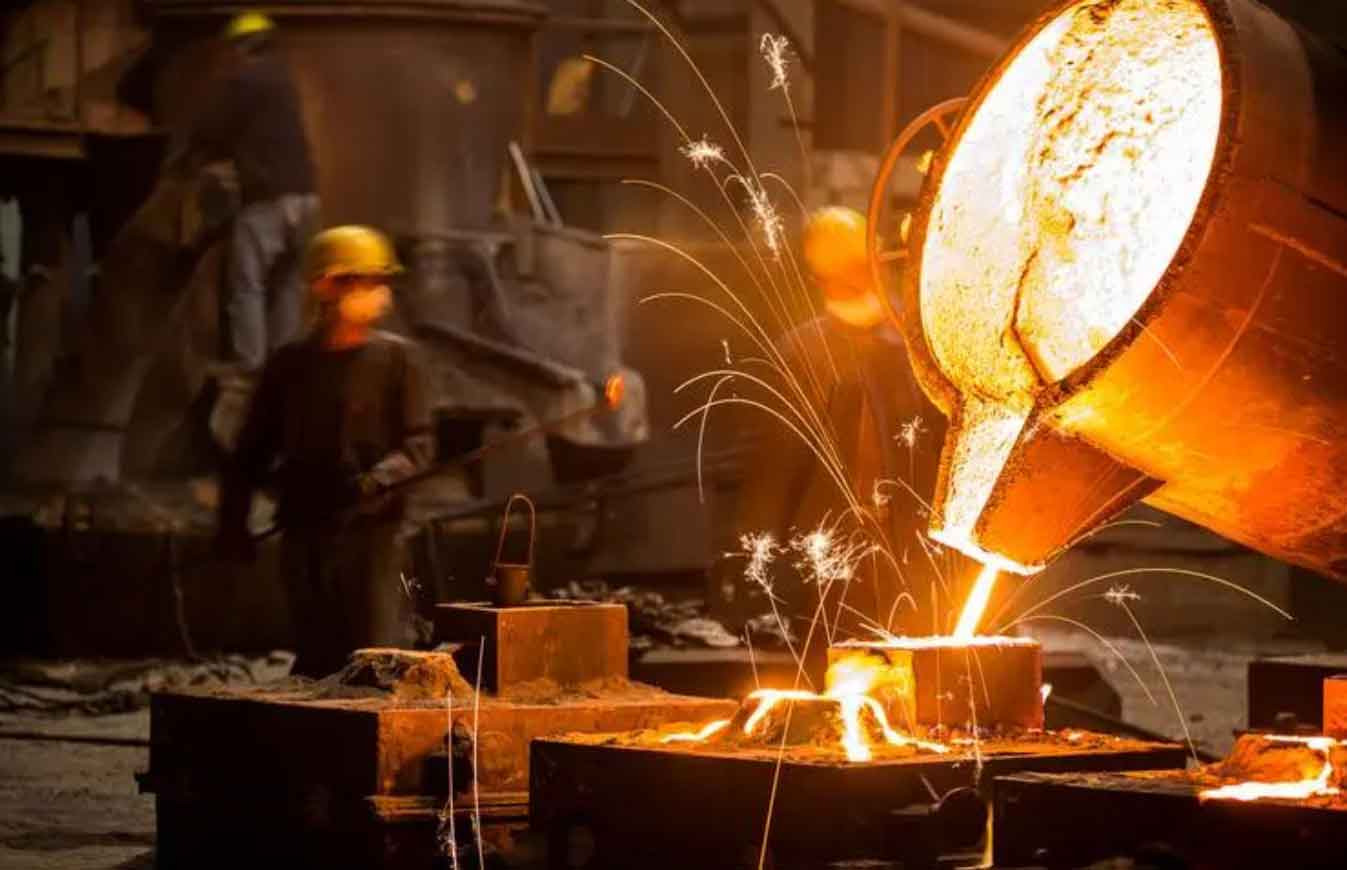
Phase I: Process Establishment and Blank Casting Trial
For our initial trial, we selected a specific stationary blade, designated here as “Blade Type A,” which serves as the last-stage low-pressure stationary blade in a 300MW steam turbine unit. This blade features a complex, wave-like curved surface (aero-foil). Its key dimensions are: a height of approximately 850 mm, a maximum chord width of 380 mm, a minimum chord width of 180 mm, with a maximum thickness of 45 mm at the root (large end) and 20 mm at the tip (small end). The net weight of a single finished blade is about 75 kg. This blade has high-performance requirements and is needed in significant quantities, making it a perennial critical part. Historically, its manufacturing involved casting a blank (using a ceramic mold process by a specialized foundry) followed by extensive machining on a large copy milling planer. Demand often outstripped internal capacity, requiring outsourcing. Therefore, “Blade Type A” presented an ideal candidate for our resin sand casting process validation.
Process Parameters for Blank Casting:
We employed metal pattern equipment for the resin sand casting process. A uniform machining allowance of 7 mm per side was pre-allocated on the pattern. Two blades were cast per mold box. A slit-type gating system was designed, complemented by insulating feeder heads to ensure sound feeding. The total poured weight per box was approximately 380 kg, yielding a cast blank weight of about 160 kg for two blades, resulting in a casting yield of roughly 42%.
Blank Machining Trial and Dimensional Analysis:
The cast blanks were measured at three key stages: in the as-cast condition, after heat treatment, and during trial machining. The primary objective was to map the distribution of the remaining stock (allowance). Measurements were taken on two blades oriented in the “forward” direction and two in the “reverse” direction relative to the mold. The results are summarized in the table below, showing the range of stock remaining on the concave (pressure side) and convex (suction side) surfaces of the airfoil.
| Blade Surface | Direction | Maximum Stock | Minimum Stock | Location of Minimum Stock |
|---|---|---|---|---|
| Concave (Intrados) | Forward | 7.5 | 5.8 | Near maximum thickness area of a mid-span section |
| Reverse | 7.8 | 5.5 | Near leading edge of a mid-span section | |
| Convex (Extrados) | Forward | 8.2 | 6.0 | Near maximum thickness area of a mid-span section |
| Reverse | 8.5 | 6.2 | From max thickness area towards leading edge |
Analysis of the measurement data revealed that the stock allowance was generally uniform across most of the blade profile. Some localized distortion was observed near the trailing edge region. Notably, the stock on the convex surface was consistently 1.0 to 1.5 mm greater than the pre-set 7 mm allowance. We attributed this systematic increase to a combination of factors: possible distortion during heat treatment, inherent errors in the metal pattern, non-uniform application of the mold coating, and slight mold parting line lift during mold assembly. These insights were critical and informed the focus areas for our subsequent, more refined trials aimed at reducing the allowance.
Phase II: Development of Full Grinding & Polishing Forming Process
Building on the initial blank trial, we progressed to a blade type requiring near-net-shape casting. We selected “Blade Type B,” a radial-type guide vane for a 200MW turbine unit. Its profile is structurally simpler than that of “Blade Type A.” Key dimensions include: height ~600 mm, root chord width ~320 mm, tip chord width ~250 mm, with a maximum thickness of 40 mm at the root and 18 mm at the tip. Historically, due to the high cost and long lead time for forging dies, this blade was machined from “Blade Type A” blanks, resulting in excessive machining waste, long cycle times, and high cost. Therefore, “Blade Type B” was chosen for our low-allowance resin sand casting process trial.
The fundamental challenge in transitioning from high-allowance to low-allowance casting is controlling dimensional inaccuracy and distortion. From empirical knowledge, dimensional errors primarily stem from pattern accuracy, coating thickness and uniformity, and mold parting line issues. Distortion, however, is largely induced during the heat treatment process. To address these, we implemented a series of targeted measures:
1. Precision Pattern Correction:
A linear shrinkage allowance of 1.8% was applied to the pattern dimensions. A minimal, uniform grinding/polishing stock was allocated. The pattern’s profile accuracy was meticulously verified, ensuring light leakage against the master template was controlled within 0.3 mm. Furthermore, the pattern was iteratively corrected based on feedback from the stock distribution observed on initial trial castings. The allowance $A_p$ applied to the pattern can be expressed as a function of the nominal dimension $D_n$, the shrinkage factor $S$, and the desired finishing stock $F$:
$$
A_p = D_n \times (1 + S) + 2F
$$
Where $S = 0.018$ and the target $F$ was progressively reduced towards 1.5-2.0 mm per side.
2. Coating and Mold Assembly Control:
The viscosity of the refractory coating was strictly controlled, and application procedures were standardized to guarantee a thin, uniform, and consistent coating layer. Mold assembly operations were rigorously controlled. Notably, we successfully eliminated the traditional use of asbestos rope on the parting line for preventing metal run-out, instead relying on precise mold machining and sealing techniques. This elimination removed a source of dimensional variability.
3. Mitigation of Heat Treatment Distortion:
Heat treatment distortion arises mainly from two mechanisms: bending due to the blade’s own weight when heated (creep deformation), and uneven cooling contraction between the concave and convex surfaces. To counteract these, we developed a specialized loading configuration for the heat treatment furnace. As shown in the schematic below, blades were arranged vertically and closely packed, with the concave surface of one blade facing the convex surface of the next. This vertical arrangement significantly increased the blade’s moment of inertia against sagging. The intimate packing ensured nearly identical cooling conditions for both surfaces of adjacent blades, dramatically reducing thermal gradient-induced distortion. The effectiveness of this method in reducing bending stress $\sigma_{bend}$ can be conceptually related to the increase in area moment of inertia $I$ for the vertical orientation compared to a horizontal lay-up:
$$
\sigma_{bend} \propto \frac{M}{I}
$$
Where $M$ is the bending moment. Vertical orientation maximizes $I$ for a blade’s cross-section, thus minimizing stress and deformation.
4. Straightening (Corrective Pressing):
Despite the above precautions, some residual distortion was inevitable in a subset of blades. A cold straightening process was implemented using a 400-ton press. Blades were carefully pressed against calibrated dies or templates until their profile conformed to the specified tolerances, as verified by master templates and straight edges.
Phase II Results, Data Analysis, and Discussion
The effectiveness of the controlled resin sand casting and finishing process was evaluated by measuring the maximum thickness at various cross-sections and stages for “Blade Type B” blades. The data below, averaged from multiple samples, illustrates the dimensional progression.
| Cross-Section | Theoretical Dimension | Metal Pattern Dimension | As-Cast Blank (Post-HT) | Calculated Single-Side Stock | Finished Blade (After Grinding) |
|---|---|---|---|---|---|
| Sec 0 (Root) | 40.00 | 41.44 | 40.95 | ~0.95 | 39.85 |
| Sec 1 | 36.50 | 37.78 | 37.30 | ~0.80 | 36.35 |
| Sec 2 | 32.75 | 33.90 | 33.45 | ~0.70 | 32.60 |
| Sec 3 | 28.80 | 29.80 | 29.40 | ~0.60 | 28.65 |
| Sec 4 | 24.60 | 25.45 | 25.15 | ~0.55 | 24.50 |
| Sec 5 | 20.20 | 20.90 | 20.70 | ~0.50 | 20.05 |
| Sec 6 (Tip) | 18.00 | 18.63 | 18.45 | ~0.45 | 17.90 |
Dimensional Analysis:
The data shows that after casting and accounting for shrinkage, coating thickness, and other process factors, the actual single-side stock on the heat-treated blank was reduced to a range of 0.45 mm to 0.95 mm. Subsequent descaling/oxidation removal during heat treatment consumed approximately 0.3-0.5 mm. Consequently, the effective stock available for grinding and polishing was notably small, in the range of 0.15-0.65 mm per side. This marginal allowance carried a risk of undercutting the minimum thickness tolerance during finishing. The results confirmed the need for targeted, non-uniform pattern correction to add slight additional stock in specific, predictable low-stock areas.
The finished blade thicknesses were consistently slightly below the theoretical dimensions, which was an expected consequence of the minimal starting stock. The specified tolerance for maximum blade thickness was +0.5 mm / -1.0 mm. The finished parts remained within this specification, albeit near the lower limit, demonstrating the need for extremely tight process control.
Profile Conformance (Light Leakage) and Straightness:
Profile accuracy was assessed by measuring the gap between the blade surface and a master template. The standard allowed a maximum light leakage of 0.5 mm over most of the profile and 1.0 mm very close to the trailing edge. Post-heat treatment, blades exhibited a slight “opening” of the profile (concave becomes less deep), but the distortion magnitude was small. After corrective pressing, most blade sections met the conformance标准. Isolated minor exceedances occurred, attributable to residual local stock variation and manual grinding inconsistencies.
Trailing edge straightness is another critical quality parameter. Measurements were taken on blanks and finished blades. The results demonstrated excellent control over this form of distortion throughout the process.
| Process Stage | Measured Straightness Deviation (Avg.) | Drawing Allowable Deviation |
|---|---|---|
| As-Cast Blank (Pre-HT) | 0.8 – 1.2 | ≤ 2.0 |
| Blank (Post-HT, Pre-Straightening) | 1.0 – 1.5 | |
| Blank (Post-Straightening) | 0.3 – 0.6 | |
| Finished Blade | 0.2 – 0.5 |
The data confirms that the developed resin sand casting and post-processing sequence effectively controls linear distortion along the blade length.
Technical Conclusions and Industrial Benefits
Based on the systematic trials conducted on “Blade Type A” and “Blade Type B,” we can draw the following definitive conclusions regarding the resin sand casting process for large steam turbine stationary blades:
1. Process Feasibility and Viability:
The successful trial production of these blades conclusively proves that the resin sand casting process for full grinding and polishing forming is not only feasible but also represents a robust new manufacturing route for large stationary blades. It serves as a viable alternative where investment casting is not practical.
2. Dimensional Control Capability:
Through stringent control over all process parameters—including pattern precision, coating application, mold assembly, and gating/feeding design—it is possible to reduce the as-cast grinding allowance on large, complex blade castings to less than 1.0 mm per side consistently. The general relationship for final part dimension $D_f$ can be modeled as:
$$
D_f = D_p – \Delta_{shrink} – \Delta_{coat} – \Delta_{distort} \pm \Delta_{grind}
$$
Where $D_p$ is the pattern dimension, $\Delta_{shrink}$ is the metal contraction, $\Delta_{coat}$ is the coating thickness effect, $\Delta_{distort}$ is net distortion, and $\Delta_{grind}$ is the stock removal. Our process minimizes $\Delta_{distort}$ and controls the other variables to keep $D_f$ within tolerance with minimal $\Delta_{grind}$.
3. Distortion Management:
The implementation of a specialized vertical-cluster heat treatment arrangement, combined with a controlled corrective pressing operation, enables effective management of thermal distortion. The process can maintain post-heat-treatment profile distortion within 1.5 mm, and final straightened blank distortion within 0.5 mm, which is fully acceptable for the subsequent precision grinding operation.
4. Economic and Operational Advantages:
The resin sand casting based full grinding/polishing forming process offers compelling advantages over traditional forged blank/machining or investment casting routes:
- Significantly Lower Cost: The cost of pattern equipment for resin sand casting is a fraction (typically less than 10%) of the cost for a set of forging dies. The raw material utilization is also higher compared to forging.
- Reduced Lead Time: The pattern fabrication time is measured in weeks, compared to many months for complex forging dies. This drastically shortens the time-to-first-part for new blade designs.
- Higher Production Efficiency: The casting process itself is faster than large-scale forging for such shapes, and it liberates expensive, high-precision milling machines for other critical tasks.
- Production Flexibility: A resin sand casting foundry can be scaled and adapted more readily than installing a new forging press or investment casting line, making it an accessible technology for many manufacturers.
In summary, the development and validation of this resin sand casting and finishing process mark a significant advancement in the manufacturing technology for large steam turbine components. It provides a cost-effective, responsive, and high-quality alternative that effectively addresses the limitations of traditional methods, thereby enhancing the overall competitiveness and production agility in the power generation equipment industry. The principles and control strategies developed are also potentially applicable to other large, complex, thin-walled cast components requiring high dimensional fidelity.