
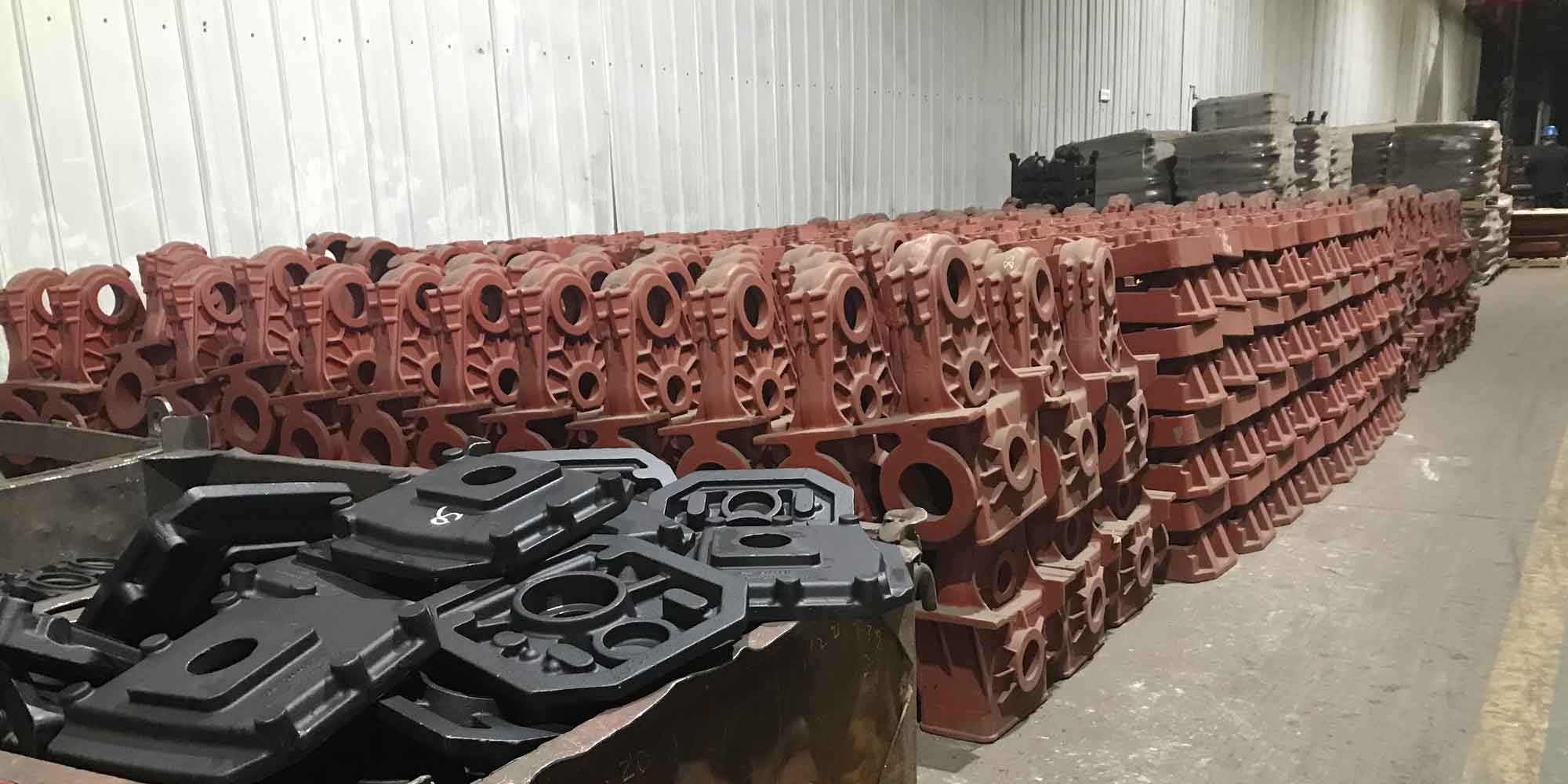
Large steel castings are essential components in power generation, heavy machinery, marine engineering, and metallurgical equipment. During solidification, the volumetric contraction of liquid steel often leads to shrinkage cavities and macro-porosity unless the casting is adequately fed. The most common and reliable feeding method is the use of risers. In conventional foundry practice, risers are made from the same sand as the mould, which causes them to freeze almost simultaneously with the casting and therefore to be relatively inefficient. To improve the feeding efficiency, insulating risers are increasingly employed. An insulating riser is surrounded by a sleeve of low-thermal-conductivity material, which slows down the cooling of the liquid steel inside the riser. With a longer liquid lifetime, the insulating riser can feed the solidification contraction of a steel casting more effectively, reduce the required riser volume, and significantly improve the casting yield.
In this thesis, I focused on two representative cast steels, ZG0Cr13Ni4Mo and ZG230-450, and on two commercial insulating materials, insulating brick and insulating board. The purpose of the work was to establish an accurate calculating model for insulating risers of large steel castings, to optimize the most important parameters in that model, and to develop a practical software package that can be used by casting process engineers. The study compared several analytical riser-calculation methods. Among them, the cubic-equation method was found to be the most suitable for insulating risers of large steel castings. I then deduced the insulating-riser form of the cubic-equation method, optimized the residual-insulating-riser geometric surface-area reduction factor, designed a Windows-based calculation program, and verified the program through numerical simulation, casting experiments and ultrasonic inspection.
1. Background and objectives
The production of large steel castings is a challenging task because the solidification time is long and the feeding path is often complicated. For example, a turbine runner or a rolling-mill housing may weigh more than one hundred tons. If the riser is not designed correctly, extensive shrinkage defects may appear in the casting. Traditional sand risers with high height-to-diameter ratios are often used to compensate for the poor feeding efficiency, but this approach wastes a large amount of liquid steel. In many heavy steel casting workshops, the average yield is only 40–50%, meaning that half of the melted steel is eventually poured into risers, gates, and feeders that must be removed and remelted. Energy consumption and labor cost are therefore enormous.
The insulating riser offers a practical solution. Its sleeve is made of low-density, low-thermal-conductivity and low-heat-capacity refractory materials such as perlite, alumina-silicate fibre, fly-ash cenospheres, or insulating brick. Because heat loss through the sleeve is greatly reduced, the riser metal remains liquid for a longer period. The feeding distance increases, the riser can be made smaller, and the casting yield rises. In China, several types of insulating riser are available for large steel castings: fly-ash cenosphere risers, fibre-composite risers, insulating-brick risers, and ceramic-fibre risers. The selection of the correct riser calculation model and the correct model parameters is critical. If the riser is too small, the casting will be defective; if the riser is too large, the economic benefit of the insulating sleeve is lost. Therefore, the main objectives of this research were:
- to analyse the existing analytical riser-calculation models and choose the most appropriate one for insulating risers of large steel castings;
- to modify the selected model for insulating risers and to determine all relevant parameters;
- to measure the thermophysical properties of the selected steel casting alloys and insulating materials;
- to optimize the residual geometric surface-area reduction factor for both insulating brick and insulating board;
- to design a user-friendly calculation program for insulating risers;
- to verify the software by computer simulation and by foundry experiments.
2. Riser-calculation models
Several analytical methods have been proposed for riser design of steel castings. The most widely known are the modulus method, the feeding-volume method, the hot-spot-circle method, the solidification-rate-ratio method, the Q-number method, the perimetrical quotient method, and the cubic-equation method. The feeding-volume method is mainly used for atmospheric-pressure blind risers and for verifying other methods. The hot-spot-circle method is empirical and not sufficiently accurate. The modulus method, first introduced by Chvorinov, is the foundation of modern riser calculation. Chvorinov’s rule states that for a steel casting the solidification time \(t\) is proportional to the square of the casting modulus \(M\), where \(M = V/A\). In mathematical form,
$$ t = K \left(\frac{V}{A}\right)^2 = K M^2 $$
where \(V\) is the volume, \(A\) is the cooling surface area and \(K\) is the solidification coefficient. To ensure that a riser can feed a steel casting, the riser must freeze after the casting. Therefore, the modulus of the riser \(M_R\) should be greater than the modulus \(M_C\) of the casting section being fed:
$$ M_R = f M_C $$
with \(f\), the modulus enlargement factor, generally between 1.1 and 1.2 for a sound steel casting. For an insulating riser, the effective cooling surface area is reduced, which means that a smaller \(f\) can be used.
2.1 Q-number method
Mcadams introduced the Q-number method for steel castings. The term \(Q\) is defined as
$$ Q = \frac{V_C}{M_C^3} $$
The recommended riser volume \(V_R\) is then calculated by
$$ \frac{V_R}{V_C} = 0.15 + \frac{200}{Q} $$
The Q-number method is simple but its original form was derived from experiments conducted under fixed conditions: a solidification contraction of about 5%, a fixed riser height-to-diameter ratio, and a specific range of casting shapes. Consequently, the Q-number method has limited applicability for large steel castings, especially when the riser shape is changed or when high-alloy steels with different contraction values are used. Creese later modified the Q-number method by introducing two coefficients:
$$ V_R = a M_C^3 + b V_C $$
where \(a\) is a solidification-modulus adjustment factor and \(b\) is a metal-contraction adjustment factor. For steel castings, this modified method reduces to the same form as the Q-number method when the coefficients are calibrated for steel.
2.2 Perimetrical quotient method
The perimetrical quotient method, proposed by Wang and Zhou, is based on the idea that when the casting has just finished solidifying, the remaining liquid riser must exactly compensate the solidification contraction of the casting. The governing equation can be written as
$$ \frac{V_R – \varepsilon V_C}{A_R} = \frac{V_C + \varepsilon V_C}{A_C} $$
where \(V_R\) and \(V_C\) are the initial riser and casting volumes, \(A_R\) and \(A_C\) are their effective cooling surface areas, and \(\varepsilon\) is the volumetric solidification contraction of the steel casting alloy. Introducing the perimetrical quotients \(q_R = V_R / M_R^3\) and \(q_C = V_C / M_C^3\), and the modulus ratio \(f = M_R/M_C\), one obtains:
$$ (1-\varepsilon) f^2 – f^3 – \varepsilon \frac{q_C}{q_R} = 0 $$
The perimetrical quotient method has a strong theoretical basis and can be applied to different steel casting alloys. However, for complicated casting shapes or non-standard riser geometries, the perimetrical quotient \(q\) is difficult to calculate accurately. This restricts its practical use for many large steel castings that have complex geometry.
2.3 Cubic-equation method
The cubic-equation method was introduced by Gao and Yu. It uses the same physical principle as the perimetrical quotient method, but expresses the riser dimensions directly in terms of the riser shape coefficients \(K_1\) and \(K_2\):
$$ V_R = K_1 d^3, \quad A_R = K_2 d^2 $$
where \(d\) is the equivalent diameter of the riser. For a cylindrical riser of height \(h\) and diameter \(d\), for example, the coefficients are \(K_1 = \pi h/(4d)\) and \(K_2 = \pi h/d + \pi/2\). The fundamental condition is that the final modulus of the riser equals the final modulus of the casting section:
$$ \frac{V_R – \varepsilon V_C}{A_R} = \frac{V_C + \varepsilon V_C}{A_C} $$
Substituting the shape coefficients and the casting modulus \(M_C = V_C/A_C\), the following cubic equation is obtained:
$$ d^3 – \frac{K_2}{K_1}(1+\varepsilon) M_C d^2 – \frac{\varepsilon}{K_1} V_C = 0 $$
Letting \(F_1 = K_2 (1+\varepsilon)/K_1\) and \(F_2 = \varepsilon/K_1\), the compact form is:
$$ d^3 – F_1 M_C d^2 – F_2 V_C = 0 $$
The cubic-equation method combines theoretical rigour with computational simplicity. It can be used for any steel casting alloy because the contraction \(\varepsilon\) is an input parameter. It can also be used with any standard riser geometry, since the coefficients \(K_1\) and \(K_2\) are known for each riser type.
2.4 Comparison and selection
I compared the three analytical methods by performing riser calculations for a series of large steel casting shapes. The castings were long steel bars with a volume of 270–2500 dm\(^3\). A cylindrical open riser with height-to-diameter ratios of 1.0 and 1.5 was chosen, and the contraction of the steel casting was fixed at 5%. The calculated riser volumes and moduli are summarized below.
| Casting No. | VC (dm3) | MC (cm) | Method | VR (dm3) | MR (cm) |
|---|---|---|---|---|---|
| C1 | 270 | 7.5 | Cubic | 118.9 | 8.88 |
| C1 | 270 | 7.5 | Perimetrical | 121.3 | 8.95 |
| C1 | 270 | 7.5 | Q-number | 124.9 | 9.03 |
| C5 | 2500 | 12.5 | Cubic | 695.2 | 16.00 |
| C5 | 2500 | 12.5 | Perimetrical | 713.1 | 16.14 |
| C5 | 2500 | 12.5 | Q-number | 765.6 | 16.53 |
The results show that the three methods all produce risers that can feed the casting, but the Q-number method gives the most conservative values. The cubic-equation method generally gives the smallest riser volume while still providing sufficient feeding, and it possesses the largest sound-casting region on the \(f\) versus \(V_R/V_C\) diagram. I therefore selected the cubic-equation method as the basis for the insulating-riser calculation model for large steel castings.
3. Cubic-equation model for insulating risers
For an insulating riser, the heat loss through the sleeve is much smaller than through a sand wall. The thermal effect of the insulating sleeve can be represented by replacing the geometrical surface area of the residual riser with an effective surface area. I introduced the residual-insulating-riser geometric surface-area reduction factor \(\delta’\), defined by
$$ A_R = \delta’ A_{RI} $$
where \(A_R\) is the effective heat-dissipating surface area of the residual insulating riser and \(A_{RI}\) is the initial geometric surface area of the insulating riser. Since the insulation reduces heat transfer, \(\delta’\) is smaller than unity. The governing equation for an insulating riser becomes:
$$ \frac{V_R – \varepsilon V_C}{\delta’ A_{RI}} = \frac{V_C + \varepsilon V_C}{A_C} $$
Substituting \(V_R = K_1 d^3\) and \(A_{RI} = K_2 d^2\), and using the definition \(M_C = V_C/A_C\), I obtained:
$$ d^3 – \delta’ \frac{K_2}{K_1}(1+\varepsilon) M_C d^2 – \delta’ \frac{\varepsilon}{K_1} V_C = 0 $$
Introducing the coefficients
$$ F_1 = \frac{K_2 (1+\varepsilon)}{K_1}, \qquad F_2 = \frac{\varepsilon}{K_1} $$
the model can be written compactly as:
$$ d^3 – \delta’ F_1 M_C d^2 – \delta’ F_2 V_C = 0 $$
This is the cubic-equation model for insulating risers of large steel castings. The solution for the equivalent riser diameter can be obtained by Cardano’s formula:
$$ d = \sqrt[3]{A + \sqrt{B^3 + A^2}} + \sqrt[3]{A – \sqrt{B^3 + A^2}} $$
with
$$ A = \frac{\delta’ F_1 M_C}{6}, \qquad B = \frac{\delta’ F_2 V_C}{2} $$
Once the equivalent diameter is known, the final riser dimensions are obtained from the selected standard riser geometry.
3.1 Model parameters
There are six parameters in the insulating-riser cubic-equation model: the casting modulus \(M_C\), the volume \(V_C\) of the casting section being fed, the solidification contraction of the steel casting alloy \(\varepsilon\), the riser shape coefficients \(K_1\) and \(K_2\), and the residual geometric surface-area reduction factor \(\delta’\). For a given large steel casting, the volume and modulus of the hot-spot section can be calculated by decomposing the casting into simple geometric elements. For standard riser types, the coefficients \(K_1\) and \(K_2\) can be calculated from the formulas shown in the following table.
| Riser type | K1 | K2 |
|---|---|---|
| Cylindrical open riser | \(\pi g /4\) | \(\pi(g+0.5)\) |
| Cylindrical blind riser | \(\pi(6g-1)/24\) | \(\pi(4g+1)/4\) |
| Spherical riser | \(\pi (1+2g-2g^2)/24\) | \(\pi (1+2g-2g^2)/4\) |
| Rectangular open riser | \(\pi(4g+4)/4\) | \(2g+2f-\pi/2\) |
Here \(g = h/d\) for cylindrical risers and \(g = h/a\), \(f = b/a\) for rectangular risers, where \(a\) is the width, \(b\) is the length, and \(h\) is the height of the riser.
The solidification contraction \(\varepsilon\) of the steel casting alloy depends mainly on the carbon content, the alloying elements, and the pouring temperature. I calculated the contraction values for several steels using the empirical equation proposed by Xu:
$$ \varepsilon = 1.9943 + 7.459 w_C – 4.73 (w_C + \sum K_i w_i) + K_T (T_P – T_L) $$
where \(w_C\) is the carbon mass fraction, \(w_i\) is the mass fraction of alloying element \(i\), \(K_i\) is the influence coefficient of that element, \(K_T\) is the pouring-temperature coefficient, \(T_P\) is the pouring temperature, and \(T_L\) is the liquidus temperature of the steel casting alloy. The resulting values for two steels used in this work are listed in the table below.
| Steel casting alloy | Solidification contraction \(\varepsilon\) |
|---|---|
| ZG0Cr13Ni4Mo | 0.058 |
| ZG230-450 | 0.049 |
4. Optimization of the parameter \(\delta’\)
The residual geometric surface-area reduction factor \(\delta’\) is the most important parameter that distinguishes the insulating-riser model from the ordinary sand-riser model. It depends on the thermal conductivity, density, specific heat, and thickness of the insulating sleeve. In principle, \(\delta’\) can be obtained from the ratio between the sand-riser modulus and the insulating-riser modulus:
$$ \delta’ = \frac{M_{riser,sand}}{M_{riser,insulating}} $$
because, for the same geometrical dimensions, the modulus of the insulating riser is higher than that of the sand riser. According to Chvorinov’s rule, the modulus ratio is related to the solidification time ratio by
$$ \frac{M_{riser,insulating}}{M_{riser,sand}} = \sqrt{\frac{t_{riser,insulating}}{t_{riser,sand}}} $$
Therefore,
$$ \delta’ = \sqrt{\frac{t_{sand}}{t_{insulating}}} $$
I carried out computer simulations of solidification for two large steel casting test blocks, one made of ZG0Cr13Ni4Mo and the other of ZG230-450. The test block had a long central bar and three risers, as designed by the proposed calculation program. Two risers were sand risers and one was an insulating-brick riser. The whole assembly was modelled in three dimensions and meshed in the ProCAST software. The thermophysical properties of the steel casting alloys, the insulating materials, and the mould material were measured experimentally.
4.1 Thermophysical property measurements
The thermal diffusivity of ZG0Cr13Ni4Mo and ZG230-450 was measured by the laser-flash method. The specific heat was measured by differential scanning calorimetry, and the thermal conductivity was measured by the transient hot-plane method. The measured properties are the temperature-dependent functions \(\alpha(T)\), \(C_p(T)\), \(\lambda(T)\) and \(\rho(T)\). These functions were entered into the simulation program. The measurements showed that the thermal diffusivity of both steel casting alloys first decreases with increasing temperature, reaches a minimum around 750 °C, and then increases. The density decreases slowly up to the solidus and drops abruptly in the mushy zone.
For the insulating materials, I measured the specific heat and thermal conductivity of insulating brick and insulating board. The results indicate that, at temperatures below 600 °C, the thermal conductivity of the insulating brick is lower than that of the insulating board. This means that, for the same wall thickness, the insulating brick provides better thermal insulation for a large steel casting. The mould material was furan-resin-bonded sand; its room-temperature density was 1.63 g/cm\(^3\), and its thermal conductivity at 1500 °C was 1.02 W·m\(^{-1}\)·K\(^{-1}\). The specific heat of the mould sand increases with temperature, following the classical Debye trend.
4.2 Solidification simulation results
The boundary conditions and interfacial heat-transfer coefficients were set according to the casting conditions. The pouring temperatures were 1550 °C. The mould and insulating sleeves were initially at 11 °C. The solidification process was simulated until the steel casting was completely solidified. The solidification time of the hot spot in the central bar section was extracted from the temperature field.
| Steel casting alloy | Riser type | Solidification time (s) | \(\delta’\) |
|---|---|---|---|
| ZG0Cr13Ni4Mo | Sand riser | 4560 | — |
| ZG0Cr13Ni4Mo | Insulating-brick riser | 7933 | 0.758 |
| ZG230-450 | Sand riser | 1900 | — |
| ZG230-450 | Insulating-brick riser | 3433 | 0.744 |
Using the formula \(\delta’ = \sqrt{t_{sand}/t_{insulating}}\), I obtained values between 0.746 and 0.758 for the insulating brick. To be conservative in practical design, I adopted the upper value:
$$ \delta’_{\mathrm{brick}} = 0.7576 $$
For the insulating board, an independent set of industrial data was available. The foundry provided a table that compares standard sand risers with Foseco insulating-board risers of equivalent modulus. The modulus ratio of the insulating-board riser to the sand riser is approximately 1.24–1.28. Taking the inverse gives \(\delta’\) in the range 0.781–0.806. A linear fit of the data points yields an average modulus ratio of 1.2416, which corresponds to:
$$ \delta’_{\mathrm{board}} = 0.8054 $$
These optimized values of \(\delta’\) were subsequently used in the calculating software for insulating risers of large steel castings.
5. Development of the calculating software
I developed the large-steel-casting insulating-riser calculation software in the Microsoft Visual C++ environment. The program is based on a dialog-style MFC application. The software is modular; it contains a main framework, a hot-spot calculation module, an insulating-riser calculation module, a result-output module, a process-parameter database module, and a report-printing module. The main framework is shown schematically in the table below.
| Module | Function |
|---|---|
| Main framework | Select steel casting alloy and insulating material; set \(\varepsilon\) and \(\delta’\) |
| Hot-spot calculation | Input geometry of the hot-spot section; calculate \(V_C\), \(M_C\) and weight |
| Riser calculation | Choose riser type; calculate \(d\), \(M_R\), \(V_R\), riser weight and dimensions |
| Result output | Display all input data and calculation results |
| Database | Store and query process parameters of insulating risers for steel castings |
| Printing | Print the calculation report |
The hot-spot calculation module includes twenty typical geometric elements commonly encountered in large steel castings: plates, bars, cylinders, rings, solid cylinders, cubes, cross-ribs, flanged cylinders, and so on. The user selects the hot-spot shape, enters the dimensions, and the program calculates the volume and modulus. The riser module supports seven standard riser families, including cylindrical open risers, cylindrical blind risers, spherical risers, rectangular open risers, and side risers. After the riser type is selected, the software computes \(K_1\) and \(K_2\) from the stored formulas, solves the cubic equation, and displays the riser sketch and dimensions. The riser diameter is rounded to the nearest standard value according to the Chinese foundry handbook, and the final modulus is recalculated automatically.
I designed the database using Microsoft Access 2003. The database stores information about insulating materials, riser types, casting materials, and calculated process parameters. The connection and query functions were implemented with ActiveX Data Objects technology. The printing module was developed by adding a hidden document-view framework inside the dialog application. This allowed me to provide a professional print preview and a hard-copy report for the foundry engineer.
6. Application of the software and verification
6.1 Riser design for a large ZG230-450 machine frame
To verify the software, I used it to design insulating risers for a large steel casting machine frame made of ZG230-450. The frame had a total length of 9645 mm, a width of 3270 mm, a thickness of 700 mm, and a total weight of approximately 110 tons. The frame was approximately symmetrical, so four insulating-brick risers were planned. Two larger risers were placed at the middle of the short sides, and two smaller risers were placed at the middle of the long sides. In addition, copper chill plates were placed near the lifting lugs and between adjacent risers to increase the feeding distance.
The short-side hot spot was idealized as a rectangular plate with dimensions 1930 mm × 3270 mm × 700 mm, and the long-side hot spot as a rectangular bar with dimensions 900 mm × 700 mm × 6180 mm. The software gave the following riser dimensions:
| Riser | Type | Dimensions (mm) | Modulus (cm) |
|---|---|---|---|
| 1# | Rectangular open riser | 1650 × 1100 × 1375 | 22.77 |
| 2# | Rectangular open riser | 1350 × 900 × 1125 | 18.63 |
After rounding to the factory-standard risers, the actual risers were converted to equivalent trapezoidal open risers. The complete mould assembly, including the pouring system, was then simulated in ProCAST. The pouring temperature was 1550 °C and the total weight of the casting system was 213 tons. The shrinkage porosity was evaluated using the Niyama criterion. The prediction showed no shrinkage cavities in the large steel casting. Some dispersed micro-porosity was found only in non-machined surfaces, which does not affect the service performance. Therefore, the insulating risers designed by the software were considered adequate for this large steel casting.
6.2 Casting experiment and ultrasonic inspection
In addition to the numerical verification, actual casting trials were performed with both ZG0Cr13Ni4Mo and ZG230-450 test blocks. The test block had a central test bar, two sand risers, and one insulating-brick riser. The riser calculated by the software had an equivalent modulus of 4.33 cm. Since the physical insulation sleeve had to be cut to build a rectangular riser, the calculated circular-riser modulus was converted into a rectangular open riser with dimensions 200 mm × 250 mm × 400 mm. The test blocks were poured in a production foundry, and the risers were subsequently cut off. After heat treatment, the bars were examined by ultrasonic testing.
Ultrasonic testing was performed with a CTS-22 instrument, a 2 MHz probe with a 24 mm crystal. The tests showed that the region fed by the insulating riser had no large shrinkage cavity and no concentrated porosity. Small individual indications were observed in some areas, but they were within the acceptable limits for the steel casting quality. The results confirmed that the insulating risers designed by the calculation software could feed the steel casting section soundly. When all three risers of the test block were working together, the casting was found to be acceptable.
6.3 Feeding efficiency and casting yield
I compared the performance of the insulating riser with a sand riser for the same steel casting hot spot. The fed volume of the hot spot was 30 dm\(^3\) and the solidification contraction of the steel casting alloy was 0.058. For a sand riser, the required riser volume was 39.76 dm\(^3\), whereas for the insulating-brick riser the required volume was only 19.15 dm\(^3\). The riser feeding efficiency \(\eta\) was calculated as:
$$ \eta = \frac{\varepsilon V_C}{V_R} $$
The sand riser gave an efficiency of 10.2%, while the insulating riser gave 14.9%. Thus the insulating riser improved the feeding efficiency by 4.7 percentage points. The total weight of the hot-spot section was 237 kg. The sand riser weighed 307 kg, while the insulating riser weighed 148 kg. Assuming the gating system accounted for about 5% of the casting weight, the casting yield was 43% for the sand riser and 60% for the insulating riser. This represents an increase of 17 percentage points in the casting yield, which is highly significant for a large steel casting foundry.
7. Conclusion
In this thesis, I systematically studied the calculation of insulating risers for large steel castings and developed a dedicated calculation program. The main conclusions are as follows.
- The cubic-equation method is the most suitable analytical model for insulating risers of large steel castings. Compared with the Q-number method and the perimetrical quotient method, it has stronger theoretical foundations, wider applicability, and better accuracy.
- By introducing the residual geometric surface-area reduction factor \(\delta’\), I derived the insulating-riser form of the cubic-equation model and solved it by Cardano’s formula.
- The thermophysical properties of ZG0Cr13Ni4Mo, ZG230-450, insulating brick, insulating board, and furan-resin sand were measured. The data were used in solidification simulations to optimize \(\delta’\).
- The optimized value of \(\delta’\) is 0.7576 for insulating brick and 0.8054 for insulating board. These values have been embedded in the software.
- I developed a dialog-based MFC software program for insulating-riser calculation. The program includes hot-spot calculation, riser calculation, result output, database management, and print functions.
- Numerical simulation and experimental casting both confirmed that the software can design sound insulating risers for large steel castings. The insulating riser improves the feeding efficiency by 4.7 percentage points and the casting yield by 17 percentage points compared with sand risers.
The software is not limited to the two tested steel casting grades. Because the user can input the solidification contraction of any steel casting alloy, the program can also be applied to other grades of cast steel, such as high-manganese steel, chromium-molybdenum steel, and austenitic stainless steel. The optimized calculation model and the software thus provide a convenient and reliable tool for the insulating-riser design of large steel castings.