
Sand casting, as a foundational and versatile manufacturing process, involves creating metal parts by pouring molten metal into a sand mold. Its adaptability for both small-batch and large-scale production, particularly for ferrous metals and high-melting-point copper alloys, ensures its continued prevalence in industry. However, the very processes that define sand casting—sand preparation, molding, core-making, melting, pouring, and finishing—generate complex aerosols representing a significant occupational health challenge. This review synthesizes current knowledge on the characteristics of airborne particulate matter (PM) in sand casting environments, moving beyond traditional mass concentration metrics to encompass particle size distribution, chemical speciation, and the emerging concern of ultrafine and nanoparticles.
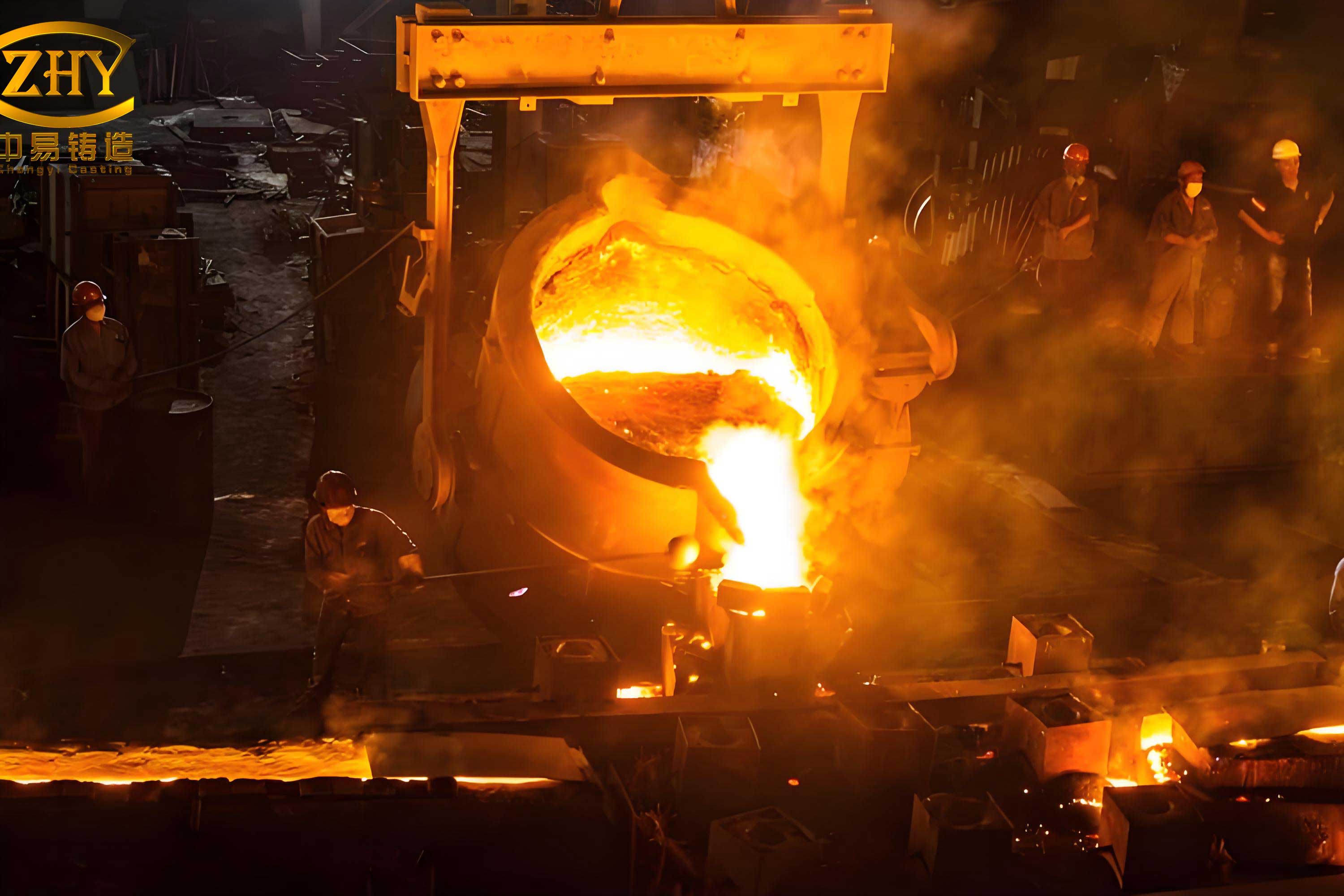
1. Sand Casting Processes and Sources of Airborne Particles
The occupational aerosol in a sand casting foundry is not a single entity but a dynamic mixture originating from multiple, often simultaneous, sources. These can be broadly categorized into two generation mechanisms: (1) mechanical processes like sand handling, mixing, shakeout, and finishing, which primarily generate dust from raw materials; and (2) pyrolytic or thermal processes like melting, pouring, and baking, which generate fume, vapors, and combustion-related particles. The primary processes, their materials, and documented particulate constituents are summarized in Table 1.
| Production Process | Key Materials | Particle-Generating Steps | Documented Particulate Constituents |
|---|---|---|---|
| Sand Preparation | Silica sand, bentonite, coal dust | Mulling, screening, mixing; Sand drying/reclamation | Crystalline silica (SiO₂), metals (Mn, Fe, Zn), Benzo[a]pyrene (BaP) and other PAHs, organic compounds (e.g., phthalates). |
| Molding & Core-Making | Silica sand, resins, catalysts | Molding, core shooting, curing | Crystalline silica (SiO₂), metals (Mn, Fe, Zn, Pb), PAHs from binder decomposition. |
| Melting & Pouring | Metal alloys, limestone, fluxes | Charging, melting, slagging, pouring | Metal fume (Fe, Mn, Al, Mg, Cr, Pb, etc.), flux dust (CaO, MgO), refractory particles, combustion-derived particles, PAHs, dioxins. |
| Finishing (Shakeout & Cleaning) | Molded castings, silica sand, steel shot | Shakeout, cutting, grinding, shot blasting | Crystalline silica (SiO₂), metal dust (from casting and shot), adherent PAHs, complex organic mixtures from degraded binders. |
This table illustrates the heterogeneous nature of sand casting aerosols. A single task, such as shakeout, exposes workers to a complex mixture of residual sand dust, thermally altered binder residues, and metal fines from the casting itself.
2. Defining and Characterizing Casting Particulate Matter
Characterizing occupational exposure in sand casting requires clarity on definitions. Particulate matter is often classified by its aerodynamic diameter ($d_a$). Key size fractions include:
- Inhalable particulate mass (IPM): Fraction entering the nose and mouth, typically $d_a < 100 \mu m$.
- Thoracic particulate mass (TPM): Fraction penetrating the head airways, $d_a < 10 \mu m$.
- Respirable particulate mass (RPM): Fraction reaching the gas-exchange region, $d_a < 4 \mu m$ (according to ISO/ACGIH criteria).
- Fine particles (PM2.5): $d_a \leq 2.5 \mu m$.
- Ultrafine/Nanoparticles (UFPs): $d_a \leq 0.1 \mu m$ (100 nm).
While occupational exposure limits (OELs) have historically focused on mass concentrations of total inhalable or respirable dust, and specifically on the respirable crystalline silica (RCS) content, this approach is increasingly recognized as insufficient for the complex mixtures in sand casting. The UK’s HSE, for instance, defines “Ferrous Foundry Particulate” (FFP) as a complex, process-specific mixture, acknowledging that exposure must be controlled against both the particulate OEL and the OELs of its constituent hazardous substances (e.g., metals, PAHs). In many jurisdictions, sand casting dust is regulated based on its free silica content, classified either as “silica dust” or “nuisance dust,” which may not fully capture the toxicological synergy of its components.
3. Traditional Characterization of Sand Casting Particulates
Extensive research has documented the physical and chemical properties of particles from sand casting operations.
3.1 Physical Characteristics: Mass Concentration and Size Distribution
Historically, high mass concentrations were common, but industrial hygiene improvements have reduced levels in modern foundries. Despite this, certain tasks remain problematic. Studies report time-weighted average (TWA) concentrations for total dust ranging from ~2 mg/m³ to over 30 mg/m³, with melting, pouring, and cleaning operations often exhibiting the highest levels. Respirable dust concentrations follow a similar pattern, with typical ranges from 0.5 to 5 mg/m³. The respirable fraction of crystalline silica (RCS) is of critical concern, with reported TWA concentrations varying from below 0.05 mg/m³ to over 2 mg/m³, frequently exceeding the OEL of 0.025 mg/m³ (ACGIH TLV®).
Particle size distribution (PSD) analyses consistently show a high proportion of inhalable and respirable particles. The mass median aerodynamic diameter (MMAD) often falls within the respirable range. A significant finding is the high number proportion of particles below 1 µm, even in processes considered primarily “dusty.” For a dust cloud with a lognormal distribution, the number concentration ($N$) is heavily skewed toward the smallest particles:
$$ \frac{dN}{d\log d_p} = \frac{N_t}{\sqrt{2\pi}\log \sigma_g} \exp\left(-\frac{(\log d_p – \log \text{MMD}_n)^2}{2 (\log \sigma_g)^2}\right) $$
where $N_t$ is total number, $\text{MMD}_n$ is the number median diameter, and $\sigma_g$ is the geometric standard deviation. In sand casting, $\text{MMD}_n$ is often in the ultrafine range, while the mass-based $\text{MMAD}$ is larger. Key data are summarized in Table 2.
| Characteristic | Typical Findings in Sand Casting |
|---|---|
| Mass Concentration | Total dust: 2-30 mg/m³; Respirable dust: 0.5-5 mg/m³; Respirable Crystalline Silica (RCS): 0.01-2 mg/m³. |
| Size Distribution | High proportion of particles < 5 µm (often 40-80% by count); Respirable mass fraction significant. |
| Silica Content & Form | Free silica content varies (5-70%); Quartz is primary, but cristobalite/tridymite may form in high-heat areas. |
| Particle Morphology | Angular quartz fragments, agglomerated soot and fume particles, spherical metal droplets. |
3.2 Chemical and Phase Composition
The chemical complexity of sand casting particulates is a defining feature. Bulk analysis reveals a wide range of elements:
- Major Elements: Si, Fe, Al, Ca, Mg, K, Na, C (from binders/coal dust).
- Minor/Trace Metals: Mn, Zn, Pb, Cr, Cu, Ni, Ti, Sb, Cd (alloy-dependent).
Particles act as carriers for condensed organic species, particularly polycyclic aromatic hydrocarbons (PAHs) generated during pyrolysis of organic binders (e.g., phenolic urethanes) and coal dust. Benzo[a]pyrene (BaP) is a common marker, with airborne concentrations in the ng/m³ to µg/m³ range. Other organics include phenols, formaldehyde, and complex degradation products from binders. Dioxins/furans have also been detected near melting furnaces. The surface composition of fine particles can differ markedly from the bulk, often enriched with condensed metals and organics, enhancing their biological activity. Key chemical constituents are summarized in Table 3.
| Constituent Class | Examples Found in Sand Casting Particulates |
|---|---|
| Elements / Metals | Si, Fe, Al, Ca, Mg, Mn, Zn, Pb, Cr, Ni. |
| Crystalline Phases | Quartz (SiO₂), Cristobalite, Metal oxides (Fe₂O₃, ZnO), Graphite (C). |
| Polycyclic Aromatic Hydrocarbons (PAHs) | Benzo[a]pyrene, Naphthalene, Phenanthrene, Anthracene, Fluoranthene. |
| Other Organic Compounds | Phenols, Formaldehyde, Isocyanates (from binders), Aliphatic hydrocarbons. |
| Combustion By-products | Elemental carbon (soot), Dioxins/Furans (near cupolas/electric furnaces). |
4. Emerging Focus: Ultrafine and Nanoparticles in Sand Casting
Recent studies using advanced particle sizers (e.g., SMPS, APS) have revealed that sand casting operations are a significant source of ultrafine particles (UFPs, $d_p < 100$ nm). These particles contribute negligibly to overall mass but dominate number and surface area concentrations, which are more relevant metrics for assessing UFP exposure and potential toxicity.
Generation Sources: UFPs are generated during high-temperature processes:
1. Metal Melting and Pouring: Vaporization and condensation of metals and salts produce primary UFPs.
2. Thermal Decomposition of Binders: Pyrolysis of organic resins generates soot particles and organic UFPs.
3. Combustion Processes: Fuels used in furnaces (e.g., coke, natural gas) produce combustion-derived UFPs.
4. Mechanical Processes (secondary): High-energy grinding or abrasion can generate some UFPs, though fewer than thermal processes.
Exposure Characteristics: Measurements show UFP number concentrations can peak in the range of $10^5$ to $10^6$ particles/cm³, with the highest levels observed at melting, pouring, and mold-making stations. The surface area concentration, a key parameter for biological interaction, can reach several hundred µm²/cm³ in these areas. The size distribution of UFPs is often bimodal, with nucleation mode particles ($< 20$ nm) from vapor condensation and accumulation mode particles (30-100 nm) from coagulation and condensation growth. This can be represented as the sum of two lognormal modes:
$$ n_N(\log d_p) = \sum_{i=1}^{2} \frac{N_i}{\sqrt{2\pi}\log\sigma_{g,i}} \exp\left[-\frac{(\log d_p – \log \text{CMD}_i)^2}{2(\log\sigma_{g,i})^2}\right] $$
where $N_i$, $\text{CMD}_i$, and $\sigma_{g,i}$ are the number concentration, count median diameter, and geometric standard deviation for mode $i$. Representative data are in Table 4.
| Process Area in Sand Casting | UFP Number Concentration Range (particles/cm³) | UFP Contribution to Total Particle Count | Surface Area Concentration Range (µm²/cm³) |
|---|---|---|---|
| Melting & Pouring | ~1×10⁵ – 3×10⁶ | 90 – 95% | 200 – 3000 |
| Molding/Core-Making (with binder curing) | ~5×10⁴ – 5×10⁵ | 80 – 95% | 50 – 500 |
| Shakeout & Cleaning | ~1×10⁴ – 2×10⁵ | 60 – 90% | 20 – 200 |
| Sand Reclamation/Preparation | ~1×10⁴ – 1×10⁵ | 50 – 80% | 10 – 100 |
5. Health Implications and Exposure Assessment Challenges
The multifaceted nature of sand casting particulates drives diverse health outcomes. Silicosis and lung cancer are well-established risks, primarily linked to RCS and certain PAHs (e.g., BaP). However, the role of the complex mixture is increasingly highlighted:
- Synergistic Effects: Metal oxides (e.g., Fe₂O₃) adsorbed on silica surfaces may modify its fibrogenicity. Organic coatings may affect particle uptake and clearance.
- Cardiopulmonary Effects: Fine and ultrafine particles are implicated in systemic inflammation, cardiovascular disease, and COPD. The high surface area of UFPs facilitates the transport of reactive species (oxidants, metals) into the bloodstream.
- Other Cancers: Exposure to certain metal fumes (e.g., Cr(VI), Ni) and complex organic mixtures contributes to cancer risk beyond the lung.
Assessment Challenges: Current regulatory practices focusing solely on mass concentration of total dust or RCS are inadequate for risk management in sand casting.
- Metrics: Mass concentration misses the potentially potent UFP fraction. Number and surface area concentrations may be more relevant for UFPs but lack established OELs.
- Speciation: Analyzing only for silica ignores carcinogenic metals and organics. A comprehensive assessment requires speciation of the mixture.
- Dynamic Processes: Particle characteristics change rapidly with process cycles (e.g., pouring vs. idle time), requiring real-time or task-based monitoring.
A more holistic framework for exposure assessment in sand casting might involve tiered monitoring:
$$ \text{Exposure Risk Index (ERI)} \propto \sum_i w_i \cdot M_i $$
where $M_i$ represents a measured metric (e.g., RCS mass, total PAH concentration, UFP number, Fe content) and $w_i$ is a weighting factor reflecting its relative toxicity. While simplified, this concept underscores the need for multi-metric evaluation.
6. Conclusion and Future Directions
Airborne particles in sand casting foundries represent a prototypical complex occupational aerosol. They are characterized by a wide size spectrum—from coarse dust to engineered nanoparticle-sized fumes—and a highly variable chemical composition encompassing crystalline silica, multiple metals, and a plethora of organic compounds. While historical control efforts have successfully reduced mass concentrations, the persistent high counts of ultrafine particles and the chemical complexity of the mixture necessitate a paradigm shift in exposure assessment and control.
Future research and practice should focus on:
- Developing Mixture-Specific Definitions: Moving beyond generic “dust” classifications to definitions that acknowledge the process-specific cocktail of hazards in sand casting.
- Implementing Advanced Monitoring: Utilizing real-time particle sizers and chemical sensors to map spatial/temporal trends of number, surface area, and key toxic components (e.g., metals, PAHs).
- Establishing Health-Based Metrics for UFPs: Conducting epidemiological and toxicological studies to derive exposure-response relationships for UFP metrics (number, surface area) in conjunction with specific chemical constituents.
- Engineering Controls for UFPs: Evaluating the efficacy of traditional ventilation and filtration systems for nanoparticles and developing targeted controls for high-emission sources like pouring stations.
- Integrated Risk Management: Adopting a control banding approach that considers all facets of the particulate hazard—silica, metals, organics, and ultrafines—in sand casting process design and job planning.
Only through a comprehensive understanding and multi-faceted assessment of this complex particulate matter can effective strategies be developed to fully protect the health of workers in the vital sand casting industry.