
In my extensive experience with advanced manufacturing processes, lost foam casting stands out as a revolutionary method often hailed as the “casting technology of the 21st century” and a “green engineering solution” for foundries. This sentiment is widely shared in the industry due to the significant advantages offered by lost foam casting, including unparalleled design freedom, high dimensional accuracy of castings, reduced production costs, and cleaner operation. However, despite these benefits, the widespread adoption of lost foam casting, particularly for high-value applications like stainless steel components, has been hampered by persistent defect formation. Among these, carbon-related defects pose a particularly stubborn challenge. I have dedicated considerable research to understanding these issues, and in this article, I will delve deeply into the mechanisms of carbon defect formation in stainless steel produced via lost foam casting, analyze the key influencing factors, and propose comprehensive mitigation strategies supported by empirical data, formulas, and comparative tables.
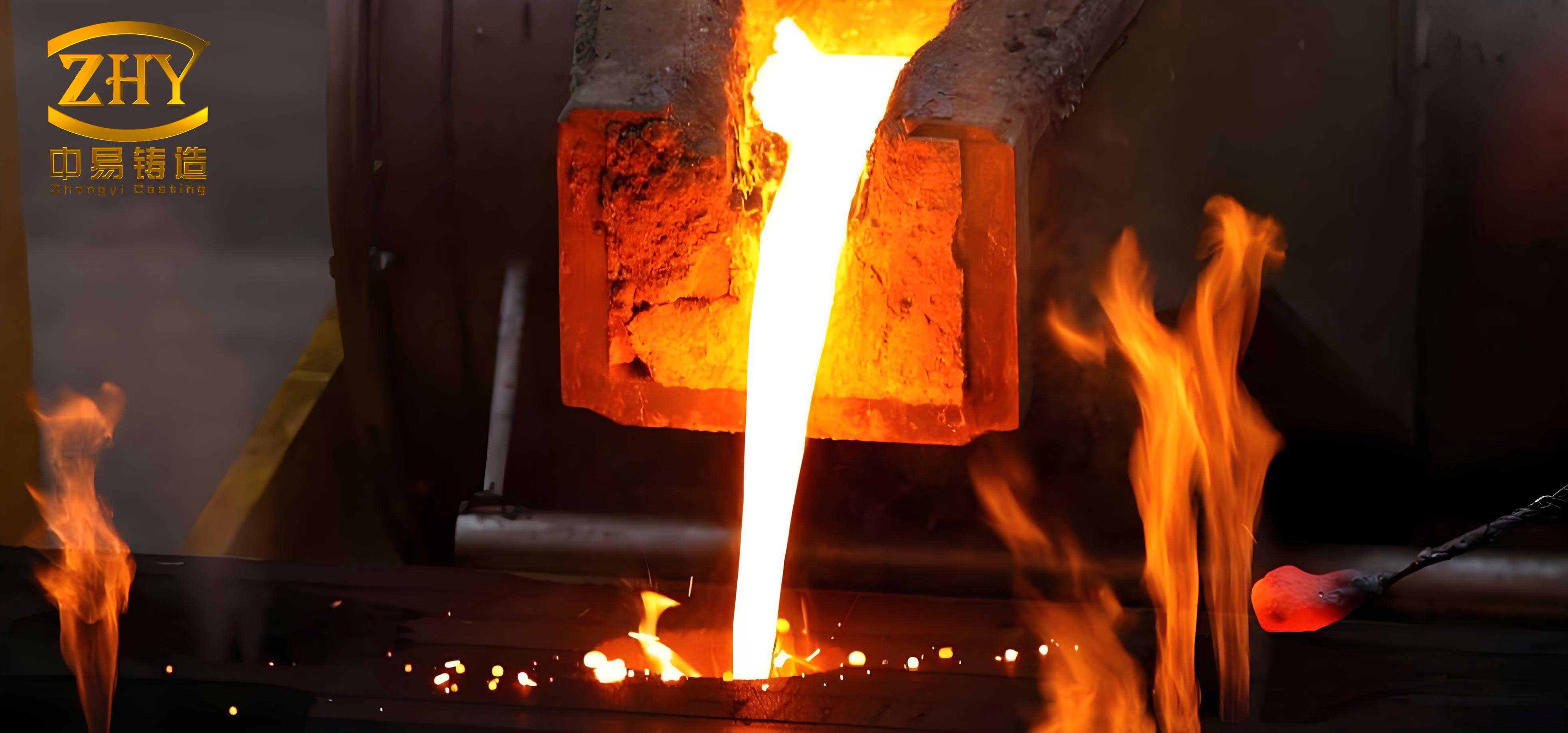
The core principle of lost foam casting involves using a foam pattern—typically made from expandable polystyrene (EPS), polymethyl methacrylate (EPMMA), or their copolymer (STMMA)—that is coated with a refractory coating and embedded in unbonded sand. Upon pouring molten metal, the foam pattern thermally decomposes, and the metal replaces the pattern cavity. While elegant in concept, the decomposition of the foam is the root cause of carbon defects. Early applications of lost foam casting were largely confined to cast iron and non-ferrous alloys, which are less sensitive to carbon pick-up. However, the growing demand for manufacturing low-carbon and ultra-low-carbon stainless steel castings using lost foam casting has made solving the problem of surface and volumetric carbon increase imperative. The inability to fully control the carbon from the pattern has led to a spectrum of defects including carburization, slag inclusions, carbon soot, wrinkles, cracks, porosity, and compositional inhomogeneity. I recall that between 2001 and 2006, many foundries specializing in lost foam casting faced severe limitations due to these carbon defects. Fundamentally, the presence of carbon in the mold cavity is the origin of all these issues. Therefore, a thorough understanding of the carbon transfer mechanisms is essential for advancing lost foam casting technology for high-performance alloys.
1. Mechanisms of Carbon Defect Formation in Lost Foam Casting
The formation of carbon defects in lost foam casting is a complex physicochemical process initiated by the thermal degradation of the foam pattern. To model this, let’s consider the most common pattern material, expandable polystyrene (EPS). Its chemical formula is $(C_8H_8)_n$. The pyrolysis of EPS is not a single-step reaction but a sequence of stages dependent on temperature. I have found it useful to break down the process as follows.
1.1 Thermal Decomposition and Formation of Elemental Carbon
When the molten metal (at temperatures often exceeding 1500°C for stainless steel) contacts the foam, the pattern undergoes rapid heating. The decomposition pathway can be summarized in key stages:
- Stage 1 (75°C – 316°C): The solid foam softens and melts into a viscous liquid. The polymer chains begin to break.
- Stage 2 (316°C – 576°C): Primary pyrolysis occurs. Long-chain $(C_8H_8)_n$ molecules crack into shorter chains, styrene monomers, and smaller hydrocarbon gases. A representative reaction can be simplified as:
$$ (C_8H_8)_n \rightarrow nC_8H_8 \text{ (monomer/short chains)} + \text{other hydrocarbons} $$ - Stage 3 (Above 800°C): Deep pyrolysis or secondary cracking takes place. The shorter hydrocarbons and gases from the previous stage further decompose. This is the most critical stage for carbon defect genesis. Hydrogen-rich gases like ethylene ($C_2H_4$) and methane ($CH_4$) crack to release hydrogen and solid carbon (soot or carbon black). The stoichiometry can be approximated by reactions such as:
$$ C_2H_4 \rightarrow 2C + 2H_2 $$
$$ CH_4 \rightarrow C + 2H_2 $$
Furthermore, the primary pyrolysis products have a carbon-to-hydrogen (C:H) ratio between 1:2 and 1:4. Under the reducing atmosphere inside the mold and at high temperatures, these hydrocarbons are unstable and tend to form elemental carbon. Therefore, carbon is generated through two primary routes during lost foam casting: 1) Direct formation from the primary pyrolysis products due to their inherent carbon content, and 2) Secondary cracking of gaseous products into carbon black and hydrogen at temperatures above 800°C.
The fate of this generated carbon determines the quality of the final casting. A portion of the carbon black may be transported through the coating’s permeability and expelled from the mold cavity if the vacuum system is effective. Another portion gets adsorbed onto the coating’s inner surface. The most problematic portions are those that either become entrapped at the metal front, forming folds or wrinkles (carbon folds), or dissolve into the molten stainless steel, causing carburization. The dissolution of carbon into the steel can be described by a diffusion-controlled process. The flux of carbon atoms, $J$, into the steel surface can be modeled using Fick’s first law for a simplified one-dimensional case:
$$ J = -D \frac{\partial C}{\partial x} $$
where $D$ is the diffusion coefficient of carbon in molten steel, $C$ is the carbon concentration, and $x$ is the distance from the surface. The activity of carbon at the metal/foam decomposition interface is extremely high, creating a strong driving force for carbon ingress.
1.2 Process Analysis of Carbon Defect Generation
In the specific context of lost foam casting for stainless steel, the problem is exacerbated. Stainless steels, especially grades like 304L or 316L, are designed with very low carbon content (often <0.03%) to preserve corrosion resistance by minimizing chromium carbide precipitation. The introduction of even 0.05% extra carbon can be detrimental. During pouring in lost foam casting, the decomposition of the foam pattern is rapid. Hydrogen, being lighter and more mobile, often reacts with any available oxygen or escapes, but the solid carbon tends to persist. In an oxygen-deficient environment (common in the sand mold under vacuum), the carbon does not oxidize to $CO$ or $CO_2$ efficiently and remains as a reactive solid or liquid film.
The distribution of carbon defects is notably inconsistent in lost foam casting. My observations align with literature findings: different castings from the same heat of steel can exhibit varying degrees of carburization, and within a single complex casting, carbon content can vary significantly from one region to another. Typically, surface carburization is most severe, and areas farther from the gating system or in lower-temperature zones (like isolated sections of the mold cavity) often show higher carbon pickup. This is because the advancing metal front pushes the decomposition products ahead. If these products cannot be vented quickly, they accumulate at the metal front or in blind pockets, leading to prolonged contact between carbon and steel, facilitating diffusion. The local carbon concentration, $C_{local}$, at a point on the casting surface can be thought of as a function of several variables:
$$ C_{local} = f(C_0, T_{pour}, v_{fill}, t_{contact}, \kappa_{coating}, P_{vac}, \rho_{foam}) $$
where:
- $C_0$ = Initial carbon content of the steel melt
- $T_{pour}$ = Pouring temperature
- $v_{fill}$ = Fill velocity of the metal
- $t_{contact}$ = Contact time between decomposition products and metal
- $\kappa_{coating}$ = Permeability of the coating
- $P_{vac}$ = Vacuum pressure in the mold
- $\rho_{foam}$ = Density of the foam pattern
This functional relationship highlights the multi-variable nature of the problem in lost foam casting, which I will explore in detail in the following sections.
2. Influencing Factors and Mitigation Strategies in Lost Foam Casting
Controlling carbon defects in lost foam casting requires a systemic approach targeting each stage of the process. Based on my research and practical investigations, I categorize the key factors into four domains: the foam pattern, the coating, the casting process parameters, and other ancillary factors.
2.1 Influence of the Foam Pattern and Pattern Assembly
The foam pattern is the primary source of carbon in lost foam casting. Its material composition and physical properties directly determine the amount and nature of the pyrolysis products.
Material Selection: The three main materials used are EPS, EPMMA, and STMMA copolymer. Their characteristics pertaining to lost foam casting are summarized in the table below.
| Material | Chemical Formula | Carbon Content (wt%) | Approx. Gas Evolution | Char Residue | Relative Cost | Suitability for Stainless Steel |
|---|---|---|---|---|---|---|
| Expandable Polystyrene (EPS) | $(C_8H_8)_n$ | ~92.3% | High volume, slower at low T | Highest | Lowest | Poor – High carbon risk |
| Expandable Polymethyl Methacrylate (EPMMA) | $(C_5H_8O_2)_n$ | ~60.0% | Very high volume, very rapid | Low | High | Moderate – High gas may cause defects |
| STMMA Copolymer (EPS/EPMMA) | Variable | ~69.6% (typical) | Moderate, between EPS & EPMMA | Moderate-Low | Moderate | Best – Balanced properties |
From the perspective of minimizing carbon defects in lost foam casting of stainless steel, STMMA copolymer is often the optimal choice. Although its carbon content is not the lowest, it offers a crucial advantage: the presence of oxygen in its molecular structure (from the MMA component). During pyrolysis, this oxygen can facilitate more complete gasification, potentially forming $CO$ and $CO_2$ rather than solid carbon. The decomposition reaction for an STMMA pattern can be conceptually represented as a more oxygenated pyrolysis, though the exact stoichiometry is complex:
$$ \text{STMMA} \rightarrow a\,C_xH_y + b\,C + c\,H_2 + d\,CO + e\,CO_2 + \ldots $$
The coefficients depend on the EPS/EPMMA ratio and pyrolysis conditions. A higher EPMMA content generally promotes cleaner gasification but at the risk of excessive gas pressure.
Pattern Density ($\rho_{foam}$): Density is a critical parameter in lost foam casting. While a higher density pattern yields better surface finish and dimensional stability, it also contains more mass of carbon per unit volume. The total carbon mass available for potential defect formation, $m_C$, is proportional to the pattern density and volume $V$:
$$ m_C \propto \rho_{foam} \cdot V \cdot w_C $$
where $w_C$ is the weight fraction of carbon in the foam material. Therefore, in lost foam casting, it is essential to use the lowest possible pattern density that still maintains sufficient strength to withstand coating, handling, and sand compaction without deformation.
Pattern Assembly and Adhesives: Complex patterns are often assembled from multiple sections. Each glue joint introduces adhesive, which is also a polymer and decomposes during pouring. Using excessive amounts of high-carbon adhesive exacerbates the carbon problem. Mitigation strategies include:
- Designing patterns for minimal assembly, favoring one-piece molding where possible.
- Ensuring joint surfaces are smooth to minimize adhesive gap and required adhesive volume.
- Selecting low-carbon or carbon-free, water-based adhesives specifically formulated for lost foam casting.
- Optimizing adhesive application to use the minimum amount necessary for structural integrity.
The carbon contribution from adhesives, $C_{adhesive}$, can be a significant secondary source in lost foam casting and must be included in the total carbon budget for the mold cavity.
2.2 Influence of the Refractory Coating
In lost foam casting, the coating is not merely a barrier; it functionally is the mold wall. Its properties govern the interaction between the decomposing pattern and the molten metal. Two coating properties are paramount for controlling carbon defects: permeability and wettability by the pyrolysis products.
Permeability ($\kappa_{coating}$): High permeability allows the gaseous decomposition products ($H_2$, $CH_4$, $C_2H_4$, etc.) to escape rapidly through the coating into the surrounding sand, where they can be evacuated by the vacuum system. This reduces the partial pressure of hydrocarbons in the cavity and the time available for secondary cracking into carbon black. The flow of gas through the coating can be approximated by Darcy’s law:
$$ Q = \frac{\kappa_{coating} A \Delta P}{\mu L} $$
where $Q$ is the volumetric flow rate, $A$ is the area, $\Delta P$ is the pressure differential across the coating, $\mu$ is the gas viscosity, and $L$ is the coating thickness. Therefore, to maximize $Q$ for a given $\Delta P$, we want high $\kappa_{coating}$ and low $L$. This means selecting coarse, well-graded refractory fillers (like zircon, alumina, or mullite) and applying the thinnest possible coating that still provides adequate refractory strength and prevents metal penetration.
Wettability and Catalytic Effects: If the liquid pyrolysis products (the tar-like intermediate phase) wet the coating surface poorly, they tend to bead up, increasing the interfacial area with the metal and hindering flow. Good wettability allows these liquids to spread into a thin film, potentially facilitating their vaporization and escape. The contact angle $\theta$ is a key measure. A low $\theta$ indicates good wettability. The choice of binder (e.g., colloidal silica, latex) and additives influences this. Furthermore, research has shown that certain additives like cryolite ($Na_3AlF_6$) can play a catalytic role. At high temperatures, cryolite decomposes:
$$ 2Na_3AlF_6 \rightarrow 6NaF + Al_2F_6 $$
These fluoride compounds may react with or adsorb carbonaceous species, helping to “scavenge” carbon from the interface and reduce carbon defects in lost foam casting. The effectiveness can be modeled as an increase in an effective carbon removal rate constant, $k_{remove}$.
| Property | Target | Rationale | Common Materials/Measures |
|---|---|---|---|
| Permeability | High | Facilitates rapid gas evacuation, reducing carbon residence time. | Coarse fillers (Zircon, Alumina), controlled grain size distribution. |
| Thickness | Minimal | Reduces gas flow resistance (see Darcy’s law). | Dipping/Slurry control, single coat if possible. |
| Wettability by Pyrolysis Liquids | High (Low $\theta$) | Promotes spreading and vaporization of liquid decomposition products. | Specific binder systems (e.g., latex-modified colloidal silica). |
| Catalytic/Active Additives | Inclusion beneficial | Promotes chemical breakdown or adsorption of carbon species. | Cryolite ($Na_3AlF_6$), other fluoride compounds. |
| Green and Fired Strength | Sufficient | Prevents mold wall collapse or erosion during pouring. | Proper binder type and percentage. |
2.3 Influence of Casting Process Parameters
The dynamics of mold filling and solidification in lost foam casting are unique and critically influence carbon pickup. The key parameters here are pouring temperature, pouring rate (or fill velocity), gating design, and mold vacuum.
Pouring Temperature ($T_{pour}$) and Velocity ($v_{fill}$): Higher pouring temperatures increase the rate of foam decomposition, potentially leading to a higher instantaneous generation of gaseous and liquid products. If the fill velocity is too slow, the metal front advances leisurely, allowing a thick layer of decomposition products to build up and linger against the metal. This prolongs the contact time $t_{contact}$, increasing carbon dissolution. Conversely, a very high fill velocity can cause turbulent flow, potentially entrapping decomposition products within the metal as inclusions. An optimal regime exists. We can conceptualize a dimensionless number, the Carbon Transport Number ($CTN$), for lost foam casting:
$$ CTN = \frac{\text{Rate of Carbon Generation}}{\text{Rate of Carbon Removal}} \approx \frac{k_{gen}(T_{pour}, \rho_{foam})}{v_{fill} \cdot \kappa_{coating} \cdot (P_{atm} – P_{vac})} $$
We aim to minimize $CTN$. Therefore, a balanced approach with a sufficiently high pour temperature to ensure fluidity but coupled with a rapid, smooth fill is desirable.
Gating System Design: This is perhaps the most critical practical factor in lost foam casting for defect control. The goal is to design a system that ensures smooth, progressive filling with minimal turbulence and provides a path for the decomposition products to be pushed into vents, risers, or special slag traps. Bottom gating or stepped (taper) gating systems are generally preferred over top pouring for stainless steel in lost foam casting. Bottom gating creates a calm, rising metal front that pushes the lighter decomposition products upward and ahead, ideally into an open riser or an extension of the mold cavity acting as a collection chamber. This design minimizes back-pressure of gases on the metal and reduces the chance of liquid pyrolysis products being trapped at the metal front. The design should avoid creating isolated “pockets” where gases and carbon can be trapped.
Mold Vacuum ($P_{vac}$): Applying a vacuum to the sand mold is standard in lost foam casting. It helps stabilize the mold, draw gases through the coating, and improve metal feeding. The vacuum level directly impacts the pressure differential $\Delta P$ in Darcy’s law for gas flow. A higher vacuum (lower absolute pressure $P_{vac}$) increases $\Delta P$, enhancing gas evacuation. This helps remove carbon-bearing gases before they crack into solids. However, an excessively high vacuum can cause other issues like mold wall collapse (if coating strength is insufficient) or severe penetration of metal into the sand. For stainless steel lost foam casting, a moderately high vacuum is recommended, typically in the range of 0.04 to 0.06 MPa (400 to 600 mbar below atmospheric), but this must be optimized for the specific coating and pattern.
2.4 Other Influencing Factors
Melting Practice and Base Metal Chemistry: Starting with a melt that has the lowest possible initial carbon content ($C_0$) provides a larger margin for error. Any carbon pickup during lost foam casting will then result in a lower final carbon content. This requires careful charge selection (using low-carbon ferroalloys, high-purity raw materials) and melting under conditions that minimize carbon pick-up from furnaces or atmosphere.
Sand Type and Compaction: While unbonded sand (like silica or olivine) is typical, its properties affect heat transfer and gas flow. Sand with high thermal conductivity can cool the metal faster, reducing $t_{contact}$, but may also affect the foam decomposition rate. Proper sand compaction around the coated pattern is essential to prevent mold wall movement that could disrupt the delicate filling process in lost foam casting.
The interplay of all these factors can be summarized in a holistic equation for the final surface carbon concentration $C_s$ in a lost foam casting:
$$ C_s = C_0 + \int_{0}^{t_{solid}} \left[ k_d \cdot A \cdot (C_{eq}(T) – C_s(t)) – k_r \cdot \kappa \cdot (P_{gas} – P_{vac}) \right] dt $$
Where:
- $C_0$ = Initial melt carbon content.
- $t_{solid}$ = Local solidification time.
- $k_d$ = Carbon dissolution rate constant (dependent on foam material, temperature).
- $A$ = Effective interfacial area between decomposition products and metal.
- $C_{eq}(T)$ = Equilibrium carbon concentration at the interface (very high).
- $k_r$ = Carbon removal rate constant via gas flow.
- $P_{gas}$ = Partial pressure of carbon-bearing gases in the cavity.
This integral formulation underscores that carbon pickup in lost foam casting is a time-dependent, rate-process competition between dissolution and removal.
3. Advanced Strategies and Future Outlook for Lost Foam Casting
Beyond the fundamental controls, several advanced strategies are emerging to further combat carbon defects in lost foam casting, especially for demanding applications like super duplex stainless steels or high-nickel alloys.
Pattern Modification and Additives: Research into impregnating foam patterns with oxidizing agents or catalysts that promote complete gasification is ongoing. For instance, incorporating small amounts of oxidizing salts into the foam structure could provide internal oxygen sources during pyrolysis, converting $C$ to $CO$ at the source.
Active Mold Atmospheres: Instead of relying solely on vacuum, introducing a controlled reactive gas (like a very dilute oxygen-inert gas mixture) into the sand mold during pouring could help oxidize carbon at the coating interface. This is a delicate balance, as too much oxygen can oxidize the molten steel itself.
Computational Modeling: The complexity of lost foam casting makes it an ideal candidate for simulation. Advanced CFD (Computational Fluid Dynamics) models coupled with pyrolysis kinetics and carbon diffusion algorithms are being developed. These models can predict areas of high carbon risk by simulating the transient filling, foam degradation, gas flow, and species transport. The governing equations for such a multi-phase model in lost foam casting are formidable, involving Navier-Stokes equations for the metal, energy equations for heat transfer, species transport equations for carbon, and source terms for foam decomposition:
$$ \frac{\partial (\rho \phi)}{\partial t} + \nabla \cdot (\rho \vec{v} \phi) = \nabla \cdot (\Gamma \nabla \phi) + S_{\phi} $$
where $\phi$ could represent velocity, enthalpy, or carbon mass fraction, and $S_{\phi}$ contains the complex source terms from foam degradation.
In-process Monitoring: Using sensors to monitor real-time pressure and gas composition inside the mold cavity during lost foam casting could provide feedback for dynamic control of vacuum or pouring rate, moving towards a smart foundry process.
| Factor Category | Specific Parameter | Recommended Action for Stainless Steel | Expected Effect on Carbon Defects |
|---|---|---|---|
| Foam Pattern | Material | Use STMMA copolymer over EPS or pure EPMMA. | Reduces total carbon input and promotes cleaner gasification. |
| Density | Use minimum density for required pattern strength. | Directly reduces mass of carbon source. | |
| Assembly & Adhesive | Minimize joints; use low-carbon, minimal adhesive. | Eliminates secondary carbon sources. | |
| Coating | Permeability | Maximize with coarse, well-graded refractories. | Enhances evacuation of carbon-bearing gases. |
| Thickness | Apply thinnest feasible uniform layer. | Reduces resistance to gas flow. | |
| Additives | Consider active additives like cryolite. | Catalytically removes carbon at the interface. | |
| Process | Gating Design | Use bottom or stepped gating; include product vents/risers. | Provides escape path for decomposition products, reduces $t_{contact}$. |
| Pouring Parameters | Optimize $T_{pour}$ and $v_{fill}$ for rapid, tranquil fill. | Balances decomposition rate with product removal. | |
| Mold Vacuum | Apply robust, consistent vacuum (e.g., 0.05 MPa). | Increases driving force for gas evacuation ($\Delta P$). | |
| Melting Practice | Start with ultra-low $C_0$ melt. | Provides buffer against inevitable pickup. |
4. Conclusion
Mastering the control of carbon defects is pivotal for unlocking the full potential of lost foam casting in the production of high-integrity stainless steel components. Through my analysis, it is clear that carbon defects in lost foam casting are not caused by a single factor but arise from the intricate interplay of pattern material chemistry, coating physics, and fluid dynamics during mold filling. The inherent inconsistency of carbon pickup—varying from casting to casting and within a casting—underscores the stochastic nature of the foam decomposition and gas-metal interaction processes in lost foam casting.
The most effective approach is a holistic, integrated strategy. Firstly, selecting the appropriate pattern material, with STMMA copolymer being a strong candidate, directly attacks the problem at its source. Secondly, engineering a highly permeable, thin, and potentially active coating is essential for managing the decomposition products. Thirdly, process design, particularly gating and vacuum control, must be optimized to create a smooth, progressive fill that sweeps decomposition products away from critical casting surfaces. Finally, stringent control over melting and base chemistry provides a vital safety margin.
The future of lost foam casting for stainless steel lies in the continued refinement of these strategies, aided by computational modeling and advanced process monitoring. By systematically addressing each link in the chain from foam to finished casting, the promise of lost foam casting as a precise, economical, and green manufacturing method for complex stainless steel parts can be fully realized, moving it firmly into the realm of high-end equipment manufacturing.