
The global manufacturing sector stands as a significant contributor to energy consumption and greenhouse gas emissions. Within this landscape, foundry processes, particularly sand casting, are essential yet notably energy-intensive and polluting. The drive towards low-carbon economies necessitates a paradigm shift, focusing not merely on reducing absolute emissions but on enhancing the efficiency with which carbon emissions are generated relative to productive output. This article, from my perspective as a researcher in sustainable manufacturing, delves into the concept of carbon efficiency specifically for sand casting. I aim to move beyond simple carbon accounting by developing a comprehensive model that links emissions to key production performance indicators, thereby providing a more nuanced and actionable tool for environmental assessment and improvement in foundry operations.
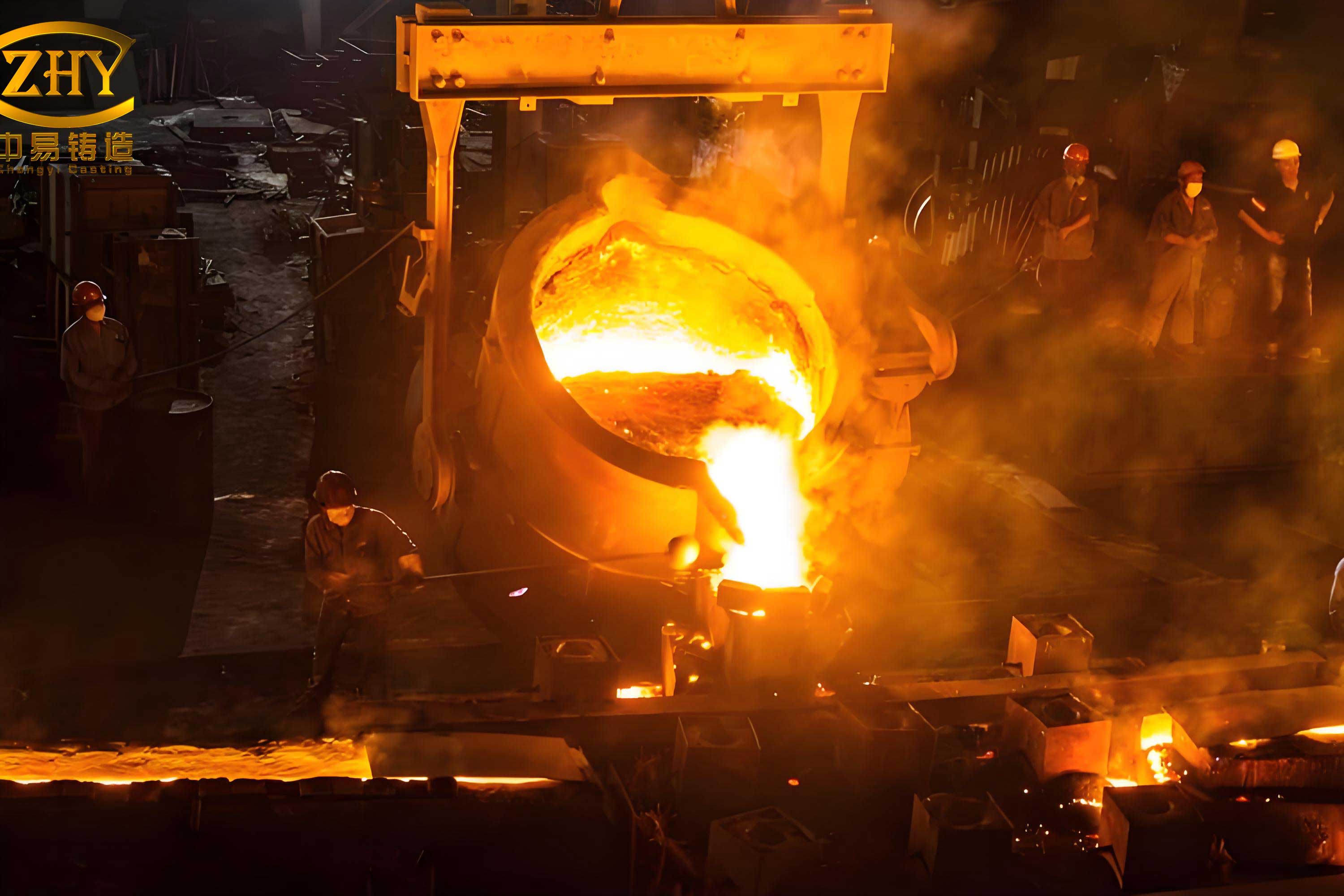
The traditional metric of carbon intensity, defined as emissions per unit of economic output, offers a high-level view but fails to capture the intricate dynamics of a physical production process like sand casting. The carbon footprint of a sand casting process is influenced by a complex interplay of factors: the technical route, equipment utilization, production rate, cycle time, material consumption, and direct energy use. Therefore, a singular focus on total carbon dioxide equivalent (CO₂e) emissions can be misleading. Two foundries might have similar total emissions, but one could be producing significantly more castings using better-utilized equipment and cleaner energy. To guide effective, targeted energy conservation and emission reduction (ECER) activities, we need a metric that reflects this multi-dimensional relationship. This is the core motivation for defining and modeling sand casting carbon efficiency.
1. Defining Carbon Efficiency for Sand Casting
Drawing from concepts like carbon intensity and carbon productivity, but tailoring them to the operational reality of a foundry floor, I define Sand Casting Carbon Efficiency (SCCE) as follows: Within the boundaries of a sand casting production process, SCCE represents the capability to minimize carbon emissions while maximizing production effectiveness, comprehensively considering factors such as production capacity, equipment status, resource input, and environmental impact.
This definition posits that true efficiency is not just low emissions, nor just high output, but the optimal ratio between the two, moderated by the state of resources. A process with high emissions might still be relatively “carbon efficient” if it correspondingly delivers exceptionally high, reliable output from well-utilized assets. Conversely, a low-emission process that is idle or produces very little is inefficient. Therefore, SCCE must be a multi-dimensional construct.
2. Modeling Carbon Emissions in Sand Casting: The Process Carbon Source Approach
To quantify carbon efficiency, we must first accurately model the carbon emissions of the sand casting process. Based on an analysis of the sand casting workflow, emissions can be categorized into five fundamental Process Carbon Sources (PCS). These are grouped into two major types: Equipment Carbon Sources (C_eq) and Non-Equipment Carbon Sources (C_neq).
| Carbon Source Type | Sub-category | Key Influencing Factors | Description |
|---|---|---|---|
| Equipment (C_eq) | Idle/Paused (C_PC) | Idle power (P_o), time (t) | Emissions from equipment in standby or ready mode. |
| Loaded (C_LC) | Idle power (P_o), load mass (m_e), specific load power (P_w), time (t), loss coefficient (μ) | Emissions from equipment performing work (e.g., mixing, compacting, pouring). | |
| Non-Equipment (C_neq) | Material Consumption (C_MC) | Quantity of material (U_i), energy for material processing (ES_k) | Embedded emissions from consumables (sand, binders, coatings). |
| Direct Energy Consumption (C_EC) | Amount of fuel/energy (V_i), emission factor (E_i) | Emissions from direct combustion of fuels (e.g., in melting). | |
| Non-Product Output (C_UC) | Quantity of waste (Q_i), treatment difficulty factor (φ_i) | Emissions from handling and disposing of waste sand, slag, and other by-products. |
The emissions from each PCS can be calculated using the emission factor method, aligned with standards like PAS 2050. The general calculation models are as follows:
For Equipment Carbon Sources:
Idle/Paused Source: $$C_{PC} = P_o \cdot t \cdot E_e$$
Loaded Source: $$C_{LC} = (P_o + \mu \cdot m_e \cdot P_w) \cdot t \cdot E_e$$
where \(E_e\) is the carbon emission factor for electricity.
For Non-Equipment Carbon Sources:
Material Consumption: $$C_{MC} = \sum_{i=1}^{n} \sum_{k=1}^{i} (ES_k \cdot U_i) \cdot E_e$$
Direct Energy: $$C_{EC} = \sum_{i=1}^{n} V_i \cdot E_i$$
Non-Product Output: $$C_{UC} = \sum_{i=1}^{n} \sum_{k=1}^{i} (ES_k \cdot Q_i \cdot \phi_i) \cdot E_e$$
The total process carbon emission (\(C_{pro}\)) for a sand casting operation is the sum of all these sources:
$$C_{pro} = C_{eq} + C_{neq} = (C_{PC} + C_{LC}) + (C_{MC} + C_{EC} + C_{UC})$$
3. The Four-Dimensional Sand Casting Carbon Efficiency Model
Based on the defined scope of SCCE, I propose a model comprising four distinct but interrelated dimensions. Each dimension captures a critical relationship between emissions and a key performance aspect of the sand casting process.
3.1 Production Capacity Carbon Efficiency (SCCE_cp)
This dimension evaluates how effectively carbon emissions are “spent” to generate production output. It is defined as the total carbon emissions of the sand casting process divided by its production capacity.
$$SCCE_{cp} = \frac{C_{eq} + C_{neq}}{CP} = \frac{(C_{PC} + C_{LC}) + (C_{MC} + C_{EC} + C_{UC})}{CP}$$
Where \(CP\) represents the production capacity. For high-volume sand casting of small parts, \(CP\) can be the number of molds produced; for other modes, it could be the tonnage of good castings per unit time. Calculating \(CP\) requires aggregating capacity from equipment, labor, and production lines, considering factors like effective working time (\(T_w\)), efficiency rates (\(\eta\)), and standard cycle times (\(t_r\)). A lower \(SCCE_{cp}\) indicates that less carbon is emitted per unit of production output, which is desirable.
3.2 Equipment Utilization Carbon Efficiency (SCCE_eq)
This dimension focuses on the relationship between emissions from equipment and how effectively that equipment is used. It is defined as the total equipment-source emissions divided by the overall equipment effectiveness.
$$SCCE_{eq} = \frac{\sum_{i=1}^{n} (C^i_{PC} + C^i_{LC})}{EP_{eq}}$$
Where \(EP_{eq}\) is the comprehensive equipment productivity, a function of availability (time utilization), performance rate (speed efficiency), and quality rate (yield of good castings). It can be expressed as:
$$EP_{eq} = \sum_{i=1}^{n} \eta_{eq} \cdot \frac{N_{qi}}{t_{ai} \cdot t_{opi} \cdot C_{dri}}$$
where \(N_q\) is quantity of good castings, \(t_a\) is total available time, \(t_{op}\) is operating time, and \(C_{dr}\) is design rate. A lower \(SCCE_{eq}\) signifies that the emissions from running equipment are better justified by high equipment utilization and yield.
3.3 Energy Consumption Carbon Efficiency (SCCE_e)
This dimension highlights the share of total emissions that originates directly from energy consumption (both electrical from equipment and direct fuels). It is defined as the ratio of energy-related emissions to the total process emissions.
$$SCCE_{e} = \frac{\sum_{i=1}^{n} (C^i_{LC} + C^i_{PC} + C^i_{EC})}{C_{pro}}$$
A lower \(SCCE_e\) value suggests that a smaller proportion of the total carbon footprint is tied to energy use, which could indicate efficient energy use or a larger relative contribution from material-related emissions. This metric helps identify processes where energy-saving measures will have the most significant impact on the total carbon footprint.
3.4 Production Cycle Carbon Efficiency (SCCE_t)
This dimension assesses the rate of carbon emission relative to the production pace. It is defined as the total carbon emissions per unit of production cycle time.
$$SCCE_{t} = \frac{\sum_{i=1}^{n} (C^i_{LC} + C^i_{PC} + C^i_{MC} + C^i_{EC} + C^i_{UC})}{\sum_{j=1}^{m} \Delta_j}$$
Where \(\Delta_j\) is the duration of the j-th production cycle. A lower \(SCCE_t\) indicates a slower emission rate for a given output, often associated with leaner operations with less waiting and downtime, which is beneficial from an environmental flow perspective.
Thus, the complete Sand Casting Carbon Efficiency is represented by the vector:
$$SCCE = \{ SCCE_{cp},\ SCCE_{eq},\ SCCE_{e},\ SCCE_{t} \}$$
Evaluating a sand casting process requires looking at all four dimensions simultaneously.
4. Evaluating Sand Casting Processes Using Grey Relational Analysis
Comparing multiple sand casting lines or process routes based on the four-dimensional SCCE vector is not straightforward. Is a line better because it has a slightly better \(SCCE_{cp}\) but a worse \(SCCE_{eq}\)? To enable a comprehensive comparative evaluation, I employ the Grey Relational Analysis (GRA) method. GRA is suitable for multi-attribute decision-making with limited information, as it measures the similarity between a candidate sequence and an ideal reference sequence.
The evaluation steps are as follows:
Step 1: Construct the Decision and Ideal Matrices. For \(m\) alternative sand casting processes, form a decision matrix \(CM\) with \(m\) rows (processes) and 4 columns (SCCE dimensions). From this matrix, create an ideal reference sequence \(P\) by selecting the best value for each dimension (the minimum value for all SCCE metrics, as lower is better). Append this ideal sequence to the decision matrix to form the extended matrix \(PCM\).
Step 2: Normalize the Matrix. Normalize the values in \(PCM\) to eliminate scale differences. Since all SCCE metrics are “lower-is-better”, use the following formula for the j-th process and k-th indicator:
$$v_j(k) = \frac{cm_j(k_{max})}{cm_j(k)}$$
where \(cm_j(k_{max})\) is the maximum value for indicator \(k\) across all processes. This ensures all normalized values \(v_j(k)\) are positive, with larger values being better.
Step 3: Calculate Grey Relational Coefficients. The coefficient \(\psi_j(k)\) measures the closeness of the j-th process’s k-th indicator to the ideal value \(v(k)\).
$$\psi_j(k) = \frac{\min\limits_j \min\limits_k |v(k) – v_j(k)| + \xi \max\limits_j \max\limits_k |v(k) – v_j(k)|}{|v(k) – v_j(k)| + \xi \max\limits_j \max\limits_k |v(k) – v_j(k)|}$$
where \(\xi\) is a distinguishing coefficient, typically set to 0.5.
Step 4: Compute the Weighted Grey Relational Grade. Aggregate the coefficients into a single score for each sand casting process, considering the relative importance (weight \(w_k\)) of each SCCE dimension.
$$\gamma_j = \sum_{k=1}^{4} \psi_j(k) \cdot w_k$$
The weights \(w_k\) can be determined using methods like AHP or entropy-based approaches, reflecting strategic priorities (e.g., prioritizing energy efficiency vs. throughput).
Step 5: Rank the Alternatives. Rank the sand casting processes based on their grey relational grade \(\gamma_j\). The process with the highest \(\gamma_j\) has the greatest similarity to the ideal sequence and is therefore the most carbon-efficient overall.
5. Illustrative Case Study
Consider a foundry producing box-type castings via a molding line. Four different sand casting process routes (L1 to L4) are analyzed over the production of 20 molds. Route L1 relies more on manual labor, while L2-L4 employ increasing levels of automation and different sand systems (e.g., self-setting resin sand).
Based on operational data, the carbon emissions from each Process Carbon Source are calculated (in kg CO₂e):
| Route | C_PC | C_LC | C_MC | C_EC | C_UC | Total (C_pro) |
|---|---|---|---|---|---|---|
| L1 | 7.2 | 10.5 | 95.0 | 3.1 | 4.8 | 120.6 |
| L2 | 6.1 | 12.0 | 85.0 | 2.1 | 2.7 | 107.9 |
| L3 | 5.7 | 11.0 | 89.0 | 1.7 | 2.4 | 109.8 |
| L4 | 7.0 | 15.0 | 93.0 | 2.9 | 3.6 | 121.5 |
Using production parameters (cycle time, equipment efficiency, etc.), the four SCCE dimensions are calculated:
| Metric | L1 | L2 | L3 | L4 | Ideal (Min) |
|---|---|---|---|---|---|
| SCCE_cp | 2.010 | 1.285 | 1.373 | 1.519 | 1.285 |
| SCCE_eq | 29.50 | 20.84 | 20.12 | 27.85 | 20.12 |
| SCCE_e | 0.172 | 0.187 | 0.168 | 0.205 | 0.168 |
| SCCE_t | 180.9 | 226.6 | 219.6 | 243.0 | 180.9 |
Applying the GRA procedure with equal weights for illustration (\(w_k = 0.25\)), we obtain the following grey relational grades:
| Sand Casting Route | Grey Relational Grade (γ) | Rank |
|---|---|---|
| L3 | 0.845 | 1 |
| L2 | 0.759 | 2 |
| L4 | 0.576 | 3 |
| L1 | 0.453 | 4 |
The analysis yields a critical insight. Route L4 has the highest total carbon emissions (121.5 kg), but it is not ranked as the least efficient. Route L3, despite having slightly higher total emissions than L2 (109.8 vs. 107.9 kg), is ranked as the most carbon-efficient overall. This is because L3 demonstrates a superior balance across all four dimensions—good production capacity, excellent equipment utilization, the lowest energy-related emissions share, and a reasonably fast cycle time. Route L1, with the lowest total cycle time emissions (SCCE_t), performs poorly in other dimensions (especially capacity and equipment efficiency), resulting in the lowest overall ranking. This outcome validates the necessity of the multi-dimensional SCCE model; a one-dimensional view based solely on total carbon emissions would have provided an incomplete and potentially misguided assessment of the sand casting processes.
6. Conclusion
In this article, I have developed a comprehensive framework for assessing carbon efficiency in sand casting. Moving beyond simple carbon accounting, the proposed model links process carbon emissions—calculated via a structured Process Carbon Source methodology—to four key performance dimensions: Production Capacity, Equipment Utilization, Energy Consumption, and Production Cycle. This four-dimensional Sand Casting Carbon Efficiency (SCCE) vector provides a holistic view of how carbon emissions relate to the operational reality of a foundry. The integration of Grey Relational Analysis offers a practical method to synthesize these multiple metrics into a single, comparative evaluation, enabling managers to identify the most carbon-efficient process route among alternatives.
The case study demonstrates the practical value of this approach. It clearly shows that the process with the lowest total carbon emissions is not necessarily the most carbon-efficient when production performance is factored in. This model equips sand casting enterprises with a nuanced analytical tool to pinpoint specific areas for improvement—be it optimizing capacity planning, improving equipment OEE, switching energy sources, or reducing cycle times—thereby supporting more informed and effective energy conservation and emission reduction strategies. Future work could involve integrating this model with real-time monitoring systems for dynamic carbon efficiency assessment and exploring its application to other casting processes beyond conventional sand casting.