
In my years of experience in the foundry industry, I have encountered numerous challenges related to casting defects, particularly those known as casting holes. These defects, which include slag holes and sand holes, are prevalent in iron castings and can significantly impact product quality and production efficiency. Through trial and error, I have developed a deep understanding of their causes and prevention. This article, written from my first-person perspective, aims to share insights into identifying, analyzing, and mitigating casting holes. I will emphasize the term “casting holes” throughout to underscore their importance, and I will use tables and formulas to summarize key points for clarity. The goal is to provide a detailed resource that exceeds 8000 tokens, ensuring thorough coverage of this critical topic.
Casting holes are essentially voids or inclusions in castings that compromise structural integrity. They manifest in two primary forms: slag holes (often called slag inclusions or dross) and sand holes (resulting from sand erosion or inclusion). Distinguishing between these casting holes is crucial for implementing effective corrective measures. In my practice, I have found that a systematic approach, focusing on root cause analysis, is essential for reducing the occurrence of casting holes.
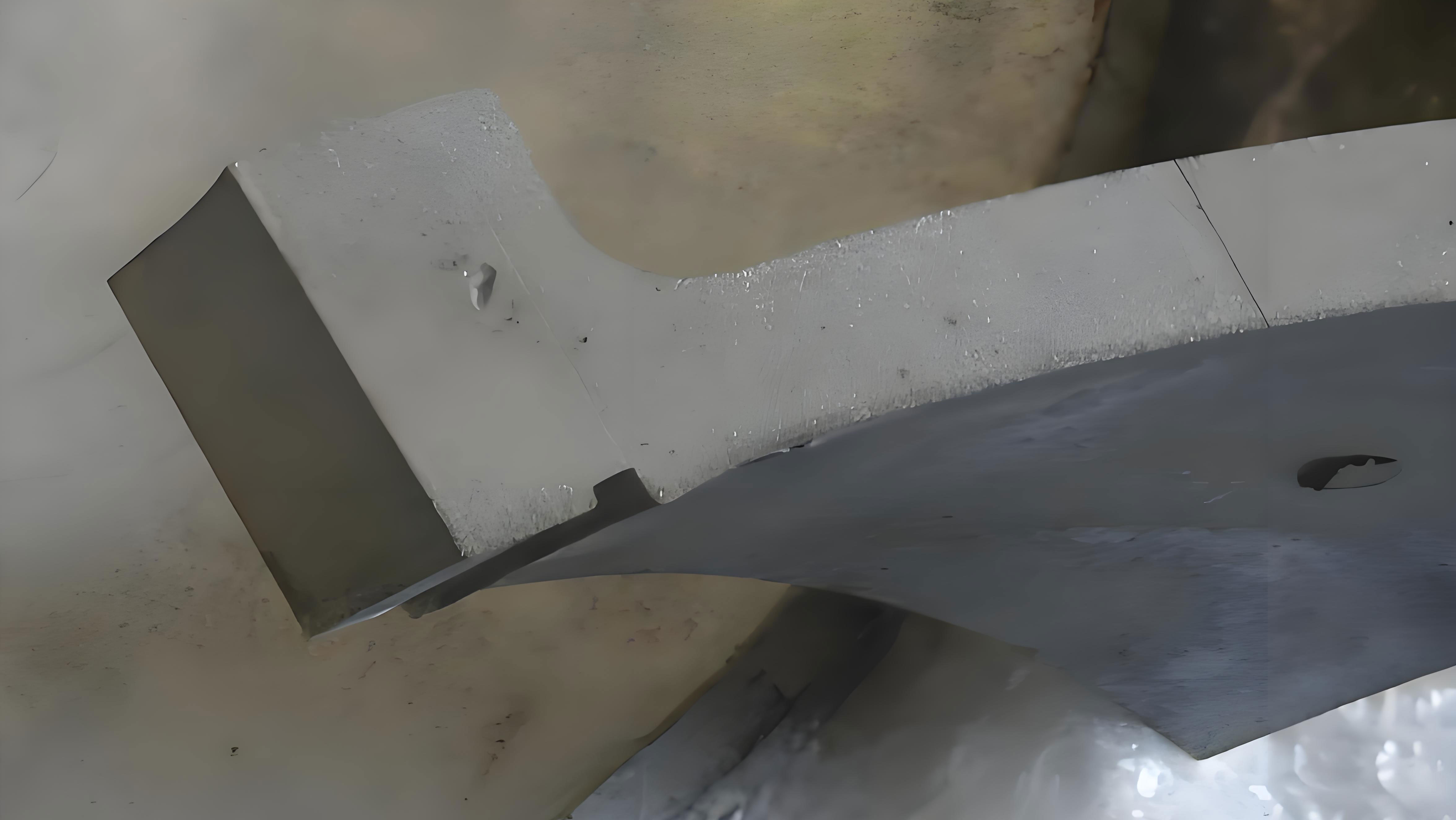
As seen in the image above, casting holes can appear as irregular cavities on or within castings, often containing non-metallic materials. This visual reference helps in recognizing these defects early. Now, let me delve into the specifics of each type of casting holes, starting with slag holes.
Slag Holes: Characteristics and Causes
Slag holes, a common type of casting holes, are characterized by cavities filled with slag or dross, typically non-metallic and irregular in shape. They often appear on the upper surfaces of castings or in areas where slag cannot float away easily. In my observations, these casting holes are usually smooth after shot blasting, indicating the presence of molten slag that solidified during casting.
The formation of slag holes is influenced by multiple factors. From my experience, the primary causes include inadequate gating design, poor slag removal during metal treatment, and oxidation during handling. To summarize, I have compiled the main reasons in the table below, which highlights how each factor contributes to casting holes.
| Cause Category | Specific Factors Leading to Slag Holes | Impact on Casting Holes |
|---|---|---|
| Gating System Design | Non-enclosed or poorly designed gates with low slag-trapping efficiency | Allows slag to enter the mold, forming casting holes |
| Metal Treatment | Incomplete slag removal before pouring; oxidation of magnesium/rare earth elements | Introduces slag inclusions that become casting holes |
| Pouring Process | Low pouring temperature; interrupted flow; failure to keep gates full | Prevents slag flotation, leading to casting holes |
| Ladle and Refractory Issues | Low耐火度 ladle linings generating secondary slag | Adds new slag sources, increasing casting holes |
| Additives and Inoculants | High-ash inoculants or劣质 ceramic filters | Introduces impurities that form casting holes |
From a theoretical standpoint, the tendency for slag formation can be expressed using thermodynamic principles. For instance, the activity of slag-forming elements like sulfur or oxygen in iron melt can be modeled. In my analysis, I often refer to equations that describe slag inclusion formation. One key formula relates to the buoyancy of slag particles:
$$ v = \frac{2g(\rho_m – \rho_s)r^2}{9\eta} $$
where \( v \) is the floating velocity of slag, \( g \) is gravitational acceleration, \( \rho_m \) is molten metal density, \( \rho_s \) is slag density, \( r \) is slag particle radius, and \( \eta \) is metal viscosity. This explains why low pouring temperature (increasing \( \eta \)) can trap slag, resulting in casting holes. Similarly, the oxidation reaction during treatment can be represented as:
$$ [Mg] + \frac{1}{2} O_2 \rightarrow MgO_{(s)} $$
where \( [Mg] \) denotes dissolved magnesium, and \( MgO \) forms slag that may lead to casting holes. These formulas help quantify the risks and guide preventive measures against casting holes.
Preventive Measures for Slag Holes
To combat slag holes, I have implemented various strategies in my foundry practice. The key is to address the root causes systematically. Below is a table summarizing effective preventive actions, all aimed at reducing the incidence of casting holes.
| Preventive Action | Implementation Method | Effect on Casting Holes |
|---|---|---|
| Optimize Gating Design | Use enclosed or semi-enclosed gates; incorporate slag traps and runners | Minimizes slag entry, preventing casting holes |
| Enhance Slag Removal | Employ effective slag coagulants; skim slag thoroughly before pouring | Reduces slag content, lowering casting holes risk |
| Control Pouring Parameters | Maintain high pouring temperature; ensure continuous, full-gate flow | Promotes slag flotation, avoiding casting holes |
| Improve Ladle Quality | Use high-refractory linings; adopt茶壶包 designs | Prevents secondary slag formation and casting holes |
| Select Quality Additives | Use low-ash inoculants; specify particle sizes; choose reliable filters | Reduces impurity introduction and casting holes |
| Process Stabilization | Fast melting and pouring; clean charge materials | Decreases oxidation and intergranular slag, mitigating casting holes |
In addition, I often apply empirical rules to estimate the required pouring temperature. For example, to avoid casting holes, the pouring temperature \( T_p \) should exceed the slag solidification temperature \( T_s \) by a margin:
$$ T_p > T_s + \Delta T $$
where \( \Delta T \) is typically 50-100°C based on my experience. This ensures slag remains fluid and can float out, reducing casting holes. Furthermore, the efficiency of slag traps can be evaluated using fluid dynamics models, which I simplify for practical use. By integrating these measures, I have consistently reduced casting holes in production.
Sand Holes: Characteristics and Causes
Sand holes represent another major category of casting holes, where cavities are filled with sand particles due to mold or core erosion. These casting holes can cause excess metal (if sand dislodges) or missing material (if sand falls into the cavity). In my work, I have observed that sand holes often appear after shot blasting or machining, revealing embedded sand.
The causes of sand holes are diverse, ranging from molding issues to equipment limitations. Based on my firsthand experience, I have identified key factors, as summarized in the table below. Each factor contributes directly to the formation of casting holes.
| Cause Category | Specific Factors Leading to Sand Holes | Impact on Casting Holes |
|---|---|---|
| Molding and Gating | Improper gating location/size; insufficient mold hardness; poor core design | Causes sand erosion or collapse, creating casting holes |
| Sand Properties | Low green strength; high fines content; inadequate binder quality | Reduces sand cohesion, leading to casting holes |
| Process Conditions | Long mold waiting time; high sand temperature; dry climate | Weakens sand, increasing casting holes risk |
| Equipment Issues | Worn tooling; excessive vibration; misalignment in molding lines | Induces sand drop or crushing, forming casting holes |
| Human and Environmental Factors | Insufficient cleaning; poor合箱 practices; external sand contamination | Introduces loose sand, resulting in casting holes |
To understand sand hole formation mechanistically, I rely on formulas related to sand strength. For instance, the green compression strength \( \sigma_c \) of molding sand is critical. It can be expressed as:
$$ \sigma_c = k \cdot \frac{C_b \cdot \rho_s}{1 + \frac{W}{C_b}} $$
where \( k \) is a constant, \( C_b \) is binder content, \( \rho_s \) is sand density, and \( W \) is water content. Low \( \sigma_c \) increases the likelihood of sand erosion and casting holes. Similarly, the erosion rate \( E \) due to molten metal flow can be modeled as:
$$ E = \alpha \cdot \frac{\rho_m v^2}{\sigma_t} $$
where \( \alpha \) is an erosion coefficient, \( \rho_m \) is metal density, \( v \) is flow velocity, and \( \sigma_t \) is sand tensile strength. High \( v \) from small gates accelerates erosion, causing casting holes. These equations guide my adjustments to prevent casting holes.
Preventive Measures for Sand Holes
Preventing sand holes requires a multifaceted approach focused on sand quality, process control, and equipment maintenance. In my practice, I have applied the following measures, which effectively reduce casting holes. The table below outlines these strategies.
| Preventive Action | Implementation Method | Effect on Casting Holes |
|---|---|---|
| Optimize Sand Mix | Increase clay/binder content; control fines; use additives for strength | Enhances sand cohesion, minimizing casting holes |
| Improve Molding Practices | Design proper drafts and radii; apply mold coatings; ensure adequate ramming | Reduces sand drop and erosion, preventing casting holes |
| Control Process Parameters | Shorten mold waiting time; regulate sand temperature and moisture | Maintains sand integrity, lowering casting holes risk |
| Maintain Equipment | Regularly check tooling and alignment; repair worn parts; stabilize molding lines | Prevents mechanical sand displacement and casting holes |
| Enhance Cleaning and合箱 | Thoroughly blow loose sand; cover gates; remove core fins | Eliminates sand sources that cause casting holes |
| Adapt to Line Limitations | Use排气塞 for hard-to-fill areas; select suitable machines for complex parts | Compensates for equipment flaws, reducing casting holes |
I also use empirical formulas to set process limits. For example, to avoid casting holes, the sand moisture content \( W \) should be optimized based on temperature \( T \):
$$ W = W_0 – \beta (T – T_0) $$
where \( W_0 \) is reference moisture, \( T_0 \) is reference temperature, and \( \beta \) is an adjustment factor. This helps maintain strength in varying conditions. Additionally, the critical flow velocity \( v_c \) to prevent erosion-related casting holes can be estimated:
$$ v_c = \sqrt{\frac{\sigma_t}{\gamma \rho_m}} $$
where \( \gamma \) is a safety factor. By keeping pouring velocities below \( v_c \), I mitigate sand holes. These proactive steps have proven essential in controlling casting holes.
Integrative Analysis: Differentiating and Preventing Casting Holes
In my experience, correctly distinguishing between slag holes and sand holes is vital for targeted prevention. Both are types of casting holes, but their root causes differ. I often employ a fishbone diagram approach to systematically analyze factors like man, machine, material, method, environment, and measurement. For instance, slag holes often correlate with metal treatment issues, while sand holes link to molding sand properties. By focusing on the primary contradictions, I can address casting holes effectively.
To further illustrate, I have developed a comparative table that highlights key distinctions between these casting holes, based on my observations. This aids in quick diagnosis and action.
| Aspect | Slag Holes | Sand Holes |
|---|---|---|
| Primary Cause | Slag inclusion from metal or gating | Sand erosion or inclusion from mold/core |
| Typical Location | Upper surfaces or slag-trapping areas | Areas with high metal flow or weak sand |
| Appearance After Cleaning | Smooth cavities with slag residues | Rough cavities with embedded sand |
| Key Preventive Focus | Slag removal and gating design | Sand strength and process stability |
| Relevant Formulas | Buoyancy and oxidation equations | Strength and erosion models |
Moreover, I emphasize process stability as a universal remedy for casting holes. Stable processes reduce variability, which is a common contributor to defects. In statistical terms, the occurrence rate of casting holes \( R_{ch} \) can be modeled as:
$$ R_{ch} = f(\sigma_p, \mu_p) $$
where \( \sigma_p \) is process standard deviation and \( \mu_p \) is process mean. Minimizing \( \sigma_p \) through consistent practices lowers \( R_{ch} \). This aligns with my philosophy that prevention is better than cure for casting holes.
Advanced Considerations and Future Directions
Beyond basic measures, I have explored advanced techniques to tackle casting holes. For example, computational fluid dynamics (CFD) simulations can predict slag entrapment or sand erosion, allowing pre-emptive design changes. These tools help visualize how casting holes form and guide optimizations. Additionally, real-time monitoring of sand properties and metal quality enables proactive adjustments, further reducing casting holes.
In terms of formulas, I often use quality control models. The Taguchi loss function, for instance, quantifies the cost of casting holes:
$$ L(y) = k(y – m)^2 $$
where \( L(y) \) is loss due to deviation from target \( m \), \( y \) is defect rate (e.g., casting holes frequency), and \( k \) is a constant. This motivates continuous improvement to minimize casting holes. Furthermore, reliability engineering principles apply; the probability of casting holes-free castings \( P_{cf} \) can be expressed as:
$$ P_{cf} = e^{-\lambda t} $$
where \( \lambda \) is failure rate due to casting holes, and \( t \) is production time. By reducing \( \lambda \) through robust processes, I enhance overall quality.
Looking ahead, I believe that integrating artificial intelligence for defect prediction will revolutionize how we handle casting holes. Machine learning algorithms can analyze historical data to identify patterns and recommend preventive actions, making the fight against casting holes more efficient. As I continue my work, I remain committed to sharing knowledge and advancing foundry practices to eliminate casting holes.
In conclusion, casting holes, including slag holes and sand holes, are persistent challenges in iron casting. From my first-hand experience, I have detailed their characteristics, causes, and preventive measures. By using tables for summary and formulas for theoretical backing, I aim to provide a comprehensive resource. Key takeaways include the importance of gating design, sand quality control, process stability, and systematic analysis. Through diligent application of these insights, foundries can significantly reduce casting holes, improving product quality and operational efficiency. Remember, every step taken to understand and address casting holes contributes to a more reliable manufacturing process.