
The development of robust casting processes for complex, high-performance steel castings is a cornerstone of advanced manufacturing, particularly for critical components in power generation equipment. As a foundry engineer engaged in the design and production of such components, I am tasked with overcoming significant metallurgical and geometrical challenges. This article details the comprehensive process design journey for a steam turbine medium-pressure inner casing, a quintessential example of a demanding steel casting. These steel castings operate under extreme temperatures and pressures, translating steam thermal energy into mechanical rotation. Their failure is not an option, mandating defect-free internal integrity and superior mechanical properties. The subject steel casting, with a single-half weight exceeding 11 metric tons and a complex geometry featuring numerous bosses, thick flanges, and intricate internal passages, presented a formidable set of obstacles to sound production.
The primary challenges stemmed from the geometry and the stringent quality requirements, which included 100% ultrasonic and magnetic particle inspection to the highest standards. The major technical hurdles identified were:
- Massive Thermal Sections: A large back flange created a significant isolated thermal mass, making sequential solidification and effective feeding exceptionally difficult.
- Internal Sand Burning & Erosion: The internal volute passages were narrow (as little as 55 mm wide) but adjacent to very thick sections. This combination created a high risk of metal penetration and sand fusion, leading to costly and difficult-to-remove surface defects.
- Core Shift and Distortion: The complex internal cavity required a large, cantilevered core assembly. Ensuring its dimensional stability and precise positioning during mold filling was critical to maintaining wall thickness.
- Defect Formation in Critical Areas: The stark variation in wall thickness, especially around the inlet chamber, predisposed the steel casting to shrinkage porosity, slag inclusions, and hot tearing.
The foundational step was a meticulous analysis of the steel casting’s geometry to identify these challenge areas. The chemical and mechanical property requirements for the material, a creep-resistant chromium-molybdenum steel, are summarized below:
| C | Si | Mn | P | S | Cr | Mo | Nb | W | N | Fe |
|---|---|---|---|---|---|---|---|---|---|---|
| 0.09-0.14 | ≤0.30 | 0.4-0.7 | ≤0.020 | ≤0.020 | 10.0-11.0 | 1.00-1.30 | 0.04-0.08 | 0.2-0.3 | 0.03-0.07 | Bal. |
| Tensile Strength (MPa) | Yield Strength (MPa) | Elongation (%) | Reduction of Area (%) | Hardness (HBW) |
|---|---|---|---|---|
| ≥ 690 | ≥ 490 | ≥ 11.0 | ≥ 35 | 220-260 |
These stringent specifications set the target for the entire process, as any internal defect could compromise the final properties of these critical steel castings.
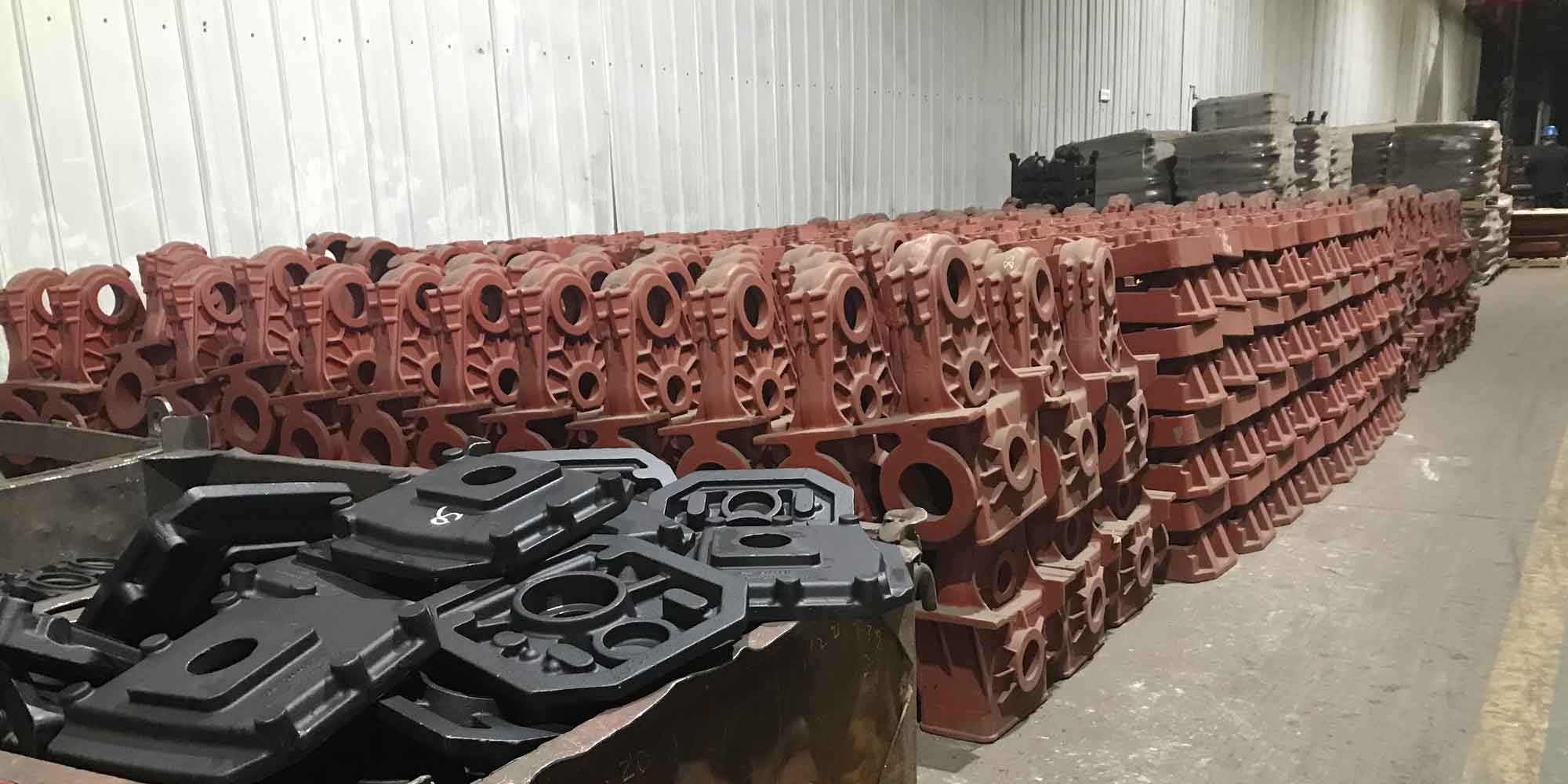
The core philosophy of the gating system design for large steel castings is to achieve a calm, predictable fill to minimize turbulence, secondary oxidation, and sand erosion. Given the high pouring temperatures (typically 1520-1620°C), a “bottom-up” filling strategy is paramount. For this steel casting, a drag-poured runner system with multiple ingates was designed. The key design parameter is the ingate velocity, which must be kept below a critical threshold to prevent jetting and surface folding. The target velocity was set at less than 0.55 m/s. The gating parameters were calculated to meet this requirement, ensuring a controlled fill time. The fill time $$ t $$ can be estimated from the mass flow rate:
$$ t = \frac{W}{\rho \cdot A \cdot v} $$
Where $$ W $$ is the casting weight, $$ \rho $$ is the liquid metal density, $$ A $$ is the total ingate cross-sectional area, and $$ v $$ is the average ingate velocity. The calculated fill time for this steel casting was approximately 166 seconds, which aligned with the principle of “low-temperature, rapid-pouring” for large steel castings to reduce total heat load on the mold.
The cornerstone of soundness in heavy-section steel castings is an effective feeding system. The goal is to establish a clear thermal gradient, directing solidification from the extremities of the casting back toward the feeders (risers). This is governed by the modulus principle, where the feeder modulus $$ M_{riser} $$ must be greater than the casting modulus $$ M_{casting} $$ at the point of feed:
$$ M = \frac{V}{A} $$
Here, $$ V $$ is volume and $$ A $$ is the cooling surface area. The large back flange, with its high modulus, was the primary concern. A traditional top-feeding approach was impractical due to the casting’s geometry. The innovative solution was the implementation of a massive “riser wall” or “feeder wall” placed against the thick back flange section within the mold cavity. This acts as an exothermic/insulated side-feeder, providing the necessary feed metal and thermal mass to compensate for the shrinkage in this challenging zone. Top risers were also placed on the horizontal parting line flanges to aid in overall feeding and as flow-offs. The total required feed metal volume $$ V_{feed} $$ must satisfy:
$$ V_{feed} = \alpha \cdot (V_{casting} + V_{riser}) $$
where $$ \alpha $$ is the solidification shrinkage factor for the steel alloy. The riser wall design was optimized to meet this requirement for the critical sections of these steel castings.
The intricate internal geometry of these steel castings necessitates complex core assemblies. The use of the riser wall meant the main volute core could not be supported by traditional end prints. Instead, a “balanced cantilever” or “bridge” core design was employed. The core was designed with a strong, central backbone that extended to supports on either side of the mold cavity. This required precise engineering to ensure the core remained rigid and correctly positioned during mold assembly and the dynamic forces of pouring. Any shift would result in unacceptable wall thickness variation in the critical internal passages of the steel casting.
Preventing specific defects was integrated into every stage of the process design for these steel castings:
- Against Sand Burn-On: The narrow, vulnerable sections of the internal core were made using high-refractoriness chromite sand instead of standard silica sand. The cores were vigorously compacted to achieve maximum density and resistance to metal penetration.
- Against Slag Inclusions: The gating system featured extended runners with slag traps. Additionally, slag collection pockets and ample venting channels were incorporated along the parting lines to float and trap slag while allowing gases to escape.
- Against Hot Tears: The significant variation in wall thickness creates differential cooling stresses. To mitigate this, strategic use of chill plates was considered in thin sections adjacent to thick masses to balance cooling rates. Furthermore, reinforcing “tie bars” or “bridges” were designed into the mold cavity across large openings in the backing flange. These bars, which become part of the steel casting and are later removed by cutting, help restrain the casting geometry during the vulnerable solid-state cooling phase, preventing the formation of stress cracks.
Modern process design for critical steel castings is incomplete without computational simulation. Using MAGMAsoft, the entire process was virtually validated before any metal was poured.
- Filling Analysis: The simulation confirmed a tranquil, progressive fill front. The liquid metal velocity remained within safe limits, showing no recirculation or air entrapment, validating the gating design for these large steel castings.
- Solidification & Feeding Analysis: This was the most critical simulation. The software predicted the time-temperature history and identified potential shrinkage zones. The results confirmed that the riser wall successfully created the required thermal gradient. The model showed the thick back flange solidifying directionally toward the feeder wall, with the feeder itself remaining liquid longest. The Niyama criterion (a derivative of temperature gradient and cooling rate) was used to predict microporosity risk, and the design showed a clear soundness margin in the final steel casting.
The heat transfer governing this phase is described by:
$$ \frac{\partial T}{\partial t} = \alpha \nabla^2 T $$
where $$ T $$ is temperature, $$ t $$ is time, and $$ \alpha $$ is the thermal diffusivity of the mold/metal system. - Stress Analysis: A preliminary stress simulation during cooling helped identify areas of high residual stress, which correlated with the locations chosen for the reinforcing tie bars, confirming their necessity.
| Challenge | Design Solution | Validation Method | Result |
|---|---|---|---|
| Feeding the Back Flange | Riser Wall (Insulated Side Feeder) | Modulus Calculation, Solidification Simulation | Eliminated macro-shrinkage in the heaviest section. |
| Internal Sand Burning | Chromite Sand Cores, High Compaction | Thermal Analysis (Simulated Heat Concentration) | Minimized penetration and fusion defects. |
| Core Stability | Balanced Cantilever Core Design | Mold Assembly Review, Dimensional Checks | Achieved correct internal wall thickness. |
| Slag & Gas Entrapment | Bottom Gating, Slag Traps, Extensive Venting | Mold Filling Simulation | Predicted calm fill; clean casting surfaces. |
| Hot Tearing | Reinforcing Tie Bars, Controlled Cooling | Stress Simulation, Visual Inspection | No cracking observed in high-risk areas. |
The final, optimized process was executed in production. The pour was conducted successfully according to the calculated parameters. After shakeout, the preliminary visual inspection was promising, with clean surfaces in the critical internal passages. The reinforcing bars were removed, and the casting underwent its full heat treatment cycle. Subsequent non-destructive testing (NDT) confirmed the success of the design:
- Ultrasonic Testing (UT): The steel casting body met the required Grade 2 acceptance criteria, with no reportable shrinkage or discontinuity indications.
- Magnetic Particle Testing (MT): No surface defects were detected in critical areas.
- Dimensional Inspection: The casting conformed to the machining allowances and required geometry.
- Coupons from the steel casting testified to the required mechanical properties as per Table 2.
This case study underscores that the successful production of high-integrity, complex steel castings is not an art but a disciplined engineering science. It requires a deep understanding of solidification principles, material behavior, and the interplay between geometry and process. By systematically deconstructing the challenges—massive thermal sections, internal sand integrity, core stability, and defect formation—and addressing each with targeted solutions like the innovative riser wall, specialized core sands, and a rigorously designed gating system, a robust process was built. The indispensable role of computational simulation in predicting and optimizing outcomes before committing to expensive tooling and metal cannot be overstated. It transforms process design from empirical guesswork into a predictable, analytical exercise. The final product, meeting all stringent NDT and property requirements, stands as validation of this holistic, science-based approach to manufacturing the most demanding steel castings for critical applications. This methodology provides a repeatable framework for tackling future challenges in the field of heavy-section and complex steel castings.