
I have long been interested in the role that ceramic cores play in alloy investment casting, especially when the target is complex internal cavities and thin-walled hollow structures. In my view, the progress of precision casting is inseparable from the progress of ceramic core technology, because the core determines the dimensional accuracy, the internal surface quality, the metallurgical integrity, and the final service reliability of castings used in aerospace, advanced metallurgy, and other high-end equipment. As alloy investment casting moves toward lightweight, integrated, and high-temperature service conditions, the demands placed on ceramic cores have become increasingly severe. A ceramic core must survive molten alloy contact, maintain dimensional stability at elevated temperature, resist chemical attack, and then be removed cleanly without damaging the casting. These requirements are often contradictory, and resolving them requires a coupled understanding of fabrication methods, material systems, and high-temperature performance.
In this article, I systematically review recent advances in ceramic cores for alloy investment casting. I focus first on the two principal fabrication routes, namely conventional forming and additive manufacturing, and I analyze their technical characteristics, performance-control mechanisms, and suitable application scenarios. I then discuss the three main material systems, alumina-based, silica-based, and magnesia-based ceramic cores, and I explain the intrinsic relationships among composition, microstructure, and high-temperature performance. Throughout the discussion, I use tables and formulas to summarize key data and mechanisms. Finally, I identify the core bottlenecks in current research and propose future directions for ceramic cores intended for high-end applications. My aim is to provide a useful reference for the development, optimization, and engineering application of high-performance ceramic cores in precision casting.
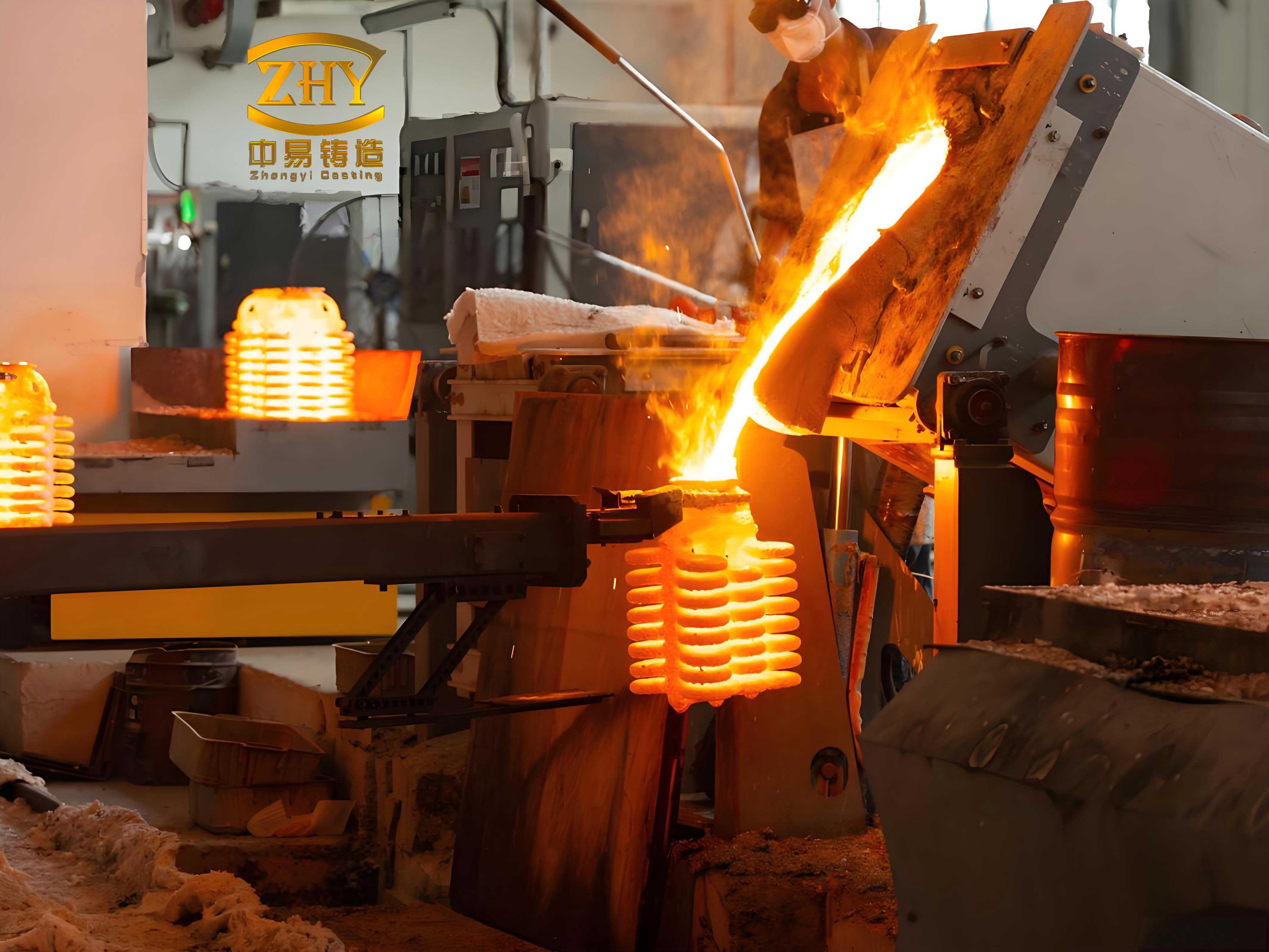
The importance of ceramic cores in precision casting can hardly be overstated. In investment casting, a wax pattern is assembled with a ceramic core, then coated with ceramic shell layers, dewaxed, fired, and filled with molten alloy. After solidification, the shell and core are removed, leaving a complex internal geometry. If the core deforms, reacts, or cannot be leached out, the entire casting may be rejected. Therefore, the core must simultaneously satisfy several requirements: high flexural strength at room and high temperatures, controlled porosity for leaching and permeability, low and isotropic shrinkage, minimal interfacial reaction with the alloy, and thermal expansion compatibility with the shell. These requirements can be expressed in quantitative terms. For example, the room-temperature flexural strength measured by three-point bending is commonly calculated as:
$$\sigma_f = \frac{3FL}{2bd^2}$$
where \(F\) is the applied load, \(L\) is the span, \(b\) is the specimen width, and \(d\) is the specimen thickness. The apparent porosity is often evaluated from bulk density and true density:
$$P = \left(1 – \frac{\rho_b}{\rho_t}\right)\times 100\%$$
where \(\rho_b\) is the bulk density and \(\rho_t\) is the true density. The linear shrinkage after sintering is given by:
$$\epsilon = \frac{L_0 – L}{L_0}\times 100\%$$
where \(L_0\) is the original length and \(L\) is the length after firing. The leaching rate, which is crucial for core removal, can be written as:
$$R_d = \frac{m_0 – m_t}{m_0}\times 100\%$$
where \(m_0\) is the initial mass and \(m_t\) is the mass after leaching for a given time. Interfacial wetting behavior is described by Young’s equation:
$$\gamma_{sv} – \gamma_{sl} = \gamma_{lv}\cos\theta$$
where \(\gamma_{sv}\), \(\gamma_{sl}\), and \(\gamma_{lv}\) are the solid-vapor, solid-liquid, and liquid-vapor interfacial energies, respectively, and \(\theta\) is the contact angle. A smaller contact angle indicates better wetting, which may help mold filling but can also intensify interfacial reactions. The thermal shock resistance of a ceramic core can be estimated by:
$$R = \frac{\sigma_f (1-\nu)}{E\alpha}$$
where \(\nu\) is Poisson’s ratio, \(E\) is Young’s modulus, and \(\alpha\) is the coefficient of thermal expansion. These formulas provide a framework for understanding why core performance is so sensitive to composition and processing.
1. Fabrication Methods
I divide the fabrication methods for ceramic cores used in precision casting into two broad categories: conventional forming and additive manufacturing. Conventional forming includes slip casting and pressing or hot injection molding. Additive manufacturing includes stereolithography, digital light processing, selective laser sintering, binder jetting, and related layer-by-layer techniques. Each route has distinct advantages and limitations, and the choice depends on the complexity of the internal cavity, the required dimensional tolerance, the production volume, and the alloy system.
1.1 Conventional Forming
Conventional forming has been used for decades and remains dominant for regular core geometries. In slip casting, a ceramic suspension containing powder, binder, and dispersant is poured into a mold cavity. The liquid is absorbed by the porous mold, and a green body forms on the mold surface. After drying, demolding, and sintering, the core is obtained. Slip casting is attractive because it can reproduce fine surface details and does not require high-pressure equipment. However, the stability of the slurry strongly affects the uniformity of the green body. Density gradients, cracks, and warping may occur if the viscosity and drying rate are not carefully controlled. In my assessment, slip casting is best suited for cores with moderate complexity and relatively thin walls, where the mold cost can be amortized over a large batch.
Pressing and hot injection molding involve filling a die with ceramic powder or a powder-binder mixture, applying pressure, and then sintering. The green body usually has higher density and better dimensional stability than in slip casting, and the production rate is higher. Hot injection molding is especially common for silica-based and magnesia-based cores because the thermoplastic binder provides good flowability. Nevertheless, pressure transmission is non-uniform in complex cavities, leading to local density differences. Dies are expensive and require long lead times, which makes rapid design iteration difficult. Table 1 compares conventional forming and additive manufacturing from the perspective of precision casting.
| Feature | Conventional forming | Additive manufacturing |
|---|---|---|
| Typical processes | Slip casting, pressing, hot injection molding | Stereolithography, digital light processing, selective laser sintering, binder jetting |
| Structural complexity | Moderate; complex internal channels are difficult | High; near-net shape of complex cavities and conformal channels |
| Dimensional accuracy | Good for simple shapes; limited by mold wear and shrinkage | High in-plane accuracy; anisotropic shrinkage along build direction |
| Production efficiency | High for batch production | Lower for mass production; suitable for small batches and prototypes |
| Tooling cost | High die or mold cost | Low tooling cost; high equipment cost |
| Microstructure control | Uniform for simple shapes; density gradients in complex shapes | Layer-wise structure; interlayer bonding and step effect must be controlled |
| Typical applications | Regular cores for automotive and industrial castings | Complex cores for aerospace turbine blades and medical implants |
From my perspective, conventional forming will remain important for cost-sensitive precision casting of regular parts. However, its inability to form highly complex internal passages is a fundamental limitation. This is where additive manufacturing offers a transformative advantage.
1.2 Additive Manufacturing
Additive manufacturing has opened new possibilities for ceramic cores in precision casting. Among the many techniques, stereolithography and digital light processing are the most widely studied for ceramic cores. In these methods, a photosensitive resin is mixed with ceramic powder to form a slurry. The slurry is selectively cured layer by layer by ultraviolet light or a digital micromirror device. After printing, the green body is debonded and sintered. The main advantage is excellent resolution, which allows the fabrication of thin walls, fine cooling channels, and complex trailing edges that cannot be produced by conventional dies. The main challenges include low printing efficiency, limited slurry stability, and shrinkage or cracking during debinding because of the large amount of organic resin.
Selective laser sintering uses a laser to selectively fuse the binder or the ceramic powder itself. It does not require a photosensitive slurry, so the material range is broader. Alumina-based, silica-based, and mixed systems have been successfully processed. The process is well suited for large and complex cores because there is no mold constraint. However, the as-built density is often insufficient, and the surface roughness is relatively high. Post-processing such as hot isostatic pressing or infiltration is often needed to improve mechanical properties. Binder jetting is another promising route. It uses a liquid binder to join powder particles, followed by curing and sintering. It offers high productivity and low cost, but the green strength is low, and the dimensional accuracy may be affected by binder migration and sintering shrinkage.
I find that the technical trade-offs in additive manufacturing can be summarized by the following relationships. The curing depth in stereolithography depends on the energy dose:
$$C_d = D_p \ln\left(\frac{E}{E_c}\right)$$
where \(C_d\) is the cured depth, \(D_p\) is the penetration depth, \(E\) is the exposure energy, and \(E_c\) is the critical energy. The sintering shrinkage is related to the green density and the final density:
$$\frac{\Delta L}{L_0} = \left(\frac{\rho_0}{\rho_f}\right)^{1/3} – 1$$
where \(\rho_0\) and \(\rho_f\) are the green and final densities. These equations explain why slurry solid loading and sintering schedule must be optimized together. A higher solid loading reduces shrinkage but increases viscosity and may compromise printability. A lower solid loading improves flow but causes larger shrinkage and a higher risk of cracking.
Table 2 lists typical additive manufacturing techniques and their characteristics for ceramic cores in precision casting.
| Technique | Feedstock | Strengths | Limitations |
|---|---|---|---|
| Stereolithography | Ceramic powder + photosensitive resin | High resolution, smooth surface, complex thin features | Low efficiency, slurry stability issues, debinding shrinkage |
| Digital light processing | Ceramic powder + photosensitive resin | Fast layer projection, good accuracy, scalable | Limited slurry viscosity window, anisotropic shrinkage |
| Selective laser sintering | Ceramic powder + binder or fusible phase | No slurry, wide material range, large parts | Low density, rough surface, post-processing needed |
| Binder jetting | Ceramic powder + liquid binder | High productivity, low cost, large build volume | Low green strength, binder migration, shrinkage control |
In my opinion, the future of core fabrication lies in hybrid approaches. For example, additive manufacturing can be used to produce a complex mold insert, which is then combined with conventional injection molding to improve productivity. Alternatively, additive manufacturing can create a near-net core that is subsequently infiltrated or coated to improve strength and surface quality. Such process fusion will support the development of precision casting toward higher accuracy, lower cost, and faster response.
2. Material Systems
The material system of a ceramic core determines its fundamental performance. Different matrix materials differ significantly in refractoriness, chemical stability, mechanical behavior, and leaching characteristics. In current practice, alumina-based, silica-based, and magnesia-based systems are the three mainstream families. I discuss each in turn, with emphasis on composition design, microstructure, and high-temperature service performance.
2.1 Alumina-Based Ceramic Cores
Alumina-based ceramic cores are preferred for high-temperature alloy castings because of their high refractoriness, excellent high-temperature strength, and chemical inertness. They are widely used in the precision casting of superalloy components. However, pure alumina is difficult to sinter and has poor thermal shock resistance. Therefore, mineralizers, nanoparticles, fibers, and pore formers are often introduced to tailor the microstructure and performance.
One effective strategy is to add silica as a mineralizer. Silica reacts with alumina to form mullite:
$$3Al_2O_3 + 2SiO_2 \rightarrow 3Al_2O_3\cdot 2SiO_2$$
Mullite acts as a reinforcing phase. It can deflect cracks, consume fracture energy, and improve both strength and thermal shock resistance. In one study, an alumina-silica system was prepared by stereolithography. When the silica addition was 20 vol%, after heat treatment at 1400 °C, the room-temperature flexural strength reached about 26 MPa, and the high-temperature flexural strength at 1300 °C reached about 45 MPa. Compared with pure alumina, the room-temperature strength increased by about 100%, and the high-temperature strength increased by about 161%. The thermal shock cycles reached three, which was a clear improvement over pure alumina. The mechanism is attributed to the formation of mullite and the presence of a viscous silica-rich phase that enhances particle bonding.
Nano-silica is even more efficient. When 3 vol% nano-silica was used as a mineralizer, after sintering at 1500 °C, the room-temperature and high-temperature flexural strengths reached about 46 MPa and 26 MPa, respectively. In contrast, pure alumina sintered at the same temperature showed only about 23 MPa and 6 MPa. This indicates that nano-silica can reduce the total amount of mineralizer while maintaining or improving mechanical performance. The fine particles promote densification and form mullite at lower temperatures.
Other oxides can also serve as mineralizers. Yttria, for example, reacts with alumina to form yttrium aluminum garnet, which can create a core-shell structure. The shell inhibits crack initiation and propagation through crack deflection and pinning. In one study, an alumina-yttria system sintered at 1550 °C achieved a room-temperature flexural strength of about 41 MPa and a high-temperature flexural strength at 1500 °C of about 32 MPa. Compared with pure alumina, the high-temperature strength increased by more than 400%. The core-shell structure and the high thermal stability of the garnet phase are responsible for the improvement.
Sintering atmosphere and debinding schedule also matter. Vacuum sintering at 1150 °C produced an alumina core with a flexural strength of about 34 MPa, shrinkage of 2.3% in X, 2.4% in Y, and 5.3% in Z, and a porosity of about 38%. Argon sintering at 1350 °C gave a strength of about 27 MPa, shrinkage of 3.0% in X, 3.2% in Y, and 5.5% in Z, and an open porosity of about 34%. When the debinding holding time was increased to 120 min, the flexural strength reached about 26 MPa, which was about 36% higher than that of the sample without holding. These results show that process optimization can significantly improve mechanical properties. Digital light processing followed by debinding and sintering at 1550 °C produced a turbine blade core with a flexural strength of about 37 MPa and an apparent porosity of about 17%.
Pore formers are often added to improve permeability and leaching. Organic fibers, such as nylon, and inorganic fibers, such as alumina fibers, can be combined. In one study, the mass ratio of nylon to alumina fiber was 6:7, corresponding to 0.9% nylon and 1.05% alumina fiber. The resulting core had a flexural strength of about 20 MPa, an apparent porosity of about 43%, and a linear shrinkage of only 0.2%. Compared with a core without alumina fiber, the porosity increased by about 5%, the strength increased by about 31%, and the shrinkage decreased by about 78%. This demonstrates that organic-inorganic hybrid fibers can overcome the traditional trade-off between porosity and strength.
Poly(methyl methacrylate) microspheres are another common pore former. When combined with triple sintering, they form connected pores and improve interlayer bonding. A core with organic pore former and triple sintering at 1650 °C achieved a flexural strength of about 34 MPa, a porosity of about 34%, and more uniform shrinkage of about 5.5% to 8.1% in X, Y, and Z. Compared with a single-sintered sample without pore former, the strength increased by about 64%. The pores satisfy the leaching requirement while the triple sintering heals cracks and enhances densification.
Table 3 summarizes representative alumina-based ceramic cores for precision casting.
| Composition / additive | Fabrication | Sintering | Room-temperature strength (MPa) | High-temperature strength (MPa) | Porosity (%) | Shrinkage / notes |
|---|---|---|---|---|---|---|
| Al2O3 + 20 vol% SiO2 | Stereolithography | 1400 °C | ~26 | ~45 at 1300 °C | — | Thermal shock cycles: 3 |
| Al2O3 + 3 vol% nano-SiO2 | Stereolithography | 1500 °C | ~46 | ~26 | — | Pure Al2O3: 23 / 6 MPa |
| Al2O3 + Y2O3 | Stereolithography | 1550 °C | ~41 | ~32 at 1500 °C | — | Core-shell structure |
| Al2O3 | Stereolithography | 1150 °C vacuum | ~34 | — | ~38 | Shrinkage: 2.3 / 2.4 / 5.3% |
| Al2O3 | Stereolithography | 1350 °C argon | ~27 | — | ~34 | Shrinkage: 3.0 / 3.2 / 5.5% |
| Al2O3 | Stereolithography + debinding | — | ~26 | — | — | 120 min debinding; +36% vs. no holding |
| Al2O3 | Digital light processing | 1550 °C | ~37 | — | ~17 | Turbine blade core |
| Al2O3 + nylon + Al2O3 fiber | Hot pressing | — | ~20 | — | ~43 | Linear shrinkage: 0.2% |
| Al2O3 + PMMA | 3D printing + triple sintering | 1650 °C | ~34 | — | ~34 | Shrinkage: 5.5–8.1% |
In my analysis, alumina-based cores offer the best combination of high-temperature strength and chemical stability, but they face two persistent challenges. First, the sintering temperature is high, which increases energy cost and may cause excessive grain growth. Second, the strength-porosity trade-off is difficult to balance, especially when high leaching efficiency is required. Additive manufacturing can create complex shapes, but it also introduces interlayer weakness and anisotropic shrinkage. Therefore, future work should focus on tailored mineralizer systems, graded porosity, and optimized thermal schedules.
2.2 Silica-Based Ceramic Cores
Silica-based ceramic cores are the most widely used in precision casting because of their low cost, good formability, low thermal expansion, and excellent leaching behavior. They are especially common in the casting of hollow turbine blades and other components with complex internal channels. However, silica-based cores suffer from low high-temperature strength, crystallization of cristobalite, and viscous flow of the glassy phase at elevated temperature. These issues can cause deformation, cracking, and dimensional instability.
To improve performance, researchers have introduced mineralizers, fibers, nanoparticles, and coatings. Zirconia is a common additive. It reacts with silica to form zircon:
$$ZrO_2 + SiO_2 \rightarrow ZrSiO_4$$
Zircon acts as a reinforcing phase and inhibits cristobalite crystallization. In one study, silica-based cores were prepared by stereolithography with nano-zirconia and zirconia short fibers. When 1 vol% zirconia fiber was added and the sintering temperature was 1250 °C, the room-temperature flexural strength reached about 30 MPa, the high-temperature strength at 1500 °C reached about 29 MPa, and the porosity was about 20%. The improvement is attributed to zircon formation and fiber pull-out and fracture, which consume crack propagation energy.
Alumina is another effective mineralizer. It promotes cristobalite crystallization and mullite formation, strengthening particle bonding and interlayer strength. In one study, alumina-modified silica cores were prepared by dry pressing. When 4 wt% alumina was added and the core was sintered at 1250 °C for 2 h, the room-temperature flexural strength reached about 12 MPa, which was about 892% higher than that of a pure fused silica core. The high-temperature deflection at 1550 °C was about 3.05 mm, the firing shrinkage was only 0.07%, and the porosity was about 37%. The mechanism is related to the formation of mullite and the suppression of viscous flow.
The purity of the alumina mineralizer also matters. In another study, ordinary alumina containing alkali and alkaline earth oxides was compared with high-purity alumina. The ordinary alumina reduced the crystallization activation energy and promoted cristobalite formation and densification. When 5 wt% ordinary alumina was added, the room-temperature bending strength reached about 20 MPa, the two-point deflection at 1540 °C for 0.5 h was only 0.23 mm, and the linear shrinkage was 0.6%. The high-purity alumina gave lower creep resistance. This shows that controlled impurities can be beneficial for silica-based cores.
Additive manufacturing has become a mainstream fabrication method for silica-based cores. In one study, spherical silica powder with different volume fractions of alumina was prepared by stereolithography. When 1.0 vol% alumina was added, the room-temperature flexural strength reached about 20 MPa and the high-temperature strength at 1550 °C reached about 21 MPa, which were 76% and 128% higher than those of the alumina-free sample, respectively. In another study, the printing direction was found to be critical. When the sample was printed parallel to the height direction and sintered at 1300 °C, the room-temperature flexural strength reached about 12 MPa, which was about 33% higher than that of the vertically printed sample. The parallel orientation improves interlayer bonding and reduces defects. Nano-silica has also been used. When 2.5 wt% nano-silica was added, the room-temperature flexural strength reached about 14 MPa, about 38% higher than that of the unmodified sample.
Coatings are another powerful tool. A nano-alumina coating on fused silica powder can create compressive stress, inhibit excessive cristobalite precipitation, and form mullite at high temperature. In one study, a silica-based core with 63 wt% coating and sintered at 1350 °C achieved a room-temperature flexural strength of about 16 MPa, about 98% higher than that of the uncoated sample. The fracture mode changed from intergranular to transgranular, and the sintering necks were strengthened. Another study used nano-alumina or nano-alumina/silica coated particles. When 42 wt% coated particles were added and the core was sintered at 1300 °C, the room-temperature flexural strength reached about 13 MPa, the high-temperature creep at 1550 °C was only about 1.64 MPa, and the thermal expansion was about 1.18%, matching the ceramic shell. Compared with the unmodified sample, the room-temperature strength increased by about 42%.
Interfacial reactions with superalloys are a major concern. Coatings such as Cr2O3 and Al2O3 have been studied. Without a coating, the contact angle between the silica-based core and a nickel-based single-crystal superalloy was about 135°, and severe sand adhesion occurred. With a Cr2O3 coating, the contact angle decreased to about 129°, but the coating was completely consumed and the surface roughness worsened. With an Al2O3 coating, the contact angle decreased to about 91°, the coating remained largely intact, and the interfacial reaction was significantly weakened. The Al2O3 coating is dense and chemically stable, blocking the diffusion of Si, O, and alloying elements. Only local reaction pits formed due to Hf segregation. The contact angle remained between about 89° and 91°, and sand adhesion was greatly reduced. This demonstrates that coating design is essential for interface control in precision casting.
Table 4 summarizes representative silica-based ceramic cores.
| Composition / additive | Fabrication | Sintering | Room-temperature strength (MPa) | High-temperature performance | Porosity (%) | Notes |
|---|---|---|---|---|---|---|
| SiO2 + 1 vol% ZrO2 fiber | Stereolithography | 1250 °C | ~30 | ~29 MPa at 1500 °C | ~20 | ZrSiO4 formation |
| SiO2 + 10 wt% cristobalite | Hot injection | 1550 °C heat treatment | — | ~12 MPa | — | +62% vs. no cristobalite |
| SiO2 + 5 wt% ordinary Al2O3 | — | — | ~20 | Deflection 0.23 mm at 1540 °C | — | Linear shrinkage 0.6% |
| SiO2 + 4 wt% Al2O3 | Dry pressing | 1250 °C, 2 h | ~12 | Deflection 3.05 mm at 1550 °C | ~37 | Shrinkage 0.07% |
| SiO2 + 1.0 vol% Al2O3 | Stereolithography | — | ~20 | ~21 MPa at 1550 °C | — | +76% / +128% vs. no Al2O3 |
| SiO2 + 2.5 wt% nano-SiO2 | Digital light processing | 1200 °C | ~14 | — | — | +38% vs. no nano-SiO2 |
| Fused silica + nano-Al2O3 coating | Hot injection | 1350 °C | ~16 | — | — | +98% vs. uncoated |
| SiO2 + n-Al2O3/SiO2 coated particles | Hot injection | 1300 °C | ~13 | Creep 1.64 MPa at 1550 °C | — | Thermal expansion 1.18% |
In my view, silica-based cores are the workhorse of precision casting for hollow blades, but their high-temperature weakness must be addressed. The combination of mineralizers, fibers, coatings, and optimized printing directions can significantly improve performance. However, the formation of cristobalite and the viscous flow of the glassy phase remain intrinsic problems. Future research should focus on stabilizing the amorphous phase, controlling crystallization, and designing graded coatings that survive the entire casting cycle.
2.3 Magnesia-Based Ceramic Cores
Magnesia-based ceramic cores are unique because of their excellent resistance to molten aluminum and their good chemical stability. They are widely used in the precision casting of aluminum alloy casings and other components where alumina-based and silica-based cores may react with the alloy. Magnesia is also attractive because it can be leached in weak acid, which makes core removal gentle and reduces corrosion of the casting. However, pure magnesia is difficult to sinter, is prone to hydration, and has relatively poor thermal shock resistance. Therefore, mineralizers, spinel additions, and pore formers are used to improve performance.
Alumina is a common additive. It reacts with magnesia to form magnesium aluminate spinel:
$$MgO + Al_2O_3 \rightarrow MgAl_2O_4$$
Spinel acts as a reinforcing phase and can offset sintering shrinkage because of its volume expansion. In one study, when 12 wt% alumina was added, the room-temperature flexural strength reached about 54 MPa, which was about 435% higher than that of the additive-free sample. When 10 wt% zirconia was added, the thermal shock cycles reached 37, which was about 825% higher than that of the unmodified sample. The sintering shrinkage was as low as about 5.9%, and the relative corrosion rate in a leaching solution after 20 min was about 91%. The improvement is attributed to spinel formation, zirconia phase transformation toughening, and grain boundary pinning.
Calcium carbonate is another effective mineralizer. It decomposes to CaO, which dissolves in the MgO lattice and promotes sintering. In one study, when 5 wt% CaCO3 was added, the room-temperature flexural strength reached about 24 MPa, which was about 217% higher than that of pure MgO. The sintering shrinkage was about 0.97%, and the dissolution rate in 40 wt% acetic acid for 10 h was about 56%. Wood flour was used as a pore former, and the combination of mineralizer and pore former provided a balance between strength and leaching.
Quartz glass powder is also used as a mineralizer. It reacts with magnesia to form magnesium silicate:
$$2MgO + SiO_2 \rightarrow Mg_2SiO_4$$
In one study, when 30 wt% quartz glass powder was added, the room-temperature flexural strength reached about 15 MPa, the high-temperature flexural strength at 1550 °C reached about 8.6 MPa, the sintering shrinkage was about 2.8%, and the thermal expansion matched that of the alumina shell. The leaching rate in 20% acetic acid under ultrasonic conditions reached about 87%. The fine quartz powder promotes densification and forms forsterite, which strengthens the core. The thermal expansion match reduces thermal stress, and the quartz glass does not interfere with acid leaching of MgO.
Spinel additions can also optimize performance. In one study, porous MgO particles were combined with MgAl2O4 as a reinforcing phase. When 60 wt% spinel was added, the room-temperature flexural strength was about 17 MPa, and the flexural strength retention after thermal shock was about 20%, which was about 5.25 times higher than that of pure MgO. The sintering shrinkage was significantly reduced. The mechanism is related to the volume expansion of in-situ spinel, which offsets shrinkage, and to the porous structure and spinel phase, which deflect cracks and increase thermal shock resistance. Transgranular fracture consumes more energy and improves the overall service performance.
Magnesia-chrome systems have also been explored. In one study, magnesia-chrome sand and high-purity MgO were used with Cr2O3 as an additive and TiO2 as a sintering aid. When the mass ratio of magnesia-chrome sand to high-purity MgO was 60:40, the room-temperature flexural strength reached about 18 MPa, which was about 53% higher than that of the sample without high-purity MgO. The sintering shrinkage was only about 1.47%, the thermal shock cycles reached eight, and the core removal rate in 90 °C acetic acid was about 36%. Chromium oxide reacts with magnesia to form magnesia-chrome spinel, which offsets shrinkage and pins grain boundaries.
Table 5 summarizes representative magnesia-based ceramic cores.
| Composition / additive | Fabrication | Sintering | Room-temperature strength (MPa) | High-temperature performance | Shrinkage / leaching |
|---|---|---|---|---|---|
| MgO + 12 wt% Al2O3 | Hot injection | 1450 °C | ~54 | — | +435% vs. pure MgO |
| MgO + 10 wt% ZrO2 | Hot injection | 1450 °C | — | Thermal shock cycles: 37 | Shrinkage ~5.9%; corrosion 91% in 20 min |
| MgO + 5 wt% CaCO3 | Pressing | — | ~24 | — | Shrinkage 0.97%; dissolution 55.8% in 10 h |
| MgO + 30 wt% quartz glass | Hot injection | 1200 °C | ~15 | ~8.6 MPa at 1550 °C | Shrinkage 2.83%; leaching 86.5% |
| MgO + 60 wt% MgAl2O4 | Hot injection | — | ~17 | Thermal shock retention 20.26% | Shrinkage reduced |
| MgO-chrome sand + high-purity MgO | Hot injection | 1420 °C | ~18 | Thermal shock cycles: 8 | Shrinkage 1.47%; leaching 36.37% |
In my assessment, magnesia-based cores are indispensable for aluminum alloy precision casting because they resist attack by molten aluminum and can be removed under mild conditions. However, their hydration sensitivity, sintering difficulty, and relatively low thermal shock resistance limit their wider application. Future work should focus on surface hydration resistance, optimized spinel content, and pore structure design. The use of coatings and composite structures may also help.
3. Mechanisms and Performance Relationships
From the data I have reviewed, several general mechanisms emerge. First, mineralizers can react with the matrix to form reinforcing phases such as mullite, zircon, spinel, and forsterite. These phases improve strength by crack deflection, crack bridging, and grain boundary pinning. The strength improvement can be described by the Hall-Petch relationship when grain growth is suppressed:
$$\sigma_y = \sigma_0 + \frac{k_y}{\sqrt{d}}$$
where \(\sigma_y\) is the yield strength, \(\sigma_0\) is the friction stress, \(k_y\) is the strengthening coefficient, and \(d\) is the grain size. A smaller grain size generally leads to higher strength, but excessive grain refinement may reduce creep resistance at high temperature. Therefore, a balance is needed.
Second, porosity plays a dual role. On one hand, porosity is necessary for leaching and permeability. On the other hand, porosity reduces strength. The Ryshkewitch-Duckworth equation describes this trade-off:
$$\sigma = \sigma_0 \exp(-bP)$$
where \(\sigma_0\) is the strength at zero porosity and \(b\) is an empirical constant. This equation explains why pore formers must be carefully controlled. The ideal microstructure has isolated pores with a narrow size distribution, rather than large connected defects.
Third, thermal expansion matching is critical. If the core and shell have different thermal expansion coefficients, thermal stress develops during heating and cooling. The thermal stress can be approximated by:
$$\sigma_{th} = \frac{E\Delta\alpha\Delta T}{1-\nu}$$
where \(\Delta\alpha\) is the difference in thermal expansion coefficients and \(\Delta T\) is the temperature change. A large mismatch can cause cracking or distortion. Therefore, mineralizers that adjust the thermal expansion of the core are highly valuable. For example, zircon and mullite have lower thermal expansion than alumina, while magnesia and spinel have relatively high expansion. Matching the core to the shell is a key design criterion in precision casting.
Fourth, interfacial reactions between the core and the molten alloy must be controlled. The reaction kinetics can be described by the parabolic rate law:
$$x^2 = k_p t$$
where \(x\) is the reaction layer thickness, \(k_p\) is the parabolic rate constant, and \(t\) is time. Coatings such as Al2O3 reduce \(k_p\) by blocking diffusion. The contact angle also affects the extent of reaction. A moderate contact angle is desirable for mold filling, but excessive wetting leads to penetration and sand adhesion. Young’s equation, introduced earlier, provides a framework for understanding coating effects.
Fifth, additive manufacturing introduces anisotropy. The strength along the build direction is often lower than that in the printing plane because of weak interlayer bonding. The anisotropy factor can be defined as:
$$A_f = \frac{\sigma_{\parallel}}{\sigma_{\perp}}$$
where \(\sigma_{\parallel}\) and \(\sigma_{\perp}\) are the strengths parallel and perpendicular to the build direction. Process optimization, such as printing parallel to the height direction, can reduce anisotropy. Post-processing, such as infiltration, can also improve interlayer bonding.
Table 6 summarizes the relationships between material systems, dominant mechanisms, and key challenges.
| Material system | Main strengthening phases | Key mechanisms | Main challenges |
|---|---|---|---|
| Alumina-based | Mullite, YAG, spinel | Crack deflection, grain boundary pinning, core-shell structure | High sintering temperature, strength-porosity trade-off, anisotropic shrinkage |
| Silica-based | Zircon, mullite, cristobalite | Fiber pull-out, coating stress, crystallization control | Low high-temperature strength, cristobalite cracking, viscous flow |
| Magnesia-based | Spinel, forsterite, magnesia-chrome spinel | Volume expansion compensation, phase transformation toughening, pinning | Hydration, difficult sintering, low thermal shock resistance |
4. Bottlenecks and Future Directions
Despite significant progress, several bottlenecks remain. In my opinion, the most important bottleneck is the lack of a unified framework for balancing strength, porosity, and leaching. Current research often optimizes one property at the expense of another. For example, increasing porosity improves leaching but reduces strength; adding mineralizers improves strength but may hinder leaching. A more systematic approach is needed, one that considers the entire life cycle of the core, from printing to casting to removal.
Another bottleneck is the interfacial reaction between the core and the alloy. Although coatings such as Al2O3 are effective, they can be consumed or damaged during long casting cycles. The development of robust, self-healing, or gradient coatings is a promising direction. In addition, the interaction between the coating and the core surface must be understood at the atomic scale. Computational modeling, such as density functional theory and molecular dynamics, can help predict interfacial stability and guide coating design.
A third bottleneck is the anisotropy and residual stress introduced by additive manufacturing. The layer-wise nature of the process creates weak interfaces and non-uniform shrinkage. Future research should focus on in-situ monitoring, real-time control of curing and sintering, and post-processing treatments such as hot isostatic pressing and infiltration. The use of bio-inspired architectures, such as hierarchical porosity and helical channels, may also improve mechanical performance without sacrificing leachability.
A fourth bottleneck is the lack of standardized testing and data sharing. Different studies use different specimen geometries, sintering conditions, and testing methods, making direct comparison difficult. A unified standard for ceramic cores in precision casting would accelerate industrial adoption. Such a standard should include density, porosity, flexural strength at room and high temperature, thermal expansion, thermal shock resistance, leaching rate, and interfacial reaction criteria.
Looking forward, I see three major research directions. The first is multi-material composite printing. By printing different compositions in different regions, it is possible to create graded properties. For example, a core could have a strong outer skin for dimensional stability and a porous inner region for leaching. The second is high-temperature interface control. Coatings, surface treatments, and alloying additions can be combined to reduce reaction with single-crystal superalloys. The third is green manufacturing. Water-based binders, recyclable slurries, and mild leaching agents can reduce environmental impact. These directions align with the broader goals of sustainable and high-performance precision casting.
Table 7 summarizes the bottlenecks and proposed solutions.
| Bottleneck | Consequence | Proposed solution |
|---|---|---|
| Strength-porosity-leaching trade-off | Difficulty in achieving high strength and easy removal simultaneously | Graded porosity, hybrid pore formers, multi-material printing |
| Interfacial reaction with alloy | Sand adhesion, surface defects, reduced casting quality | Robust coatings, self-healing layers, interface modeling |
| Anisotropy and residual stress in additive manufacturing | Directional weakness, warping, cracking | In-situ monitoring, optimized build orientation, HIP, infiltration |
| Lack of standardized testing | Difficult comparison and technology transfer | Unified standards for density, strength, porosity, leaching, and interface |
| Environmental impact | Organic binders and chemical leaching agents | Water-based binders, recyclable slurries, mild acids |
5. Concluding Remarks
I have reviewed the state of the art in ceramic cores for alloy investment casting, with a focus on fabrication methods, material systems, and high-temperature performance. Conventional forming remains cost-effective for regular cores, while additive manufacturing enables complex geometries that are essential for advanced precision casting. Alumina-based cores offer high strength and chemical stability; silica-based cores provide low cost and excellent leachability; magnesia-based cores resist molten aluminum and can be removed under mild conditions. Each system has its own strengths and weaknesses, and the choice depends on the alloy, the casting geometry, and the service requirements.
The key mechanisms that control performance include phase formation, crack deflection, grain boundary pinning, porosity-strength trade-offs, thermal expansion matching, and interfacial reactions. Formulas such as the flexural strength equation, the porosity equation, the shrinkage equation, the leaching rate equation, Young’s equation, the thermal shock resistance parameter, and the parabolic reaction law provide a quantitative basis for understanding these mechanisms. Tables 1 through 7 summarize the main comparisons and data.
In my opinion, the future of ceramic cores for precision casting will be shaped by three trends: multi-material and graded structures, advanced interface control, and green manufacturing. The integration of additive manufacturing with conventional processing, the development of robust coatings, and the establishment of unified standards will be essential. By addressing the current bottlenecks, I believe that ceramic cores will continue to enable the next generation of high-performance castings for aerospace, energy, and transportation applications. The journey from laboratory innovation to industrial implementation will require close collaboration among materials scientists, process engineers, and casting manufacturers, but the rewards in terms of component performance and manufacturing efficiency are substantial.
In summary, I am optimistic that the ongoing research on ceramic cores will not only improve the dimensional accuracy and internal quality of castings but also expand the design space for complex internal geometries. As precision casting continues to evolve, ceramic cores will remain a critical enabling technology, and the principles and data reviewed here can serve as a foundation for future development.