
In my years of experience in the foundry industry, I have observed that furan resin sand is widely regarded for producing high-quality sand casting products with low rejection rates. Its excellent dimensional accuracy and surface finish make it a preferred choice for complex castings. However, despite these advantages, sand casting products can still suffer from various defects if controls in raw material selection, process design, molding operations, and production management are inadequate. Based on my practical knowledge and reference to technical literature, I will discuss the common defects in furan resin sand casting products and outline effective prevention strategies. This comprehensive guide aims to help foundry engineers optimize their processes for superior sand casting products.
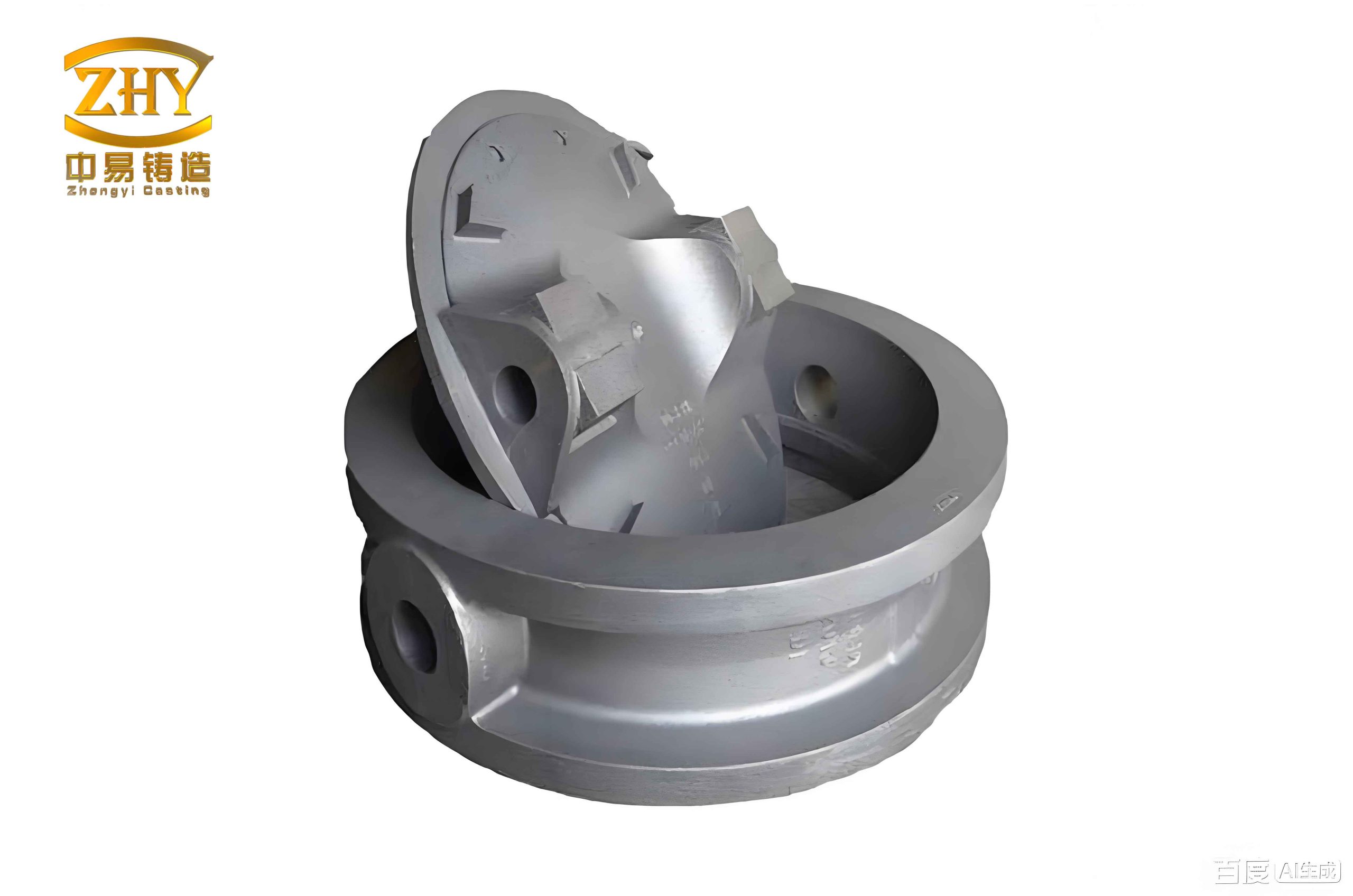
Furan resin sand offers high permeability, but its gas generation is typically higher than inorganic binders, leading to a predisposition for gas-related issues in sand casting products. The sources of gas include excessive resin and catalyst addition, high nitrogen content in resins, incomplete curing of molds before pouring, fine sand grains reducing permeability, poor coating quality or insufficient drying, inadequate reclaimed sand regeneration increasing fines and loss on ignition, improper gating system design, and operational errors like slow pouring or blocked venting. To quantify gas generation, the total gas volume $G$ can be estimated using the formula: $$G = k \cdot R \cdot \rho$$ where $R$ is the resin addition rate (mass fraction), $\rho$ is the density of the sand mixture, and $k$ is a constant dependent on resin composition. For sand casting products, maintaining $R$ below 1.0% for steel castings and 2.0% for iron castings is critical. Additionally, adding silane at 0.2-0.3% of resin mass can enhance bond strength, allowing reduced resin usage. Prevention measures are summarized in the table below:
| Cause of Gas Defects | Prevention Measures for Sand Casting Products |
|---|---|
| High resin and catalyst addition | Use low-nitrogen resins with high furfuryl alcohol content; optimize catalyst type seasonally; ensure complete curing before pouring. |
| Fine sand or high moisture | Use sand with grain size 30/70 and moisture content below 0.2%; improve permeability. |
| Poor coating practices | Apply coatings with Baume concentration >30; ensure thorough drying; use double-layer coatings for thick sections. |
| Inadequate sand reclamation | Control loss on ignition below 3% and fines below 0.8% in reclaimed sand; reduce sand-to-metal ratio to <3. |
| Improper gating and venting | Design closed gating systems (e.g., sprue:runner:ingate = 1.5:1.25:1); add vent holes in upper molds; use bottom gating. |
| Operational errors | Avoid interrupted pouring; ignite gases during pouring; connect core vents to mold vents properly. |
Mechanical penetration, or metal penetration into sand interstices, is another common defect in sand casting products. It occurs due to coarse sand grains with wide gaps, insufficient coating thickness, low mold hardness, high new sand ratio, and poor surface stability from over-aged sand or high sand temperature. The resistance to penetration $P_r$ can be modeled as: $$P_r = \frac{\sigma \cdot d}{\mu}$$ where $\sigma$ is the surface strength of the mold, $d$ is the average sand grain diameter, and $\mu$ is the metal viscosity. To prevent this, use finer sand distributions, apply graphite-based coatings with zircon flour additions, increase mold compaction, and maximize reclaimed sand usage. For sand casting products, maintaining a compact mold with adequate coating is essential to avoid “iron-sand” adhesion.
Veining defects in sand casting products arise from the thermal expansion mismatch between silica sand and coatings. Silica sand has a high coefficient of thermal expansion, causing the coating to crack during pouring and allowing metal penetration into vein-like patterns. The expansion strain $\epsilon$ can be expressed as: $$\epsilon = \alpha \cdot \Delta T$$ where $\alpha$ is the thermal expansion coefficient of the sand and $\Delta T$ is the temperature change. Using a high percentage of reclaimed sand can reduce $\alpha$, aligning it better with coatings. Additionally, incorporating materials like chromite or zircon sand in critical areas minimizes veining in sand casting products.
Cracks, particularly hot tears, are more prevalent in furan resin sand casting products due to the mold’s high rigidity and low yield. Factors include complex geometries, wall thickness variations, sulfur penetration from sulfonic acid catalysts, and slow cooling rates. The susceptibility to cracking $C_s$ can be related to the stress concentration factor: $$C_s = K_t \cdot \frac{E \cdot \alpha \cdot \Delta T}{1 – \nu}$$ where $E$ is Young’s modulus, $\nu$ is Poisson’s ratio, and $K_t$ is the stress concentration factor. Prevention involves enhancing mold yield by adding 2-3% wood flour as a breakdown agent, reducing sand thickness with polystyrene blocks, using low-expansion sands like chromite, optimizing gating for simultaneous solidification, modifying designs, lowering pouring temperatures, adding chilling ribs, and switching to phosphoric acid catalysts. These measures are crucial for durable sand casting products.
Slag inclusion in sand casting products primarily results from reactions between metal and binders, or from mold erosion due to prolonged exposure to hot metal. It often appears in initial metal flows or upper mold sections. Prevention strategies focus on gating design: employ fast, steady, closed, bottom-gating systems with adequate pressure heads, and set overflow risers to divert cold, dirty metal. Using high-strength, heat-resistant coatings with low gas generation also helps. For large planar sand casting products, tilt pouring with overflow risers can effectively eliminate slag defects.
Insufficient hardness in sand casting products stems from the low thermal conductivity of furan resin sand, which slows cooling and promotes ferrite formation. Notably, surface hardness may be 10-15 HB lower than the interior due to slower surface cooling. The hardness $H$ can be approximated by: $$H = H_0 – \beta \cdot t_c$$ where $H_0$ is the base hardness, $\beta$ is a cooling rate coefficient, and $t_c$ is the cooling time. To counteract this, reduce carbon equivalent values, add pearlite-stabilizing elements like chromium or copper, increase cooling with chills or tellurium coatings, lower pouring temperatures, and shorten shakeout times. These steps ensure that sand casting products meet specified hardness standards.
Carburization, sulfurization, and nodularity degeneration are surface defects in sand casting products, especially in low-carbon steels, stainless steels, and ductile iron. Carburization can create a 2-3 mm deep carbon-rich layer, while sulfurization from sulfonic catalysts leads to a 1-2 mm sulfur-rich layer, impairing properties. Prevention involves using coatings with oxidants like iron oxide for carburization, or chromium sand molds with double-layer coatings. For sulfurization, special coatings with desulfurizing agents are effective, and increasing nodulizer addition in ductile iron sand casting products can mitigate球化不良. The diffusion depth $d$ for these elements can be estimated using Fick’s law: $$d = \sqrt{D \cdot t}$$ where $D$ is the diffusion coefficient and $t$ is the exposure time.
Dimensional inaccuracy in iron sand casting products, though less common with resin sand, can occur due to pattern deformation, incorrect shrinkage allowances, or molding errors. Patterns may warp with temperature changes if inadequately dried, and shrinkage rates must be adjusted from clay sand practices. The shrinkage factor $S$ for resin sand can be determined empirically: $$S = \frac{L_m – L_c}{L_m} \times 100\%$$ where $L_m$ is the pattern dimension and $L_c$ is the casting dimension. To ensure precision in sand casting products, use stable patterns, calibrate shrinkage based on trials, maintain tight core fits, and control coating thickness. Consistent process control is key to achieving dimensional accuracy in sand casting products.
In summary, producing high-quality sand casting products with furan resin sand requires meticulous attention to material selection, process design, and operational practices. By addressing gas defects through controlled resin usage and proper venting, preventing mechanical penetration with optimized coatings, managing thermal expansion to avoid veining, enhancing mold yield to reduce cracks, designing gating systems to eliminate slag, adjusting cooling parameters for hardness, using specialized coatings for surface defects, and calibrating shrinkage for dimensional accuracy, foundries can significantly improve the reliability of sand casting products. Continuous monitoring and adaptation based on specific casting conditions will further enhance the performance of furan resin sand in manufacturing superior sand casting products. The integration of these measures ensures that sand casting products meet stringent quality standards, minimizing defects and maximizing productivity in the foundry industry.