
The application of tread braking remains a fundamental and widespread method for railway locomotives globally. Within this system, the brake shoe is a critical safety component, directly responsible for generating the frictional force necessary to decelerate or stop the vehicle. Among various materials, grey iron castings have been extensively utilized for decades in the manufacture of these brake shoes, including medium-phosphorus variants. Their popularity stems from a favorable combination of properties: excellent thermal conductivity, which helps dissipate the immense heat generated during braking; relatively low impact on wheel tread wear; and cost-effective manufacturability. Furthermore, the friction performance of grey iron castings is largely stable and less susceptible to fluctuations caused by varying climatic conditions compared to some composite materials. Consequently, they continue to be batch-installed on numerous locomotive types, such as the DF4 series.
However, a persistent and significant challenge associated with grey iron castings for brake shoes is their propensity for cracking or catastrophic fracture during service. Such failures pose a direct threat to operational safety. Additionally, even within production batches where chemical composition and standard mechanical properties meet specifications, considerable scatter in wear rates and inconsistent friction coefficients across different initial braking speeds are often observed. These inconsistencies can be attributed to subtle variations in metallurgical structure and casting integrity, which are highly sensitive to foundry process parameters. Therefore, a deep understanding of the root causes of fracture, the influence of microstructure on tribological behavior, and the implementation of rigorous production controls are paramount for enhancing the reliability and performance of these essential grey iron castings.
Root Cause Analysis of Fracture in Grey Iron Brake Shoes
Field investigations and failure analyses of in-service grey iron castings used as brake shoes frequently identify a common fracture pattern. Cracks typically initiate and propagate transversely across the shoe body, often near the “nose” or mounting lug area. This location coincides with the region of maximum bending stress and can be a zone of microstructural weakness. Examination of fracture surfaces usually reveals underlying casting defects that act as stress concentrators and crack initiation sites. The primary defects leading to failure in these grey iron castings are summarized below.
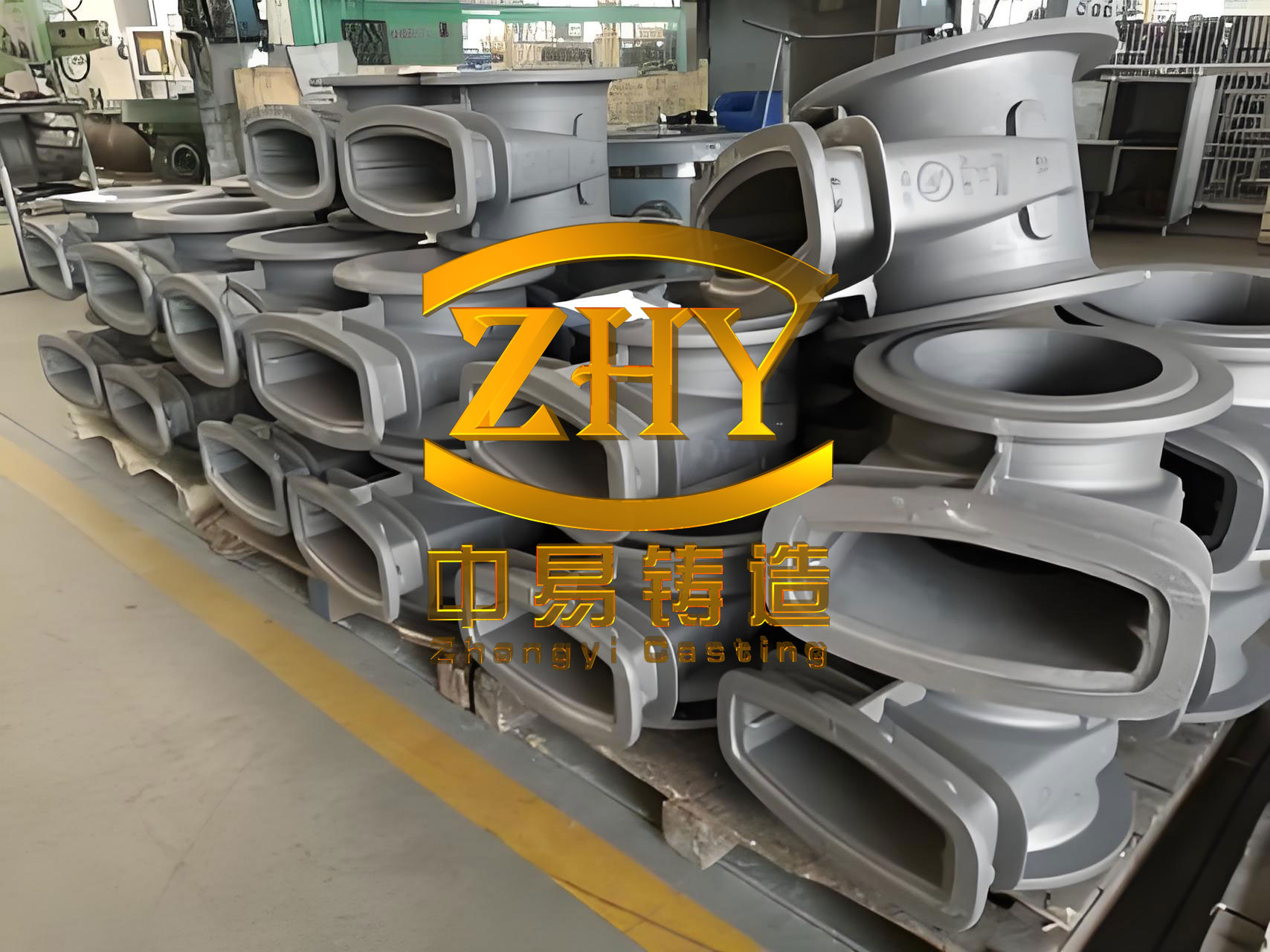
1. Porosity and Blowholes: These are cavities within the casting caused by entrapped gases. In the context of grey iron castings for brake shoes, sources include:
- Contaminants on pre-inserted steel inserts (e.g., rust, oil, moisture) that vaporize upon contact with molten iron.
- Gases generated from mold binders or moisture in the sand mold.
- Air entrapment during turbulent pouring or gases from oxidation of the molten metal itself.
These voids severely reduce the effective load-bearing cross-section and create localized stress peaks.
2. Shrinkage Cavities: These are irregular cavities, often localized in heavier sections or hot spots, resulting from inadequate feeding of liquid metal during solidification to compensate for volumetric shrinkage. For grey iron castings, contributing factors are:
- Insufficient mold rigidity, allowing wall movement that disrupts feeding.
- Excessively high pouring temperature, increasing the total liquid contraction and promoting shrinkage porosity.
3. Poor Fusion between Insert and Casting Matrix: The steel insert (lug) must metallurgically bond with the surrounding grey iron. Poor fusion manifests as a distinct boundary, oxide layer, or lack of inter-diffusion. Causes include:
- Insufficient superheat of the iron melt, preventing proper remelting of the insert surface.
- Oxides, scale, or other high-melting-point contaminants on the insert surface acting as a barrier.
This defect creates a plane of extreme weakness, making the grey iron casting highly susceptible to fracture under the cyclic bending loads of braking.
| Defect Type | Primary Causes | Effect on Integrity |
|---|---|---|
| Porosity/Blowholes | Wet/moist inserts, mold gases, turbulent pouring, metal oxidation | Reduces load-bearing area, creates stress concentration points |
| Shrinkage Cavities | Low mold strength, high pouring temperature, inadequate feeding | Creates internal voids and discontinuities in critical sections |
| Poor Insert Fusion | Low melt temperature, contaminated insert surface | Creates a severe plane of weakness at the critical insert-matrix interface |
Influence of Chemistry and Microstructure on Friction Performance
The tribological performance of grey iron castings in dry sliding brake applications is a complex function of their microstructure. The service condition involves high-pressure sliding contact, leading to adhesive and abrasive wear mechanisms. An optimal microstructure must reconcile conflicting requirements: sufficient hardness and strength to resist deformation and wear, yet enough graphite to provide lubrication and thermal conductivity, coupled with controlled friction characteristics.
The friction coefficient $\mu$ is a critical design parameter. It is nominally calculated from the measured friction force $F$ and the applied normal load $N$:
$$\mu = \frac{F}{N}$$
However, the real contact area $A_{real}$ between the rough surfaces of the grey iron casting and the wheel is only a small fraction (typically 5-15%) of the apparent area $A_{apparent}$. The contact occurs at asperities, and the local pressure is extremely high. Therefore, the uniformity and nature of the microstructure, rather than just bulk properties, govern the real $\mu$ and wear rate $W$. The wear rate can be conceptually related to the Archard’s wear equation:
$$V = K \frac{N \cdot s}{H}$$
where $V$ is wear volume, $K$ is a dimensionless wear coefficient, $s$ is sliding distance, and $H$ is material hardness. For grey iron castings, $K$ and $H$ are not constants but are strongly dependent on microstructure.
1. Graphite Morphology and Distribution: Graphite plays a dual role. As a solid lubricant, it smears to form a film, reducing adhesive wear and friction. However, graphite flakes act as voids and stress concentrators, disrupting the continuity of the metallic matrix and reducing its effective strength and wear resistance.
- Type: Undercooled (Type D) graphite and the associated ferrite halo lead to high wear. A uniform distribution of Type A (random flake) graphite is preferred.
- Size & Amount: Excessively long, coarse flakes weaken the matrix. Fine, evenly distributed flakes (ASTM size 3-5) provide good lubrication without severely compromising matrix strength. The Carbon Equivalent (CE) controls this balance:
$$CE = \%C + \frac{\%Si + \%P}{3}$$
A CE in the range of 3.6-3.8% is typically targeted for these grey iron castings.
2. Matrix Structure: The metallic base surrounding the graphite.
- Pearlite: A lamellar mixture of ferrite and cementite (Fe$_3$C). It is hard, strong, and provides excellent wear resistance. A fully pearlitic matrix is desired, but small amounts of ferrite (optimally 10-20%) can improve fracture toughness.
- Ferrite: Soft and ductile. Excessive free ferrite, especially surrounding graphite, significantly reduces hardness and accelerates wear.
3. Phosphide Eutectic (Steadite): Phosphorus, a common alloying element in these grey iron castings, forms a hard, brittle phosphide eutectic network at grain boundaries.
- Binary (α-Fe + Fe$_3$P): Hardness ~750-800 HV. Acts as a wear-resistant phase and increases friction coefficient.
- Ternary (α-Fe + Fe$_3$P + Fe$_3$C): Hardness ~900-950 HV. Even more brittle than binary steadite. It is prone to spalling, becoming abrasive debris that accelerates three-body wear. Its formation must be suppressed.
A controlled amount of discontinuous, isolated islands of binary phosphide eutectic enhances wear and friction performance.
4. Free Carbides (Cementite): Hard Fe$_3$C particles increase bulk hardness but reduce machinability and can lower the friction coefficient. More critically, they promote the formation of the undesirable ternary phosphide eutectic. Their presence should be minimized.
| Microstructural Feature | Target / Desired Form | Beneficial Effect | Detrimental Effect if Non-Optimal |
|---|---|---|---|
| Graphite | Type A, size 3-5, uniform distribution | Lubrication, thermal conductivity, damping | Weakens matrix (coarse flakes), high wear (Type D) |
| Matrix | Fine pearlite with 10-20% ferrite | High strength, good wear resistance, some toughness | Low wear resistance (high ferrite), brittleness (massive carbides) |
| Phosphide Eutectic | Isolated islands of binary (α-Fe+Fe$_3$P) type | Increases hardness, wear resistance, and friction coefficient | Embrittlement, source of abrasive debris (ternary type) |
| Free Carbides | Minimized or absent | – | Promotes ternary steadite, reduces friction coefficient, increases brittleness |
Production Control Strategies for Enhanced Performance
To mitigate fracture risks and stabilize friction-wear properties, a holistic approach controlling every stage of producing these grey iron castings is essential. The strategies can be divided into defect prevention and microstructure control.
A. Defect Prevention for Structural Integrity:
- Insert (Lug) Preparation: Inserts must be thoroughly cleaned (e.g., shot blasted) to remove rust, scale, and oils. A protective coating (e.g., thin plating) can prevent re-oxidation.
- Insert and Mold Drying: Pre-heating inserts to >200°C and ensuring molds are completely dry before assembly eliminates moisture-based gas sources.
- Reduced Hold Time: Minimize the time between mold closing and pouring to prevent moisture absorption from the atmosphere.
- Mold Rigidity and Gating: Use high-strength molding sand/systems to resist wall movement. Design gating systems for laminar filling to minimize air entrapment.
- Pouring Parameter Control: Strictly control pouring temperature (typically 1380-1420°C for medium-section castings) and speed to balance fluidity against shrinkage and gas pickup.
B. Chemistry and Metallurgical Process Control for Tribology:
- Raw Material Selection: Use clean, low-residual charge materials (pig iron, steel scrap) to control trace elements like Cr, Ti, and V that promote carbides.
- Chemical Composition Window:
- C, Si: Adjusted to achieve CE ~3.7%. (e.g., C: 2.9-3.2%, Si: 1.8-2.2%).
- Mn: 0.8-1.2% to strengthen pearlite and neutralize S.
- P: 0.6-0.8% to form the beneficial binary phosphide eutectic.
- S: Keep as low as possible (<0.12%).
- Alloys: Limited Cu (<0.3%) can strengthen pearlite. Strictly limit Cr (<0.15%) to avoid carbides/ternary steadite.
- Superheating and Holding: Superheat the melt to 1500-1520°C and hold for 3-5 minutes. This aids in dissolution of nuclei, homogenization, and reduction of undesired inherited graphite structures from the charge.
- Inoculation: This is the most critical step for controlling graphite morphology in grey iron castings.
- Purpose: Promotes Type A graphite, reduces undercooling, refines eutectic cells, increases graphite count, and improves uniformity.
- Practice: Use efficient inoculants like FeSiBa or FeSiSr. A common method is stream inoculation during tapping (0.2-0.3% addition) followed by a late inoculation in the pouring ladle (0.1-0.2%). This dual treatment maximizes effectiveness and minimizes fade.
The effectiveness of inoculation can be conceptually related to increasing the number of potent nuclei $N$, leading to finer graphite spacing $\lambda$:
$$\lambda \propto \frac{1}{\sqrt[3]{N}}$$
| Process Stage | Control Parameter | Target / Requirement |
|---|---|---|
| Melting & Chemistry | Carbon Equivalent (CE) | 3.6 – 3.8 % |
| Phosphorus (P) | 0.6 – 0.8 % | |
| Superheating Temperature | 1500 – 1520 °C (Hold 3-5 min) | |
| Inoculation | Inoculant Type | FeSiBa, FeSiSr (or combination) |
| Total Addition | 0.3 – 0.5 % (split between tap and late) | |
| Molding & Pouring | Insert Condition | Clean, dry, pre-heated >200°C |
| Pouring Temperature | 1380 – 1420 °C (depends on section) |
Verification of Control Measures: Results and Discussion
Implementation of the aforementioned integrated control strategy has yielded significant improvements in the quality and performance of grey iron castings for brake shoes.
1. Fracture Resistance: Samples produced under the controlled protocol underwent rigorous inspection. Fracture surface analysis revealed excellent fusion between the steel insert and the grey iron matrix, with no evidence of shrinkage cavities, gas porosity, or oxide films at the interface. The matrix was dense and continuous, confirming the effectiveness of the defect-prevention measures.
2. Microstructural and Property Conformance: Representative samples from multiple production batches were tested according to relevant standards (e.g., TB/T 3104.3-2017). Key results are summarized below:
| Property Category | Test Standard / Parameter | Result | Specification Requirement |
|---|---|---|---|
| Chemical Composition | Carbon (C) | 3.0 – 3.1 % | 2.9 – 3.5 % |
| Silicon (Si) | 1.8 – 2.0 % | 1.8 – 2.2 % | |
| Manganese (Mn) | 0.9 – 1.1 % | 0.6 – 1.2 % | |
| Phosphorus (P) | 0.7 – 0.8 % | ≤ 1.0 % | |
| Sulfur (S) | < 0.02 % | ≤ 0.15 % | |
| Mechanical & Physical | Tensile Strength | 240 – 260 MPa | ≥ 150 MPa |
| Hardness (HBW) | 200 – 215 | 179 – 255 | |
| Pressure Test (90 kN) | No deformation/crack | No permanent deformation/crack | |
| Metallography | Graphite Form | Type A, BA | Type A, B, AB, BA |
| Graphite Size | ASTM 4 | ASTM 3-5 | |
| Matrix Structure | Pearlite + 7-12% Ferrite, Isolated Binary Steadite | Pearlite + ≤18% Ferrite |
3. Friction and Wear Performance: 1:1 dynamometer bench tests simulating real braking conditions were conducted. The friction coefficient $\mu$ as a function of initial speed and pressure was recorded. The grey iron castings produced with controlled chemistry and inoculation showed:
- Stable Friction Level: The average friction coefficient was maintained within the desired operational band (e.g., $\mu_{avg} \approx 0.18-0.22$) across different braking cycles.
- Reduced Sensitivity: The deviation of $\mu$ with changing initial speed was minimized, indicating a more stable and predictable tribo-layer formation.
- Low and Consistent Wear: The wear rate, measured as thickness loss per unit of friction work, was significantly lower and exhibited less batch-to-batch variation compared to historically problematic productions. The wear debris primarily consisted of finely fragmented oxides and iron particles, rather than large, sharp carbide or steadite fragments.
The relationship between controlled microstructure and improved wear can be conceptualized. The wear coefficient $K$ in Archard’s equation is lower for a microstructure with fine pearlite, fine Type A graphite, and binary steadite, compared to one with coarse graphite, free ferrite, or ternary steadite.
4. Field Service Validation: Since mid-2020, grey iron castings for brake shoes manufactured under this comprehensive control regime have been deployed on over 30 locomotives (e.g., DF4D type). To date, the service performance has been excellent, with no reported incidents of in-service fracture and consistently satisfactory braking performance reported from maintenance depots. This field validation confirms the laboratory and bench-test findings, demonstrating that the risk associated with these critical grey iron castings can be effectively managed through scientific process control.
Conclusion
Grey iron castings remain a vital and economically significant material for railway brake shoes. Their performance and safety are not merely a function of meeting basic chemical and hardness specifications, but are profoundly governed by the integrity of the casting and the details of its microstructure. Fracture primarily originates from preventable defects like porosity, shrinkage, and poor insert fusion. The friction and wear characteristics are optimized by a microstructure comprising fine, uniformly distributed Type A graphite in a matrix of fine pearlite with a controlled amount of isolated binary phosphide eutectic, while avoiding free carbides and ternary steadite.
Achieving this optimal structure in grey iron castings requires a disciplined, multi-faceted production strategy. This includes stringent control of charge materials and melting practice, precise targeting of chemical composition (notably Carbon Equivalent and Phosphorus), effective superheating, and, most critically, a robust and well-executed inoculation practice to control graphite nucleation and growth. Complementary measures to ensure casting soundness, such as insert preparation, mold control, and regulated pouring parameters, are equally essential to prevent strength-limiting defects.
The synthesis of these controls has been empirically proven to enhance the fracture toughness, stabilize the friction coefficient, and reduce the wear rate of grey iron castings for brake shoes. The successful deployment of shoes produced under this protocol in active locomotive service underscores the practical viability and importance of such an integrated metallurgical and foundry engineering approach. As long as tread braking systems remain in use, the continuous refinement of production techniques for these grey iron castings will be fundamental to ensuring railway operational safety and reliability.