
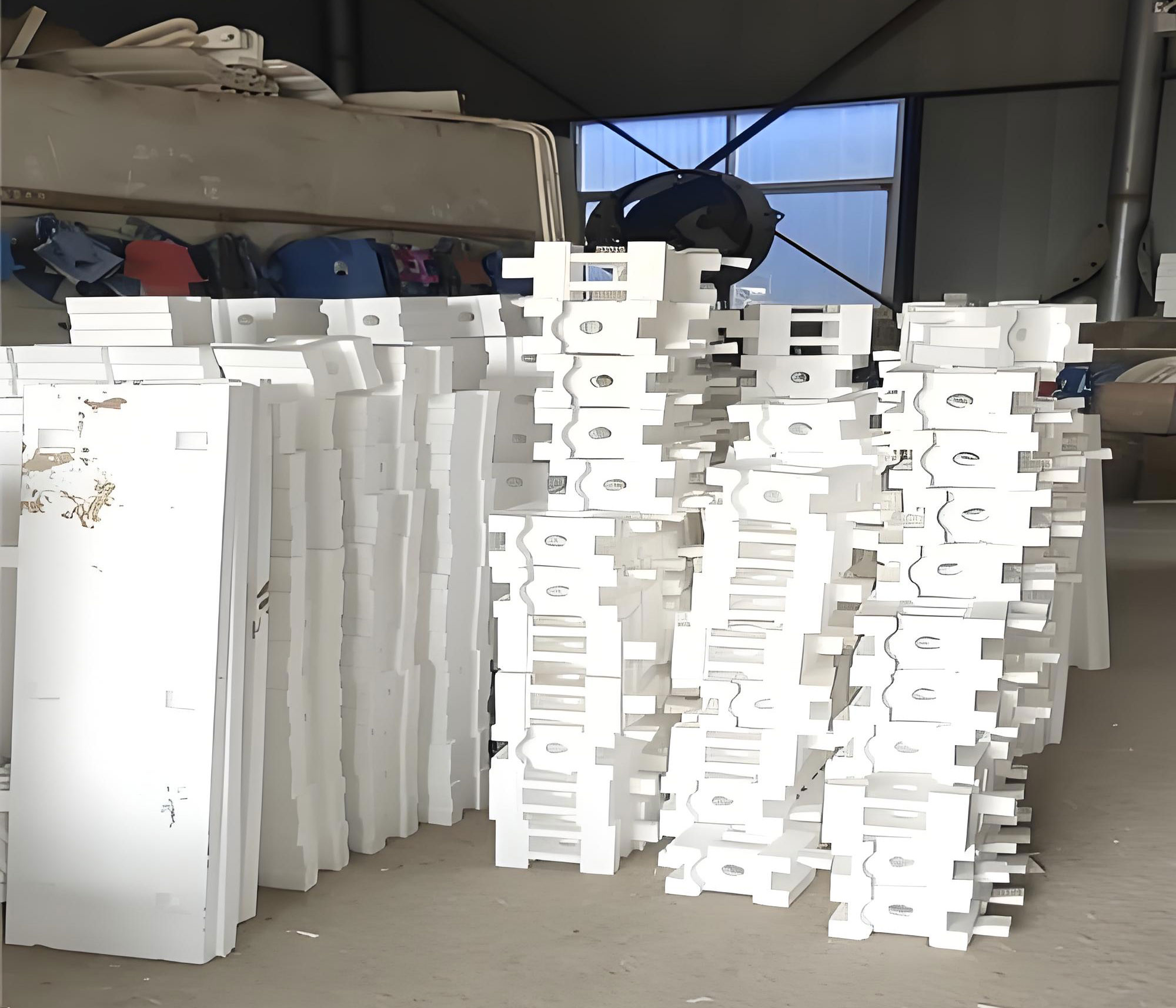
In my extensive experience with advanced manufacturing, the adoption and refinement of the lost foam casting process stands out as a significant technological evolution for producing intricate components. This technique, which gained widespread industrial application in the late 20th century, involves creating a foam pattern of the desired part, coating it with a refractory material, embedding it in unbonded sand, and then pouring molten metal. The metal vaporizes the foam pattern, precisely taking its shape. For complex, thin-walled, and high-precision castings such as transmission housings, mastering this process is paramount. While it offers exceptional design freedom and excellent dimensional accuracy, achieving consistent, high-quality results requires a deep, holistic understanding of the interplay between numerous process variables. In this detailed exploration, I will dissect the critical aspects of the lost foam casting process, from gating design and parameter control to defect formation mechanisms and mitigation strategies, supported by quantitative models and summarized data.
1. Foundational Principles and Gating System Design
The core of a successful lost foam casting process lies in its gating system design, which diverges fundamentally from conventional casting methods. The freedom to place the gating channels anywhere on the foam pattern is both an advantage and a challenge. The primary objective is to ensure a smooth, progressive, and controlled filling of the mold cavity while efficiently evacuating the pyrolysis products (gases and liquids) generated from the vaporizing foam.
Two primary gating approaches are commonly evaluated: top-pouring (or gravity) systems and bottom-gating (or uphill) systems. For a complex transmission housing, the choice is critical. A top-pouring system, while simple, often leads to turbulent flow, causing foam degradation products to be trapped within the metal, resulting in gross defects. A stepped gating system, attempting to fill from both bottom and top, can cause confluence cold shuts and fold defects where two metal fronts meet.
Based on empirical data and flow modeling, the bottom-gating system proves far superior for such components. The rationale is grounded in fluid dynamics and heat transfer principles. By introducing molten metal at the lowest point of the cavity, it rises quietly, displacing the degrading foam upwards ahead of the advancing metal front. This promotes a more laminar flow and allows pyrolysis gases to escape through the coating and the unbonded sand towards the top of the mold, often aided by a vent or a riser. The filling velocity \( v_f \) must be carefully balanced against the foam decomposition rate \( R_d \) and gas permeability \( k \) of the sand-coating system. An optimal condition can be conceptualized as:
$$ v_f \approx \alpha \cdot \frac{R_d \cdot A_p}{k \cdot \rho_m} $$
where \( A_p \) is the pattern surface area being decomposed, \( \rho_m \) is the metal density, and \( \alpha \) is an empirical constant related to gas escape efficiency.
For a transmission housing, I typically employ a system with two symmetrically placed ingates at the bottom. This configuration, compared to a single ingate, reduces the local thermal load and metal velocity at each entry point, minimizing erosion of the coating and sand. It also halves the fill time \( t_f \) for a given metal head pressure, which can be approximated for a bottom-gate system by:
$$ t_f = \frac{V_c}{A_g \cdot \sqrt{2gH}} $$
where \( V_c \) is the cavity volume, \( A_g \) is the total cross-sectional area of the ingates, \( g \) is acceleration due to gravity, and \( H \) is the effective metallostatic head. The two metal streams are designed to meet at a location, such as the end of the housing, where a slag collection riser is placed to trap any final debris.
| Gating Type | Filling Characteristic | Advantages | Disadvantages & Typical Defects | Suitability for Complex Housings |
|---|---|---|---|---|
| Top-Pouring | Turbulent, free-fall | Simple design, fast setup | Severe turbulence, entrapped slag and folds, high oxidation, poor surface finish. | Poor |
| Stepped (Combination) | Partially controlled from multiple levels | Can fill tall sections more evenly in theory. | High risk of cold shuts at metal confluence points; complex foam cluster assembly. | Low to Moderate |
| Bottom-Gating (Uphill) | Laminar, progressive upward fill | Quiet filling, efficient gas evacuation, minimal turbulence, excellent surface quality. | Requires careful calculation of ingate size and position; slightly longer fill time. | Excellent |
2. Critical Process Parameters and Their Interdependence
The stability of the lost foam casting process hinges on the precise control of a matrix of parameters. A deviation in one can cascade into multiple defects.
2.1. Pattern Material and Coating
The foam pattern, typically Expanded Polystyrene (EPS) or similar copolymer, is the literal template. Its density, bead fusion, and cellular structure directly influence the volume and composition of pyrolysis products. Higher density foam yields more residual carbon, impacting the metal chemistry. The coating, often a water-based refractory slurry containing silica, alumina, and binders, serves multiple functions: it provides a barrier to prevent sand penetration, allows gas permeability, and maintains the pattern’s shape during handling and sand filling. The coating thickness \( \delta_c \), its viscosity \( \eta \), and permeability \( K_c \) are key. A common practice is to apply two layers with a target dried thickness. The permeability can be related to coating properties by a simplified Kozeny-Carman type relation:
$$ K_c \propto \frac{\phi^3}{S^2 (1-\phi)^2} $$
where \( \phi \) is the coating porosity and \( S \) is the specific surface area of the refractory particles.
2.2. Sand System and Vibration Compaction
Dry, unbonded silica sand is universally used. Its grain size distribution (AFS fineness number), typically between 45 and 70, affects both surface finish and permeability. The sand must be thoroughly compacted around the fragile coated pattern using three-dimensional vibration to achieve a uniform and high bulk density \( \rho_b \). Inadequate compaction leads to loose sand zones, causing mold wall movement and dimensional inaccuracy or even collapse during pouring. The vibration parameters—frequency \( f \), amplitude \( A \), and time \( t_v \)—are optimized empirically. A useful index is the compaction energy \( E_c \):
$$ E_c \propto A^2 \cdot f^3 \cdot t_v $$
Excessive vibration can distort the pattern or damage the coating.
3.3. Melting, Pouring, and Process Control
The metallurgical preparation and thermal management during pouring are decisive. For gray iron castings like transmission housings, the carbon equivalent must be controlled, accounting for carbon pickup from the decomposing foam. The pouring temperature \( T_p \) is a critical compromise. Too low, and the metal front may lose fluidity, leading to misruns and cold laps; too high, and it increases the thermal shock to the coating, the generation rate of pyrolysis products, and the risk of penetration defects. A practical range is 1420–1480°C for iron. The pouring rate must be synchronized with the decomposition and gas evacuation; a common technique is the “fast-slow-fast” sequence: a quick initial pour to establish the metal seal in the sprue, a controlled steady pour to fill the majority of the cavity, and a final reduction to top up the riser without excessive turbulence. Applying a vacuum to the sand mold (negative pressure) is almost always employed to enhance gas extraction, stabilize the mold, and improve metal feeding.
| Process Stage | Parameter | Symbol / Unit | Typical Range / Value | Primary Influence |
|---|---|---|---|---|
| Pattern & Coating | Foam Density | \( \rho_f \) (g/cm³) | 0.016 – 0.025 | Gas volume, carbon defect severity |
| Coating Thickness (dry) | \( \delta_c \) (mm) | 0.5 – 1.5 per layer | Sand penetration resistance, gas permeability | |
| Coating Drying Temperature/Time | \( T_d / t_d \) | 50±5°C / 15-20 hours | Coating strength, moisture removal | |
| Sand & Molding | Sand Grain Fineness (AFS) | – | 200-270 mesh (approx. AFS 55-75) | Surface finish, permeability |
| Vibration Frequency | \( f \) (Hz) | 40 – 80 | Sand compaction efficiency | |
| Vibration Amplitude | \( A \) (mm) | 0.5 – 1.0 | Sand compaction energy | |
| Pouring & Metallurgy | Pouring Temperature | \( T_p \) (°C) | 1420 – 1480 (for Iron) | Fluidity, foam degradation rate |
| Metal Composition (C.E.) | C.E. (%) | Adjusted for carbon pickup | Final mechanical properties, shrinkage | |
| Mold Negative Pressure | \( P_{vac} \) (MPa or in-Hg) | 0.02 – 0.05 MPa (~6-15 in-Hg) | Gas evacuation, mold rigidity |
3. In-Depth Defect Analysis and Mitigation Strategies
Despite careful design, the lost foam casting process is susceptible to specific defects. Their prevention requires a root-cause understanding.
3.1. Pattern Distortion and Dimensional Instability
Large, complex foam patterns are prone to warping during handling, coating, drying, and sand filling due to their low mechanical strength and thermal sensitivity. This directly translates into casting dimensional errors.
Mechanism: Gravitational creep, uneven drying stresses in the coating, and non-uniform sand pressure during vibration can cause permanent deformation of the foam’s cellular structure.
Solutions: Reinforcement of the foam cluster is essential. External reinforcement frames, while intuitive, often fuse to the casting and create severe cleaning issues. Internal reinforcement by bonding high-strength materials (like bamboo strips or polymer rods) into low-strength sections of the foam pattern before coating has proven highly effective. The reinforcement material is selected for its low thermal mass and combustibility, ensuring it leaves minimal residue. The reinforcement design follows a simple structural principle: providing support against the largest bending moments. The required bending stiffness \( EI \) of the reinforcement can be estimated from the pattern’s weight distribution and support conditions.
3.2. Carbonaceous (Fold/Lustrous Carbon) Defects
This is a hallmark defect of the lost foam casting process, appearing as shiny, black films or folds on the casting surface, often at the top or vertical walls. It is primarily a consequence of incomplete foam pyrolysis.
Mechanism: When the advancing metal front is too cool or too fast, the foam does not fully vaporize into gases. Instead, it melts and decomposes into a viscous, tar-like liquid pyrolysis product. If the metal’s thermal energy is insufficient to gasify this liquid before being pushed ahead or trapped by the solidifying metal front, it becomes incorporated as a carbon-rich film. The defect formation can be modeled by comparing the energy balance at the metal-foam interface. For complete gasification, the heat flux from the metal \( Q_m \) must exceed the energy required to pyrolyze the foam \( Q_p \):
$$ Q_m = h(T_m – T_p) \cdot A_i > Q_p = \dot{m}_p \left[ C_s(T_v – T_0) + L_v + \int_{T_v}^{T_g} C_g \, dT \right] $$
where \( h \) is the interfacial heat transfer coefficient, \( T_m \) and \( T_p \) are metal and pyrolysis front temperatures, \( A_i \) is the interfacial area, \( \dot{m}_p \) is the foam mass degradation rate, \( C_s \) and \( C_g \) are specific heats, \( L_v \) is latent heat of vaporization, and \( T_0, T_v, T_g \) are initial, vaporization, and gas temperatures.
Mitigation Framework:
- Foam Material: Use low-density, readily gasifiable foams with additives that promote complete decomposition.
- Pouring Parameters: Optimize pouring temperature \( T_p \) and velocity \( v_f \) to ensure \( Q_m > Q_p \). A higher \( T_p \) and a controlled, sufficiently fast pour rate are key.
- Gating Design: Bottom-gating promotes a hot metal front. Placing a riser/vent at the highest point provides an escape path for liquid pyrolysis products.
- Alloy Chemistry: For ferrous alloys, a slightly oxidizing melt can help burn off some residual carbon.
- Vacuum Application: Stronger mold vacuum enhances the removal of gaseous and liquid decomposition products through the coating.
3.3. Sand Penetration and Burn-On/Burn-In
This defect manifests as a fused mixture of metal and sand on the casting surface, particularly in deep pockets, undercuts, or hot spots, making cleaning extremely difficult.
Mechanism: It occurs when the protective coating layer fails, allowing liquid metal to infiltrate the interstices between sand grains. Failure modes include:
- Coating cracking or spalling due to thermal shock or poor strength.
- Inadequate sand compaction, leaving low-density zones.
- Localized overheating of the coating, reducing its refractoriness.
- Excessive ferrostatic pressure overcoming the coating’s resistance.
The pressure condition for penetration can be described by a modified version of the law for flow through a porous medium, considering the metal’s surface tension \( \sigma \), contact angle \( \theta \), and pore radius \( r \):
$$ P_{metal} > P_{threshold} = \frac{2\sigma \cos \theta}{r} $$
If the local metal pressure exceeds the threshold pressure of the coating-sand interface, penetration initiates.
Mitigation Strategies:
- Coating Integrity: Ensure proper coating formulation, mixing, application, and complete drying to achieve high hot strength and crack resistance.
- Enhanced Compaction: Meticulous vibration procedure to achieve uniform, high-density sand support, especially in deep recesses. Using specialty sands (e.g., rounded grain) can improve flowability.
- Localized Reinforcement: For persistent problem areas (e.g., sharp corners, thermal junctions), applying a secondary refractory patch (like a self-setting resin sand mix) directly onto the dried coating in those areas before sand filling dramatically increases local resistance to penetration and thermal shock.
- Process Control: Moderate pouring temperature and use of chills to reduce hot spot severity.
| Defect Type | Primary Root Causes | Key Investigative Parameters | Corrective Actions & Process Adjustments |
|---|---|---|---|
| Pattern Distortion | Low foam strength, gravitational sag, uneven sand pressure, thermal softness during drying. | Foam density & modulus, cluster support design, drying air temperature uniformity, vibration intensity. | Internal reinforcement of pattern weak sections; optimize drying rack design; reduce vibration amplitude; shorten handling time. |
| Carbon Defect (Folds) | Incomplete foam pyrolysis; metal front too cool/slow; poor gas/liquid evacuation. | Pouring temperature \( T_p \), fill time \( t_f \), foam type & density, coating permeability \( K_c \), mold vacuum \( P_{vac} \). | Increase \( T_p \); optimize gating for progressive fill; use faster-pouring foam; increase \( P_{vac} \); ensure adequate venting/risering at high points. |
| Sand Penetration / Burn-On | Coating failure (crack, thin spot), low sand density, local overheating, high metal pressure. | Coating thickness \( \delta_c \) & strength, sand compaction density \( \rho_b \), local section modulus, \( T_p \). | Improve coating application & drying; enhance local sand compaction; apply refractory paste to hotspots; reduce \( T_p \) if possible; review alloy solidification range. |
| Surface Scab/Depression | Early coating collapse, localized gas pressure buildup, sand cave-in. | Coating dry strength, foam degradation gas pressure, sand flowability, vibration sequence. | Increase coating binder content; ensure complete pattern venting; use finer, more flowable sand; apply vacuum during pouring. |
4. Integrated Process Optimization and Control Framework
Success in the lost foam casting process is not about optimizing individual parameters in isolation, but about managing the complex system synergistically. A robust production process requires a control framework based on the following pillars:
1. Systematic Design of Experiments (DoE): Given the high number of interacting variables (foam density, coating thickness, vibration time, pouring temp, vacuum level, etc.), a structured DoE approach is invaluable for modeling responses (like defect rate, surface finish, dimensional accuracy) and finding the global optimum operating window rather than a local one.
2. Real-time Monitoring and Data Logging: Critical process variables should be monitored and recorded for every mold. This includes actual pouring temperature via thermocouple, pour time via flow sensor or video, and mold vacuum pressure. This data creates a traceable history for each casting, enabling powerful root-cause analysis when defects occur.
3. Predictive Modeling and Simulation: Advanced simulation software that couples fluid flow, heat transfer, foam decomposition, and stress analysis is becoming increasingly accessible. These tools can predict filling patterns, temperature gradients, and potential defect locations (like cold shuts or porosity) before creating physical patterns, saving immense time and material cost in process development. For instance, simulating the velocity field \( \vec{v}(x,y,z,t) \) and temperature field \( T(x,y,z,t) \) can pinpoint where \( Q_m < Q_p \), indicating a risk zone for carbon defects.
4. Feedback Loops and Continuous Improvement: The process must not be static. Data from inspection (dimensional checks, X-ray, dye penetrant) should feed back to adjust process parameters. A statistical process control (SPC) chart for key dimensions and defect counts is essential for maintaining stability and identifying drift.
The production of a high-integrity transmission housing via the lost foam casting process epitomizes modern precision manufacturing. It demands a shift from artisanal skill to engineered science. Every step—from the polymer chemistry of the foam to the fluid dynamics of metal flow and the high-temperature mechanics of the refractory coating—is a link in a chain. Strengthening the overall process requires not just strengthening each link, but perfectly aligning them. By embracing a data-driven, holistic approach that integrates mechanistic understanding with empirical control, the full potential of the lost foam casting process for creating complex, near-net-shape components with exceptional quality and efficiency can be consistently realized.