
In my extensive experience within the foundry industry, cold cracking in grey iron castings stands as one of the most formidable and economically significant defects. Unlike hot tears that occur during solidification, cold cracks manifest after the casting has fully solidified, when it is in the elastic state. These cracks appear typically under tensile stress, often at locations of stress concentration such as section changes, sharp corners, or near internal ribs. For general machinery components like machine tool beds, cold cracks might be repairable through welding if they occur in non-critical areas. However, for critical applications like grey iron steam turbine casings which demand exceptional pressure tightness, a cold crack propagating from a non-stress-relieved area into a pressure-containing wall is often catastrophic. The repair of such cracks is complex, can introduce new defects compromising integrity, and is frequently not permissible. Therefore, a deep understanding of the underlying mechanisms and the implementation of robust preventive strategies are paramount to enhancing the quality, reliability, and service life of grey iron castings.
Cold cracks in grey iron castings are characterized by a straight or smoothly curved fracture path. The fracture surface is typically clean, exhibiting a metallic luster or slight oxidation tints. Crucially, the crack propagates transgranularly (through the grains) rather than along grain boundaries, which is a direct signature of failure induced by high levels of residual casting stress. Thus, to combat cold cracking, one must first master the origins and nature of these internal stresses.
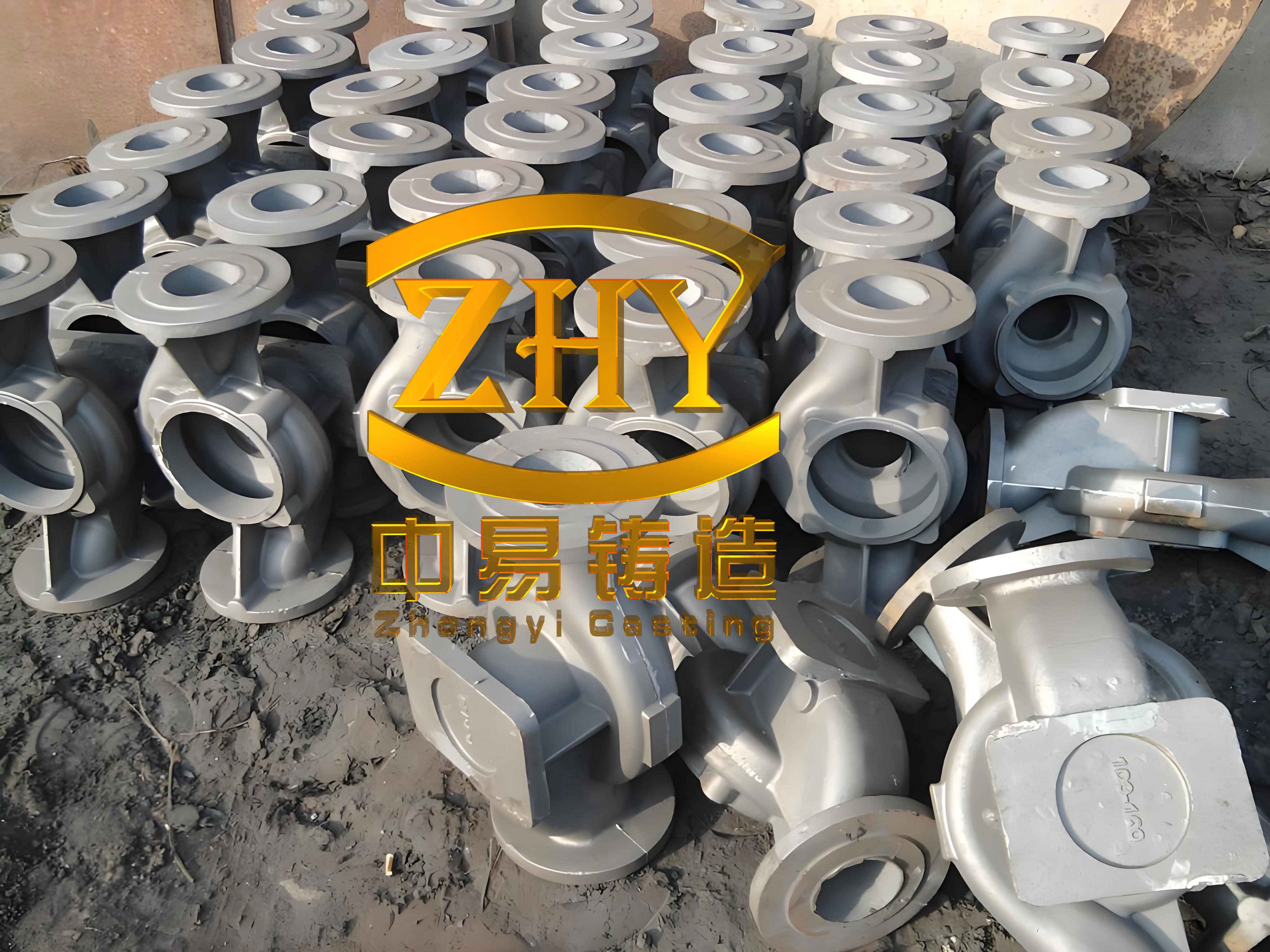
Casting stress arises when the volumetric changes associated with solidification and cooling are hindered by external constraints or by the casting’s own geometry. We can classify these stresses into three primary categories: thermal stress, transformation stress, and contraction stress. The total residual stress $\sigma_{total}$ in a casting can be considered a superposition of these components, though their interaction is complex:
$$ \sigma_{total} \approx \sigma_{thermal} + \sigma_{transformation} + \sigma_{contraction} $$
When $\sigma_{total}$ exceeds the ultimate tensile strength (UTS) of the material at that temperature, a cold crack initiates. For grey iron, the UTS is notably lower than its compressive strength, making it particularly susceptible to tensile failure.
1. The Triad of Casting Stresses: A Detailed Mechanistic View
1.1 Thermal Stress ($\sigma_{thermal}$)
Thermal stress is the most prevalent contributor to cold cracks in grey iron castings. It originates from differential cooling rates within the casting geometry. Thicker sections (hot spots) cool and contract more slowly than thinner sections. Since the casting is a monolithic body, these differentially contracting regions constrain each other, setting up internal stresses. The thicker, hotter core goes into tension upon final cooling as it is pulled by the already contracted, rigid thinner sections. The classic example is a simple plate with a central boss; upon cooling, the boss will be in residual tension, prone to cracking.
The magnitude of thermal stress can be approximated using a simplified model based on elastic theory and thermal contraction mismatch. If we consider two adjacent regions, A and B, with different cooling histories, the stress developed can be related to the difference in their strain:
$$ \sigma_{thermal} = E \cdot \alpha \cdot \Delta T_{eff} $$
Where:
$E$ = Young’s modulus of the grey iron (approx. 100-140 GPa, dependent on graphite morphology and matrix).
$\alpha$ = Coefficient of thermal expansion (approx. $10^{-5} \, \text{K}^{-1}$ for grey iron).
$\Delta T_{eff}$ = An effective temperature difference accounting for the timing of mechanical coherence and the cooling rate disparity.
In reality, $\Delta T_{eff}$ is not a simple temperature gradient but a function of cooling rate $(\frac{dT}{dt})$, section size $(D)$, and the material’s thermal diffusivity $(a)$. A more comprehensive view involves solving the heat transfer equation with mechanical boundary conditions:
$$ \frac{\partial T}{\partial t} = a \nabla^2 T $$
subject to the resulting strain field: $\epsilon_{total} = \alpha (T – T_{ref}) + \epsilon_{mechanical}$
For practical foundry analysis, simulation software uses such coupled thermo-mechanical models to predict stress fields in complex grey iron castings.
1.2 Transformation Stress ($\sigma_{transformation}$)
This stress arises from phase transformations that occur at different times across the casting cross-section due to temperature gradients. In grey iron, the most relevant transformations are the eutectoid transformation (austenite to ferrite + graphite or pearlite) and, in alloyed irons, the martensitic transformation. These transformations are accompanied by specific volume changes. For instance, the austenite-to-pearlite transformation involves a volume expansion. If the surface transforms first and expands, it will be compressed by the still-austenitic core. Later, when the core transforms and attempts to expand, it is constrained by the already transformed and rigid surface, putting the core into tension and potentially causing cracking.
The volume change $\Delta V/V$ for the eutectoid transformation in iron-carbon alloys is approximately +1%. The associated transformation stress can be significant and is additive to thermal stress. The condition for its maximization is when the temperature difference between surface and core coincides with the transformation temperature range (approx. 700-750°C for eutectoid).
1.3 Contraction Stress ($\sigma_{contraction}$)
Also known as mechanical restraint stress, this is generated when the solid casting’s linear shrinkage is physically hindered by external obstacles. The most common obstacles are rigid sand cores, strong mold walls, or even protruding casting features like large gates. Contraction stress is always tensile in nature from the casting’s perspective and acts locally. The basic equation is:
$$ \sigma_{contraction} = E \cdot \epsilon_{restrained} $$
where $\epsilon_{restrained}$ is the strain that would have occurred from free shrinkage but was prevented.
The total linear shrinkage strain for grey iron from the solidus to room temperature is typically 0.8-1.2%. If a core restrains 50% of this shrinkage, the induced stress can easily approach the yield strength of the material. This is why the collapsibility and thermal deformation characteristics of molding and core sands are critical for preventing cold cracks in intricate grey iron castings.
The interplay of these stresses determines the final residual stress state. The table below summarizes their key characteristics and drivers.
| Stress Type | Primary Cause | Nature in Critical Region | Key Influencing Factors |
|---|---|---|---|
| Thermal Stress ($\sigma_{thermal}$) | Differential cooling rates | Tensile in slower-cooling (hotter) sections | Section thickness variation, casting geometry, cooling rate |
| Transformation Stress ($\sigma_{transformation}$) | Non-simultaneous phase changes | Tensile in regions transforming later | Alloy composition, cooling rate through transformation range |
| Contraction Stress ($\sigma_{contraction}$) | External restraint to shrinkage | Always locally tensile | Sand core rigidity, mold strength, casting design |
2. Root Cause Analysis: Factors Exacerbating Cold Cracking in Grey Iron Castings
Multiple factors during melting, processing, and casting design interact to elevate residual stress levels and reduce the material’s resistance to cracking in grey iron castings. A systematic analysis is crucial.
2.1 Molten Metal Processing: Superheating and Holding
Superheating (heating above the normal pouring temperature) and holding at high temperature are sometimes employed for slag removal and grain refinement. However, excessive superheating temperature ($T_{sh}$) or prolonged holding time ($t_{hold}$) can be detrimental. High temperatures can dissolve indigenous nuclei (e.g., oxides, sulfides) that act as substrates for graphite precipitation during solidification. This reduces the nucleation potency, leading to undercooled solidification with a finer but more segregated structure and potentially larger total solidification contraction. The net effect is an increase in thermal stress. The relationship can be conceptualized as an increase in the “effective shrinkage potential” with excessive superheat.
2.2 Inoculation Practice
Inoculation is a cornerstone of grey iron production, primarily aimed at promoting type A graphite and preventing chill. From a stress perspective, effective inoculation ensures a more uniform, simultaneous solidification across sections by providing abundant heterogeneous nucleation sites. This uniformity minimizes thermal gradients and, subsequently, thermal stresses. Furthermore, a well-inoculated grey iron casting exhibits a more uniform matrix structure, reducing transformation stress disparities. Inadequate inoculation, uneven distribution, or severe fading (recession of inoculation effect with time) leads to localized undercooling, increased section sensitivity, and higher stress.
2.3 Critical Chemical Composition
The chemical composition of the grey iron casting is a fundamental lever controlling both stress generation and material strength.
- Carbon Equivalent (CE) and Carbon Content: Carbon has a dual role. The liquid contraction from pouring temperature to liquidus increases with carbon content, as shown in classic data. However, carbon also governs the amount of graphite precipitated during eutectic solidification. Graphite precipitation causes a volume expansion (graphitization expansion) which can compensate for the earlier liquid and solidification shrinkage. An optimal Carbon Equivalent promotes this compensation effect. The Carbon Equivalent is calculated as: $$ CE = \%C + \frac{\%Si + \%P}{3} $$ A higher CE generally reduces shrinkage tendency and increases thermal conductivity, both beneficial for reducing stress. However, strength decreases, so a balance must be struck.
- Phosphorus (P): Phosphorus is highly detrimental. At levels above 0.03-0.05%, it forms a low-melting-point, continuous network of steadite (iron-phosphorus eutectic) along grain boundaries. This network severely embrittles the grey iron casting, drastically reducing its tensile strength and toughness, making it extremely prone to cold cracking even under moderate stress. The effect is non-linear and accelerates above 0.03% P.
- Other Elements: Silicon influences graphite formation and matrix ferrite content. Manganese balances sulfur and promotes pearlite. Sulfur and trace elements like lead, bismuth, or titanium can affect graphite morphology and nucleation, indirectly influencing stress.
The following table quantifies some of these relationships, particularly for liquid contraction, a key contributor to the initial thermal stress buildup.
| Carbon Content, w(C) % | Approximate Liquid Contraction, % | Implication for Stress |
|---|---|---|
| 3.0 | ~4.7 | Higher liquid contraction volume, larger stress potential. |
| 3.2 | ~3.5 | Moderate contraction. |
| 3.4 | ~2.4 | Lower liquid contraction, favorable for stress reduction. |
| 3.6 | ~1.5 | Significant graphite expansion compensation likely. |
2.4 Pouring Temperature ($T_{pour}$)
A high pouring temperature increases the total temperature drop the metal must undergo, amplifying the liquid contraction and the overall thermal gradient before coherency. This generally increases the thermal stress magnitude. The relationship can be simplified as the integrated contraction over a larger temperature interval. Conversely, too low a pouring temperature risks mistruns and poor fluidity. An optimal window exists for each grey iron casting design.
2.5 Charge Make-up and Metallurgical History
The proportion of steel scrap in the charge increases the melting point and reduces the Carbon Equivalent, tending to increase shrinkage and strength. High steel scrap charges, unless balanced with sufficient carburizers, can lead to higher stress-prone grey iron castings. The use of returns (gates, risers, scrap castings) is standard, but excessive use of returns from already high-stress castings can perpetuate issues if the melt chemistry and treatment are not carefully controlled.
2.6 Casting Design and Molding Factors
This is often the primary source of stress. Abrupt section changes, isolated hot spots, intersecting ribs (creating “T” or “X” junctions), and poor accessibility for sand collapse all create ideal conditions for high stress concentration. The stress concentration factor $K_t$ at a sharp re-entrant corner can be 3 or higher, meaning the local stress is triple the nominal bulk stress. Furthermore, rigid molding materials with low collapsibility generate high contraction stress.
3. A Systematic Framework for Prevention in Grey Iron Castings
Based on the mechanistic understanding, a multi-pronged approach spanning metallurgy, process control, and casting design is essential to minimize cold cracks in grey iron castings. The goal is to reduce the driving forces (stresses) and enhance the material’s resistance.
3.1 Melt Control and Metallurgy
| Factor | Target/Control Strategy | Rationale & Typical Parameters |
|---|---|---|
| Superheating & Holding | Minimize necessary superheat; avoid prolonged holds. | Limit nucleus dissolution. e.g., Superheat: 1450-1500°C max; Hold time < 10-15 min above 1500°C. |
| Inoculation | Robust, uniform, and fade-resistant inoculation. | Ensure simultaneous eutectic solidification. Use late stream inoculation (pour basin, in-mold) + foundry-grade FeSi (75% Si) with Sr, Ca, Al. Inoculant addition: 0.2-0.5% of tap weight. |
| Carbon & CE Control | Aim for higher end of specification for CE (e.g., 4.0-4.2). | Maximize graphite expansion compensation for shrinkage. w(C) often 3.2-3.5% for medium-strength irons. |
| Phosphorus Control | Keep as low as possible, ideally < 0.03%. | Avoid embrittling phosphide networks. Use low-P pig iron and scrap. |
| Pouring Temperature | Optimize for casting geometry; avoid excessive superheat. | Balance fluidity and stress. Typical range: 1320-1380°C for medium sections. |
| Charge Make-up | Control steel scrap ratio; ensure adequate carbon recovery. | Avoid excessive shrinkage tendency. Balance with returns and carburizer. |
3.2 Casting Process Design
- Rigging Design: Use chills strategically to promote directional solidification away from hot spots or to equalize cooling rates. External chills can be placed near thick sections to accelerate their cooling, aligning their contraction with thinner walls.
- Gating and Feeding: While grey iron is often considered self-feeding due to graphite expansion, improper gating can create hot spots. Use gating systems that minimize temperature gradients and avoid direct impingement on thin sections or cores.
- Mold/Core Material Selection: Employ molding sands with high collapsibility after the metal has solidified. Organic binders (e.g., phenolic urethane) often offer better collapse than some rigid inorganic binders. Hollow or crushable cores can be used in critical restraining areas.
- Use of Strain-Relief Devices: Incorporate “soft” sections or deliberate weak points like collapsible cores in strategic locations. Design and attach temporary “tie bars” or “braces” that hold critical dimensions during cooling but yield plastically or are removed before they induce high stress. These are often called “cooling jigs.”
3.3 Post-Casting Processes
- Knock-out Time: The time the casting remains in the mold (shake-out time) is critical. Removing the casting from the mold while it is still too hot (e.g., above 400-500°C) exposes it to rapid, uneven air cooling, inducing severe thermal stress. Allowing it to cool slowly inside the mold (often for many hours, depending on weight) is a very effective stress-reduction technique for large grey iron castings. For a 20-tonne casting, shake-out after 120-168 hours is not uncommon.
- Stress Relief Annealing: This is a definitive method to reduce residual stresses. The casting is heated to a temperature below the lower critical temperature (typically 500-600°C for grey iron), held for a sufficient time (1 hour per 25 mm of section thickness), and then cooled slowly and uniformly (often inside the furnace). The process works by allowing localized plastic flow (creep) to relax the elastic stresses. The annealing cycle must be carefully designed to avoid distortion or further phase transformations that could introduce new stresses.
- Controlled Finishing: Avoid aggressive grinding or cutting operations that can locally heat and cool the casting, adding new stresses. Use intermittent cuts and coolants.
4. Illustrative Case Study: A Large Steam Turbine Rear Casing
To synthesize these principles, consider the production of a large, complex rear turbine casing—a classic high-risk grey iron casting. The component weighed approximately 20 tonnes after pouring, featuring a large internal volume with a network of intersecting vertical and horizontal reinforcing ribs (a “cross-ribbed” structure). The wall thickness varied significantly from the heavy flange regions to the thinner shell walls. This geometry is a perfect recipe for high thermal and contraction stresses.
The initial production campaign experienced a recurring cold crack defect. The crack invariably originated at a sharp, stress-concentrating “vee” formed by the intersection of a mold parting line flash (a small fin) with the main casting wall. From this notch, the crack propagated inwards along the plane of an internal rib intersection, reaching the pressure-retaining wall. This location combined all stress concentrators: a geometric notch (flash), a junction (rib-to-wall), and a restrained contraction zone.
A root-cause analysis pointed to the following contributors:
- High Restraint: The massive, intertwined core structure provided immense restraint to the contraction of the inner walls and ribs.
- Thermal Gradient: The thick rib junctions solidified and cooled much slower than the adjacent thinner walls.
- Metallurgical Factors: The iron composition was at the lower end of the CE range to meet mechanical specs, reducing graphite expansion compensation. Phosphorus was at 0.045%, promoting slight embrittlement.
- Process Timing: The shake-out time was perhaps too short for a casting of this mass and complexity.
The implemented countermeasures, drawing from the framework above, were:
| Aspect | Action Taken | Expected Effect |
|---|---|---|
| Chemistry | Adjusted CE to upper specification limit (4.1). Reduced P to <0.03%. | Increase shrinkage compensation, eliminate phosphide embrittlement. |
| Inoculation | Enhanced with a two-stage process: ladle inoculation + in-stream inoculation during pouring. | Promote uniform solidification, reduce undercooling. |
| Pouring Temp | Lowered and stabilized to 1330±10°C. | Reduce total thermal contraction range. |
| Casting Design (Local) | Placed external chills on the heavy rib junctions adjacent to the crack-prone wall. Added temporary “pull bars” (steel braces) across the critical internal dimension to control distortion without fully restraining contraction. | Accelerate cooling of hot spots, control contraction in a “soft” manner. |
| Mold/Core | Modified core sand mix to improve collapsibility post-solidification. | Reduce mechanical restraint stress ($\sigma_{contraction}$). |
| Knock-out Time | Extended from 120 hours to 168 hours. | Allow more uniform cooling in the insulating sand, lowering cooling rate and thermal stress. |
| Stress Relief | Implemented a mandatory, precisely controlled furnace annealing cycle: Heat to 550°C, hold for 10 hours, furnace cool to 200°C. | Relax residual elastic stresses plastically. |
The result was a complete elimination of the cold crack defect in subsequent castings. This case underscores that solving cold cracking in demanding grey iron castings is never about a single “silver bullet” but a holistic system of controls addressing all stress generation mechanisms.
5. Advanced Considerations and Modeling
For critical grey iron castings, predictive tools are invaluable. Numerical simulation of coupled heat transfer, solidification, and stress development (often called thermal-stress or thermo-mechanical simulation) allows engineers to visualize potential problem areas before making tooling. These software packages solve the governing equations for energy, mass, and momentum, incorporating material properties that change with temperature, including the latent heat of phase changes and the elastic-plastic constitutive behavior of the solidifying metal.
A simplified constitutive model for grey iron in the elastic range might be:
$$ \sigma = E(T) \cdot \epsilon_{el} $$
where $E(T)$ decreases with increasing temperature. In the plastic range (after yield), more complex models like bilinear or multi-linear isotropic hardening are used. The simulation output includes maps of residual stress, displacement, and areas where the stress exceeds a user-defined failure criterion (e.g., a percentage of the temperature-dependent UTS). This allows for virtual optimization of chills, risers, and casting geometry specifically for stress reduction in the grey iron casting.
Furthermore, material characterization is key. The ultimate tensile strength of grey iron is not a fixed value but depends on graphite morphology (type, size, distribution), matrix structure (ferrite/pearlite ratio), and the presence of defects. The relationship between tensile strength and hardness (Brinell Hardness Number) is often used for quality control, but it is indirect. A more direct assessment of crack resistance can be inferred from tests like the transverse rupture test or by measuring the elastic modulus and damping capacity, which relate to graphite structure.
6. Concluding Synthesis
Cold cracking in grey iron castings is a failure mode rooted in the exceeding of the material’s tensile strength by internally generated residual stresses. These stresses arise from an intricate interplay of thermal gradients, phase transformations, and external restraints during the cooling process. Preventing this defect requires a fundamental shift from merely reacting to cracks to proactively managing the stress lifecycle of the casting.
The strategy is twofold: minimize stress generation and maximize stress tolerance. Minimization is achieved through careful control of the grey iron casting’s chemistry (notably CE and P), expert inoculation, optimized pouring temperature, and intelligent casting design featuring controlled cooling, strategic use of chills, and high-collapsibility molds. Maximizing tolerance involves ensuring a sound, uniform microstructure free of embrittling phases and implementing proper post-casting protocols like extended shake-out times and definitive stress relief annealing.
While it is theoretically impossible to eliminate all residual stress in a complex grey iron casting, the systematic application of these principles can reduce stresses to levels well within the safety margin of the material’s strength. This not only prevents costly scrap and rework but also enhances the performance reliability of the grey iron casting in service, whether in a high-pressure turbine, a precision machine tool, or any other demanding application. The pursuit of robust grey iron castings free from cold cracks remains a core challenge and a testament to the synergy of metallurgical science and foundry engineering. Continuous improvement in process control, simulation capabilities, and material understanding will further empower foundries to produce ever more reliable and complex grey iron castings.