
In the field of advanced manufacturing, titanium alloys have garnered significant attention due to their exceptional properties, including low density, high specific strength and stiffness, good toughness, non-magnetic characteristics, high melting point, low thermal expansion coefficient, and superior corrosion resistance. These attributes make titanium alloys ideal for critical applications in aerospace, biomedical, and chemical industries. Among various fabrication techniques, precision casting, particularly investment casting combined with centrifugal methods, has emerged as a cost-effective near-net-shape manufacturing process for producing complex titanium alloy casting parts. This approach minimizes material waste and reduces machining costs, which is crucial for high-value components. However, the mechanical performance and microstructural stability of titanium alloy casting parts are highly influenced by post-casting heat treatments. Therefore, optimizing heat treatment protocols is essential to ensure reliability and longevity in service conditions.
This study focuses on ZTC4 titanium alloy, a widely used casting alloy analogous to Ti-6Al-4V. The primary objective is to systematically evaluate the impact of different heat treatment states—namely, as-cast, annealed, hot isostatic pressed (HIP), and HIP followed by annealing—on the microstructure evolution and mechanical properties of ZTC4 casting parts. By employing a first-person perspective as a researcher, I detail the experimental methodology, present analytical results using tables and mathematical formulations, and discuss the implications for industrial applications. The keyword ‘casting parts’ is emphasized throughout to underscore the relevance to manufactured components.
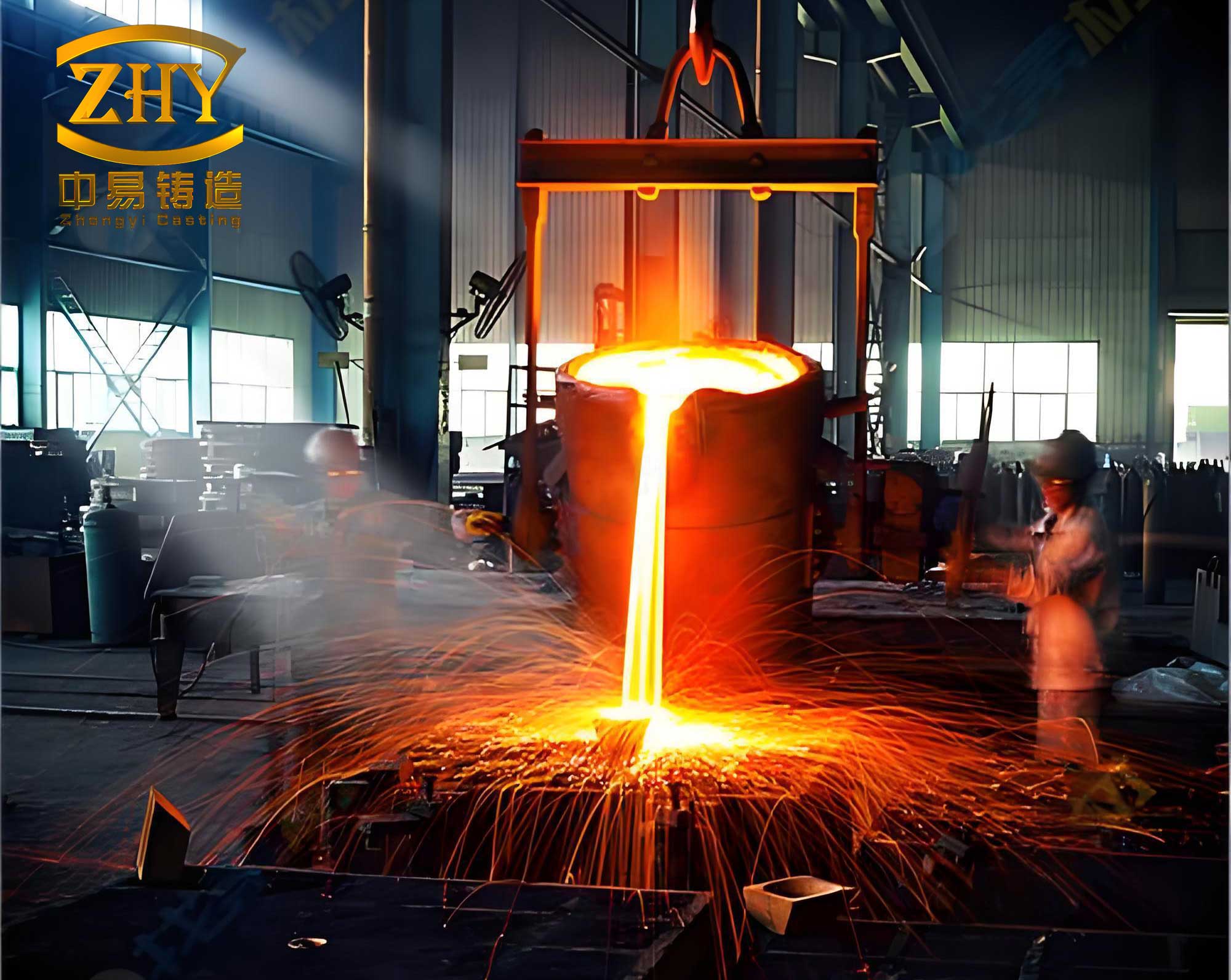
The manufacturing of titanium alloy casting parts involves intricate processes to achieve desired geometries and properties. Centrifugal casting, used in this investigation, enhances metal filling and reduces defects by utilizing centrifugal force. After casting, heat treatments are applied to modify the microstructure, relieve residual stresses, and improve mechanical performance. Common treatments include annealing for stress relief, HIP for porosity closure, and combinations thereof. Understanding the interplay between heat treatment parameters and material behavior is vital for producing high-integrity casting parts. In this work, I explore how different thermal histories affect the α and β phase morphology, grain boundaries, and resultant tensile properties in ZTC4 casting parts.
The experimental matrix was designed to compare four distinct states: as-cast (representing the baseline condition), annealed, HIP, and HIP plus annealed. For consistency, all casting parts were produced under identical centrifugal casting parameters, ensuring that any variations in properties could be attributed solely to heat treatment. The chemical composition of the ZTC4 alloy used is summarized in Table 1. This composition aligns with standard specifications for titanium casting parts, ensuring adequate strength and corrosion resistance.
| Element | Titanium | Aluminum | Vanadium | Iron | Carbon | Nitrogen | Hydrogen | Oxygen |
|---|---|---|---|---|---|---|---|---|
| Content | Balance | 5.5–6.8 | 3.5–4.5 | ≤0.30 | ≤0.10 | ≤0.05 | ≤0.015 | ≤0.20 |
The casting parts were fabricated using investment molding and centrifugal casting. Key process parameters included a preheat temperature of 350°C, vacuum level below 5 Pa, centrifugal speed of 160 rpm, and melting current ranging from 19,000 to 21,000 A. These conditions were optimized to minimize gas entrapment and shrinkage porosity in the casting parts. Attached test specimens, representative of the casting parts, were extracted from the same circumferential location to ensure uniformity. After radiographic inspection to confirm internal soundness, the specimens were grouped for heat treatment, as outlined in Table 2.
| Heat Treatment State | Process Details |
|---|---|
| As-cast | No additional treatment; baseline condition. |
| Annealed | Heated to 735°C, held for 2 hours, furnace-cooled to below 200°C. |
| Hot Isostatic Pressed (HIP) | Heated to 930°C under 125 MPa pressure, held for 2.5 hours, furnace-cooled to below 300°C. |
| HIP + Annealed | HIP treatment followed by annealing at 735°C for 2 hours, furnace-cooled to below 200°C. |
For each state, ten specimens were prepared to ensure statistical reliability. Mechanical testing was conducted using a universal testing machine according to ASTM E8/E8M standards. Tensile properties—ultimate tensile strength (UTS), yield strength (YS), elongation (EL), and reduction of area (RA)—were measured. Microstructural analysis involved sectioning specimens, grinding, polishing, and etching with a solution of HF, HNO3, and H2O (1:4:45 by volume). Optical microscopy was employed to observe phase morphology and grain boundaries.
The microstructure of ZTC4 casting parts is primarily composed of α (hexagonal close-packed) and β (body-centered cubic) phases. The as-cast condition exhibits a fine, acicular α phase within a β matrix, with narrow interlamellar spacing. This structure results from rapid solidification during centrifugal casting. The arrangement can be described using a phase fraction model, where the volume fraction of α phase, $V_\alpha$, influences mechanical behavior. For titanium alloys, the relationship between phase morphology and strength often follows the Hall-Petch equation, modified for two-phase systems:
$$ \sigma_y = \sigma_0 + k_\alpha \cdot d_\alpha^{-1/2} + k_\beta \cdot d_\beta^{-1/2} $$
where $\sigma_y$ is the yield strength, $\sigma_0$ is the lattice friction stress, $k_\alpha$ and $k_\beta$ are constants, and $d_\alpha$ and $d_\beta$ are the average grain sizes of α and β phases, respectively. In casting parts, the as-cast condition typically has small $d_\alpha$ due to fast cooling, contributing to higher strength but limited ductility.
Upon annealing, the microstructure evolves. Annealing at 735°C, below the β transus temperature (approximately 882°C for ZTC4), promotes coarsening of α phase and partial spheroidization. The annealing kinetics can be expressed using the Lifshitz-Slyozov-Wagner theory for Ostwald ripening:
$$ \bar{r}^3 – \bar{r}_0^3 = \frac{8 \gamma D C_\infty V_m}{9 RT} t $$
where $\bar{r}$ is the average particle radius, $\bar{r}_0$ is the initial radius, $\gamma$ is the interfacial energy, $D$ is the diffusion coefficient, $C_\infty$ is the solubility, $V_m$ is the molar volume, $R$ is the gas constant, $T$ is temperature, and $t$ is time. This coarsening reduces the α phase aspect ratio, leading to a more equiaxed morphology. For casting parts, this transformation enhances ductility but may slightly lower strength.
HIP treatment involves high temperature and pressure, which effectively closes internal porosity common in casting parts. The HIP process can be modeled using creep mechanisms, where the densification rate $\dot{\rho}$ follows:
$$ \dot{\rho} = A \cdot \exp\left(-\frac{Q}{RT}\right) \cdot \sigma^n $$
where $A$ is a pre-exponential factor, $Q$ is activation energy, $\sigma$ is applied stress, and $n$ is the stress exponent. At 930°C, the alloy is in the β phase field, leading to complete transformation to β upon heating, followed by decomposition into α+β upon cooling. This results in a coarse, lamellar α structure with thickened β boundaries. Such microstructure in casting parts improves fatigue resistance but can compromise tensile strength.
Combining HIP with annealing aims to balance densification and microstructural refinement. The additional annealing after HIP allows for partial recrystallization, reducing the coarseness inherited from HIP. This dual treatment is particularly beneficial for casting parts requiring both high integrity and good mechanical properties.
The mechanical properties data for all states are consolidated in Table 3. Each value represents the average of ten tests, with standard deviations indicating variability. The as-cast casting parts show high UTS and YS but lower ductility. Annealed casting parts exhibit similar strength with improved ductility. HIP-treated casting parts demonstrate a notable drop in strength but significant enhancement in elongation and reduction of area. Finally, HIP+annealed casting parts achieve an optimal combination, with strength meeting standards and ductility maximized.
| Heat Treatment State | Ultimate Tensile Strength (MPa) | Yield Strength (MPa) | Elongation (%) | Reduction of Area (%) |
|---|---|---|---|---|
| As-cast | 952.4 ± 9.8 | 847.0 ± 7.2 | 16.1 ± 1.8 | 7.2 ± 1.6 |
| Annealed | 947.7 ± 8.5 | 877.4 ± 11.3 | 16.1 ± 2.5 | 8.6 ± 1.0 |
| HIP | 917.4 ± 17.2 | 840.4 ± 10.8 | 20.3 ± 5.8 | 8.4 ± 1.7 |
| HIP + Annealed | 922.2 ± 11.5 | 843.7 ± 6.3 | 19.0 ± 2.3 | 10.1 ± 1.5 |
To quantify the performance trade-offs, I define a composite performance index $PI$ for casting parts, integrating strength and ductility:
$$ PI = w_1 \cdot \frac{\sigma_{UTS}}{\sigma_{req}} + w_2 \cdot \frac{\sigma_{YS}}{\sigma_{req}} + w_3 \cdot \frac{EL}{EL_{req}} + w_4 \cdot \frac{RA}{RA_{req}} $$
where $w_1$, $w_2$, $w_3$, and $w_4$ are weighting factors summing to 1, and subscript $req$ denotes minimum required values per standards (e.g., UTS ≥ 890 MPa, YS ≥ 820 MPa, EL ≥ 12%, RA ≥ 5%). For aerospace casting parts, equal weighting might be assumed. Calculating $PI$ for each state reveals that HIP+annealed casting parts score highest, confirming their superior overall performance.
Microstructural observations corroborate these findings. As-cast casting parts display fine, needle-like α phases with distinct grain boundaries. Annealed casting parts show slightly coarsened α phases with more interlocking arrangement. HIP-treated casting parts exhibit coarse α laths and prominent β boundaries, explaining the strength reduction. HIP+annealed casting parts feature moderated α phase size and homogeneous distribution, optimizing strength-ductility balance. These morphological changes directly impact dislocation movement and crack propagation in casting parts.
The evolution of α phase aspect ratio $AR$ (length-to-width ratio) can be correlated with ductility. Higher $AR$ typically corresponds to lower ductility due to easier crack propagation along elongated grains. For casting parts, I approximate $AR$ from micrographs and relate it to elongation via a linear regression model:
$$ EL = a – b \cdot AR $$
where $a$ and $b$ are material constants. Data fitting suggests that HIP+annealed casting parts have an optimal $AR$ around 3–4, yielding high elongation without excessive strength loss.
Furthermore, the effect of heat treatment on residual stress is critical for casting parts. Residual stresses $\sigma_{res}$ induced during casting can be relieved through annealing. The stress relaxation follows an exponential decay:
$$ \sigma_{res}(t) = \sigma_{res}(0) \cdot \exp\left(-\frac{t}{\tau}\right) $$
where $\tau$ is a relaxation time constant dependent on temperature and material. HIP adds hydrostatic pressure, which not only closes pores but also homogenizes stresses, enhancing the dimensional stability of casting parts.
In practice, the choice of heat treatment for ZTC4 casting parts depends on application requirements. For high-strength applications, as-cast or annealed states may suffice. However, for components subjected to cyclic loading or requiring high reliability, HIP+annealed is recommended. This combination ensures minimal porosity, refined microstructure, and balanced properties. The improved ductility reduces brittleness, which is crucial for fracture-critical casting parts.
To further optimize heat treatment, computational modeling can be employed. Using finite element analysis, temperature and stress distributions during heat treatment of casting parts can be simulated. The phase transformation kinetics can be described by the Johnson-Mehl-Avrami-Kolmogorov equation:
$$ f = 1 – \exp(-k t^n) $$
where $f$ is the transformed fraction, $k$ is a rate constant, and $n$ is the Avrami exponent. Such models help in predicting microstructure and tailoring heat treatment schedules for specific casting parts geometries.
In summary, this comprehensive study demonstrates that heat treatment significantly influences the microstructure and mechanical properties of ZTC4 titanium alloy casting parts. Among the four states investigated, HIP followed by annealing yields the best combination of strength, ductility, and microstructural homogeneity. This state meets all standard requirements while minimizing property variability, making it ideal for high-performance casting parts. The insights gained here can guide manufacturers in selecting appropriate heat treatments to enhance the quality and reliability of titanium alloy casting parts across various industries.
Future work could explore the effects of cooling rates after heat treatment, or the addition of alloying elements to further improve properties. Additionally, non-destructive evaluation techniques could be integrated to monitor microstructural changes in casting parts in real-time. By advancing our understanding of heat treatment effects, we can continue to push the boundaries of what is achievable with titanium alloy casting parts, enabling lighter, stronger, and more durable components for demanding applications.