
In the field of metal casting, producing high-integrity, dimensionally precise thin-wall components presents a significant challenge. This is particularly true for grey cast iron, a material prized for its damping capacity, machinability, and cost-effectiveness, but whose relatively lower fluidity compared to ductile iron complicates the filling of intricate, thin sections. Traditional green sand molding, while versatile, often struggles to achieve the consistent surface finish, sharp definition, and tight dimensional tolerances required for modern, high-volume components. This paper details my extensive practical experience in overcoming these challenges through the strategic application of Sand-Faced Permanent Mold (SPM) casting technology for the mass production of thin-wall grey cast iron parts.
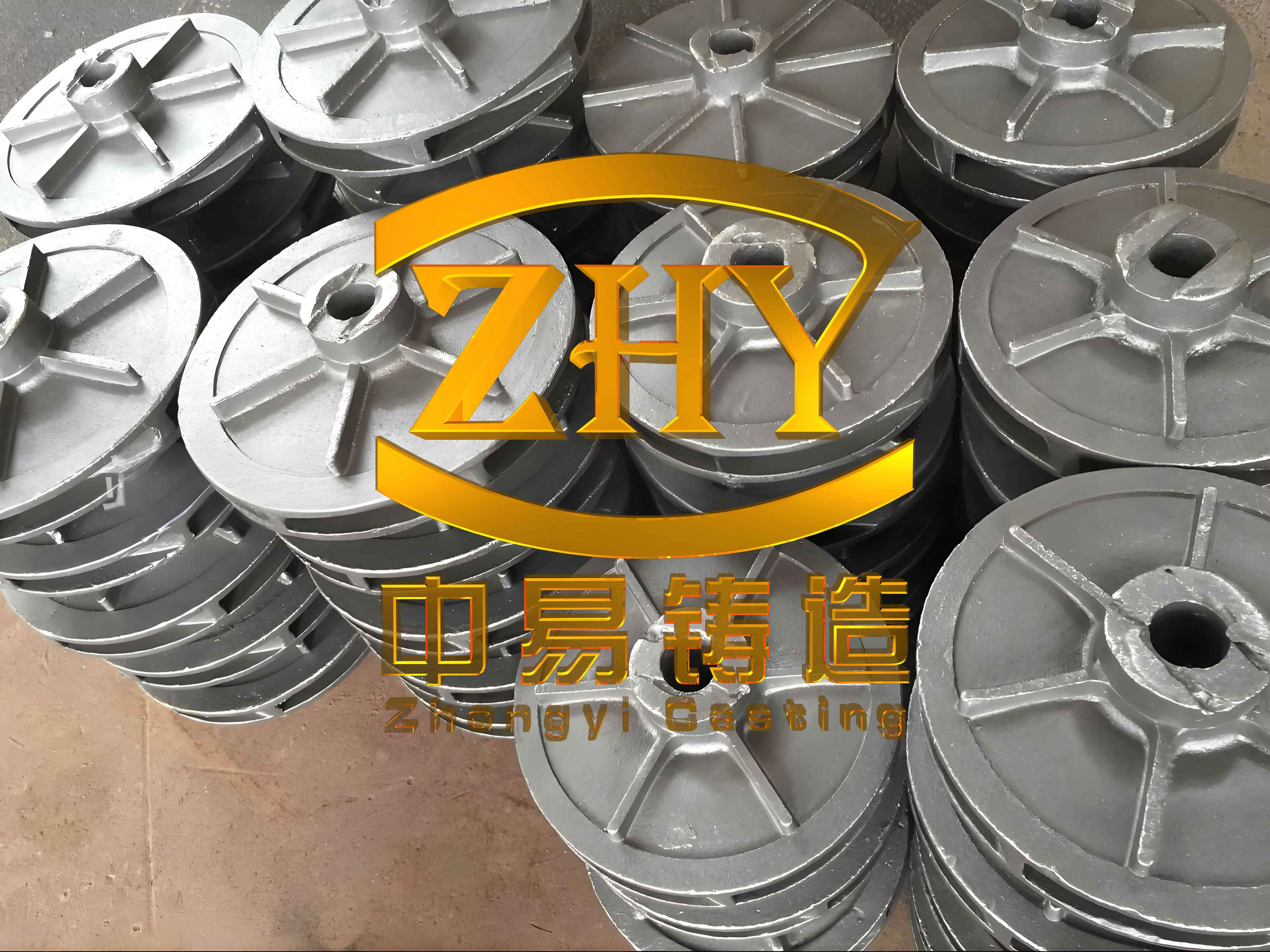
The SPM process, also known as iron mold with sand lining, ingeniously combines the benefits of permanent mold (gravity die) and shell molding processes. A reusable cast iron or steel mold (the “iron type”) defines the external geometry of the part. A thin, precise layer of resin-coated sand is then formed against the heated cavity of this mold, typically via a shooting and thermal curing process. This creates a smooth, rigid shell that lines the mold cavity. When the two halves of the prepared mold are closed, the thin sand linings face each other, forming the complete mold cavity. Molten grey cast iron is then poured into this composite mold. The result is a casting process with superior heat transfer characteristics, exceptional dimensional repeatability, and excellent surface finish, perfectly suited for the demands of batch production.
Inherent Challenges of Thin-Wall Grey Cast Iron Casting
Successfully casting thin-wall sections in grey cast iron requires a deep understanding of the inherent material and process limitations. The primary difficulties are amplified in high-productivity scenarios and are summarized below:
| Challenge Category | Specific Issue | Root Cause & Consequence |
|---|---|---|
| Fluidity & Filling | Cold shuts, mistruns, incomplete filling. | High surface-area-to-volume ratio leads to rapid heat loss. The lower superheat and fluidity of grey cast iron (compared to ductile iron) exacerbate this. The metal front solidifies before the cavity is fully filled. |
| Microstructure Control | Chill formation (carbides, white iron). | The high cooling rate imposed by the metal mold can suppress graphitization, promoting the formation of hard, brittle cementite at the surface or in thin sections, impairing machinability and mechanical properties. |
| Thermal Stress & Cracking | Hot tears or cold cracks. | Non-uniform cooling and hindered contraction, especially in box-shaped or cored geometries where the internal sand core (or iron core) restricts shrinkage, generate high tensile stresses that can fracture the weak, high-temperature solid. |
| Dimensional & Geometric | Distortion, poor dimensional accuracy. | Non-uniform heat extraction and core restraint can lead to warping. Achieving sharp corners and consistent wall thickness is difficult in conventional sand processes. |
The rate of heat extraction is governed by the fundamental heat transfer equation. The heat flux \( q” \) from the solidifying grey cast iron to the mold can be expressed as:
$$ q” = h \cdot (T_{cast} – T_{mold}) $$
where \( h \) is the interfacial heat transfer coefficient, \( T_{cast} \) is the casting surface temperature, and \( T_{mold} \) is the mold surface temperature. In SPM, the \( h \) value and the thermal mass of the composite mold are critical design levers. The propensity for chill formation is related to the cooling rate \( \dot{T} \), which must be controlled to remain below the critical rate for carbide formation in grey cast iron.
The SPM Process: A Synergistic Solution
The SPM process directly addresses the aforementioned challenges through its unique construction. The thick, high-thermal-conductivity iron mold provides rapid, directional solidification, promoting a dense, sound microstructure. However, the key innovation is the interposed sand layer. This layer, though thin, acts as a vital thermal and mechanical buffer:
- Thermal Insulation: It moderates the extreme chilling effect of the iron mold, preventing carbide formation in thin sections of grey cast iron and allowing proper graphitization.
- Surface Finish: It provides an exceptionally smooth cavity surface, reducing fluid flow resistance and yielding castings with a superior as-cast finish.
- Dimensional Control: The rigid iron mold ensures minimal mold wall movement, granting outstanding dimensional repeatability and sharp geometric definition.
- Controllable Cooling: By varying the thickness of the sand layer (typically between 5-25 mm), the foundry engineer can precisely tailor the local cooling rate. Thicker sand in problematic areas slows cooling to prevent chill or relieve stress.
The process capability can be quantified by the modulus extension factor. For a given section modulus \( M \) (volume/surface area), the solidification time \( t_s \) in SPM is extended compared to a pure metal mold, following Chvorinov’s rule modified for the composite mold:
$$ t_s = B \cdot \left( \frac{V}{A} \right)^n = B \cdot M^n $$
where \( B \) is the mold constant (much lower for pure iron mold, higher for SPM), and \( n \) is typically around 2. The SPM’s \( B \) value sits optimally between that of sand and metal mold.
Critical Process Design Parameters for Thin-Wall Grey Iron
Designing an SPM process for thin-wall grey cast iron components is a multi-variable optimization problem. The following parameters are paramount and must be designed in concert.
1. Gating System Design
The goal is to achieve rapid, tranquil, and directional filling to combat the rapid heat loss. A well-designed system is crucial for grey cast iron.
$$ \text{Flow Velocity} = \frac{\text{Flow Rate}}{\text{Cross-Sectional Area}} $$
Excessive velocity causes turbulence and entrains air; insufficient velocity leads to premature freezing. I consistently employ a pressurized or semi-pressurized system to ensure a rapid, coherent metal stream. The area ratios are critical. A proven starting point for thin-wall grey cast iron is:
$$ F_{sprue} : F_{runner} : F_{ingate} = 1.0 : 1.2 : 1.5 $$
This creates a choke at the sprue base, promoting rapid filling. Multiple, strategically placed ingates are essential to reduce flow distance and fill the thin sections simultaneously. The ingate thickness should be closely matched to the part wall thickness to minimize thermal shock and jetting.
2. Sand Layer & Iron Mold Thickness
This is the most powerful tool for controlling the thermal regime. The sand layer thickness \( d_{sand} \) and iron mold thickness \( d_{iron} \) are not uniform; they are strategically varied. The total thermal resistance \( R_{total} \) of the mold wall is the sum of the resistances:
$$ R_{total} = \frac{d_{sand}}{k_{sand}} + \frac{d_{iron}}{k_{iron}} $$
where \( k \) is thermal conductivity. Increasing \( d_{sand} \) increases \( R_{total} \), slowing cooling. The following table provides a design guideline:
| Component Region | Sand Layer Thickness (mm) | Iron Mold Thickness (mm) | Design Rationale |
|---|---|---|---|
| Thin Sections (<4mm), Corners | 15 – 25 | 15 – 20 | Maximize insulation to prevent chill and ensure fill. |
| Medium Walls (4-8mm) | 8 – 15 | 20 – 25 | Balance cooling for soundness without chill. |
| Thick Sections, Bosses | 5 – 10 | 25 – 30 | Promote faster cooling to avoid shrinkage porosity. |
| Internal Cores | 15 – 30 | N/A (if sand core) or thin iron | Maximize collapsibility to prevent hot tearing. |
3. Venting and Atmosphere Control
The permeability of the thin sand shell is lower than a conventional sand mold. Combined with the rapid filling, air entrapment is a major risk. Venting must be proactively designed. This includes:
- Micro-porosity in the sand layer itself, achieved by proper sand grain distribution.
- Strategic placement of vent channels machined into the iron mold, leading to the atmosphere.
- Use of permeable venting plugs at the highest points and in areas where air is likely to be trapped.
The goal is to minimize back-pressure \( P_{back} \) during filling, described by:
$$ P_{back} \propto \frac{\dot{m}^2}{\rho \cdot A_{vent}^2 \cdot \mu} $$
where \( \dot{m} \) is the metal mass flow rate, \( \rho \) is air density, \( A_{vent} \) is the total vent area, and \( \mu \) is a flow coefficient. Maximizing \( A_{vent} \) is critical for thin-wall grey cast iron filling.
4. Sand and Coating Specifications
The sand layer quality directly defines casting surface finish. I specify:
- Fine-grained silica sand: AFS Grain Fineness Number (GFN) of 70-100 for a smooth cavity surface to reduce fluid friction for the grey cast iron.
- Phenolic resin coating: Provides high shell strength and thermal stability.
- Refractory mold wash: A thin layer of graphite- or zircon-based coating is applied to the cured sand shell. This further improves surface finish, prevents metal penetration, and aids in stripping the casting.
Production Operation: A Protocol for Consistency
Robust process design must be coupled with disciplined operational control to achieve consistent quality in grey cast iron SPM casting.
| Process Stage | Key Parameter | Target / Control Method | Rationale |
|---|---|---|---|
| Mold Preparation | Mold Temperature, Release Agent | 150-250°C; Uniform, thin layer of silicone-based spray. | Ensures proper sand curing and easy shell demolding. Prevents shell sticking to the iron type. |
| Sand Shooting & Curing | Shooting Pressure, Curing Time/Temp | Optimized for uniform shell density; Follow resin specs. | Creates a consistent, strong shell with no soft spots or blow-outs. |
| Metal Pouring | Pouring Temperature, Pouring Time | 1350-1400°C; 5-10 seconds for a ~10kg casting. | Provides sufficient superheat to fill thin sections before freezing. Fast pour minimizes temperature drop. |
| Solidification & Shakeout | Closed Time, Shakeout Time | 2-5 minutes closed; Shakeout at ~800-900°C. | Allows solidification under pressure. Early shakeout while casting is still ductile reduces resistance to contraction, minimizing stress and cracking risk in the grey cast iron. |
| Process Cycling | Mold Cooling between Cycles | Forced air or water mist cooling to maintain stable mold temp. | Ensures consistent thermal conditions cycle-to-cycle, which is vital for dimensional stability and microstructure. |
Quantitative Benefits and Application Case
The efficacy of the SPM process for thin-wall grey cast iron is best demonstrated through comparative metrics and a practical example.
| Performance Indicator | SPM Process | Conventional Green Sand |
|---|---|---|
| Dimensional Tolerance (CT8 per ISO 8062) | Easily Achieved & Exceeded | Challenging to Maintain Consistently |
| Surface Roughness (Ra, μm) | 6.3 – 12.5 | 12.5 – 25 |
| Metallurgical Yield (Weight of Casting / Weight of Metal Poured) | 85% – 92% | 50% – 65% |
| Scrap Rate (for thin-wall grey iron) | 1% – 3% | 5% – 15% |
| Production Rate (molds/hour) | 20 – 40 | 10 – 20 |
| Typical Minimum Wall Thickness (Grey Iron) | 2.5 – 3.0 mm | 4.0 – 5.0 mm |
Consider a theoretical but representative component: a housing with dimensions 400mm x 200mm x 250mm, featuring uniform walls of 4mm, thin ribs of 2.5mm, and several cored openings. The material is Grade 250 grey cast iron.
- Process Design: The mold is designed as a single horizontal parting. The sand layer is set at 20mm on the internal cores and thin ribs, and 10mm on the main walls. The iron mold thickness is 25mm. A six-ingate system with a sprue-runner-ingate ratio of 1:1.1:1.4 is used to ensure uniform, fast filling.
- Outcome: The castings exhibit sharp geometrical definition on all edges and openings. No chill is detected in the 2.5mm ribs upon microscopic inspection. The consistent cooling results in a uniform pearlitic matrix with well-dispersed Type A graphite. Dimensional variation across a batch of 1000 pieces is within ±0.3mm on critical dimensions, well inside CT8 limits. The weight of the finished casting is 8.5kg, compared to a 12kg design weight initially required in sand casting to ensure fill and provide machining stock. This represents a 29% saving in raw grey cast iron.
The economic advantage is profound. The reduction in machining (often limited to just drilled holes), the near-elimination of finishing labor, the drastic reduction in energy per casting (lower pouring mass, higher yield), and the high productivity make SPM the dominant economic choice for suitable batch sizes, typically above 5,000 pieces.
Conclusion and Outlook
The Sand-Faced Permanent Mold casting process stands as a uniquely powerful manufacturing solution for the high-volume production of thin-wall, high-precision grey cast iron components. By masterfully balancing the intense cooling of a metal mold with the insulating and finishing properties of a thin resin sand lining, it surmounts the classic challenges of fluidity, chill, and stress cracking associated with grey cast iron. The keys to success lie in a holistic approach: an aggressively designed gating system for rapid fill, strategic variation of sand and iron thickness for controlled solidification, meticulous venting, and strict adherence to thermal management protocols during production.
The results speak for themselves—castings with exceptional dimensional fidelity, superb surface quality, consistent metallurgical properties, and significant reductions in weight and total cost. As the industry continues to demand lighter, stronger, and more precise components, the adoption and refinement of SPM technology for alloys like grey cast iron will undoubtedly expand. Future developments may include integrated simulation tools to optimize sand layer thickness maps automatically, advanced coating materials for even better performance, and further automation to make the process accessible for increasingly complex and variable geometries. For the discerning foundry engineer tasked with producing high-quality thin-wall grey cast iron castings efficiently, the SPM process is not just an option; it is, in many cases, the definitive technical and economic solution.