
In my extensive work with gray iron casting, a persistent and often misunderstood issue is the appearance of minute, irregular pits or holes on machined surfaces, particularly in heavy-section components like machine tool guides. These defects, frequently misattributed to shrinkage or microporosity, critically affect surface finish, dimensional accuracy, and ultimately the service life of the casting. Through systematic metallurgical analysis, I have dedicated significant effort to unraveling the true genesis of these flaws. This article presents a first-person account of my investigative journey, concluding that the so-called “hole defects” are fundamentally a result of graphite flaking during machining operations, not inherent solidification defects. The implications for the production of high-integrity gray iron casting components are profound, necessitating a paradigm shift in both foundry and machining practices.
The unique properties of gray iron casting, such as excellent damping capacity, good wear resistance, and relative ease of manufacture, stem from its characteristic microstructure comprising a metallic matrix interspersed with flake graphite. This very graphite, however, introduces a structural discontinuity. My research was driven by the need to explain why, upon machining, these surfaces often exhibit a speckled pattern of pits. Conventional wisdom in many machining shops points to “spongy” metal or shrinkage. However, preliminary microscopic examination consistently failed to reveal the dendritic or intergranular features typical of solidification porosity. This discrepancy prompted a deeper, more structured inquiry into the true mechanism.
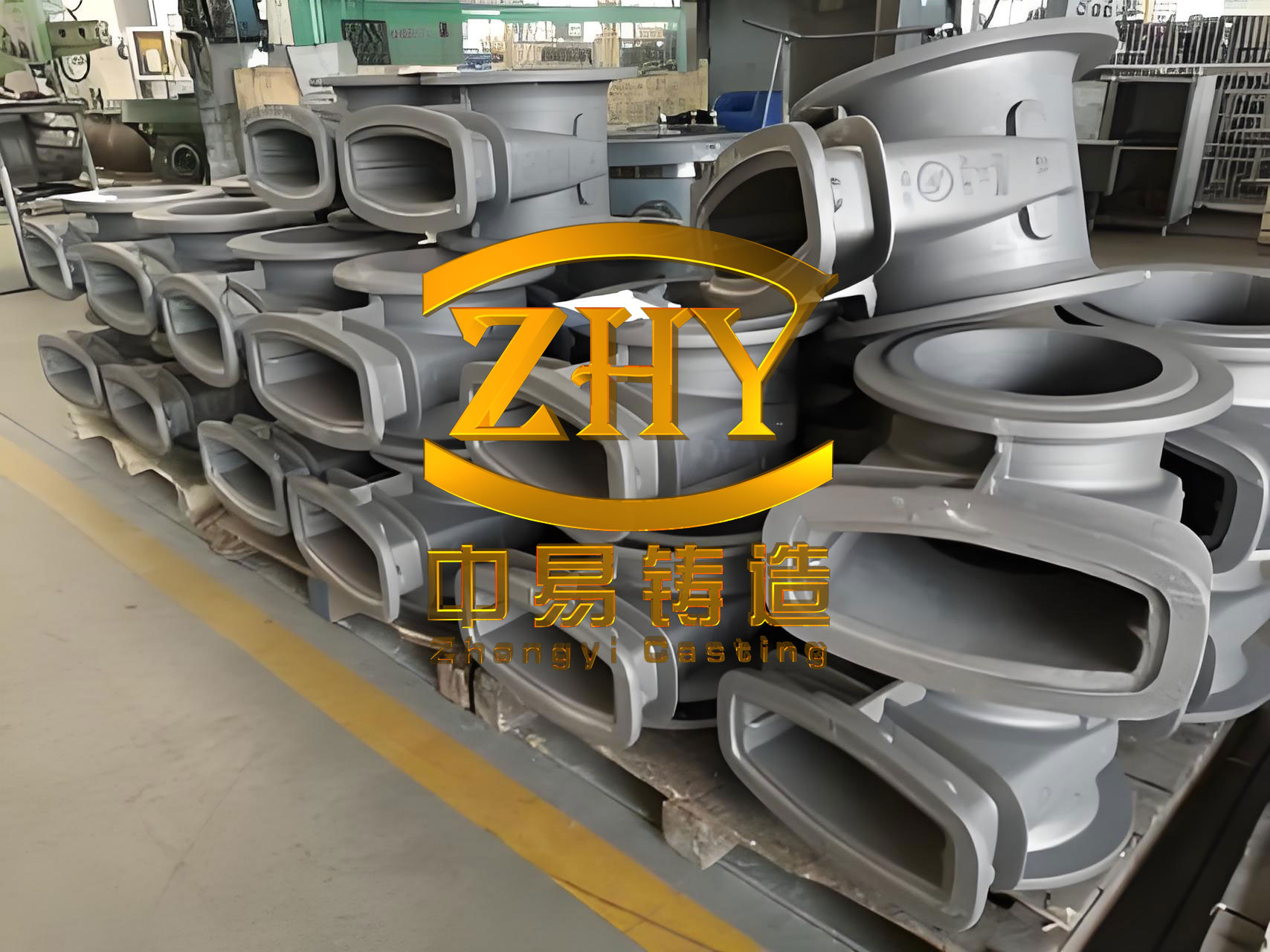
To methodically study this phenomenon in gray iron casting, I designed and executed a series of controlled experiments. The base material was a standard HT250-grade iron, melted in a medium-frequency induction furnace using a charge of Z18 pig iron, steel scrap, and necessary ferroalloys. The molten metal was treated with a 0.3% barium-silicon inoculant. To simulate varying cooling conditions encountered in real castings, I utilized step-block molds created with furan resin sand. These blocks featured sections with thicknesses of 40 mm, 80 mm, 100 mm, 150 mm, and 200 mm, each 300 mm long and 150 mm wide. From the central region of each step, samples were extracted for analysis.
I organized the trials into distinct groups to isolate the effects of composition and inoculation on the machinability of gray iron casting. The chemical composition ranges for these groups were carefully controlled, as summarized in Table 1.
| Group Designation | C | Si | Mn | P (max) | S (max) | Cu | Sn | Cr (max) | Primary Treatment |
|---|---|---|---|---|---|---|---|---|---|
| Alloyed Group | 3.0-3.15 | 1.8-2.0 | 0.6-1.0 | 0.12 | 0.12 | ≤0.4 | ≤0.4 | 0.5 | Base Inoculation |
| Alloyed + Group A | 3.0-3.15 | 1.8-2.0 | 0.6-1.0 | 0.12 | 0.12 | ≤0.4 | ≤0.4 | 0.5 | Base Inoculation + Additive A |
| Enhanced Inoculation Group | 3.0-3.15 | 1.8-2.0 | 0.6-1.0 | 0.12 | 0.12 | – | – | 0.5 | Intensive Inoculation |
The core of my experimental approach involved subjecting samples from each group and section size to different machining processes: sawing, turning, and grinding. This allowed me to correlate machining shear forces with the resultant surface morphology. After machining, I conducted thorough metallographic examination using optical microscopy at magnifications of 300x and 1200x to document the微观形貌 of the pits. Furthermore, I analyzed the underlying as-cast microstructure of each sample to establish a direct link between graphite morphology and pit formation.
The results were unequivocal. For any given sample of gray iron casting, the severity and appearance of the pits varied dramatically with the machining method. Sawing, a process involving high撕裂 force, produced the largest and deepest cavities, often with jagged edges suggesting forceful pull-out. Turning resulted in smaller, shallower pits, and under high magnification, a dark, film-like residue—reminiscent of graphite—was visible within them. Grinding, a process of abrasive shear and compression, yielded the faintest impressions, often appearing as mere traces or “ghosts” of the graphite flakes on the surface. Critically, none of these cavities showed evidence of dendrites or shrinkage porosity. This led me to the first major inference: the pits are not solidification defects but are created during the cutting action itself.
A more revealing analysis came from comparing samples across different groups and section sizes. As the section thickness of the gray iron casting increased, leading to slower cooling, the graphite flakes in the microstructure became coarser and more clustered. Correspondingly, the size and prevalence of machining-induced pits increased. This parallel trend was starkly evident. Similarly, comparing the groups, the Enhanced Inoculation Group exhibited the finest, most uniformly distributed graphite and, consequently, the smallest and most evenly dispersed pits. The Alloyed + Group A, despite having shorter graphite, showed noticeable clustering, which translated to localized areas of more severe pitting. The correlation was direct: the size, distribution, and cohesion of the graphite directly dictated the pitting behavior. I concluded that the pits are formed when the cutting tool mechanically dislodges graphite flakes from the iron matrix. Sometimes, fragments of the immediately surrounding ferrite or pearlite matrix adhering to the graphite are also torn out, enlarging the cavity.
To understand this mechanistically, one must consider the three-dimensional architecture of graphite in gray iron casting. During eutectic solidification, graphite grows in a cooperative manner with austenite. I conceptualize the final flake as having a robust “core” region (which initiates growth and may appear as undercooled or primary graphite in a 2D section) and extending “lamellae” or “blades”. The mechanical anchoring of this structure within the matrix is critical. The strength of this interface can be approximated by considering the shear stress required for detachment, which relates to the graphite-matrix interfacial energy and the geometry of the flake. A simple model for the critical shear stress ($\tau_c$) to initiate flake pull-out could be expressed as a function of the graphite’s aspect ratio and interfacial strength:
$$ \tau_c \propto \frac{\Gamma}{d} \cdot f(L/d) $$
where $\Gamma$ is the effective graphite-matrix interfacial energy, $d$ is the flake thickness, $L$ is the flake length, and $f(L/d)$ is a function describing the geometric engagement. Larger, coarser flakes (large $d$ and $L$) present a weaker interface relative to the machining forces, making them more susceptible to pull-out. The cooling rate ($T’$) during solidification of the gray iron casting is a primary governor of graphite size. An empirical relationship often holds:
$$ d_{graphite} = k \cdot (T’)^{-n} $$
where $k$ and $n$ are material constants. Slower cooling (lower $T’$, as in thicker sections) leads to larger $d_{graphite}$, which, according to the first model, decreases $\tau_c$, promoting easier flake removal and larger pits. This perfectly explains my experimental observations across different step-block thicknesses.
The potency of inoculation in gray iron casting lies in its ability to increase the number of eutectic graphite nucleation sites ($N$). This refines the graphite structure, reducing both $d$ and $L$. The effectiveness of an inoculant can be related to the number of active nuclei surviving in the melt, which decays with time and temperature:
$$ N(t) = N_0 \cdot \exp\left(-\frac{Q}{R T} \cdot t \right) $$
where $N_0$ is the initial nuclei concentration, $Q$ is an activation energy, $R$ is the gas constant, $T$ is the melt temperature, and $t$ is time. Late or post-inoculation practices aim to maximize $N(t)$ at the moment of solidification, thereby refining the graphite and, through the mechanisms described, minimizing subsequent pitting. My production trials on actual HT250 machine bed castings confirmed this. A bed cast with standard ladle inoculation showed visible pitting on the machined guideways. An identical bed cast with an additional 0.1% late-stream inoculation exhibited a dramatically smoother surface with significantly fewer pits, validating the laboratory findings.
| Measure Category | Specific Action | Mechanism of Action | Key Consideration/Range |
|---|---|---|---|
| Melting & Metallurgy | Enhanced/Multiple Inoculation | Increases graphite nucleation sites (↑N), refines flake size (↓d, ↓L). | Use of long-lasting inoculants (e.g., Sr-Si); late stream or mold inoculation is most effective. |
| Reduced Pig Iron, Increased Steel Scrap | Minimizes genetic inheritance of coarse graphite; promotes formation of finer exogenous graphite nuclei. | Pig iron ≤30%, preferably ≤10%; steel scrap ≥50%. | |
| Process Control | Elevated Superheating Temperature | Dissolves inherited coarse graphite clusters above a critical temperature (~1500°C). | Must be followed by controlled, rapid cooling to prevent graphite re-growth during holding. |
| Alloying | Addition of Carbide Stabilizers (Mn, Cr) & Pearlite Refiners (Sn, Sb) | Moderates graphitization, promotes finer pearlitic matrix which may better anchor graphite. | Mn ≤1.2%, Cr ≤0.5%, Sn ≤0.1%, Sb ≤0.03% to avoid excessive hardness & tool wear. |
| Solidification Control | Accelerated Cooling (Chills, High Conductivity Molds, Lower Pouring Temp) | Increases cooling rate (↑T’), refines graphite and matrix structure. | Strategic use of chills in heavy sections; optimal pouring temperature balance needed. |
| Composition | Reduced Carbon & Silicon Equivalent | Directly reduces graphite volume and tends to refine flake size. | Must be coupled with strong inoculation to avoid undercooled graphite and chill risk. |
| Machining Strategy | Optimized Cutting Parameters | Reduces shear and tensile forces on graphite flakes during material removal. | Final finishing depth of cut ~1/10 of roughing cut; reduced feed rates. |
| Final Abrasive Finishing (Grinding, Honing) | Replaces tensile-dominated cutting with compressive shear, minimizing flake pull-out. | Highly effective for final surface; can eliminate visible pitting. |
Building on this foundational understanding, I developed and validated a comprehensive set of preventive measures for the gray iron casting industry. These strategies target the root cause—graphite morphology and its interface—at every stage of the process. A holistic application, often combining several measures, is typically required to eliminate pitting in demanding applications. Table 2 provides a systematic summary of these countermeasures, linking each action to its underlying metallurgical or mechanical principle.
The fight against machining pitting in gray iron casting is a fight for microstructural control. It requires a seamless integration of foundry science and machining engineering. For instance, the choice of machining parameters is not independent of the material’s microstructure. A gray iron casting with coarse graphite may require a radically different finishing strategy than one with finely inoculated graphite. The depth of cut ($a_p$) in finishing operations must be chosen to ensure complete removal of the damaged layer from previous roughing, which contains the deep pits from coarse graphite pull-out. A rule derived from practice can be stated as:
$$ a_{p,\ finish} \geq \delta_{rough} + \alpha \cdot d_{graphite} $$
where $\delta_{rough}$ is the depth of the deformed/pitted layer from roughing, $d_{graphite}$ is the characteristic flake size, and $\alpha$ is a safety factor. This equation underscores the need for dialogue between the foundry and the machine shop when specifying gray iron casting components.
In conclusion, my investigation decisively demonstrates that the prevalent machining surface pits in gray iron casting are artifacts of graphite flake removal during cutting, not indications of internal shrinkage porosity. The propensity for this defect is intrinsically linked to the size, morphology, and distribution of the graphite phase, which are governed by solidification conditions and melt treatment. Therefore, the pathway to superior machined surface quality in gray iron casting lies in proactive microstructural engineering through vigorous inoculation, careful control of cooling rates, judicious alloying, and intelligent machining sequence design. By reframing this “defect” as a predictable outcome of the interaction between tool and microstructure, we can unlock new levels of precision and performance in gray iron casting applications, from automotive engines to the massive guideways of machine tools. The continuous pursuit of excellence in gray iron casting demands such a deep and integrated understanding of material behavior.