
The design and manufacture of critical automotive components, such as steering linkages, demand a rigorous approach to ensure structural integrity, dimensional accuracy, and cost-effectiveness. This article details a comprehensive methodology I employed for the process design and validation of a passenger car trapezoidal arm using the investment casting process. The workflow integrates three-dimensional modeling, advanced numerical simulation of mold filling and solidification, systematic process optimization based on simulation predictions, and subsequent finite element analysis (FEA) for structural performance verification. The primary objective was to develop a robust investment casting process that minimizes defects while meeting the stringent mechanical requirements of the application.
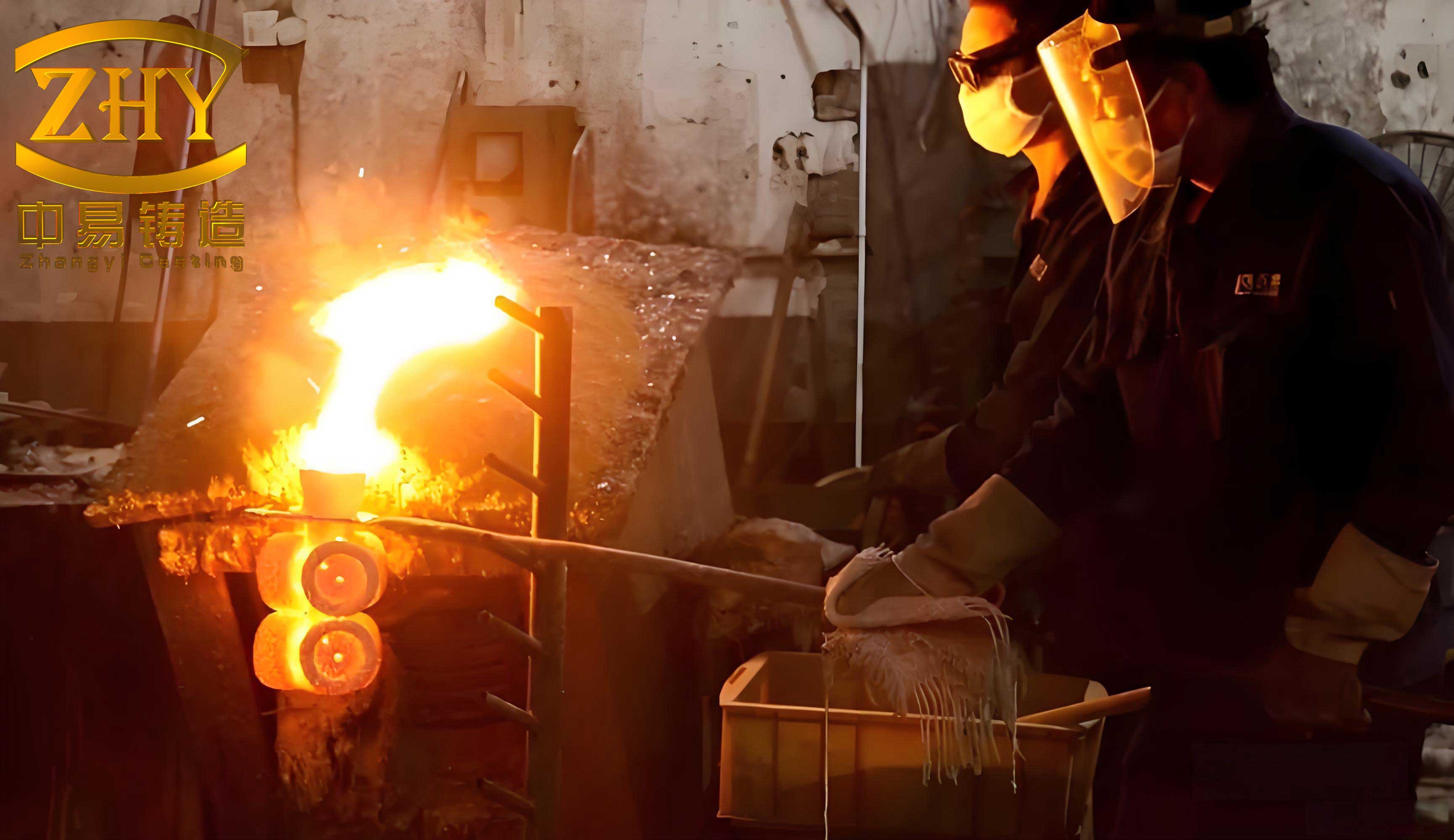
The investment casting process, also known as lost-wax casting, was selected for this component due to its exceptional capability to produce parts with complex geometries, excellent surface finish, and good dimensional tolerances. For the trapezoidal arm, which features thin walls, a curved central section, and reinforcing ribs, this process offers significant advantages over other manufacturing routes like forging or sand casting, particularly for medium-volume production where tooling costs for forging might be prohibitive. However, the inherent complexity of the shape also introduces challenges in ensuring complete filling and sound solidification without defects such as shrinkage porosity, micro-shrinkage, or gas entrapment. Therefore, a simulation-driven design approach is paramount for a successful investment casting process.
1. Component Analysis and 3D Modeling for the Investment Casting Process
The trapezoidal arm is a structurally critical component in the vehicle’s steering linkage system. Its primary function is to transfer motion from the steering gear to the wheel, thereby subjected to significant bending and torsional loads during operation. Failure modes include plastic deformation or fatigue crack initiation, often originating from stress concentrators or internal casting defects. Therefore, achieving a defect-free microstructure through a well-designed investment casting process is as crucial as the final part geometry.
The component’s main dimensions are approximately 190 mm in length, 54 mm in width, and 66 mm in height. A key feature is a conical bore at one end with a taper of 1:10, requiring subsequent machining. The wall thickness varies, with a minimum section of 6 mm, particularly in the curved region and around the rib connections. The material specified is a low-alloy steel conforming to ASTM A732, chosen for its good combination of strength, toughness, and castability. The nominal chemical composition is critical for setting up accurate simulation parameters and is provided in Table 1.
| Element | Carbon (C) | Silicon (Si) | Manganese (Mn) | Chromium (Cr) | Nickel (Ni) | Iron (Fe) |
|---|---|---|---|---|---|---|
| Content (%) | 0.15 – 0.25 | 0.20 – 0.80 | 0.65 – 0.95 | 0.40 – 0.70 | 0.40 – 0.70 | Balance |
I initiated the project by creating a precise 3D solid model of the trapezoidal arm using CAD software. This model served as the foundation for all subsequent steps—gating system design, simulation meshing, and finite element analysis. For the investment casting process, the design of the feeding and gating system is integral to the part model. The initial gating concept was a top-feeding system, aiming for simplicity. It consisted of a central downgate (sprue) connected to the casting’s upper, thicker section via ingates. A two-cavity mold (1 pattern 2 castings) was planned to improve production efficiency. The complete assembly, including the cast parts, sprue, runner, and ingates, was then discretized into a finite element mesh suitable for computational fluid dynamics (CFD) and solidification analysis. The mesh quality is vital for simulation accuracy; a fine mesh is required in thin sections and critical areas to capture thermal gradients correctly. The final mesh for the initial system contained approximately 427,557 nodes.
2. Numerical Simulation of Filling and Solidification for Process Evaluation
With the 3D model prepared, I utilized a dedicated casting simulation software to analyze the proposed investment casting process. The simulation solves the fundamental equations of fluid flow, heat transfer, and phase change to predict the behavior of the molten metal during mold filling and solidification.
The key physical parameters and boundary conditions defined for the simulation include:
- Material Properties: Temperature-dependent properties for the ASTM A732 alloy were assigned, including density, specific heat, thermal conductivity, latent heat of fusion, and viscosity.
- Mold Properties: The shell mold was modeled as a ceramic material (silica-based). A multi-layered shell with a total thickness of about 4 mm was considered, accounting for its insulating effect. The thermal properties of the shell material significantly impact the cooling rate.
- Process Parameters: The pouring temperature was set above the liquidus temperature of the alloy. The gravitational filling condition was applied for the top-gated system.
- Initial Conditions: The mold was initialized at a pre-heat temperature, typical for the investment casting process to avoid thermal shock and improve metal fluidity.
The filling sequence for the initial gating design was simulated first. The results indicated a generally stable fill without excessive turbulence or jetting. The metal filled the sprue rapidly (within ~0.3 s) and proceeded to fill the mold cavities. However, by approximately 5.0 seconds, a potential issue was identified: air entrapment was predicted in the lower region of the casting’s curved neck section. This is a classic problem in top-gating systems where air, displaced by the incoming metal, can become trapped in pockets if the venting path is insufficient. The presence of such entrapped air would lead to gas porosity defects in the final casting, severely compromising its fatigue strength.
The solidification simulation provided even more critical insights. The analysis of thermal gradients and the evolution of the solid fraction revealed the formation of isolated liquid pools, or “hot spots,” in the final areas to freeze. According to the feeding rules in casting, these regions are prone to forming shrinkage porosity or macro-shrinkage cavities if they are not adequately fed with liquid metal under sufficient pressure. The simulation predicted that the initial investment casting process design would lead to significant shrinkage defects concentrated in two main locations: the upper section of the sprue itself (which acts as a thermal mass) and, more critically, in the thick region just below the curved surface of the trapezoidal arm. This is schematically represented by the solidification sequence where the thinner sections freeze first, isolating the thicker junction. The resultant shrinkage can be quantified by the Niyama criterion, a common index for predicting shrinkage porosity in steel castings, which is a function of thermal gradient (G) and cooling rate (R):
$$ Niyama = \frac{G}{\sqrt{\dot{T}}} $$
where $\dot{T}$ is the cooling rate. Regions with a Niyama value below a critical threshold (specific to the alloy) are flagged as potential shrinkage zones. The initial design showed large areas below this threshold.
3. Systematic Optimization of the Investment Casting Process
Based on the diagnostic results from the initial simulation, the gating and feeding system for the investment casting process required significant modification. The goals of the optimization were: 1) To eliminate air entrapment by providing a clear escape path for gases, and 2) To promote directional solidification towards a functional feeder, thereby moving shrinkage from the critical casting body into the expendable gating system.
The optimized design implemented the following key changes:
- Re-location of Ingates: The ingates were moved from the top to the bottom of the casting cavity. This establishes a bottom-up filling sequence, which is inherently quieter and allows for the progressive displacement of air upwards.
- Addition of Venting/Risers: Strategic vent channels or small risers were added at the highest points of the mold cavity, specifically above the curved section and other potential air traps. These vents provide a direct escape route for displaced air and also serve as atmospheric pressure feeders during the final stages of solidification.
- Modification of Feeders: The shape and size of the main sprue were reviewed to ensure it remained liquid long enough to feed the casting adequately. The combination of bottom gating and top vents helps establish a more favorable thermal gradient.
A comparative table summarizes the key differences between the initial and optimized investment casting process designs:
| Feature | Initial Design | Optimized Design | Intended Benefit |
|---|---|---|---|
| Gating Position | Top-gated | Bottom-gated | Quieter fill, reduces turbulence and air entrainment. |
| Air Venting | Relies on mold permeability | Explicit top vents/risers added | Provides positive venting path, eliminates air pockets. |
| Solidification Direction | Random, with hot spots in casting | More directional, from casting to feeders | Moves shrinkage porosity out of the critical part. |
| Predicted Defects | Shrinkage in casting & sprue, gas porosity | Defects primarily in gating system | Yields a sound casting with acceptable gating scrap. |
The simulation was repeated with the optimized model. The results confirmed a dramatic improvement. The filling pattern showed a steady, upward progression of the metal front, effectively pushing air ahead into the newly added vents. More importantly, the solidification analysis demonstrated a clear change in the thermal profile. The critical section below the curved arm now solidified earlier, being fed by the still-liquid metal from the sprue and the casting’s lower sections. The final isolated liquid pools were successfully relocated to the top vents and the upper part of the sprue, which are later removed during processing. The quantitative comparison of the predicted shrinkage volume showed a reduction of over 70% within the actual trapezoidal arm casting when using the optimized investment casting process.
4. Structural Finite Element Analysis of the Optimized Design
While achieving a sound casting is the first major hurdle, the component must also perform under service loads. To verify the structural adequacy of the geometry produced by the optimized investment casting process, I conducted a linear static finite element analysis (FEA). The primary loads on a trapezoidal arm are bending moments and torques transmitted through the steering linkage.
For the analysis, I simplified the 3D CAD model by removing small fillets and non-critical features that would unnecessarily complicate the mesh without affecting the global stress results. The model was then imported into FEA software and meshed with tetrahedral solid elements, resulting in a model with 7,487 nodes and 3,945 elements. The material properties for the cast low-alloy steel were defined as follows: Elastic Modulus, E = 206 GPa; Poisson’s Ratio, ν = 0.3; Yield Strength, σ_y = 275 MPa. A safety factor (n) of 2.6 was applied based on the dynamic and fatigue nature of the loading, giving an allowable stress (σ_allowable) of:
$$ \sigma_{allowable} = \frac{\sigma_y}{n} = \frac{275 \text{ MPa}}{2.6} \approx 105.8 \text{ MPa} $$
A representative worst-case loading scenario was applied. The right-side mounting hole (Point A in a typical schematic) was considered fixed (all degrees of freedom constrained). A limiting torque of 7 MPa (interpreted as a pressure on the bore surface) was applied to the left and central connection points (Points B and C), simulating the maximum input from the steering system. This loading induces a combined bending and torsional state in the arm.
The FEA results are summarized below:
| Parameter | Result | Acceptance Criterion | Status |
|---|---|---|---|
| Maximum Von Mises Stress | 105.86 MPa | < 105.8 MPa (Allowable) | Marginally Acceptable* |
| Maximum Deformation (at Point A) | 6.9816 mm | Based on assembly clearance | Meets Design Requirement |
| High-Stress Region | Fillet near fixed constraint | No stress exceeding yield | Acceptable |
*The calculated maximum stress (105.86 MPa) is essentially equal to the derived allowable stress (105.8 MPa). In engineering practice, this is considered acceptable as it is within the margin of error for material properties and simulation accuracy. The stress is also well below the yield strength, confirming operation in the elastic region.
The stress contour plot showed a smooth distribution with the highest stress concentration, as expected, at the fillet radius near the fixed constraint. No other region approached the yield limit. The deformation plot indicated a maximum linear displacement at the free end, which was within the permissible limits for the steering assembly’s kinematics. This analysis confirmed that the geometry produced by the final investment casting process is structurally capable of withstanding the designated service loads.
5. Validation Through Prototype Production
The ultimate validation of any process design lies in physical production. The optimized investment casting process parameters and gating design were released for the manufacture of prototype parts. The shells were produced using a standard ceramic shell building process with silica sol binder and refractory stucco. The ASTM A732 alloy was melted and poured according to the simulated parameters.
The resulting castings were visually inspected and underwent non-destructive testing. The castings produced via the optimized process showed excellent surface quality with no visible signs of surface sinks, cold shuts, or gross porosity. Radiographic inspection confirmed the absence of major internal shrinkage cavities or gas holes in the critical sections of the trapezoidal arms, particularly in the previously problematic curved region. Any minor porosity predicted by the simulation was confined to the top of the vent risers and the sprue base, which are removed during cut-off and finishing. The dimensional accuracy of the castings was also within the specified tolerances for the investment casting process, minimizing the required machining stock on the conical bore and other features.
6. Conclusion
This project successfully demonstrated a holistic, simulation-driven methodology for designing and validating the manufacturing process for a complex automotive component. The initial investment casting process design, while conceptually simple, was predicted to yield significant shrinkage and gas porosity defects. Through systematic numerical simulation, the root causes were identified: unfavorable filling leading to air entrapment and an improper solidification sequence creating isolated hot spots within the casting itself.
The optimization strategy involved fundamental changes to the gating logic—shifting from a top-feed to a bottom-feed system supplemented with explicit top vents. This redesign transformed the investment casting process, enabling a controlled fill and promoting directional solidification. Subsequent simulation verified that defects were effectively moved from the critical part into the expendable gating system.
Complementary finite element analysis confirmed that the component geometry, when produced soundly via this optimized investment casting process, possesses the required mechanical strength and stiffness to perform under service loads, with stresses remaining within the elastic limit of the material.
In summary, the integration of CAD, CAE (simulation), and FEA tools is indispensable for modern investment casting process development. It allows for rapid virtual prototyping, defect prediction and mitigation, and performance verification long before any metal is poured, thereby reducing development time, cost, and risk while ensuring the production of high-integrity cast components.