
In my extensive experience working with gray iron casting for railway applications, I have observed that brake shoes made from gray iron, including medium-phosphorus variants, are widely used in locomotives such as the DF4 series due to their favorable thermal conductivity, minimal impact on wheels, and cost-effectiveness. However, these gray iron casting components are prone to cracking or fracture during service, which poses significant safety risks. This article delves into the root causes of such failures, analyzes how chemical composition and microstructure influence friction performance, and proposes practical production control measures. Through rigorous testing and field applications, I aim to demonstrate that optimizing gray iron casting processes can enhance wear resistance and stabilize friction coefficients, thereby mitigating operational hazards.
The fracture of gray iron casting brake shoes typically occurs transversely near the nose end, where bending stress is highest and strength is most compromised. Based on my inspections of failed components, defects like gas pores, shrinkage cavities, and poor fusion between the nose and the shoe body are primary contributors. For instance, gas pores often arise from contaminants on the nose surface, such as oil or rust, which combust during pouring, trapping gases in the gray iron casting. Similarly, shrinkage cavities result from inadequate mold strength or excessive pouring temperatures, while poor fusion stems from low metal temperatures or surface impurities on the nose. These issues underscore the need for meticulous control in gray iron casting production to ensure integrity.
Beyond defects, the friction performance of gray iron casting brake shoes is profoundly affected by their chemical composition and microstructure. In dry sliding friction conditions, as in railway braking, the wear mechanism involves adhesion, necessitating a balance of thermal conductivity, friction properties, and strength. From my research, the microstructure dictates wear characteristics: a transition to Type A graphite reduces adhesive wear, whereas Type D graphite with associated ferrite increases it. Moreover, a pearlitic matrix with fine, uniform graphite enhances耐磨性, while phosphide eutectics and free carbides play nuanced roles.
To elaborate, graphite in gray iron casting serves a dual function. It acts as a lubricant, forming a film that improves wear resistance but may lower friction coefficients. Conversely, excessive graphite weakens the matrix by creating discontinuities. Thus, in gray iron casting for brake shoes, I recommend aiming for Type A graphite with fine,均匀分布 to maintain导热性 without compromising strength. The matrix itself should be multiphase, with a tough base embedding harder constituents. Pearlite is superior to ferrite for耐磨性, and refining pearlite boosts hardness and uniformity. Notably, the fracture toughness of gray iron casting peaks when ferrite content is between 10% and 20%, highlighting the importance of microstructure control.
Phosphorus eutectics, commonly found as discontinuous networks or isolated islands in gray iron casting, enhance friction coefficients and减摩 properties. Binary phosphide eutectic (α-Fe + Fe₃P) has a hardness of 750–800 HV, while ternary phosphide eutectic (α-Fe + Fe₃P + Fe₃C) reaches 900–950 HV but is more brittle and prone to spalling. In gray iron casting for brake shoes, I advise avoiding ternary phosphide eutectic to prevent abrasive wear. Instead, binary phosphide eutectic should be uniformly dispersed in the pearlitic matrix. Free carbides can strengthen the matrix but reduce friction coefficients and promote ternary phosphide formation, so their content must be strictly managed in gray iron casting.
The friction coefficient, a critical parameter, is derived from the ratio of frictional force to normal load under ideal contact conditions. However, gray iron casting is not perfectly homogeneous; actual contact area is only 5%–15% of the nominal area, leading to stress concentrations on harder protrusions. Thus, improving uniformity in gray iron casting is vital to minimize凸出硬点 and stabilize performance. To quantify this, the friction coefficient μ can be expressed as:
$$ \mu = \frac{F_f}{N} $$
where \( F_f \) is the frictional force and \( N \) is the normal load. Wear rate \( W \) in gray iron casting can be modeled using Archard’s equation:
$$ W = k \cdot P \cdot v $$
where \( k \) is a wear coefficient specific to the gray iron casting material, \( P \) is the pressure, and \( v \) is the sliding velocity. Controlling these factors through microstructure optimization is key for gray iron casting brake shoes.
Based on my findings, I propose the following production control measures for gray iron casting to prevent fractures and enhance friction performance. First, to address defects, ensure the nose surface is clean and镀层-protected, pre-dry molds and noses, minimize等待时间 before pouring, and optimize pouring temperatures and speeds. Second, for chemical composition, I recommend targeting a carbon equivalent (CE) of 3.6%–3.8% to balance graphite formation, with manganese at 1%–1.2% to refine pearlite, phosphorus at 0.6%–0.8% to promote binary phosphide eutectic, and strict limits on sulfur and chromium to avoid brittleness. Copper can be added below 0.2% to stabilize pearlite, but caution is needed to prevent ternary phosphide formation. Table 1 summarizes these compositional guidelines for gray iron casting.
| Element | Target Range (%) | Role in Gray Iron Casting |
|---|---|---|
| Carbon (C) | 2.9–3.5 | Promotes graphite formation; affects strength and wear |
| Silicon (Si) | 1.8–2.2 | Graphitizer; influences matrix structure |
| Manganese (Mn) | 1.0–1.2 | Refines pearlite; enhances hardness |
| Phosphorus (P) | 0.6–0.8 | Forms binary phosphide eutectic; improves friction |
| Sulfur (S) | ≤0.15 | Harmful; kept minimal in gray iron casting |
| Copper (Cu) | ≤0.2 | Stabilizes pearlite; use sparingly |
| Chromium (Cr) | Controlled | Avoids carbides and ternary phosphide in gray iron casting |
Third, in melting and processing gray iron casting, select clean raw materials, superheat iron to 1500–1520°C with a 3–5 minute hold to purify the melt, and employ inoculation. I use a combination of 75% ferrosilicon and silicon-barium inoculants at 0.2% during tapping and 0.3% each in the ladle to refine graphite and promote均匀 microstructure. This treatment reduces chilling tendency and enhances the distribution of phosphide eutectics in gray iron casting. The effectiveness of these measures can be evaluated through mechanical and摩擦性能 tests, as shown in later sections.
To validate these control strategies in gray iron casting, I conducted fracture toughness tests on samples from production batches. The results revealed excellent fusion between the nose and shoe body, with dense structures free of shrinkage or gas pores, confirming that process adjustments mitigate defects. Subsequently, I performed comprehensive tests per relevant standards, including chemical analysis, mechanical properties, pressure resistance, metallography, and 1:1 dynamometer friction-wear evaluations. The data consistently met specifications, demonstrating that optimized gray iron casting yields superior performance.
For instance, Table 2 presents typical test results for gray iron casting brake shoes, highlighting key parameters. The tensile strength exceeded 250 MPa, hardness ranged within 200–210 HBW, and pressure tests showed no deformation—all indicative of robust gray iron casting quality. Metallographic examination revealed a pearlitic matrix with 7%–12% ferrite and Type AB/BA graphite,等级 4 per standards, which aligns with the desired microstructure for耐磨性 and friction control in gray iron casting.
| Parameter | Requirement | Test Result |
|---|---|---|
| Phosphorus Content (%) | ≤1.0 | 0.9 |
| Tensile Strength (MPa) | ≥150 | 254 |
| Hardness (HBW 10/3000) | 179–255 | 202–211 |
| Pressure Resistance | No deformation at 90 kN | Passed |
| Matrix Structure | Pearlite + ≤18% ferrite | Pearlite + 7–12% ferrite |
| Graphite Type | A, B, AB, BA | AB, BA |
| Graphite Length | Grade 3–5 | Grade 4 |
The friction-wear performance of gray iron casting brake shoes was assessed on a 1:1 dynamometer, simulating real braking conditions. The curves plotted friction coefficient against sliding speed and time, showing stable values across initial speeds from 30 to 120 km/h. This consistency in gray iron casting components underscores the effectiveness of microstructure control. For example, the friction coefficient μ can be related to material properties through empirical models specific to gray iron casting:
$$ \mu = \alpha \cdot \frac{H}{E} + \beta \cdot G_v $$
where \( \alpha \) and \( \beta \) are constants, \( H \) is hardness, \( E \) is elastic modulus, and \( G_v \) is graphite volume fraction in gray iron casting. By optimizing these variables, we achieve a balance between wear resistance and friction stability.
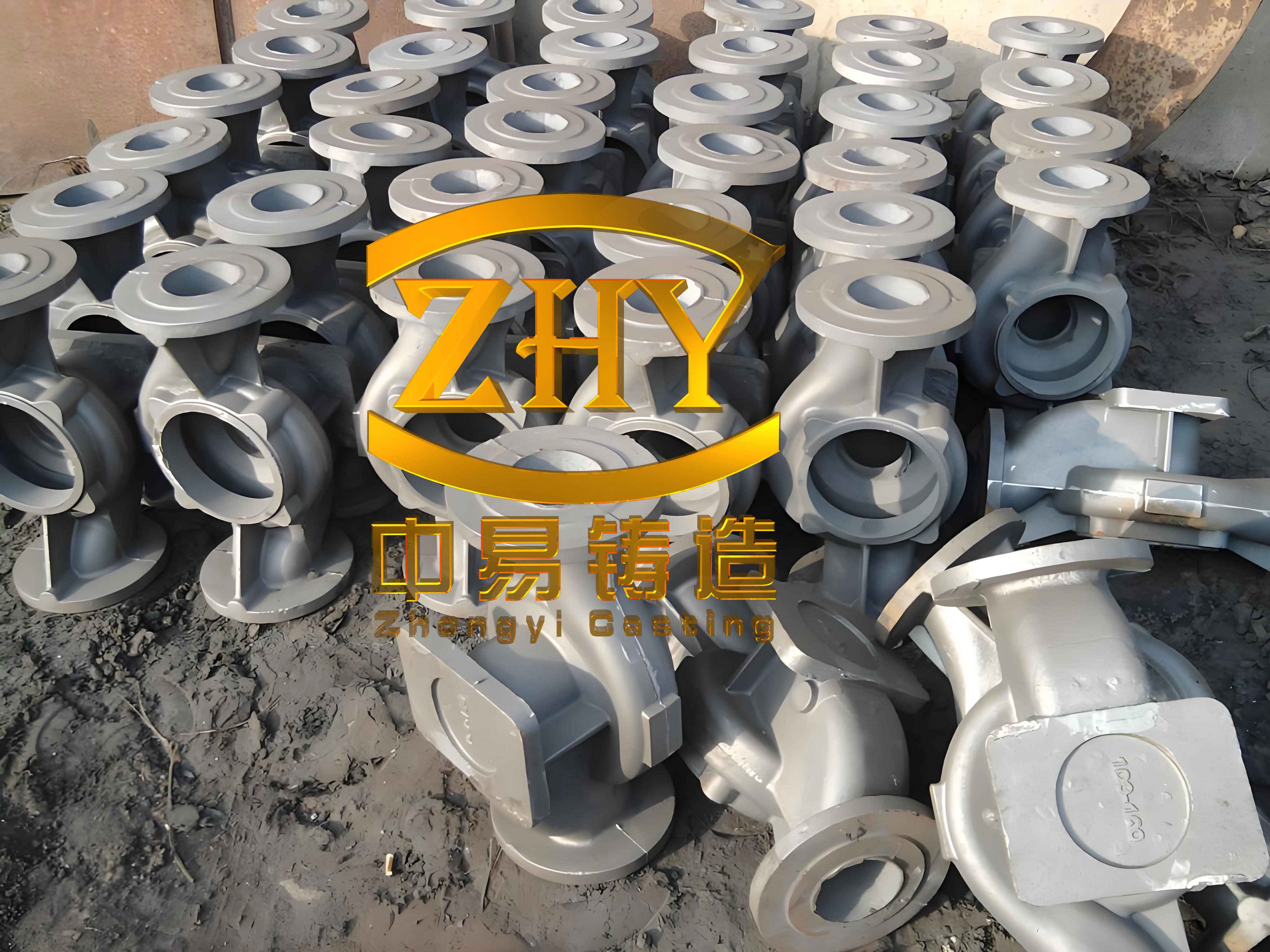
In terms of field application, gray iron casting brake shoes produced under these controls have been deployed on DF4D locomotives since June 2020. Over 30 units have been equipped, and service records up to January 2021 indicate no incidents of fracture or abnormal wear. This real-world success validates the production measures for gray iron casting, highlighting their practical relevance in enhancing railway safety. To visualize the typical microstructure of such gray iron casting, consider the following image, which shows a well-formed graphite distribution in a pearlitic matrix—a hallmark of quality gray iron casting for brake shoes.
Expanding on the metallurgical aspects, the role of inoculation in gray iron casting cannot be overstated. Inoculation modifies the solidification process, increasing graphite nucleation sites and reducing undercooling. This results in finer, more uniform graphite flakes and a refined pearlitic matrix. For gray iron casting brake shoes, I recommend using silicon-barium inoculants at 0.5–0.8% total addition, split between late stream and ladle treatments. The effectiveness can be quantified by the graphite nodule count \( N_g \) per unit area, which correlates with wear resistance:
$$ N_g = \frac{C_i \cdot T_p}{t_s} $$
where \( C_i \) is the inoculant concentration, \( T_p \) is the pouring temperature, and \( t_s \) is the solidification time in gray iron casting. Higher \( N_g \) values indicate better microstructure control, directly impacting the performance of gray iron casting components.
Furthermore, the thermal management during gray iron casting is critical. Braking generates significant heat, and the thermal conductivity \( k_t \) of gray iron casting influences heat dissipation. The conductivity depends on graphite morphology and matrix composition, approximated by:
$$ k_t = k_m (1 – V_g) + k_g V_g $$
where \( k_m \) is the matrix conductivity, \( k_g \) is graphite conductivity, and \( V_g \) is the graphite volume fraction in gray iron casting. By optimizing \( V_g \) through composition and inoculation, we enhance thermal performance, reducing thermal stress and cracking risks in gray iron casting brake shoes.
Another key factor is the control of residual stresses in gray iron casting. During solidification, uneven cooling can induce stresses that predispose components to fracture. Finite element analysis (FEA) simulations of gray iron casting processes help optimize mold design and cooling rates. For instance, the stress \( \sigma \) in a braking scenario can be modeled as:
$$ \sigma = E \cdot \alpha_t \cdot \Delta T + \sigma_r $$
where \( E \) is Young’s modulus, \( \alpha_t \) is the thermal expansion coefficient, \( \Delta T \) is the temperature gradient, and \( \sigma_r \) is residual stress from gray iron casting. By minimizing \( \Delta T \) and \( \sigma_r \) through process controls, we improve the durability of gray iron casting brake shoes.
In practice, implementing these measures requires rigorous quality assurance in gray iron casting production. I advocate for statistical process control (SPC) to monitor key variables like chemical composition, pouring temperature, and inoculation efficiency. Table 3 outlines a SPC plan for gray iron casting brake shoes, ensuring consistency across batches. This proactive approach reduces variability and enhances the reliability of gray iron casting products.
| Process Variable | Target Range | Monitoring Frequency | Impact on Gray Iron Casting |
|---|---|---|---|
| Carbon Equivalent (%) | 3.6–3.8 | Per heat | Influences graphite formation and strength |
| Pouring Temperature (°C) | 1380–1420 | Continuous | Affects fluidity and defect formation in gray iron casting |
| Inoculant Addition (%) | 0.5–0.8 | Per ladle | Refines microstructure in gray iron casting |
| Mold Hardness (HB) | 80–100 | Per shift | Ensures dimensional stability in gray iron casting |
| Cooling Rate (°C/min) | 10–20 | Simulated | Controls matrix formation in gray iron casting |
Looking ahead, advancements in gray iron casting technology offer further opportunities. For example, computational thermodynamics software can predict phase formations in gray iron casting based on composition, aiding in配方 design. Additionally, additive manufacturing techniques are being explored for complex gray iron casting geometries, though traditional methods remain cost-effective for brake shoes. My ongoing research focuses on integrating real-time sensors into gray iron casting processes to adjust parameters dynamically, ensuring optimal microstructure每一批.
In conclusion, the friction performance of gray iron casting brake shoes is a multifaceted issue tied to defects, composition, and microstructure. Through my work, I have shown that加强现场操作, optimizing chemical profiles,严格控制熔炼关键工艺, and effective inoculation can significantly improve the耐磨性 and friction stability of gray iron casting components. The validation via lab tests and field deployments confirms that these measures reduce fracture risks and enhance safety. As gray iron casting continues to evolve, such controls will remain essential for meeting the demands of railway braking systems, ensuring that gray iron casting brake shoes perform reliably under diverse operating conditions.
To reiterate, gray iron casting is a versatile material, but its成功 hinges on precise engineering. By embracing these insights, manufacturers can produce gray iron casting brake shoes that not only meet standards but exceed expectations in service life and safety. The journey from raw iron to a functional brake shoe involves countless细节, but with careful attention to gray iron casting principles, we can achieve outstanding results. I encourage further exploration into gray iron casting innovations, as they hold the key to下一代 railway components.