
In my extensive experience within the foundry, I have come to regard dimensional accuracy as the single most critical objective throughout the production of steel castings. A dimensional defect is often catastrophic, distinguishing itself sharply from other types of flaws. While defects like porosity or inclusions might be locally repaired through welding or grinding, a dimensional error typically affects an entire surface or a significant region of the part. The required repair volume increases exponentially, leading to a substantial surge in subsequent labor costs, material consumption, and a drastic extension of the production cycle. Therefore, proactive control is not merely beneficial but essential.
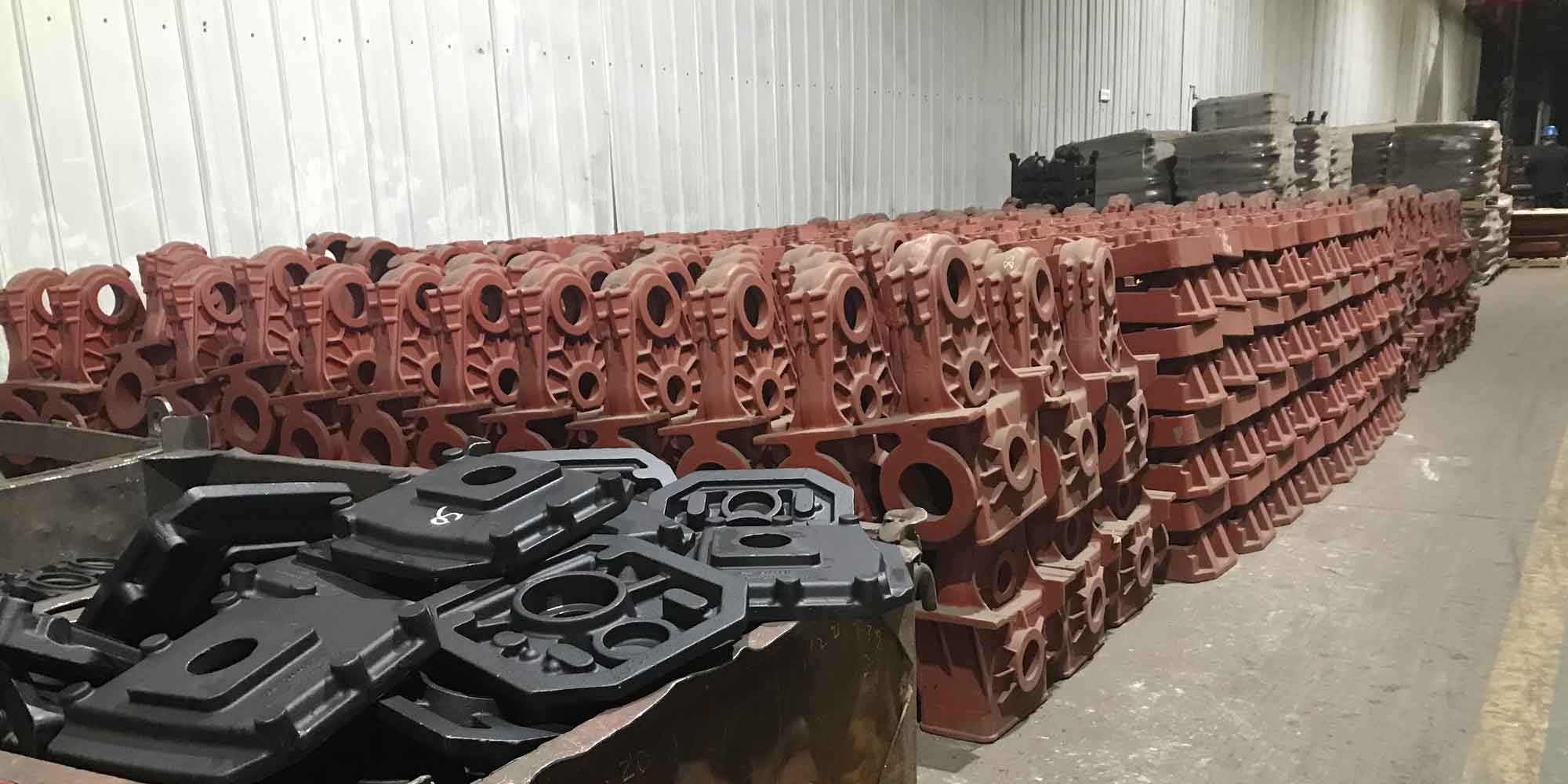
The processes of core setting and flask closing represent the pivotal juncture where this control is either cemented or lost. This phase involves the assembly of previously manufactured molds and cores according to precise technical specifications to form a complete mold cavity ready for pouring. For large steel castings, this is the definitive step for locking in product dimensions. Its success hinges entirely on meticulous upfront process design, encompassing the number of cores, the sequence of their placement, core print design, and the deliberate allocation of gaps—between core print and mold print, between mold halves, and between adjacent cores. Furthermore, the design must consider operator accessibility, provisions for dimensional adjustment (tolerances), and the necessity and method for securing cores against buoyant forces. A robust core assembly and closing procedure is the ultimate guarantor of mold dimensional fidelity.
Pre-Assembly Dimensional Verification: The Foundational Step
Prior to any assembly activity, a systematic verification of all components is non-negotiable. This pre-closing audit involves two parallel streams of measurement.
1. Core Dimensional Inspection: Each core must be individually measured according to its identification number. Key dimensions, especially those of the core prints (length, width, height), are recorded. Critical functional dimensions of the core body are also validated. This step confirms the core has been produced within its specified tolerances.
2. Mold Dimensional Inspection: The mold itself undergoes similar scrutiny. Overall envelope dimensions (length/diameter, width, height) are measured. Critical features, such as flange locations or datum points, are checked. Most importantly, the dimensions of the core prints within the mold are measured and directly compared to the corresponding measurements from the cores.
This comparative analysis is crucial for verifying the compatibility of the mating core prints. The design intentionally specifies the mold’s core print to be slightly larger than the core’s print, creating a necessary assembly gap. The magnitude of this gap is a critical design parameter. An insufficient gap makes core seating difficult, often requiring grinding, hindering productivity, and risking loose sand contamination. An excessive gap allows for core misalignment and leads to large fins (flash), which are challenging to remove and can compromise the final casting dimension and surface quality.
The required gap $\delta_{cp}$ (core print gap) is not constant; it is a function of the core print height $H_{cp}$. A general rule of thumb can be expressed, though specific foundry standards apply:
$$
\delta_{cp} = k \cdot H_{cp}
$$
Where $k$ is an empirical factor (typically between 0.015 and 0.04 for large steel castings). For smaller print heights (e.g., below 200 mm), a fixed gap in the range of 3-5 mm is common. The relationship emphasizes that taller cores require proportionally larger gaps to account for potential taper deviations and ease assembly. This can be summarized in a design guideline table:
| Core Print Height, $H_{cp}$ (mm) | Recommended Gap, $\delta_{cp}$ (mm) | Basis |
|---|---|---|
| < 200 | 3 – 5 | Fixed allowance for standard fit |
| 200 – 500 | 0.02$H_{cp}$ | Proportional scaling |
| > 500 | 0.025$H_{cp}$ to 0.04$H_{cp}$ | Increased allowance for tall cores |
The pre-assembly measurement log serves as the baseline document for the upcoming operation. A suggested format for tracking is:
| Component ID | Dimension Description | Nominal (mm) | Measured (mm) | Deviation (mm) | Status |
|---|---|---|---|---|---|
| Core-A1 | Print Length | 450.0 | 449.5 | -0.5 | OK |
| Mold-Upper | A1 Print Length | 455.0 | 455.8 | +0.8 | OK |
| Calculated Gap | $\delta = 455.8 – 449.5 = 6.3$ mm (Must be checked against design spec for $H_{cp}$) | ||||
The Core Setting and Closing Operation: A Procedural Deep Dive
With verified components, the physical assembly begins. The first rule is to always maintain the core in a horizontal plane during handling and lowering. For cores with an uneven weight distribution, counterweights must be used in conjunction with a spirit level to achieve perfect balance before lifting. Since the mold rests on a leveled bed, a non-horizontal core will not seat correctly, inducing immediate misalignment.
Key Operational Requirements:
1. Sequential Adherence: The core setting sequence outlined in the process drawing must be followed strictly. This sequence is designed to ensure accessibility, allow for measurement, and prevent interference.
2. Dimensional Control Loop: After placing each critical core, key dimensions must be measured against the pre-defined checklist. A typical tolerance for preliminary adjustment during core setting for large steel castings is ±5 mm. This loop of place-measure-adjust is fundamental.
3. Core Securement Strategy: This is paramount for dimensional stability during pouring. Cores, particularly large ones, are subject to substantial buoyant force $F_b$ from the molten steel:
$$
F_b = \rho_{steel} \cdot V_{core} \cdot g – \rho_{sand} \cdot V_{core} \cdot g \approx (\rho_{steel} – \rho_{sand}) \cdot V_{core} \cdot g
$$
Where $\rho_{steel}$ is the density of molten steel (~7.2 g/cm³), $\rho_{sand}$ is the mold sand density (~1.6 g/cm³), $V_{core}$ is the submerged core volume, and $g$ is gravity. This force can displace unsecured cores, causing major dimensional defects and even dangerous eruptions (metal run-outs).
Securement must be planned during the tooling design phase. Methods include:
- Integral Locking Prints: Designing the core print and the corresponding mold print to form a mechanical lock when the cope is placed. This is the most efficient method, utilizing the weight of the upper mold section for fixation.
- Bolt-Down or Tie-Bars: Using steel rods, bolts, or welded brackets to anchor the core’s internal reinforcement (core grid) to the mold’s reinforcing structure.
- Chaplet-Assisted Seating: For critical wall thickness control, calibrated steel chaplets (spacers) can be used to position a core precisely. After verification, these are often removed through the riser to prevent fusion issues.
4. Comprehensive Documentation: Once all cores are positioned, aligned, and secured, all final as-assembled critical dimensions are recorded in the product’s permanent dimensional record. This serves as vital data for process control and any necessary post-casting analysis.
Practical Application Examples:
Rotational Symmetry Castings (e.g., Turbine Housings): For steel castings comprising multiple segment cores forming a large circle, control relies on establishing and verifying precise datums. Typically, two or three “datum cores” are positioned first. Their location, often defined by a centerline, is adjusted to be absolutely correct with zero allowed deviation. The remaining segment cores are then installed, with their position and fit checked against these fixed datums. The circumferential gaps between cores are measured and evenly distributed. Any significant deviation in total gap indicates a cumulative dimensional error that must be addressed before proceeding.
Large Cylinder Castings (e.g., Valve Bodies, Engine Blocks): These often feature numerous nozzle and passage cores oriented in different directions. The primary challenge shifts towards managing complexity and securing multiple, sometimes small, cores against flotation. Proactive planning involves designing and placing core anchorage points during the molding and core-making stages. This involves embedding steel plates or bars (often made from square tubing) at strategic locations in the mold. During core making, corresponding steel members are integrated into the core’s reinforcement grid. During assembly, after the core is positioned and wall thickness is verified, these mating steel parts are bolted or welded together, creating a rigid mechanical connection that locks the core in place within the mold, immune to buoyant forces.
Problem Diagnosis and Corrective Actions During Assembly
Despite careful planning, issues can arise during the core setting process. A systematic approach to diagnosis and correction is vital.
| Problem | Root Cause | Immediate Corrective Action | Preventive/Long-term Action |
|---|---|---|---|
| Excessive Flash (Fins) | Core print gap ($\delta_{cp}$) too large; Core/mold print mismatch due to tooling wear or deformation. | Record location and severity. Post-casting, extensive grinding will be required. If accessible, ceramic fiber rope or core paste can be packed into excessive gaps before pouring to minimize metal penetration. | Review and correct tooling dimensions. Adjust the core print clearance specification. Improve maintenance of patterns and core boxes. |
| Core Binding / Difficult Seating | Core print gap ($\delta_{cp}$) too small; Sand swelling or distortion; Loose sand obstructing the print. | Carefully grind or scrape the interfering area of the core print. Never force the core. Thoroughly clean both core and mold prints before assembly. | Increase the designed gap allowance. Investigate and rectify causes of sand distortion (e.g., improper hardening, inadequate support). |
| Dimensional Out-of-Tolerance | Incorrect core/mold dimension; Improper core positioning; Insufficient measurement during assembly. | 1. Micro-adjustment via Rigging: Slight tilting of the lifting gear can shift the core. 2. Use of Adjustable Chocks: Temporary, calibrated wedges or spacers can position the core correctly. Final wall thickness must be verified with a thickness gauge. |
Enhance pre-assembly measurement protocol. Implement in-process inspection checkpoints. Ensure lifting lugs on cores are positioned for balanced handling. |
| Core Movement / Lack of Fixation | Inadequate securement design; Failure to install designed anchoring devices; Underestimation of buoyancy force. | If discovered before closing, install additional anchorage (e.g., steel ties welded to the reinforcement). For small cores, core paste can provide limited bonding. | Mandatory buoyancy force calculation $F_b$ for all cores. Design positive mechanical locking features (e.g., tapered lock prints) or anchorage points into every core that requires it. |
Conclusion: A System of Interlinked Precisions
The achievement of dimensional accuracy in large steel castings is not the result of a single action but the output of a meticulously controlled system. Core setting and flask closing is the critical convergence point of this system. Its success is fundamentally predetermined by the quality of upfront engineering: the precision of pattern and core box tooling, the scientific calculation of allowances and gaps, and the intelligent design of core securement methods. The operational phase then executes this plan with disciplined verification, applying a rigorous measure-adjust-secure loop. Every identified issue, from a minor binding print to a major misalignment, must be traced back to its root cause in design, tooling, or process control to enable continuous improvement. By treating the mold assembly process with the same level of engineering rigor as the casting design itself, foundries can consistently produce large, complex steel castings that meet stringent dimensional specifications, thereby avoiding the costly and time-consuming penalties associated with dimensional rework.