
In the field of investment casting, the composite shell mold technology has been widely adopted for producing high-precision automotive components. However, with the continuous rise in raw material prices and the downward pressure on product pricing, the profitability of investment casting processes has been increasingly challenged. This situation necessitates a thorough analysis of manufacturing costs and the exploration of innovative process improvements. In this study, we focus on the composite shell mold used in investment casting, aiming to identify key cost drivers and implement strategic modifications to reduce expenses while maintaining or enhancing shell performance. Through a detailed cost analysis and process optimization, we have achieved significant material cost savings, which will be elaborated in this comprehensive report.
The investment casting process, also known as lost-wax casting, involves creating a ceramic shell around a wax pattern, which is then melted out to form a mold cavity for metal casting. The composite shell mold, which combines different materials and layers, is critical for achieving dimensional accuracy and surface finish. However, the cost of materials, particularly refractory materials, constitutes a substantial portion of the overall manufacturing expense. Therefore, reducing these costs without compromising quality is essential for the sustainability of investment casting operations.
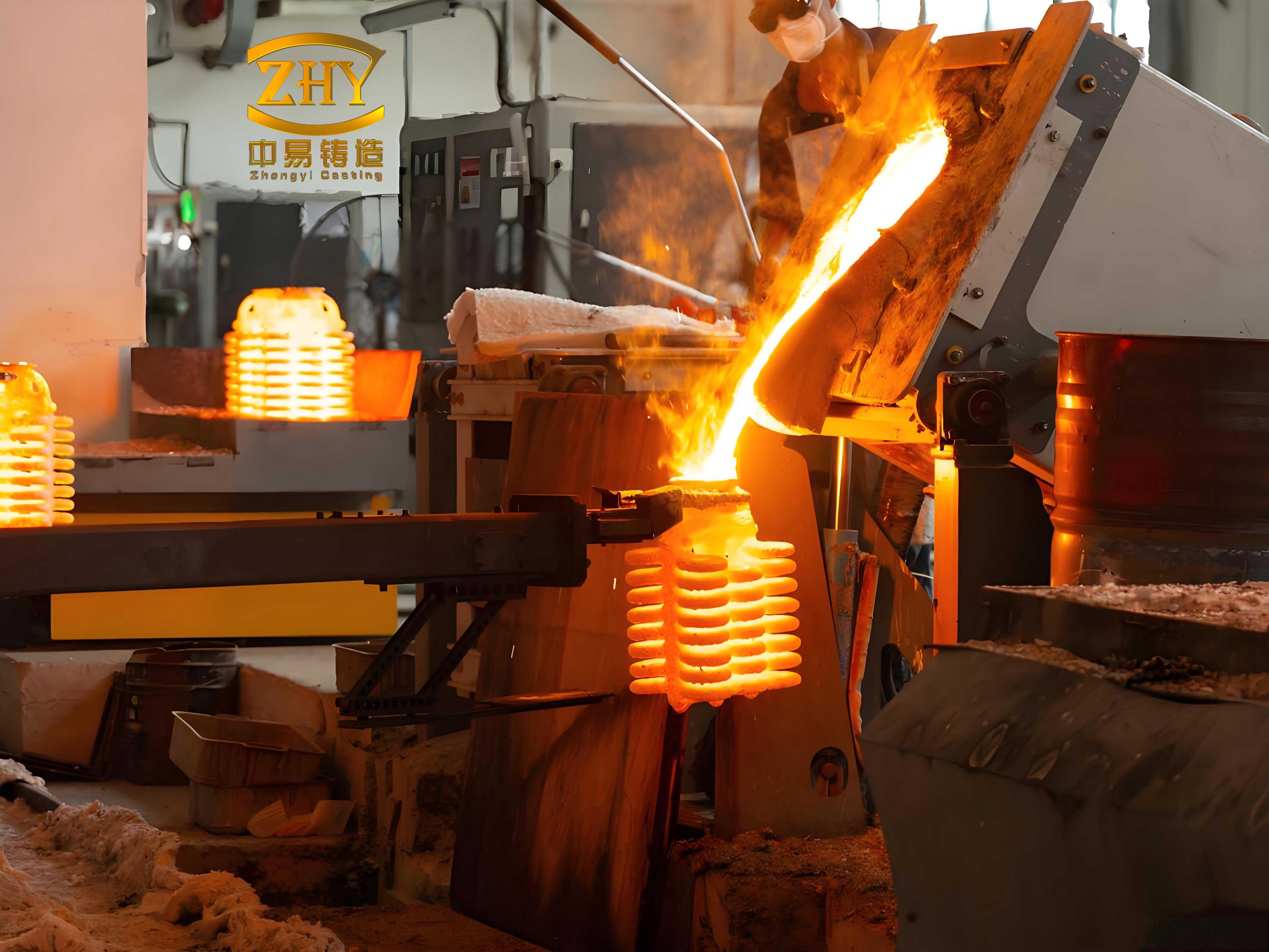
To address this, we employed the ABC analysis method, a value engineering technique, to categorize materials based on their cost contribution. This allowed us to pinpoint the most significant cost items in the composite shell mold for investment casting. The results revealed that specific refractory materials, such as zircon sand and zircon flour, were the primary cost drivers. By substituting these with more economical alternatives like brown alumina powder and refined quartz sand, and by optimizing the sanding process through an alternating stucco method, we managed to cut material costs by approximately 50%. This article will delve into the methodologies, data analyses, and outcomes of this initiative, providing insights into cost-effective practices for investment casting.
1. Cost Analysis of Composite Shell Mold in Investment Casting
The composite shell mold in investment casting typically consists of multiple layers: a surface layer and a transition layer based on silica sol process, and a reinforcement layer based on water glass process. Each layer requires specific raw materials, totaling over ten different types. To quantify the cost impact, we compiled data on material consumption per ton of qualified castings. The initial material cost for the composite shell mold was approximately 1436 yuan per ton of castings. Using ABC analysis, we classified these materials into three categories: A (high-cost items), B (medium-cost items), and C (low-cost items). The analysis highlighted that Class A materials, which constitute about 30% of the material types, account for over 70% of the total cost. Specifically, zircon sand (100#), zircon flour (325#), and mullite sand (20#-1) were identified as the key cost contributors. This finding directed our efforts toward these materials for substitution and process refinement.
| Material Name and Specification | Material Price (yuan/t) | Consumption per Ton of Castings (kg) | Cost per Ton of Castings (yuan) |
|---|---|---|---|
| Silica Sol Process Materials | 910.19 | ||
| Silica Sol | 2600 | 37.88 | 98.49 |
| Zircon Flour (325#) | 10000 | 31.03 | 310.30 |
| Zircon Sand (100#, 80-120 mesh) | 10000 | 45.44 | 454.40 |
| Mullite Flour (270#) | 510 | 21.62 | 11.03 |
| Mullite Sand (40#, 30-60 mesh) | 490 | 73.41 | 35.97 |
| Water Glass Process Materials | 525.88 | ||
| Water Glass (M: 3.2-3.6) | 650 | 166.67 | 108.34 |
| High-Alumina Synthetic Flour (200#) | 340 | 224.00 | 76.16 |
| Mullite Sand (20#-1, 10-30 mesh) | 490 | 528.92 | 259.17 |
| Crystalline Aluminum Chloride | 2700 | 28.67 | 77.41 |
| Wetting Agent JFC | 12000 | 0.40 | 4.80 |
| Total | 1436.07 |
The ABC classification table further elucidates the cost distribution. For instance, zircon sand alone contributes about 31.64% to the total material cost, followed by zircon flour at 21.61%, and mullite sand at 18.06%. This cumulative effect underscores the importance of targeting these materials for cost reduction in investment casting. The ABC analysis can be mathematically represented by the Pareto principle, where a small percentage of items account for a large percentage of value. In our case, the cost contribution of Class A materials can be expressed as:
$$ \text{Cost Contribution}_A = \frac{\sum_{i \in A} C_i}{\sum_{j=1}^{n} C_j} \times 100\% $$
where \( C_i \) is the cost of material \( i \), and \( n \) is the total number of materials. For our data, this yields approximately 71.30% for Class A materials, confirming their dominance.
| Class | Material Types (%) | Cost Contribution (%) | Key Materials |
|---|---|---|---|
| A | 30 | 71.30 | Zircon Sand, Zircon Flour, Mullite Sand |
| B | 30 | 19.79 | Water Glass, Silica Sol, Aluminum Chloride |
| C | 40 | 8.91 | High-Alumina Flour, Mullite Flour, Wetting Agent |
2. Analysis of Process Materials in Investment Casting
Refractory materials play a pivotal role in determining the performance of the shell mold in investment casting. Key properties include high-temperature strength, thermal stability, thermal expansion, and residual strength after casting. The selection of substitutes for Class A materials must adhere to fundamental principles to ensure that the shell mold’s integrity is not compromised. Firstly, the substitute materials should maintain adequate high-temperature strength and resistance to thermal deformation while minimizing residual strength to facilitate shell removal. Secondly, the chemical and phase composition should be optimized through material blending to achieve synergistic effects, leveraging the strengths of different materials.
In investment casting, the shell mold must withstand the thermal shock of molten metal and provide a smooth surface for the casting. Zircon-based materials are prized for their high refractoriness and low thermal expansion, but their cost is prohibitive. Alternatives like brown alumina powder (Al₂O₃) and quartz sand (SiO₂) offer favorable properties at lower costs. Brown alumina powder, for instance, has high hardness and thermal stability, making it suitable for surface layers. Quartz sand, while having a higher thermal expansion, can be managed through process adjustments. The performance of these materials can be evaluated using parameters such as thermal conductivity (\( k \)), coefficient of thermal expansion (\( \alpha \)), and modulus of rupture (MOR) at elevated temperatures. For example, the high-temperature strength \( \sigma \) of a shell material can be modeled as:
$$ \sigma = f(T, \text{composition}, \text{microstructure}) $$
where \( T \) is the temperature. By selecting materials with comparable or improved \( \sigma \) at lower cost, we can achieve cost efficiency in investment casting.
3. Process Improvement Scheme for Investment Casting
Based on the cost analysis and material principles, we proposed a process improvement scheme centered on material substitution and an alternating stucco method. The key changes include replacing zircon flour with brown alumina powder and zircon sand with refined quartz sand in the surface layer, while maintaining the overall coating preparation process. Additionally, the sanding structure was optimized by alternating different types of sand across layers to enhance shell properties. This alternating stucco method involves using materials like mullite sand and bauxite sand in specific sequences to improve both strength and collapsibility.
The coating formulations and viscosities were adjusted accordingly, as summarized in Table 3. The viscosity, measured using a flow cup, is critical for ensuring proper coating application in investment casting. For the surface layer, a mixture of silica sol, brown alumina powder, defoamer, and wetting agent is used, with a viscosity of 30±2 seconds. The transition layer uses silica sol and mullite flour, while the reinforcement layer employs water glass and high-alumina synthetic flour. These formulations aim to balance cost and performance.
| Coating Type | Coating Formulation (Mass Ratio) | Viscosity (seconds, 100mL, ø6mm cup) |
|---|---|---|
| Surface Layer | m(silica sol) : m(brown alumina powder) : m(defoamer) : m(wetting agent) = 1 : 3.6 : 0.03 : 0.03 | 30 ± 2 |
| Transition Layer | m(silica sol) : m(mullite flour) = 1 : 2 | 22 ± 2 |
| Reinforcement Layer | m(water glass) : m(high-alumina synthetic flour) = 1 : (1.05–1.10) | 14 ± 2 |
The alternating stucco method is detailed in Table 4, which outlines two schemes for different alloy types. Scheme 1 is designed for carbon steel and low-alloy steel castings, using refined quartz sand and natural quartz sand in alternation with mullite sand. Scheme 2 is for stainless steel and high-alloy steel castings, using alumina sand and bauxite sand alternated with mullite sand. This approach leverages the phase transformation effects of materials like mullite to improve collapsibility while maintaining high-temperature strength. The process involves multiple layers (e.g., 6.5 layers), with specific sand types applied at each stage. The drying and hardening procedures remain consistent with standard silica sol and water glass processes in investment casting.
| Coating Layer | Surface Layer | Transition Layer | Layer 3 | Layer 4 | Layer 5 | Half Layer | Remarks |
|---|---|---|---|---|---|---|---|
| Coating | Silica sol + brown alumina powder | Silica sol + mullite flour | Water glass + high-alumina synthetic flour | No coating | Viscosity as per Table 3 | ||
| Scheme 1 Stucco | Refined quartz sand (80-120 mesh) | Mullite sand (30-60 mesh) | Natural quartz sand (10-30 mesh) | Mullite sand (10-30 mesh) | Natural quartz sand (10-30 mesh) | No stucco | For carbon and low-alloy steel castings |
| Scheme 2 Stucco | Alumina sand (80-120 mesh) | Mullite sand (30-60 mesh) | Bauxite sand (10-30 mesh) | Mullite sand (10-30 mesh) | Bauxite sand (10-30 mesh) | No stucco | For stainless and high-alloy steel castings |
Note: For a 6.5-layer process, Layer 6 uses mullite sand (10-30 mesh). Drying and hardening follow standard investment casting protocols.
4. Effect Analysis of the Improved Investment Casting Process
The implementation of the alternating stucco process in investment casting yielded significant benefits. Firstly, the comprehensive properties of the shell mold were enhanced, including improved high-temperature strength and reduced residual strength, which facilitated shell removal and increased production efficiency. Secondly, the material costs were substantially reduced, as evidenced by the updated cost statistics in Table 5. The total material cost per ton of qualified castings dropped to approximately 717.57 yuan, representing a savings of about 718.50 yuan per ton compared to the original process. This translates to a cost reduction of roughly 50%, calculated as:
$$ \text{Cost Reduction} = \frac{1436.07 – 717.57}{1436.07} \times 100\% \approx 50\% $$
This dramatic decrease is primarily attributed to the substitution of lower-cost materials like brown alumina powder (4200 yuan/t) for zircon flour (10000 yuan/t) and refined quartz sand (600 yuan/t) for zircon sand (10000 yuan/t). The alternating stucco method also optimized material usage, reducing the consumption of expensive mullite sand by incorporating natural quartz sand and bauxite sand.
| Material Name and Specification | Material Price (yuan/t) | Consumption per Ton of Castings (kg) | Cost per Ton of Castings (yuan) |
|---|---|---|---|
| Silica Sol Process Materials | 303.07 | ||
| Silica Sol | 2600 | 37.88 | 98.49 |
| Brown Alumina Powder (325#) | 4200 | 31.03 | 130.32 |
| Refined Quartz Sand (100#, 80-120 mesh) | 600 | 45.44 | 27.26 |
| Mullite Flour (270#) | 510 | 21.62 | 11.03 |
| Mullite Sand (40#, 30-60 mesh) | 490 | 73.41 | 35.97 |
| Water Glass Process Materials | 414.46 | ||
| Water Glass (M: 3.2-3.6) | 650 | 166.67 | 108.34 |
| High-Alumina Synthetic Flour (200#) | 340 | 224.00 | 76.16 |
| Mullite Sand (20#-1, 10-30 mesh) | 490 | 176.30 | 86.39 |
| Natural Quartz Sand (20#-1, 10-30 mesh) | 174 | 352.62 | 61.36 |
| Crystalline Aluminum Chloride | 2700 | 28.67 | 77.41 |
| Wetting Agent JFC | 12000 | 0.40 | 4.80 |
| Total | 717.57 |
Beyond cost savings, the improved process positively impacted shell performance. The alternating stucco method allowed for better control over thermal expansion and collapsibility, which is crucial for complex and thick-walled castings in investment casting. For instance, the use of mullite sand, which contains cristobalite, introduces phase transformations that enhance shell breakdown after casting. This can be described by the phase transformation energy \( \Delta G \):
$$ \Delta G = \Delta H – T \Delta S $$
where \( \Delta H \) is the enthalpy change, \( T \) is the temperature, and \( \Delta S \) is the entropy change. The controlled alternation of materials helps manage these transformations to optimize residual strength.
Furthermore, the selection of refractory materials should be tailored to local availability and cost structures. In investment casting, it is essential to conduct comprehensive economic analyses when material changes affect casting dimensions. For long-term benefits, mold dimensions can be adjusted to compensate for any dimensional shifts, ensuring consistent product quality. This holistic approach underscores the importance of process flexibility in investment casting.
5. Extended Discussion on Investment Casting Optimization
The success of this cost reduction initiative in investment casting opens avenues for further research and development. One area is the exploration of additional alternative materials, such as fused silica or ceramic beads, which might offer lower costs or superior properties. The performance of these materials can be evaluated using analytical models, such as the Weibull distribution for strength variability:
$$ P_f = 1 – \exp\left[-\left(\frac{\sigma}{\sigma_0}\right)^m\right] $$
where \( P_f \) is the probability of failure, \( \sigma \) is the applied stress, \( \sigma_0 \) is the characteristic strength, and \( m \) is the Weibull modulus. This helps in assessing the reliability of shell molds under thermal stress.
Another aspect is the optimization of process parameters beyond material substitution. For example, the drying time and temperature for each layer in investment casting can be fine-tuned to reduce energy consumption and cycle time. Computational simulations, like finite element analysis (FEA), can model heat transfer during shell baking and metal pouring. The heat conduction equation:
$$ \frac{\partial T}{\partial t} = \alpha \nabla^2 T $$
where \( \alpha \) is thermal diffusivity, can predict temperature gradients and stress development in the shell.
Additionally, the environmental impact of investment casting processes is gaining attention. By using more abundant and less toxic materials like quartz sand instead of zircon sand, we can reduce the ecological footprint. Life cycle assessment (LCA) methodologies can quantify these benefits, considering factors from raw material extraction to shell disposal. The overall environmental impact \( I \) can be expressed as:
$$ I = \sum_{i} w_i \cdot E_i $$
where \( w_i \) are weighting factors and \( E_i \) are environmental effect indicators.
Moreover, the alternating stucco method can be adapted for other investment casting applications, such as aerospace or medical device components, where precision and cost are critical. By customizing the sand sequences based on alloy type and casting geometry, we can achieve tailored shell properties. This flexibility is a key advantage of investment casting over other manufacturing methods.
In terms of quality control, non-destructive testing techniques like ultrasonic inspection can be employed to detect shell defects before pouring. The signal amplitude \( A \) from such tests can correlate with shell density \( \rho \):
$$ A \propto \frac{1}{\rho} $$
allowing for real-time adjustments in the process.
Finally, the economic implications of these improvements extend beyond direct material savings. Reduced shell costs lower the overall production cost per casting, enhancing competitiveness in the market. For high-volume investment casting operations, even small cost reductions per unit can translate to significant annual savings. This underscores the value of continuous improvement in investment casting technologies.
6. Conclusion
In conclusion, through a systematic cost analysis and process optimization, we have demonstrated that substantial cost reductions are achievable in investment casting composite shell molds. By applying ABC analysis, we identified zircon-based materials as the primary cost drivers and successfully substituted them with brown alumina powder and quartz sand. The implementation of an alternating stucco process further enhanced shell performance by improving high-temperature strength and collapsibility. As a result, material costs were cut by approximately 50%, from 1436.07 yuan to 717.57 yuan per ton of qualified castings, without compromising quality.
This study highlights the importance of value engineering and material science in advancing investment casting practices. The methodologies described here—including cost categorization, material substitution, and process innovation—can be adapted to other investment casting scenarios to drive efficiency and profitability. Future work may focus on exploring new refractory blends, optimizing drying cycles, and integrating digital tools for process control. Ultimately, the relentless pursuit of cost-effective solutions will ensure the sustainability and growth of investment casting in the face of economic challenges.
The investment casting industry must continue to evolve, leveraging research and collaboration to overcome cost pressures. By embracing change and innovation, we can maintain the high standards of precision and reliability that define investment casting, while making it more accessible and economical for diverse applications.