
In my extensive experience within the foundry industry, achieving precise control over the microstructure and mechanical properties of grey iron casting remains one of the most demanding yet rewarding challenges. The production of critical components, such as compressor cylinders for air-conditioner units, exemplifies this challenge perfectly. These castings require a specific combination of graphite morphology and matrix structure to meet stringent performance criteria, often surpassing standard specifications. Through systematic experimentation and process refinement, I have developed and implemented a series of effective measures that reliably produce high-quality grey iron castings with controlled pearlite content and a predominance of undercooled (Type D) graphite. The journey to mastering these parameters involves a deep understanding of the interplay between alloy chemistry, cooling rate, and subsequent heat treatment.
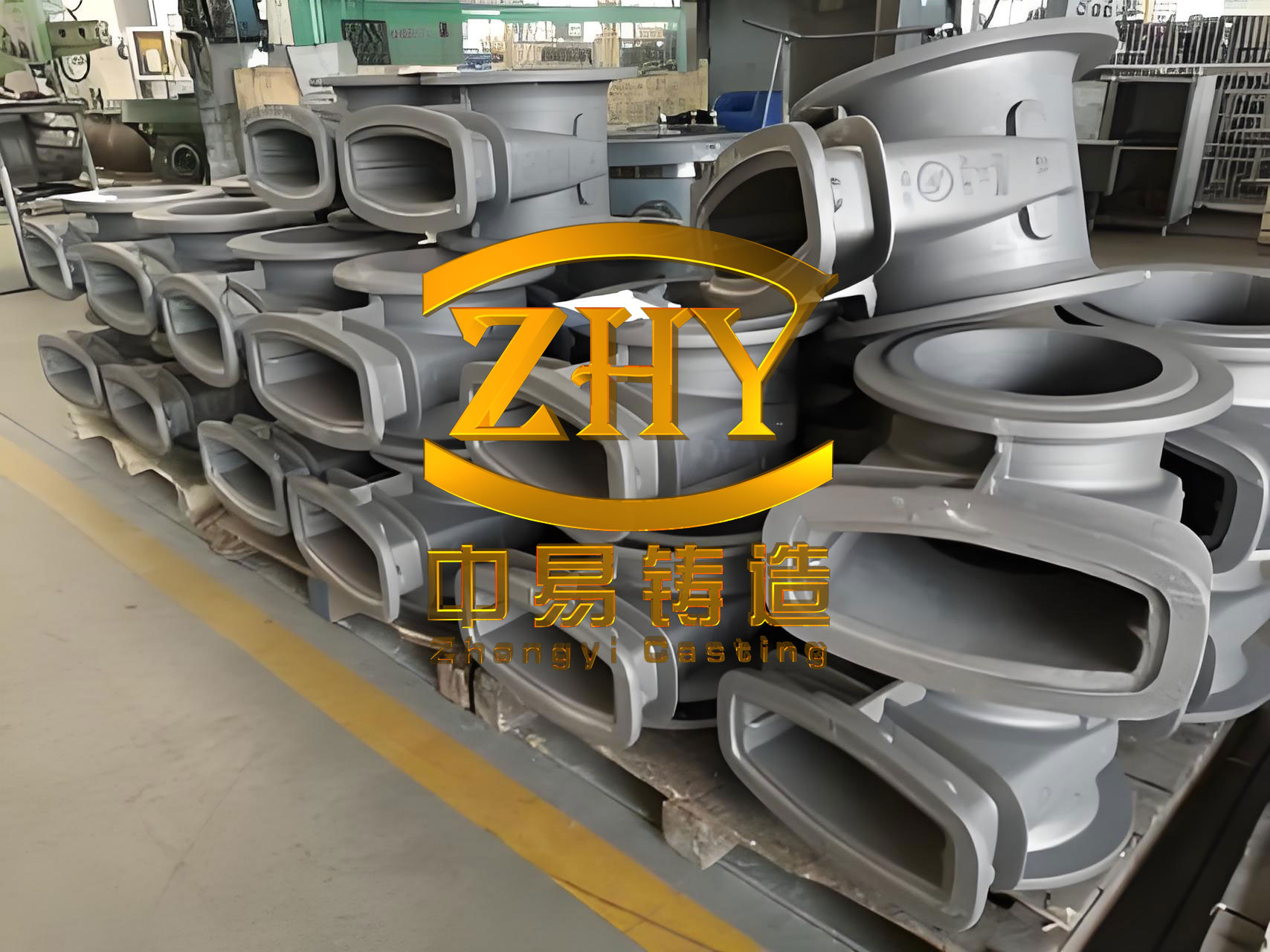
The target for a typical compressor cylinder grey iron casting is a tensile strength (σ_b) of no less than 207 MPa and a Brinell hardness (HB) between 170 and 223. More critically, the metallurgical structure must be meticulously controlled: the matrix should be primarily ferritic but must contain 20% to 30% pearlite in the normalized condition, with residual free carbides not exceeding 5%. The graphite morphology is specified to be uniformly distributed and predominantly of the undercooled Type D. While some Type A graphite is permissible in the central region of the sample, the length of Type D graphite should correspond to grades 5-8 according to standard charts. Achieving this specific constellation of properties consistently requires moving beyond conventional foundry practice.
1. Foundational Principles and Experimental Setup
The fundamental premise for controlling graphite morphology in grey iron casting is manipulating the solidification kinetics. Type A (flake) graphite forms under conditions of relatively slow cooling, allowing for stable growth from the melt. In contrast, Type D (undercooled) graphite, which appears as an interdendritic, finely branched structure, is a product of rapid cooling that creates significant undercooling before solidification. This undercooling suppresses the formation of coarse flakes and promotes the fine, random orientation characteristic of Type D graphite. The relationship between cooling rate (Ṫ) and graphite type can be conceptualized, though simplified, as a function of thermal diffusivity (α) and section thickness (d):
$$ \text{Graphite Type Transition} \propto \frac{\alpha \cdot \Delta T}{d^2} $$
Where ΔT is the undercooling below the equilibrium eutectic temperature. A high value of this function favors Type D formation. Therefore, the primary technical hurdle is imposing a sufficiently high and consistent cooling rate on the casting.
To this end, the experimental setup was designed around permanent mold (metal die) casting with an active cooling system. The equipment included a 50 kg medium-frequency induction furnace, a dedicated metal die casting machine with seven sets of dies, and a custom-built closed-loop water cooling system. Supplementary equipment for quality verification included a 75 kW box-type heat treatment furnace, a Brinell hardness tester, and a metallurgical microscope.
The cooling system was the cornerstone of the process. As shown in the schematic, pressurized water (via a booster pump) was circulated through a network of drilled channels within both the fixed and movable halves of the metal die. Flexible hoses connected the cooling circuits in the moving sections to accommodate die opening and closing, which was actuated by a hydraulic power unit to ensure sufficient clamping force. This system allowed for precise extraction of heat from the mold, directly controlling the solidification rate of the grey iron casting.
2. The Critical Role of Controlled Cooling on Graphite Morphology
Prior to implementing the forced cooling system, the grey iron casting solidified under near-equilibrium conditions within the metal mold. The cooling was essentially passive, relying on the thermal mass of the die. This resulted in slow cooling rates, which permitted graphite to grow freely, predominantly yielding Type A and occasionally Type F (flake, rosette) graphite. The length and distribution were inconsistent and failed to meet the specification for Type D.
The introduction of the active cooling system was transformative. By forcibly removing heat, the solidification time was drastically reduced. This imposed a high degree of undercooling on the solidifying iron, disrupting the stable growth front for flake graphite. The graphite nucleation rate increased dramatically, leading to a much finer, interdendritic dispersion. The effectiveness of this approach is visually evident when comparing micrographs from uncooled and cooled processes. The controlled process reliably produced the desired Type D graphite structure throughout the critical sections of the grey iron casting. The cooling water temperature itself became a critical parameter: too high (e.g., >50°C), and the cooling rate would be insufficient, risking the reappearance of Type A graphite; too low (e.g., <30°C), and excessive chilling could create unacceptable levels of surface carbides (chill) and machining difficulties. A stable inlet water temperature of around 40°C was found to be optimal.
3. Alloying Strategy for Matrix and Strength Control
While cooling rate dictates graphite morphology, the matrix structure—specifically the pearlite-to-ferrite ratio—is primarily governed by alloy chemistry and heat treatment. The base composition for the grey iron casting was maintained within the following range to ensure good castability and a foundation for mechanical properties:
| Element | Target Range (wt.%) |
|---|---|
| Carbon (C) | 3.15 – 3.65 |
| Silicon (Si) | 2.45 – 2.65 |
| Manganese (Mn) | 0.6 – 1.0 |
| Phosphorus (P) | ≤ 0.35 |
| Sulfur (S) | ≤ 0.15 |
To achieve the mandatory 20-30% pearlite content and enhance strength, alloying additions were necessary. Various pearlite-promoting elements were trialed, including tin (Sn), copper (Cu), chromium (Cr), and titanium (Ti). Tin proved problematic due to severe oxidation losses at high temperatures and the formation of low-melting-point compounds. Copper and chromium were effective but required careful control. Titanium, particularly when added as ferrotitanium (Fe-Ti), emerged as the most effective and consistent element for this specific grey iron casting application.
Titanium acts as a powerful graphitizing agent and potent carbide stabilizer in complex ways. It significantly increases the degree of eutectic undercooling, providing abundant heterogeneous nucleation sites. This refines both the graphite and the matrix structure. More importantly for strength, titanium forms stable, finely dispersed carbides (e.g., TiC) and carbonitrides that pin grain boundaries and dislocation movement, effectively strengthening the ferritic-pearlitic matrix. The relationship between titanium addition and hardness/pearlite content is strongly positive, as summarized in the experimental data below:
| Alloying Element | Addition (wt.%) | Avg. Hardness (HB) | Pearlite (%) | Carbides | Primary Graphite Type | Heat Treatment |
|---|---|---|---|---|---|---|
| Cu | 0.30 | 179 | ~20 | <1% | Type D | 920°C, 1h, forced air |
| Cr | 0.13 | 182 | ~25 | >1% | Type D | 920°C, 1h, forced air |
| Fe-Ti (as Ti) | 0.10 | 186 | ~20 | Trace | Type D | 920°C, 2h, forced air |
| Fe-Ti (as Ti) | 0.15 | 192 | ~35 | Trace | Type D | 920°C, 2h, forced air |
The data clearly shows that with a titanium addition of 0.10-0.15% (as elemental Ti), the hardness stabilizes in the desired 180-190 HB range, and the pearlite content reaches the target 20-30%. An empirical correlation for the increase in yield strength (σ_y) due to Ti addition in this system can be approximated by:
$$ \Delta \sigma_y \approx K_{Ti} \cdot (\%Ti)^{2/3} $$
Where $K_{Ti}$ is a strengthening coefficient specific to the base iron composition. Exceeding approximately 0.3% Ti can lead to excessive carbide formation at grain boundaries, pushing pearlite content beyond 40% and causing embrittlement, which degrades machinability and overall performance. Therefore, the optimal titanium addition for this grade of high-performance grey iron casting was firmly established between 0.10% and 0.20%.
4. The Finalizing Step: Normalizing Heat Treatment
The as-cast microstructure from the metal die process, while having the correct graphite type, often contains some free carbides (chill) and possesses an as-cast stress state. More crucially, the pearlite content may not be uniformly distributed or at the precise target level. A normalizing heat treatment is therefore an indispensable final step to standardize the properties of the grey iron casting.
The purpose of normalizing is threefold: 1) to dissolve any metastable carbides formed during rapid cooling, 2) to homogenize the matrix and allow for the controlled formation of a stable pearlite-ferrite mixture upon cooling, and 3) to relieve residual casting stresses. The specific cycle developed is critical to success:
- Charging: Castings must be charged into the furnace at a temperature not exceeding 500°C to avoid thermal shock.
- Austenitizing: Heat uniformly to 920 ± 10°C and hold for 2 hours. This ensures complete austenitization and carbon diffusion.
- Quenching: This is the most critical step. Castings must be transferred from the furnace to the cooling station in under 20 seconds to prevent premature pearlite formation at high temperatures.
- Cooling: Cooling must be performed in a strong, directed air flow (forced air blast), not still air. The goal is to cool the casting from 920°C to below 650°C (the pearlite “nose” temperature) in less than 2 minutes. This continuous cooling transformation (CCT) behavior is key. The cooling rate (Ṫ_air) must be high enough to avoid the ferrite region but not so high as to induce martensite. For this grey iron casting composition, forced air provided the perfect Ṫ_air.
The transformation during cooling can be conceptually linked to the Avrami equation for diffusional transformations:
$$ f = 1 – \exp(-k t^n) $$
Where $f$ is the transformed fraction (pearlite), $k$ is a rate constant dependent on temperature and undercooling, $t$ is time, and $n$ is an exponent. The forced air cooling precisely controls the time-temperature path to achieve the desired $f$ value of 0.2 to 0.3 (20-30% pearlite), with the remainder transforming to ferrite. Slower cooling (e.g., furnace cool or still air) results in excessive ferrite and lower strength. This heat treatment cycle is the final guarantor of consistent, specification-meeting properties in the finished grey iron casting.
5. Integrated Process Flow and Quality Outcomes
The successful production of this high-specification grey iron casting is the result of integrating the three pillars discussed: Rapid Solidification, Targeted Alloying, and Controlled Normalizing. The process flow is sequential and non-negotiable:
Melting & Alloying: Base iron is melted and adjusted to target chemistry. Ferrotitanium is added to achieve 0.10-0.15% Ti recovery.
Permanent Mold Casting with Active Cooling: The metal is poured into dies with circulating water at ~40°C. This ensures Type D graphite formation.
Normalizing Heat Treatment: Castings are treated at 920°C for 2 hours and cooled rapidly under a forced air blast. This sets the final matrix structure to 20-30% pearlite in a ferritic matrix and relieves stresses.
Verification: Hardness and microstructural analysis confirm HB 180-190 and the required graphite and matrix morphology.
This methodology has been entrenched into standard operating procedures for hundreds of melts. The resulting grey iron castings exhibit exceptional consistency in mechanical properties and microstructure, directly comparable to premium international products. The process demonstrates that moving from a standard grey iron casting to a high-performance one is not merely about chemistry but about holistic control of the thermal history from liquid to finished component.
6. Conclusion and Broader Implications
Through dedicated investigation and process engineering, a reliable method for producing high-performance grey iron casting with controlled D-type graphite and precise pearlite content has been established and validated in production. The key conclusions are definitive:
First, obtaining a predominance of Type D graphite in a grey iron casting is fundamentally dependent on achieving a rapid cooling rate during solidification. Active cooling systems in permanent molds are an effective and practical solution to impose this condition. Passive cooling invariably leads to Type A or F graphite, which is unsuitable for applications requiring the specific properties associated with the fine, undercooled structure.
Second, controlling the matrix phase balance, specifically achieving a stable 20-30% pearlite content in a primarily ferritic matrix, requires deliberate alloy design. Among various elements, titanium added via ferrotitanium in the range of 0.10% to 0.20% (as Ti) provides an optimal combination of pearlite promotion, matrix strengthening, and graphite refinement without detrimental effects on machinability. The strengthening mechanism is a composite of solid solution and dispersion strengthening from fine precipitates.
Third, the heat treatment cycle is not merely a stress-relieving operation but a critical microstructural tuning step. A normalizing treatment at 920°C for 2 hours followed by rapid cooling in forced air is essential to dissolve carbides, homogenize the structure, and achieve the target pearlite percentage through controlled transformation kinetics. Other cooling mediums, such as still air or furnace cooling, fail to produce the required microstructure and properties for this grade of grey iron casting.
The principles outlined here—mastery over cooling kinetics, strategic alloying, and definitive thermal processing—extend beyond the specific case of compressor cylinders. They provide a framework for elevating the quality and consistency of demanding grey iron casting applications across various industries, enabling foundries to meet ever-increasing performance specifications with confidence and scientific rigor.