
The lost foam casting process offers significant advantages over traditional casting methods, eliminating the need for cores, mold parting, and flask assembly. This is particularly beneficial for producing automotive components, pipe fittings, and wear-resistant parts. The process can be broadly divided into three areas: the White Area (foam pattern production), the Coating Area (pattern coating and drying), and the Casting Area (molding and pouring). This article focuses on the White Area, which encompasses all steps from raw bead selection to the assembly of the final foam pattern cluster. Based on the principle of process quality control, I will discuss and analyze the key control points, parameters, and their influence on the final casting quality in lost foam casting.
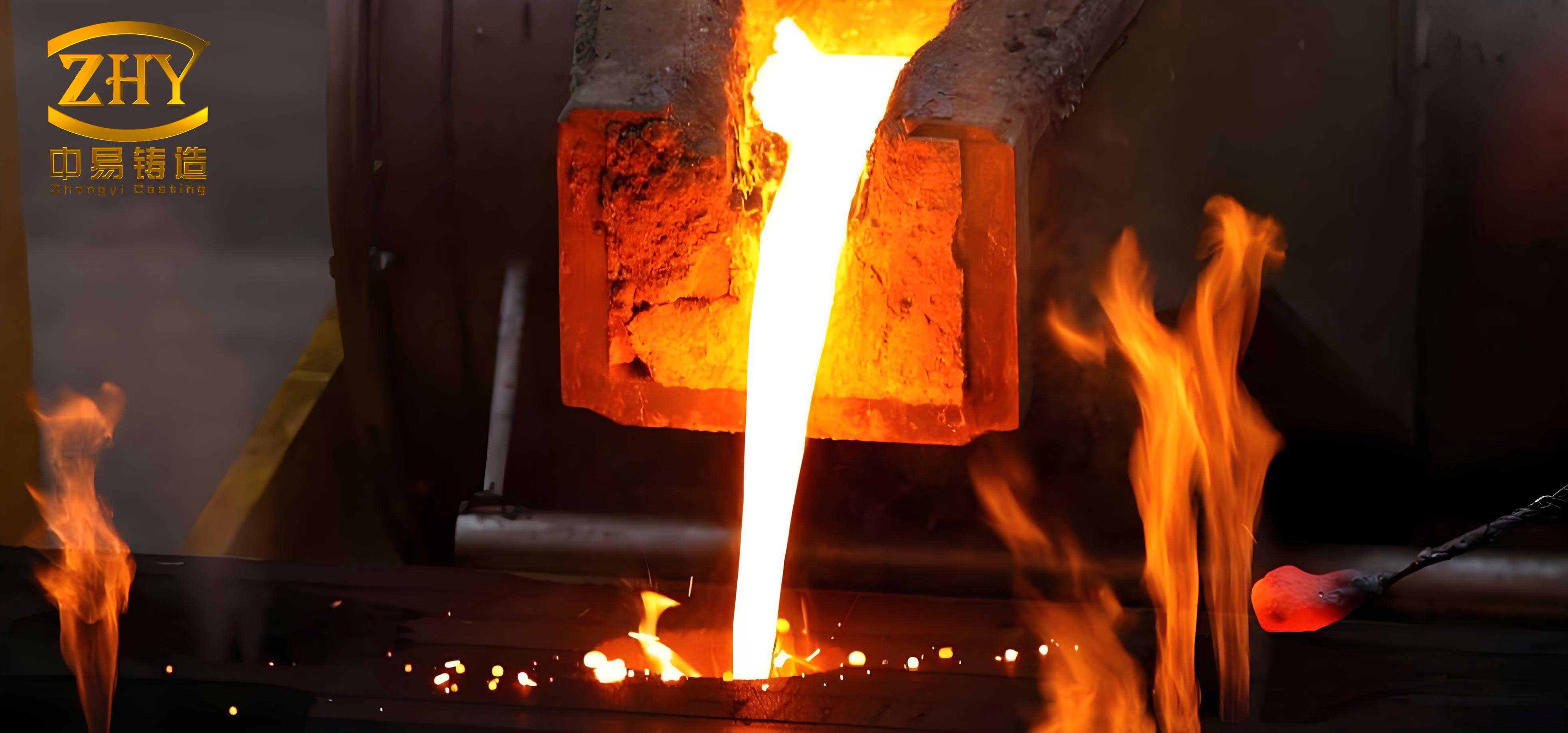
The White Area, named for the color of the expanded polystyrene (EPS) material, is the foundation of the entire lost foam casting process. The quality of the foam pattern directly dictates the surface finish, dimensional accuracy, and the likelihood of defects in the final metal casting. Inconsistent density, poor fusion, or improper assembly of the foam pattern can lead to casting defects such as carbon inclusion, veining, misruns, or dimensional inaccuracies. Therefore, rigorous control over each sub-process in the White Area is paramount. The key procedures include: Raw Bead Selection, Pre-expansion, Aging/Conditioning, Molding (Shape-forming), Drying, and Bonding/Assembly.
1. Raw Bead Selection and Material Science
The selection of the base expandable polymer beads is the first and one of the most critical decisions in lost foam casting. The pattern material must possess a fine, closed-cell structure, vaporize quickly and cleanly upon contact with molten metal, and leave minimal residue. The primary types of beads used are:
| Bead Type | Chemical Name | Appearance & Carbon Content | Gas Generation | Typical Application in Lost Foam Casting |
|---|---|---|---|---|
| EPS | Expandable Polystyrene | Semi-transparent, ~92% C | Lowest | Non-ferrous metals (Al, Cu), Grey Iron, general steel castings. |
| STMMA | Co-polymer Resin | Off-white, 60-90% C | Medium | Grey Iron, Ductile Iron, Low-carbon and alloy steels. |
| EPMMA | Polymethyl Methacrylate | Semi-transparent, ~60% C | Highest | Ductile Iron, Malleable Iron, Low-carbon and alloy steels where carbon pick-up is a critical concern. |
The selection criteria involve a careful balance:
- Cast Metal Compatibility: The bead’s decomposition behavior must match the pouring temperature and solidification characteristics of the iron alloy.
- Carbon Pick-up (w(C)): Higher carbon content beads like EPS can lead to carburization on the casting surface, which may be undesirable for certain grades of ductile iron or steel. The carbon content `w(C)` is a key parameter.
- Gas Generation Volume: Excessive gas generation during decomposition can cause casting defects if the sand ventilation or coating permeability is insufficient.
- Cost vs. Performance: While EPMMA minimizes carbon defects, it is the most expensive. The choice must align with the quality requirements and cost structure of the production.
- Bead Size (Diameter): This is chosen based on the section thickness of the casting. A fundamental rule is that the thinnest section of the casting must accommodate at least 3-4 fully expanded beads across its thickness to ensure a dense, seamless pattern surface. This can be expressed as a guideline:
$$ d_{bead} \leq \frac{t_{min}}{3.5} $$
where `d_bead` is the fully expanded bead diameter and `t_min` is the minimum casting wall thickness. For example, a 5 mm wall requires beads that expand to roughly 1.4 mm or smaller.
Thus, the optimal bead for lost foam casting of iron is one that offers low density, controlled gas evolution, minimal carbon residue, good rigidity, and processability at a justifiable cost.
2. Pre-expansion: The First Expansion
Pre-expansion is the controlled initial expansion of raw, dense beads to a lower, uniform density suitable for the final molding process. In lost foam casting, batch-type steam pre-expanders are commonly used for their control and consistency. The goal is to achieve a target pre-bead density, typically between 0.018 to 0.025 g/cm³ for iron castings. This represents an expansion ratio (or blow ratio) of 30 to 55 times the original bead volume. The expansion ratio `E` can be defined as:
$$ E = \frac{\rho_{original}}{\rho_{pre-expanded}} $$
where `ρ_original` is the density of the raw bead (e.g., ~0.6 g/cm³ for EPS) and `ρ_pre-expanded` is the target pre-expansion density.
Key control parameters in pre-expansion for lost foam casting include:
- Steam Pressure and Temperature: Saturated steam provides the heat to soften the polymer and volatilize the pentane (or other) blowing agent within the bead. Precise control is needed to achieve uniform expansion without causing bead collapse or over-fusion.
- Cycle Time: The residence time of beads in the steam environment must be optimized. Insufficient time leads to low density and under-expanded beads; excessive time causes over-expansion, bead wall rupture, and density instability.
- Initial Bead Blowing Agent Content: Raw beads typically contain 4.8-7.0% blowing agent by weight. If content is too high, beads may need to be “aired” or aged before pre-expansion to prevent violent, uncontrolled expansion. If too low, pre-expansion parameters must be adjusted to compensate, often requiring slightly higher steam temperature or longer time.
- Agitation: Proper mechanical agitation in the pre-expander is crucial to ensure all beads are exposed evenly to the steam, preventing density gradients within a batch.
The success of the entire lost foam casting process hinges on achieving consistent, spherical pre-expanded beads of the target density. Variations here propagate directly into the molding stage.
| Parameter | Too Low / Short | Optimal Range | Too High / Long |
|---|---|---|---|
| Steam Pressure | Under-expansion, high density, poor mold fill. | 0.15 – 0.25 MPa (saturated) | Over-expansion, bead collapse, density variation, shrinkage. |
| Cycle Time | Inconsistent density, unexpanded cores. | 30-120 seconds (batch dependent) | Bead fusion in pre-chamber, deformed beads. |
| Pre-bead Density | Poor surface finish in final pattern, weak pattern. | 0.018 – 0.025 g/cm³ | Difficulty in molding fine details, excessive pattern strength leading to gas defects. |
3. Aging and Conditioning: Stabilizing the Beads
Freshly pre-expanded beads are in a metastable state. The internal cell pressure is lower than atmospheric pressure due to the condensation of steam and blowing agent, making them soft and susceptible to deformation. Aging allows air to diffuse through the polymer walls into the cells, equalizing the pressure and hardening the beads. This process also allows for the evaporation of surface moisture. In lost foam casting, consistent bead conditioning is vital for predictable mold fill and fusion.
Natural Aging: Beads are stored in breathable bags or bins in a controlled environment (18-25°C, dry, ventilated). The time required depends on bead density, polymer type, and ambient conditions. A general guideline:
$$ t_{aging} \propto \frac{1}{\rho_{bead}} $$
Higher density beads require less aging time. Beads at the upper end of the pre-expansion density range (e.g., >0.030 g/cm³) may be used almost immediately.
Pressurized Conditioning (Forced Aging): To accelerate the process or to further increase the internal pressure of low-density beads for better molding performance, pressurized conditioning is used. Beads are placed in a sealed tank, and dry air is introduced at 0.2-0.3 MPa for 4-8 hours. It is critical that beads are surface-dry before pressurized conditioning to prevent internal corrosion of the equipment. The ideal internal bead pressure `P_i` after conditioning should be slightly above atmospheric pressure `P_a`:
$$ P_i \approx P_a + \Delta P \quad \text{where} \quad \Delta P \approx 0.02 – 0.05 \text{ MPa} $$
This positive differential ensures the beads fully expand to contact the mold walls during the molding cycle. The aging area must be free from static electricity (use grounded, conductive containers), and storage hoppers should be designed to avoid dead zones where beads can compact and age inconsistently.
4. Molding (Shape-Forming): Creating the Pattern
This is the stage where conditioned beads are transformed into the final foam pattern shape. Beads are blown into a pre-heated aluminum mold cavity. Steam is then injected, causing the beads to soften, expand further, and fuse together at their boundaries, forming a solid, integral replica of the part. Key control factors are mold temperature, steam pressure/time, and cooling. Modern automated machines provide precise control over these cycles. However, defects can arise from improper parameter setup or poor bead quality. Below is an analysis of common molding defects in lost foam casting pattern production:
| Defect | Visual Description | Root Causes | Corrective Actions in Lost Foam Casting |
|---|---|---|---|
| Poor Fusion / Open Structure | Bead boundaries visible, pattern easily breaks apart along beads. | Low mold/steam temperature; Short steam cycle; Insufficient blowing agent in bead; Under-conditioned beads. | Increase steam temperature/pressure; Lengthen steam injection time; Check bead conditioning pressure/time; Verify pre-bead density. |
| Surface Melting or Collapse | Pattern surface is shiny, shrunken, or has a “orange peel” texture. | Excessive mold/steam temperature; Prolonged steam exposure. | Reduce mold temperature; Shorten steam cycle; Improve cooling after fusion. |
| Incomplete Fill | Missing sections in thin walls or corners of the pattern. | Bead size too large for section; Insufficient fill pressure; Blocked vents or fill ports. | Use smaller bead size; Increase fill air pressure; Redesign fill gates/vent locations in tooling. |
| Swelling or Dimensional Oversize | Pattern is larger than mold cavity after demolding. | Insufficient cooling time; Pattern ejected while still hot; Over-expansion due to high steam pressure. | Increase cooling cycle (water spray/air); Implement post-molding fixture; Optimize steam parameters. |
| Post-Molding Shrinkage | Pattern shrinks over hours/days after demolding. | Pre-bead density too low; Inadequate aging/conditioning; Pattern cooled too rapidly. | Increase pre-expansion density target; Extend aging time; Control cooling rate to be gradual. |
The molding process in lost foam casting is a complex interplay of heat transfer and polymer rheology. The ideal cycle ensures complete cavity fill, perfect bead-to-bead fusion for a strong, monolithic pattern, and controlled cooling to lock in dimensions and minimize internal stresses.
5. Pattern Drying and Bonding/Assembly
After demolding, patterns often contain surface moisture from the cooling cycle. They must be dried in a controlled environment (30-40°C with air circulation) to achieve a stable weight and prevent issues during coating. The final step in the White Area of lost foam casting is the assembly of individual foam patterns and the gating/riser system into a complete cluster. This is typically done using specialized hot-melt adhesives, latex-based glues, or solvent-based cements.
Critical Control Points for Bonding:
- Adhesive Application: A thin, even layer should be applied to both surfaces. The adhesive should become tacky (“dry to touch”) before joining to ensure immediate grab and strength development.
- Alignment and Pressure: Parts must be aligned precisely and held under firm pressure for a set time to squeeze out excess adhesive and ensure full contact. Fixtures or locating pins are essential.
- Gap Elimination: Any gap at the joint is a potential channel for liquid metal penetration (veining defect) or a source of loose sand inclusions. If a perfect seam cannot be achieved, the joint must be sealed with specialized liquid filler or high-temperature tape designed for lost foam casting.
- Minimal Use of Reinforcement: While plastic pins or staples can be used for alignment or reinforcement, they should be minimized. Their use in critical casting areas is discouraged as they create a different decomposition profile and may lead to localized defects.
- Surface Preparation: Bonding surfaces must be clean, dry, and smooth. Any imperfections should be lightly sanded and any dust removed to guarantee optimal adhesive bonding.
A perfectly manufactured but poorly assembled pattern cluster will invariably result in a defective casting, nullifying all previous careful controls in the lost foam casting White Area process.
6. Conclusion: Integrated Process Control
The White Area operations in lost foam casting form a tightly interlinked chain. A deviation in one parameter, such as pre-bead density, cascades into issues in aging, molding, and ultimately, casting quality. Successful implementation relies on:
- Standardization: Defining and documenting critical parameters for each material, pattern type, and machine.
- Monitoring & Data Recording: Consistently measuring and logging parameters like pre-bead density, aging time/pressure, mold temperatures, and cycle times.
- Preventive Maintenance: Ensuring pre-expanders, molding machines, and steam systems are calibrated and functioning correctly.
- Operator Training: Ensuring personnel understand the cause-and-effect relationships between their actions and pattern quality.
By establishing robust control over the bead selection, pre-expansion, aging, molding, and assembly processes, the yield of high-quality foam patterns is significantly increased. This proactive approach in the White Area directly and effectively reduces the incidence of costly casting defects—such as carbon defects, fills, and dimensional errors—that originate from pattern inconsistencies. Therefore, mastering the White Area is not merely a preliminary step but the cornerstone of reliable and economical lost foam casting production for iron castings.