
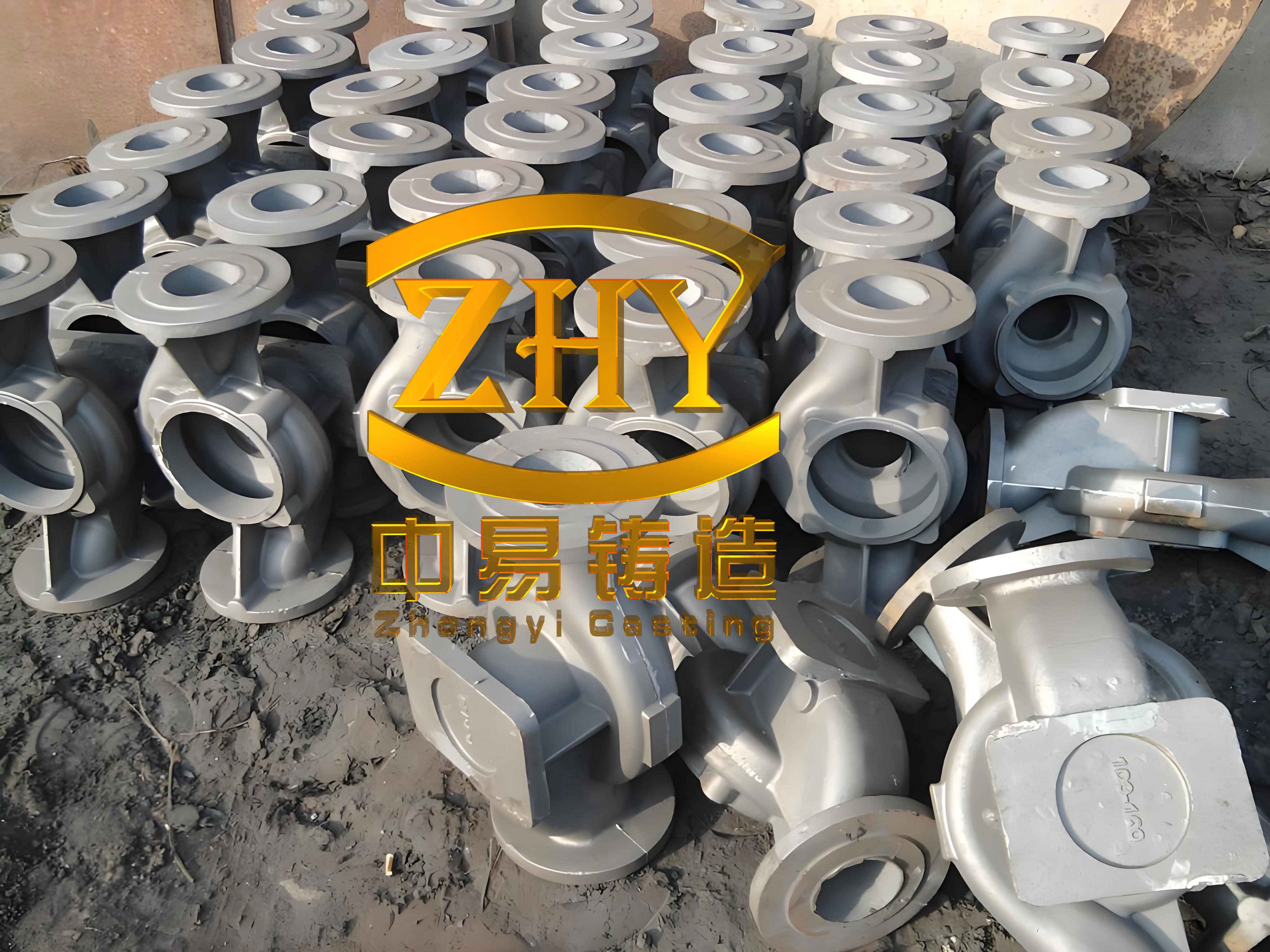
The quest for dimensional stability and durability in metal components inevitably leads us to confront the persistent challenge of residual stress. In the realm of grey iron castings, these internal, locked-in stresses are not merely an academic concern but a critical industrial factor influencing everything from machining accuracy to in-service performance and failure resistance. As a practitioner deeply involved in process design and simulation, I have found that the interplay of metallurgy and thermal history dictates the final stress state. Traditionally, mitigating these stresses relied on post-casting treatments like thermal aging, which add cost and time. A more elegant solution lies in proactively understanding and controlling the process parameters during casting itself. This article delves into a systematic investigation of key factors influencing residual stress in grey iron castings, employing an integrated framework of Computer-Aided Engineering (CAE) and Design of Experiments (DOE). Our goal is to move beyond rules-of-thumb and provide a quantified, data-driven perspective on how to minimize these detrimental stresses from the outset.
At its core, residual stress in a casting arises from non-uniform thermal contraction and phase transformations during solidification and cooling. Different sections of a casting cool at different rates. The region that cools and contracts first is constrained by the hotter, more malleable material surrounding it, leading to plastic deformation. As the entire casting finally cools to room temperature, these incompatible deformations manifest as a self-equilibrating system of internal stresses. In grey iron castings, this is further complicated by the graphite expansion phase and the austenite-to-ferrite/pearlite transformations. The classic benchmark for studying this phenomenon is the stress frame casting—a simple yet powerful geometry comprising sections of different thicknesses connected by a cross-member, deliberately designed to generate and reveal thermal stresses.
To dissect this complex problem, we turned to a synergistic CAE-DOE approach. CAE simulation, using advanced foundry software, allows us to model the entire process—filling, solidification, cooling, and stress development—with high fidelity. It provides a virtual lab where we can observe the formation of stresses impossible to measure non-destructively in real-time. DOE, specifically the Taguchi method, is the strategic maestro for this virtual lab. Instead of running a prohibitive number of simulations by varying one factor at a time, DOE allows us to efficiently explore the multi-factor design space with a minimal set of well-chosen experiments (orthogonal arrays). This combination is powerful: CAE generates accurate data for each prescribed set of conditions, and DOE analyzes that data to identify significant trends, interactions, and optimal parameter sets. For our analysis, the key metric chosen to represent the severity of residual stress was the maximum von Mises stress within the casting. The von Mises stress ($\sigma_{vM}$) is an equivalent or effective stress derived from the principal stress components ($\sigma_1, \sigma_2, \sigma_3$) and is an excellent indicator of yield propensity and failure risk under multi-axial stress states, making it ideal for assessing casting integrity.
$$
\sigma_{vM} = \sqrt{\frac{(\sigma_1 – \sigma_2)^2 + (\sigma_2 – \sigma_3)^2 + (\sigma_3 – \sigma_1)^2}{2}}
$$
Four primary process parameters were selected as factors for investigation, each with three levels, as detailed in the table below. The Si/C ratio is a fundamental metallurgical lever affecting matrix structure and phase transformation behavior. Pouring temperature dictates the initial thermal energy input. Shake-out time controls when the casting is released from the mold’s constraint. Cooling conditions, modulated here by the size of chills placed on the thicker section, directly influence the thermal gradient.
| Factor | Level 1 | Level 2 | Level 3 |
|---|---|---|---|
| A: Pouring Temperature (°C) | 1380 | 1400 | 1420 |
| B: Si/C Ratio | 0.567 | 0.606 | 0.646 |
| C: Shake-out Time (s) | 6000 | 8000 | 10000 |
| D: Chill Size (mm³) | 50x55x50 | 80x55x50 | 100x55x50 |
A standard L9(3^4) orthogonal array was used, resulting in nine unique simulation runs. The CAE software calculated the complete thermal-mechanical history for each run, from which the maximum von Mises stress value was extracted. The simulation results for the maximum residual stress across all nine experimental designs are summarized below.
| Run No. | A: Temp (°C) | B: Si/C | C: Shake-out (s) | D: Chill Size | Max. von Mises Stress (MPa) |
|---|---|---|---|---|---|
| 1 | 1380 | 0.567 | 6000 | Small | 276.1 |
| 2 | 1380 | 0.606 | 8000 | Medium | 265.2 |
| 3 | 1380 | 0.646 | 10000 | Large | 255.6 |
| 4 | 1400 | 0.567 | 8000 | Large | 255.0 |
| 5 | 1400 | 0.606 | 10000 | Small | 275.4 |
| 6 | 1400 | 0.646 | 6000 | Medium | 261.0 |
| 7 | 1420 | 0.567 | 10000 | Medium | 268.7 |
| 8 | 1420 | 0.606 | 6000 | Large | 259.0 |
| 9 | 1420 | 0.646 | 8000 | Small | 279.2 |
The DOE analysis proceeds by calculating the average response (maximum stress) for each level of every factor. For example, the average stress for Pouring Temperature at Level 1 (1380°C) is the mean of runs 1, 2, and 3: (276.1 + 265.2 + 255.6)/3 = 265.63 MPa. Performing this calculation for all factors and levels reveals the main effect of each parameter.
| Response Average | Level 1 (MPa) | Level 2 (MPa) | Level 3 (MPa) | Range (MPa) |
|---|---|---|---|---|
| A: Pouring Temp | 265.63 | 263.80 | 268.96 | 5.16 |
| B: Si/C Ratio | 266.60 | 266.53 | 265.26 | 1.34 |
| C: Shake-out Time | 265.36 | 266.46 | 266.56 | 1.20 |
| D: Chill Size | 276.90 | 264.96 | 256.53 | 20.37 |
The Range, calculated as the difference between the highest and lowest average for a factor, is a direct measure of its influence. A larger range signifies a greater impact on residual stress. The results are unequivocal:
- Cooling Condition (Chill Size) is the dominant factor, with a massive range of 20.37 MPa. Larger chills, which extract heat more rapidly from the thick section, dramatically reduce the final stress by minimizing the thermal disparity between sections. The relationship is strongly inverse: larger chill size leads to lower stress. This can be conceptualized by considering how the chill modifies the cooling rate differential, $\Delta \dot{T}$, between thick ($\dot{T}_t$) and thin ($\dot{T}_s$) sections: $\Delta \dot{T} = \dot{T}_t – \dot{T}_s$. A larger chill increases $\dot{T}_t$, reducing $\Delta \dot{T}$ and thus the driving force for stress development.
- Pouring Temperature is the second most significant factor (range 5.16 MPa), but its effect is non-monotonic. The lowest stress occurs at the intermediate temperature of 1400°C. This counterintuitive result highlights the complex thermo-metallurgical interplay. Higher temperatures increase the total heat content, potentially leading to slower cooling in certain zones and altering phase transformation kinetics. The initial temperature $T_p$ affects the cooling curve and the undercooling $\Delta T$ at which phases nucleate, which in turn influences the phase transformation strain $\epsilon_{pt}$. There appears to be an optimal point where these effects balance to minimize stress.
- Si/C Ratio and Shake-out Time have comparatively minor and nearly equivalent influence (ranges of 1.34 MPa and 1.20 MPa, respectively). For the Si/C ratio, a slightly higher value (0.646) trended towards lower stress, possibly by promoting a more uniform matrix and favorable graphite morphology. The effect of shake-out time was perhaps the most surprising: longer times in the mold correlated with slightly higher residual stress. This challenges the conventional wisdom of “the longer, the better.” For this specific stress frame geometry, it suggests that most of the stress-generating plastic deformation occurs while the casting is still constrained by the rigid sand mold. Prolonged cooling in the mold may allow stress to build up via creep or further differential contraction under constraint. Upon shake-out at a lower temperature, the elastic stress locked in is higher. The final stress $\sigma_f$ is a function of the plastic strain $\epsilon_{pl}$ accumulated in-mold and the elastic recovery $\epsilon_{el}$ after shake-out: $\sigma_f = E \cdot \epsilon_{el}$, where $E$ is the elastic modulus. The findings suggest that for some grey iron castings, an earlier shake-out at a carefully selected temperature might allow for more uniform air cooling and stress relief.
This study underscores that a one-size-fits-all approach to reducing residual stress in grey iron castings is ineffective. The hierarchy of influence—Cooling > Pouring Temperature > (Si/C, Shake-out)—provides a clear directive for process engineers. Priority must be given to optimizing cooling design through strategic use of chills, fins, or mold materials to balance cooling rates. Pouring temperature should be treated as a precise variable to be optimized within a window, not just a minimum threshold. The metallurgical composition (Si/C) is important for mechanical properties but has a relatively subdued direct effect on stress for common grades. Most importantly, the shake-out practice needs reevaluation based on casting geometry; blind adherence to extended mold times can be counterproductive.
Beyond the studied factors, the general constitutive behavior of the material during cooling is described by the incremental stress-strain relationship, which sums up the elastic, plastic, thermal, and phase transformation strains:
$$
d\epsilon_{total} = d\epsilon_{el} + d\epsilon_{pl} + d\epsilon_{th} + d\epsilon_{pt}
$$
Where $d\epsilon_{th} = \alpha(T) \cdot dT$, with $\alpha(T)$ being the temperature-dependent coefficient of thermal expansion. For grey iron castings, the $\epsilon_{pt}$ term related to graphite expansion and austenite decomposition is particularly significant. The CAE software numerically solves such coupled thermo-metallurgical-mechanical equations to predict the final state.
In practical terms, controlling residual stress in grey iron castings is a multi-stage endeavor. The insights from this DOE-CAE analysis primarily inform the pre-casting design and solidification control stage. However, for castings with complex geometries or stringent requirements, complementary strategies remain vital. These include:
- Stress Relief Heat Treatment: A controlled thermal cycle (e.g., heating to 500-550°C, holding, and slow cooling) to allow creep and relaxation, effectively reducing stress. The reduction can often be estimated as a percentage of the as-cast stress.
- Vibratory Stress Relief: Applying resonant vibrations to the casting to induce micro-plasticity in high-stress regions, providing a lower-energy alternative to thermal treatment.
- Design Modifications: Where possible, adopting more uniform wall thicknesses, generous fillets, and symmetrical designs to inherently reduce thermal gradients.
The integration of CAE and DOE, as demonstrated, transforms foundry process development from an art to a science. It enables a systematic exploration of the vast parameter space governing the quality of grey iron castings. By identifying and quantifying the key drivers of residual stress, this methodology empowers engineers to make informed decisions, reduce costly trial-and-error iterations, and consistently produce more dimensionally stable and reliable cast components. Future work will involve validating these virtual findings with physical measurements (e.g., using strain gauge rosettes or hole-drilling methods) on actual castings and extending the analysis to include other critical factors like alloying elements (e.g., Cr, Mo, Sn) and the design of the gating and feeding system, which can also induce localized cooling variations. The ultimate goal is a comprehensive, predictive toolkit for manufacturing grey iron castings with minimal inherent stress, ensuring they meet the ever-increasing demands of precision engineering.