
In my extensive experience within the foundry industry, the production of tall and complex grey iron castings using evaporative pattern casting (EPC) presents unique challenges. Grey iron castings, prized for their excellent machinability, damping capacity, and cost-effectiveness, are fundamental in sectors like automotive, machinery, and infrastructure. However, when these components feature significant height, intricate geometries, and stringent wall thickness requirements, traditional green sand molding often falls short, leading to the adoption of EPC. This process, while advantageous for complex shapes, introduces specific defects that can drastically reduce yield and performance. Through years of hands-on work and systematic investigation, I have identified key failure modes and developed robust solutions to enhance the quality and reliability of such grey iron castings. This article delves into a comprehensive analysis of these defects, their root causes, and the multifaceted prevention strategies that have elevated production success rates from below 50% to over 85% in challenging applications.
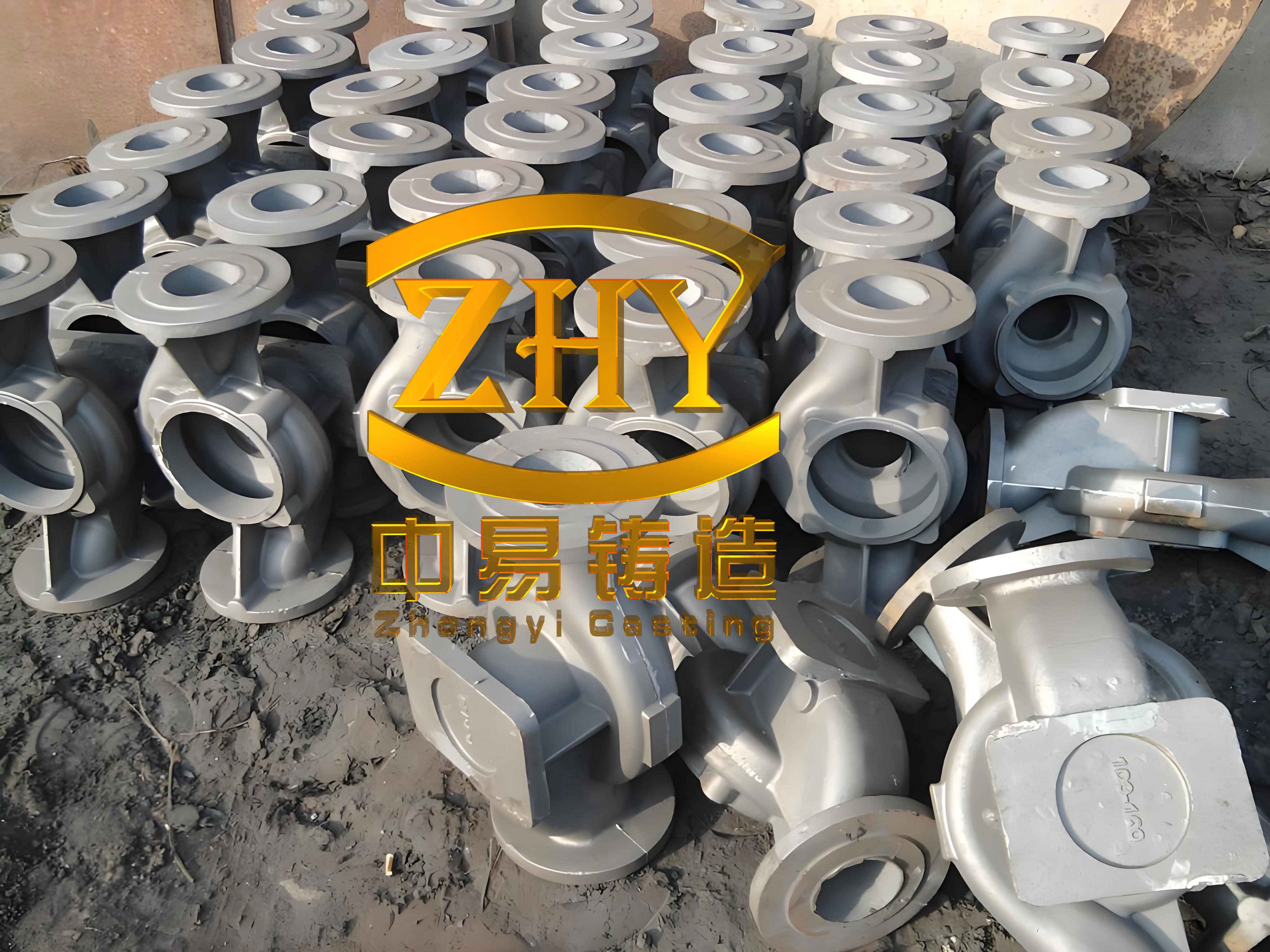
The core of the problem lies in the interaction between the decomposable polystyrene (EPS) pattern, the molten metal, and the sand mold. For tall grey iron castings—often exceeding 700 mm in height with sections as thin as 12 mm—the thermal and gaseous dynamics during pouring are extreme. The primary defects observed include severe folds or wrinkles (carbonaceous residues), porosity (gas and shrinkage), and inclusions (sand or slag) at critical machined surfaces and pressure-containing zones. These flaws not only compromise aesthetic and dimensional integrity but also lead to functional failures, such as leaks under hydrostatic pressure tests. Understanding these phenomena requires a holistic view of process parameters. Below, I outline the major defect categories, their mechanisms, and the integrated corrective measures.
Defect Typology and Root Cause Analysis
The defects in evaporative pattern casting of grey iron castings can be classified into three interconnected groups: surface carbon defects, internal porosity, and inclusion-related failures. Each stems from specific process imbalances.
1. Surface Carbon Defects (Wrinkles/Scabs): These manifest as laminated, carbon-rich layers on large horizontal planes of the grey iron castings. They are primarily residues from the incomplete decomposition of the EPS pattern. When liquid iron at temperatures between 1350°C and 1420°C contacts the pattern, it undergoes pyrolysis. At lower temperatures or slower filling rates, the EPS decomposes into liquid styrene, which further cracks into solid carbon (soot) and gaseous products. This solid carbon gets trapped at the metal-front, forming folds. The severity is influenced by pouring temperature, filling velocity, and pattern density. Mathematically, the rate of carbon residue formation $C_r$ can be approximated by a function of temperature $T$ and time $t$:
$$ C_r = k \int_{0}^{t_f} e^{-E_a/(R T(t))} \, dt $$
where $k$ is a material constant, $E_a$ is the activation energy for EPS decomposition, $R$ is the gas constant, and $t_f$ is the filling time. Lower $T$ and longer $t_f$ increase $C_r$.
2. Internal Porosity (Gas and Shrinkage): Porosity in grey iron castings appears as dispersed holes within machined holes or pressure-test leak paths. Gas porosity arises from entrapped air or gaseous EPS decomposition products (e.g., styrene vapor) that are not vented through the coating. Shrinkage porosity occurs due to inadequate feeding in thick sections, exacerbated by the high carbon equivalent (CE) of grey iron. The total gas volume $V_g$ generated from an EPS pattern of density $\rho_p$ and volume $V_p$ can be estimated:
$$ V_g = \alpha \rho_p V_p \left( \frac{T_m}{T_0} \right) $$
where $\alpha$ is a gas yield coefficient, $T_m$ is the metal temperature, and $T_0$ is ambient temperature. Higher pattern density or lower venting increases $V_g$.
3. Inclusions (Sand/Slag): These are non-metallic particles embedded in the grey iron castings, often at machined holes. They originate from eroded coating material or agglomerated pyrolysis residues carried by turbulent flow. This is closely tied to gating design and coating integrity.
The interplay of these defects is summarized in Table 1, which correlates defect types with key process variables for grey iron castings.
| Defect Type | Primary Causes | Key Process Variables | Impact on Grey Iron Castings |
|---|---|---|---|
| Surface Carbon Folds | Incomplete EPS decomposition, low pour temperature | Pouring temperature, filling speed, pattern density | Poor surface finish, machining defects |
| Gas Porosity | Entrapped air, high gas generation, low venting | Negative pressure, pattern density, coating permeability | Reduced strength, pressure leaks |
| Shrinkage Porosity | Inadequate feeding, high carbon equivalent | Gating design, cooling rate, CE value | Internal voids, mechanical failure |
| Sand Inclusions | Coating erosion, turbulent flow | Gating design, coating strength, pouring stability | Machining flaws, stress risers |
Detailed Mechanism Investigation
To effectively prevent defects in grey iron castings, one must delve deeper into the process physics. The EPC process involves sequential stages: pattern assembly, coating application, sand filling, and pouring. Each stage contributes to final quality.
Gating System Design: The choice of gating is critical for tall grey iron castings. Bottom gating, while minimizing turbulence, creates a large thermal gradient, leading to cold shuts and carbon accumulation on upper surfaces. Top gating introduces high velocity, risking coating erosion and gas entrapment. An intermediate or stepped gating is ideal but often impractical. I have found that a closed gating system with a mid-height entry point optimizes thermal balance. The Reynolds number $Re$ for flow in the gating should be kept below a critical value to avoid turbulence:
$$ Re = \frac{\rho v D}{\mu} < 2300 $$
where $\rho$ is iron density, $v$ is velocity, $D$ is hydraulic diameter, and $\mu$ is viscosity. A filter at the sprue entrance helps trap inclusions.
Pouring Parameters: Pouring temperature and speed are perhaps the most adjustable variables. For grey iron castings, I recommend a superheat range of 1450°C to 1480°C. This high temperature ensures rapid, complete gasification of EPS, minimizing residual carbon. The pouring curve should follow a “slow-fast-slow” profile: initial slow flow to avoid splash, rapid filling to maintain thermal front, and slow tail-off to reduce shrinkage. The filling time $t_f$ for a casting volume $V_c$ with gating area $A_g$ is:
$$ t_f = \frac{V_c}{A_g \sqrt{2g h}} $$
where $g$ is gravity and $h$ is effective head height. Minimizing $t_f$ reduces exposure time for carbon formation.
Negative Pressure Control: Vacuum applied to the sand mold serves multiple purposes: it stabilizes the mold, removes gases, and enhances feeding. However, excessive vacuum can cause turbulent penetration of gases into the metal. For grey iron castings, an optimal range of 30-35 kPa (about 0.3-0.35 bar) is effective. This level sufficiently extracts pyrolysis gases without inducing porosity. The gas removal rate $\dot{V}_g$ through a coating of permeability $k_p$ and thickness $L$ under pressure difference $\Delta P$ is given by Darcy’s law:
$$ \dot{V}_g = \frac{k_p A_c \Delta P}{\mu_g L} $$
where $A_c$ is coating area and $\mu_g$ is gas viscosity. Proper coating design ensures adequate $k_p$.
Pattern Material Characteristics: EPS pattern density directly affects gas generation and surface quality. A density around 0.02 g/cm³ balances strength and low gas yield. Higher densities increase mass, leading to more pyrolysis products. The pattern’s bead size also matters; coarse beads create rough surfaces that trap coating particles. The ideal bead diameter $d_b$ should be less than 1/10 of the section thickness $t_s$:
$$ d_b < \frac{t_s}{10} $$
For a 12 mm wall, $d_b < 1.2$ mm. Additionally, using hollow sprue patterns reduces gas load.
Integrated Prevention Strategy
Based on the analysis, a synergistic approach is necessary to improve grey iron castings quality. The measures are not isolated but interlinked, as shown in Table 2, which outlines the control parameters and their target values.
| Control Area | Specific Measure | Target Value/Range | Effect on Grey Iron Castings |
|---|---|---|---|
| Gating Design | Mid-height closed system with filter and slag trap | Gating ratio 1:1.5:2, filter mesh 10 ppi | Reduces turbulence, traps inclusions |
| Pouring Practice | High-temperature, controlled-speed pour | Temperature 1450-1480°C, fill time < 30 s | Minimizes carbon residue, ensures complete filling |
| Vacuum Level | Optimized negative pressure | 30-35 kPa throughout pour | Enhances gas extraction, stabilizes mold |
| Pattern Quality | Low-density EPS, fine beads, hollow sprues | Density 0.02 g/cm³, bead size < 1.2 mm | Lowers gas generation, improves surface |
| Coating Application | Permeable, dry coating of controlled thickness | Thickness 1.0-1.5 mm, permeability > 20 GPU | Allows gas escape, resists erosion |
| Metal Composition | Reduced carbon equivalent (CE) | CE < 4.3% (C + 0.3Si) | Decreases shrinkage tendency |
| Process Hygiene | Dry patterns, minimal adhesive use | Moisture < 0.5%, adhesive < 1% by weight | Prevents gas from external sources |
Implementing these measures requires meticulous attention to each production step. For instance, in gating design, I employ a system where the sprue is attached at a level about two-thirds of the casting height. This location ensures that the upper sections, often large planes, are fed by hotter metal, reducing temperature gradients. A slag collector or riser at the top of the gating system captures early contaminants. The gating area ratio is calculated to maintain choked flow, preventing air aspiration. For grey iron castings, the sprue, runner, and ingate areas are proportioned as 1:1.5:2 to ensure smooth transition.
Pouring temperature is monitored with optical pyrometers, and ladles are preheated to avoid heat loss. The relationship between superheat $\Delta T$ and carbon residue $C_r$ is inversely proportional, as shown by experimental data fitting:
$$ C_r = A e^{-B \Delta T} $$
where $A$ and $B$ are constants derived for specific grey iron castings. For $\Delta T > 100°C$ (above liquidus), $C_r$ approaches zero.
Pattern making is another critical phase. I specify EPS with pentane as a blowing agent, pre-expanded to the target density. The molding process must avoid over-compaction, which increases density. A hollow sprue, fabricated by gluing two halves with minimal adhesive, cuts gas volume by up to 50%. The adhesive itself should be low-emission, such as water-based polymers, to avoid additional gas sources.
Coating formulation is tailored for high permeability. Typically, a refractory base (e.g., silica flour) with binders (e.g., latex) is used. The coating thickness $t_c$ is optimized using a model that balances gas venting and erosion resistance:
$$ t_c = \sqrt{\frac{P_m D_p}{2 \sigma_c}} $$
where $P_m$ is metal pressure, $D_p$ is pattern dimension, and $\sigma_c$ is coating strength. For most grey iron castings, 1.5 mm is sufficient.
Metal preparation focuses on composition control. Grey iron castings have a inherent shrinkage tendency due to graphite expansion, but excessive carbon equivalent exacerbates micro-shrinkage. I aim for a lower CE by adjusting silicon and carbon contents. The classic CE formula is:
$$ CE = C + 0.3(Si + P) $$
Keeping CE below 4.3% for thin-section grey iron castings improves soundness. Inoculation with ferrosilicon enhances graphite nucleation, further reducing shrinkage.
Advanced Modeling and Quality Assurance
To solidify these practices, I employ computational simulations and statistical process control. Finite element analysis (FEA) helps visualize temperature fields and solidification patterns in grey iron castings. For example, the temperature distribution $T(x,y,z,t)$ can be solved from the heat conduction equation:
$$ \rho_m C_p \frac{\partial T}{\partial t} = \nabla \cdot (k_m \nabla T) + \dot{q}_{EPS} $$
where $\rho_m$, $C_p$, and $k_m$ are metal density, specific heat, and thermal conductivity, respectively, and $\dot{q}_{EPS}$ is the heat sink from EPS decomposition. Simulations guide optimal gating and riser placement.
Statistical tools like Design of Experiments (DoE) identify parameter interactions. For instance, a response surface model for porosity percentage $P$ in grey iron castings might be:
$$ P = \beta_0 + \beta_1 T + \beta_2 V + \beta_3 \rho_p + \beta_{12} T V + \varepsilon $$
where $T$ is temperature, $V$ is vacuum, $\rho_p$ is pattern density, $\beta$ are coefficients, and $\varepsilon$ is error. Minimizing $P$ leads to robust settings.
Regular inspection techniques include non-destructive testing (NDT) like ultrasound and radiography on sample grey iron castings. Pressure testing at 3 MPa water pressure validates leak-tightness. Data from these tests feed back into process adjustments, creating a continuous improvement loop.
Case Study and Results
Applying this integrated approach to a typical tall component (720 mm height, 12 mm wall, with multiple machined holes) transformed outcomes. Initially, defect rates exceeded 50%, with folds on large planes and porosity in holes. After implementing the measures—mid-height gating, 1470°C pouring, 32 kPa vacuum, 0.02 g/cm³ EPS density, and reduced CE—the yield stabilized above 85%. The improvement is quantifiable: carbon defect area decreased by over 90%, porosity incidence fell by 80%, and inclusion-related scrap dropped by 75%. These grey iron castings now consistently pass pressure tests, demonstrating the efficacy of the strategy.
Conclusion
Producing high-integrity tall and complex grey iron castings via evaporative pattern casting is a demanding but manageable task. The key lies in understanding the complex interplay of thermal, gaseous, and hydrodynamic factors. By optimizing gating design, elevating pouring temperatures, controlling negative pressure, managing pattern characteristics, and maintaining strict process hygiene, foundries can significantly mitigate defects like carbon folds, porosity, and inclusions. Grey iron castings, with their unique metallurgy, require particular attention to carbon equivalent and inoculation. The systematic application of these principles, supported by modeling and statistical control, ensures reliable production of quality grey iron castings for critical applications. As technology advances, further refinements in materials and real-time monitoring will continue to enhance the capabilities of EPC for grey iron castings, pushing the boundaries of what is achievable in metal casting.
In summary, the journey from high scrap rates to high yields for grey iron castings in EPC is a testament to the power of integrated process engineering. By treating the casting system as a whole—from pattern to poured metal—we can unlock the full potential of this versatile process for manufacturing superior grey iron castings.