
In my experience with modern foundry practices, resin sand casting has emerged as a pivotal method for producing high-quality castings, particularly for large and medium-sized components in industries such as machine tools, heavy machinery, shipbuilding, and general machinery. This process offers significant advantages, including high dimensional accuracy, low surface roughness, clear contours, reduced labor intensity, and high productivity. As a result, resin sand casting has become one of the fastest-growing casting technologies in recent years. However, despite its maturity, improper control in areas like raw material selection, process design, molding operations, and production management can lead to defects, even causing batch scrapping. Therefore, analyzing the main defects in resin sand casting and proposing effective preventive measures is crucial for guiding foundries to improve product quality and reduce scrap rates. In this article, I will delve into the causes and solutions for common defects, utilizing tables and formulas to summarize key points, and emphasize the importance of rigorous process control in resin sand casting.
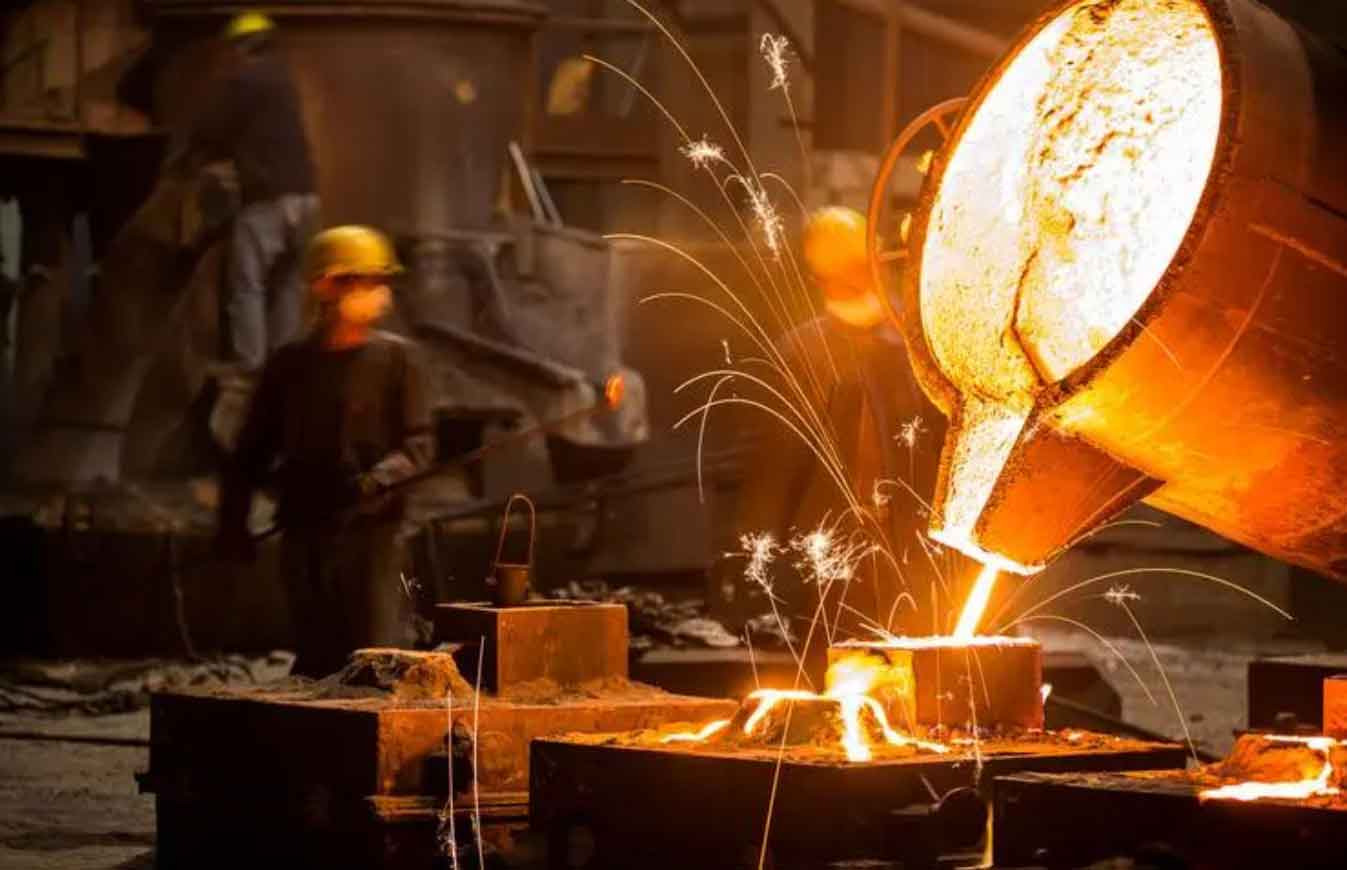
Resin sand casting relies on synthetic binders, such as furan or phenolic resins, to bond sand grains, creating molds and cores with excellent stability. The process involves mixing sand, resin, and a hardening agent, followed by molding and curing. While this method enhances efficiency, the complex interactions between materials and process parameters can introduce defects. Based on my observations and literature review, I have identified several primary defects: sand sticking, erosion, gas holes, iron fins, slag inclusions, and cracks. Each defect stems from specific factors, and addressing them requires a comprehensive understanding of the resin sand casting system. Below, I will explore each defect in detail, incorporating tables and formulas to illustrate relationships and guidelines.
To begin, let me outline the common defects in resin sand casting through a summary table. This table provides an overview of defect types, primary causes, and key preventive actions, serving as a quick reference for foundry engineers.
| Defect Type | Primary Causes | Key Preventive Measures |
|---|---|---|
| Sand Sticking (Penetration) | High pouring temperature, coarse sand grains, low mold compactness, impure sand, poor coating quality | Optimize pouring temperature, use fine sand, improve compactness, apply high-quality coatings |
| Erosion (Wash) | Early or late demolding, moisture issues, poor mold surface finish, improper gating design | Control demolding time, enhance gating systems, use high-thermal-strength resins |
| Gas Holes | High nitrogen content in resin, fine sand grains, inadequate venting, residual moisture in coatings | Use low-nitrogen resins, adjust sand granularity, ensure proper drying, improve venting |
| Iron Fins (Veining) | High thermal expansion of silica sand, resin brittleness, aging of binders, low phosphorus in iron | Use sand with lower expansion, modify resin composition, increase reclaimed sand ratio |
| Slag Inclusions | Reaction between metal and resin, long pouring times, burnt mold surfaces | Design gating for quick pouring, use high-strength coatings, employ overflow risers |
| Cracks (Hot Tearing) | High mold strength, poor collapsibility, structural constraints, sulfur penetration from hardeners | Reduce resin addition, add collapsibility agents, use low-expansion sands, modify gating |
Now, I will discuss each defect in depth, starting with sand sticking, which is a frequent issue in resin sand casting. Sand sticking, also known as penetration defect, occurs when molten metal infiltrates the sand mold, resulting in a rough casting surface or “metal-sand” adhesion. The causes are multifaceted, often related to process parameters. For instance, excessive pouring temperature can over-oxidize the metal, increasing its fluidity and penetration tendency. In resin sand casting, the absence of clay or other fine additives creates larger inter-sand voids, facilitating metal entry. To quantify this, the permeability of the sand mold plays a critical role. Permeability (P) can be expressed as a function of sand grain size and compactness: $$P = \frac{k \cdot d^2}{\mu \cdot \rho}$$ where (P) is permeability, (d) is the average sand grain diameter, (\mu) is the dynamic viscosity of the gas, (\rho) is the sand density, and (k) is a constant dependent on sand shape and distribution. Coarser grains increase (d), raising permeability, but if compactness is low, voids enlarge, leading to mechanical penetration. Therefore, controlling sand granularity is vital. I recommend using four- or five-sieve sand with optimized grain distribution. Additionally, the high-temperature strength of the resin bond can be enhanced by increasing furfuryl alcohol content in furan resins, which reduces metal penetration. The relationship between resin high-temperature strength (S_h) and furfuryl alcohol content (C_f) can be approximated linearly: $$S_h = \alpha \cdot C_f + \beta$$ where (\alpha) and (\beta) are constants derived from empirical data. For preventive measures, refer to the detailed table below.
| Cause Category | Specific Factors | Preventive Actions |
|---|---|---|
| Process Parameters | Pouring temperature too high | Select appropriate pouring temperature based on alloy type; for example, for large iron castings, keep below 1320°C |
| Sand Characteristics | Coarse sand grains, low compactness, high impurity content | Use sand with SiO₂ content >92% for iron castings and >97% for steel castings; employ washed sand with clay content <0.2% |
| Resin System | Low high-temperature strength due to low furfuryl alcohol | Increase furfuryl alcohol content in resin; typical resin addition should be 0.8-1.0% by mass |
| Coating Issues | Poor coating quality or improper application | Use graphite-based coatings for iron castings; for large steel castings, apply dual-layer alcohol-based coatings with sintering and insulating layers |
Moving on to erosion, or wash defects, in resin sand casting, this occurs when metal flow scours the mold or core surface, causing sand displacement and resulting in excess metal or sand inclusions. From my perspective, erosion often arises from timing issues during demolding. If demolding occurs too early, the resin sand lacks sufficient strength, leading to mold damage; if too late, the sand may become brittle and crack. The strength development in resin sand is time-dependent and influenced by temperature and humidity. The strength (S) as a function of time (t) can be modeled as: $$S(t) = S_{\text{max}} \cdot (1 – e^{-k_s \cdot t})$$ where (S_{\text{max}}) is the maximum achievable strength and (k_s) is a rate constant dependent on hardening agent and temperature. To prevent erosion, controlling sand, resin, and hardener temperatures within 20-30°C is essential for uniform strength development. Moreover, gating system design is critical. Using large-flow, low-velocity gating with ceramic pipes for sprue can minimize direct impact. The velocity (v) of metal flow should be reduced to avoid turbulence, which can be estimated using Bernoulli’s principle: $$v = \sqrt{\frac{2 \cdot g \cdot h}{1 + f}}$$ where (g) is gravity, (h) is the metallostatic head, and (f) is a friction factor. Additionally, improving mold surface finish and draft angles reduces sticking during demolding. For a concise summary, see the table below.
| Cause Category | Specific Factors | Preventive Actions |
|---|---|---|
| Demolding Issues | Incorrect demolding time, uneven strength due to moisture | Control demolding time based on temperature; ensure sand temperature of 20-30°C for consistent curing |
| Gating Design | Direct metal impact on mold walls, high flow velocity | Use ceramic sprue tubes with refractory bricks at base; design gating with area ratios (F_sprue : F_runner : F_ingate = 1.50 : 1.25 : 1.00) |
| Resin Properties | Low thermal strength of resin binder | Select resins with high thermal strength; add 20% zircon flour to coating for better heat resistance |
| Mold Quality | Rough mold surface, inadequate draft angles | Enhance mold surface finish; apply suitable draft angles (typically 1-3 degrees) for easy release |
Next, gas holes are a prevalent defect in resin sand casting, often manifesting as scattered porosity due to nitrogen evolution from the resin binder. In my analysis, gas holes originate from multiple sources, including high nitrogen content in resins, fine sand grains reducing permeability, and inadequate venting. The total gas generation (G) during pouring can be expressed as: $$G = G_r + G_m + G_w$$ where (G_r) is gas from resin decomposition, (G_m) from moisture, and (G_w) from other volatiles. For furan resins, (G_r) is proportional to nitrogen content (N): $$G_r = \gamma \cdot N$$ with (\gamma) as a constant. To mitigate this, using low-nitrogen resins (e.g., with nitrogen content below 1% for steel castings and 2% for iron castings) is advisable. Additionally, sand grain size affects permeability; finer grains decrease permeability, trapping gas. The optimal grain size distribution can be determined using sieving analysis, with recommendations like 50/100 mesh for small-medium castings and 30/70 for large castings in resin sand casting. Coatings also play a role; residual solvent moisture in alcohol-based coatings can contribute to gas. Ensuring thorough drying, such as flame drying before pouring, is critical. Furthermore, improving venting by adding more vents in the cope mold helps release gas quickly. The vent area (A_v) should be proportional to the mold volume (V_m): $$A_v = \delta \cdot V_m$$ where (\delta) is an empirical factor (e.g., 0.05 cm² per cm³). Below is a table summarizing gas hole prevention.
| Cause Category | Specific Factors | Preventive Actions |
|---|---|---|
| Resin Composition | High nitrogen content, low furfuryl alcohol | Use low-nitrogen resins; add silicon coupling agents (0.2-0.3% of resin mass) to reduce resin usage |
| Sand Properties | Fine sand grains, high micro-fines content (>0.8%) | Select sand with optimal granularity; control micro-fines in reclaimed sand to below 0.8% |
| Coating and Drying | Residual moisture in coatings, insufficient drying | Use coatings with solvent moisture <5%; perform flame drying after coating; allow molds to cure for 6-8 hours before pouring |
| Gating and Venting | Poor gating design, inadequate venting | Design gating for fast pouring (e.g., bottom gating); increase vent holes in cope; use area ratios of 1.50:1.25:1.00 for sprue-runner-ingate |
Iron fins, or veining, are another defect specific to resin sand casting, characterized by thin, irregular metal projections on casting surfaces. From my viewpoint, this defect is primarily due to the high thermal expansion of silica sand, which causes mold cracking during heating. The linear thermal expansion coefficient (\alpha_s) of silica sand is about 12-15 × 10⁻⁶ /°C, whereas coatings may have lower expansion, leading to stress and cracking. The stress (\sigma) developed can be estimated as: $$\sigma = E \cdot \Delta \alpha \cdot \Delta T$$ where (E) is the elastic modulus of the sand, (\Delta \alpha) is the difference in expansion coefficients, and (\Delta T) is the temperature change. To reduce iron fins, using sands with lower expansion, such as zircon or chromite sand, is effective. Additionally, resin composition affects brittleness; higher phenolic content increases脆性, promoting cracking. Adjusting resin to have higher furfuryl or urea-formaldehyde content can alleviate this. Reclaimed sand usage also helps, as its expansion coefficient decreases with recycling due to baked residues. The expansion reduction ratio (R_e) after (n) cycles can be modeled as: $$R_e = 1 – \lambda \cdot n$$ where (\lambda) is a degradation constant. Moreover, ensuring resin is within shelf life and avoiding excess hardener prevents premature aging. The table below outlines key measures.
| Cause Category | Specific Factors | Preventive Actions |
|---|---|---|
| Sand Expansion | High SiO₂ content (>92%) in sand, uniform grain size | Use sand with controlled SiO₂ content; increase reclaimed sand ratio; adopt multi-grade sand with dispersed grain distribution |
| Resin Characteristics | High phenolic content, resin aging, excessive hardener | Modify resin with higher furfuryl alcohol; avoid storage beyond shelf life; limit hardener addition to recommended levels |
| Coating Compatibility | Mismatch in thermal expansion between sand and coating | Use coatings with expansion similar to sand; incorporate zircon flour into coatings for better compatibility |
| Metal Composition | Low phosphorus in iron (<0.15%) | Adjust iron composition to include phosphorus above 0.15% if design allows; improve casting design to reduce stress concentration |
Slag inclusions in resin sand casting involve non-metallic particles entrapped in the casting, often stemming from reactions between metal and resin or from burnt mold surfaces. In my experience, slag forms during the initial metal flow, where resin decomposition products mix with metal. To minimize this, gating design should promote rapid and tranquil filling. The pouring time (t_p) can be optimized using the formula: $$t_p = \frac{V}{A \cdot v}$$ where (V) is the mold cavity volume, (A) is the gating cross-sectional area, and (v) is the flow velocity. Shorter pouring times reduce exposure to resin gases. Additionally, using high-strength, heat-resistant coatings protects mold surfaces from burning. For large flat castings,倾斜浇注 (tilt pouring) and overflow risers can divert slag-laden metal away from critical areas. The effectiveness of overflow risers depends on their volume (V_r), which should be at least 10% of the casting volume: $$V_r \geq 0.1 \cdot V_c$$ where (V_c) is the casting volume. Implementing these strategies in resin sand casting can significantly reduce slag defects, as summarized in the table.
| Cause Category | Specific Factors | Preventive Actions |
|---|---|---|
| Reaction Products | Resin-metal interaction during early pouring | Design gating for quick, enclosed pouring; use bottom gating systems; treat molten metal to reduce oxides |
| Mold Surface Damage | Burnt mold tops due to prolonged exposure | Apply high-strength, refractory coatings; for large castings, use ceramic filters in gating to trap slag |
| Pouring Practice | Long pouring times, turbulence in flow | Optimize pouring speed to avoid interruptions; for flat castings, employ tilt pouring and set overflow risers at tops |
| Casting Design | Large horizontal surfaces prone to slag accumulation | Add overflow risers on top surfaces; design with inclined planes to facilitate slag floatation |
Finally, cracks, particularly hot tears, are a serious defect in resin sand casting, often observed in thin-walled sections of steel, iron, copper, and aluminum castings. Based on my analysis, cracks result from high mold strength that restricts casting contraction during cooling. The resin sand mold’s collapsibility is lower than green sand molds, leading to high stresses. The stress (\sigma_c) due to contraction can be expressed as: $$\sigma_c = E_c \cdot \epsilon \cdot (1 – \frac{T_m – T}{T_m – T_s})$$ where (E_c) is the casting’s elastic modulus, (\epsilon) is the thermal strain, (T_m) is the melting temperature, (T) is the current temperature, and (T_s) is the solidus temperature. To prevent cracks, reducing resin addition to lower mold strength is effective; typical final strengths should be 0.6-0.8 MPa for molds and 0.8-1.0 MPa for cores in resin sand casting. Adding collapsibility agents like wood flour (2-3%) or using hollow cores improves退让性. Furthermore, substituting silica sand with low-expansion sands like zircon or chromite reduces restraint. Gating design also plays a role; using chills with tapered edges avoids sharp thermal gradients. The risk of cracking can be quantified using a hot tearing index (HTI): $$HTI = \frac{S_m}{S_c} \cdot \Delta T$$ where (S_m) is the mold strength, (S_c) is the casting strength, and (\Delta T) is the cooling range. Lowering pouring temperature and using non-sulfonic acid hardeners can prevent surface micro-cracks. The table below encapsulates these measures.
| Cause Category | Specific Factors | Preventive Actions |
|---|---|---|
| Mold Rigidity | High resin sand strength, poor collapsibility | Reduce resin addition to 0.8-1.0%; add collapsibility agents (e.g., wood flour); use hollow cores and reduce mold wall thickness |
| Thermal Expansion | High expansion of silica sand, structural constraints | Replace silica sand with zircon or chromite sand in critical areas; design with gradual section changes |
| Resin System | High nitrogen resins, sulfonic acid hardeners causing sulfur penetration | Use low-nitrogen, high-furfuryl alcohol resins; switch to phosphoric acid-based hardeners for sensitive alloys |
| Casting Design and Pouring | Complex geometries, high pouring temperature | Modify designs to include reinforcement ribs; lower pouring temperature by 20-30°C; use chills with tapered transitions |
In conclusion, resin sand casting is a versatile and efficient method, but its success hinges on meticulous control over materials and processes. Through my detailed analysis, I have highlighted that defects like sand sticking, erosion, gas holes, iron fins, slag inclusions, and cracks can be mitigated by optimizing parameters such as sand granularity, resin composition, gating design, and coating applications. The integration of tables and formulas in this discussion provides a systematic approach to troubleshooting. For instance, the permeability formula $$P = \frac{k \cdot d^2}{\mu \cdot \rho}$$ underscores the importance of sand size, while strength models like $$S(t) = S_{\text{max}} \cdot (1 – e^{-k_s \cdot t})$$ emphasize curing dynamics. By adhering to these preventive measures, foundries can enhance the quality and yield of resin sand casting, ensuring its continued dominance in precision casting applications. As resin sand casting evolves, ongoing research into advanced binders and real-time process monitoring will further reduce defects, solidifying its role in modern manufacturing.