
In my years of experience in casting process design and quality control, I have encountered numerous challenges with complex castings, particularly in the marine diesel engine industry. One of the most demanding applications is the production of cylinder heads for high-speed, heavy-duty marine diesel engines. These components are typically made from high-toughness nodular cast iron, a material chosen for its excellent mechanical properties, including strength, ductility, and fatigue resistance. However, the casting process for nodular cast iron is fraught with difficulties due to its solidification characteristics. Nodular cast iron undergoes a mushy solidification mode, which often leads to issues such as low graphite nodule count, large nodule diameter, and reduced mechanical performance. Additionally, problems like fading of nodularization and inoculation are common, further complicating production. Traditionally, cylinder heads were produced using compacted graphite iron, but the shift to nodular cast iron for enhanced performance has introduced new complexities. The intricate geometry of cylinder heads, with integrated components like intake manifolds and rocker arm seats, creates isolated hot spots that are challenging to control during solidification. This often results in casting defects such as shrinkage porosity, gas holes, and leakage, leading to low yield rates—sometimes below 80% in initial production phases. In this article, I will delve into the defect analysis and solutions for high-toughness nodular cast iron cylinder heads, drawing from practical insights and technical investigations to improve casting quality and yield.
The primary defects observed in these cylinder heads include shrinkage cavities in valve guide holes, shrinkage porosity in bolt holes, gas pores around fuel injection holes, and shrinkage and gas defects near the exhaust manifold gating areas. These issues not only compromise the structural integrity but also affect the functional performance of the cylinder heads. To address these challenges, it is essential to understand the underlying mechanisms. The mushy solidification of nodular cast iron is characterized by a wide freezing range, where liquid and solid phases coexist. This can be described by the solid fraction equation: $$f_s = 1 – \exp\left(-k(t – t_0)^n\right)$$ where \(f_s\) is the solid fraction, \(k\) is a kinetic constant, \(t\) is time, \(t_0\) is the nucleation time, and \(n\) is an exponent related to growth morphology. In nodular cast iron, the graphite nodules form during eutectic solidification, and their size and distribution are critical for mechanical properties. The number of graphite nodules per unit volume, \(N_v\), can be approximated by: $$N_v = C \cdot \Delta T^{-m}$$ where \(C\) is a constant, \(\Delta T\) is the undercooling, and \(m\) is an exponent. Low cooling rates in hot spots lead to fewer and larger nodules, reducing toughness. Therefore, controlling the cooling rate is paramount to mitigating defects.
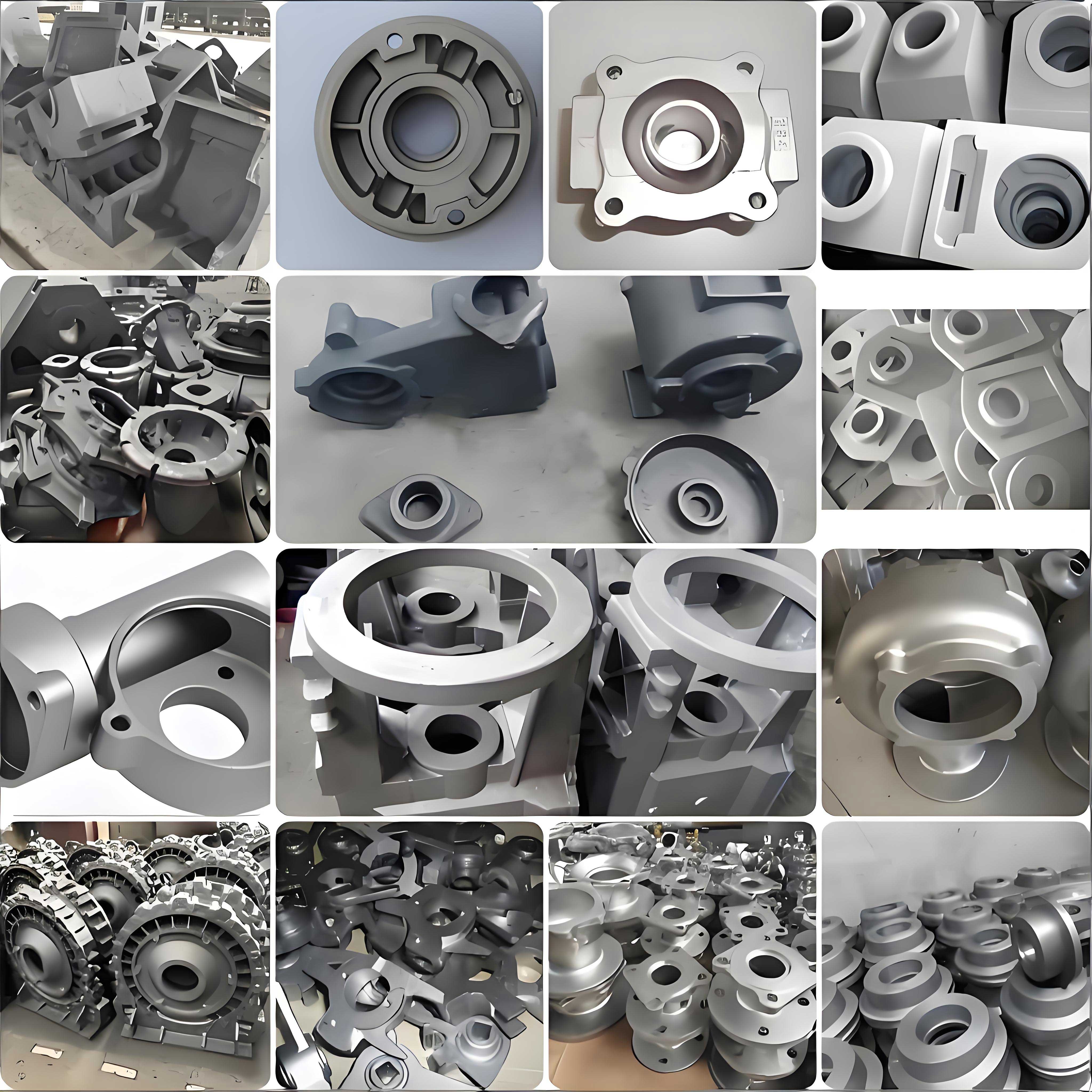
The structure of a cylinder head is inherently complex, with multiple cores—often up to 27 in number—made from hot-box coated sand. This complexity exacerbates defect formation. For instance, shrinkage defects arise because isolated hot spots, such as those around valve guide holes and bolt holes, solidify without adequate feeding from liquid metal. The feeding distance, \(L_f\), in nodular cast iron can be estimated using: $$L_f = \frac{\Delta P}{\rho g + \frac{2\sigma}{r}}$$ where \(\Delta P\) is the pressure drop, \(\rho\) is density, \(g\) is gravity, \(\sigma\) is surface tension, and \(r\) is the pore radius. In practice, this distance is often insufficient for thick sections, leading to shrinkage cavities. Similarly, gas defects occur due to the evolution of gases from sand cores during pouring. The gas generation rate, \(G\), from coated sand can be modeled as: $$G = A \exp\left(-\frac{E_a}{RT}\right)$$ where \(A\) is a pre-exponential factor, \(E_a\) is activation energy, \(R\) is the gas constant, and \(T\) is temperature. If these gases cannot escape, they form pores in the casting.
To tackle shrinkage defects, my approach focuses on accelerating cooling in hot spots to promote earlier graphite expansion, which aids in self-feeding. This involves the strategic use of chills and special sands. For example, in valve guide holes, I employ circular steel chills (ø25 mm × 60 mm) and internal chills (ø8 mm) in exhaust passages. For fuel injection holes, the core material is switched from ordinary coated sand to chromite sand, which has a higher heat accumulation coefficient. This change enhances heat extraction, as described by Fourier’s law: $$q = -k \nabla T$$ where \(q\) is heat flux, \(k\) is thermal conductivity, and \(\nabla T\) is temperature gradient. Additionally, chromite-coated chills with a sand layer of 6–8 mm are used for bolt holes, and external chills are placed near gating areas on intake manifold flanges. These measures effectively reduce the local solidification time, \(t_s\), given by: $$t_s = \frac{V^2}{4\pi \alpha A^2}$$ where \(V\) is volume, \(A\) is surface area, and \(\alpha\) is thermal diffusivity. By minimizing \(t_s\), graphite nucleation is improved, and shrinkage is minimized.
Gas porosity, on the other hand, requires measures to reduce gas generation and enhance venting. I address this by baking fuel injection hole cores at 180°C for 4 hours after coating and drying. This thermal treatment reduces the volatile content, lowering gas evolution. Moreover, ventilation holes are drilled in core prints and extended outside the mold to facilitate gas escape. The effectiveness of venting can be quantified by the Darcy’s law for gas flow: $$v = -\frac{K}{\mu} \nabla P$$ where \(v\) is velocity, \(K\) is permeability, \(\mu\) is viscosity, and \(\nabla P\) is pressure gradient. Ensuring adequate venting paths prevents gas entrapment in the nodular cast iron matrix.
The implementation of these solutions requires careful planning. For instance, chills must be securely positioned in core boxes, with grooves machined to enhance sand adhesion. In my trials, I designed specialized chills and conducted preliminary tests to verify their placement. The first trial involved 20 cylinder heads, and after cleaning, the surface quality was excellent with no visible gas pores. Random sectioning of one casting revealed no shrinkage defects, confirming the efficacy of the measures. Subsequently, over 400 cylinder heads were produced using this methodology, achieving a yield rate of 95%—a significant improvement from the initial less than 80%. This success underscores the importance of tailored cooling and venting strategies in nodular cast iron casting.
Beyond these practical steps, a deeper analysis of nodular cast iron behavior is warranted. The mechanical properties of nodular cast iron, such as tensile strength (\(\sigma_t\)) and elongation (\(\epsilon\)), are influenced by graphite morphology. The Hall-Petch relationship can be adapted for nodular cast iron: $$\sigma_t = \sigma_0 + k_y d^{-1/2}$$ where \(\sigma_0\) is friction stress, \(k_y\) is a constant, and \(d\) is graphite nodule diameter. Smaller nodules, achieved through faster cooling, enhance strength and toughness. Additionally, the solidification shrinkage of nodular cast iron, typically around 4–6%, must be compensated by feeding. The feeding efficiency, \(\eta_f\), can be expressed as: $$\eta_f = \frac{V_f}{V_s} \times 100\%$$ where \(V_f\) is fed volume and \(V_s\) is shrinkage volume. Using chills improves \(\eta_f\) by creating directional solidification toward feeders.
To summarize the defect analysis and solutions, I present the following tables that encapsulate key aspects. These tables provide a quick reference for practitioners working with nodular cast iron cylinder heads.
| Defect Type | Location | Primary Cause | Related Factors |
|---|---|---|---|
| Shrinkage Cavity | Valve Guide Holes | Isolated hot spots, inadequate feeding | Low cooling rate, mushy solidification |
| Shrinkage Porosity | Bolt Holes | Similar to above, with local geometry effects | High section thickness, poor chill placement |
| Gas Pores | Fuel Injection Holes | Gas evolution from sand cores | High core gas generation, insufficient venting |
| Combined Defects | Exhaust Manifold Gating | Thermal gradients and gas entrapment | Complex gating design, core interactions |
| Defect Type | Solution Measure | Mechanism | Implementation Details |
|---|---|---|---|
| Shrinkage | Use of Steel Chills (ø25 mm × 60 mm) | Accelerates cooling, promotes early graphite expansion | Placed in valve guide holes; internal chills in exhaust passages |
| Chromite Sand Cores/Chills | Higher heat accumulation, faster heat extraction | For fuel injection holes; coated chills with 6–8 mm sand layer | |
| Gas Porosity | Core Baking at 180°C for 4 hours | Reduces volatile content, lowers gas generation | Applied to fuel injection hole cores after coating |
| Venting Improvements | Drilled Ventilation Holes in Core Prints | Facilitates gas escape from mold cavity | Holes extended to mold exterior; checked during assembly |
Furthermore, the role of inoculation in nodular cast iron cannot be overlooked. Inoculation enhances graphite nucleation, and its efficiency, \(I_e\), can be modeled as: $$I_e = N_0 \exp\left(-\frac{Q}{RT}\right)$$ where \(N_0\) is initial nucleus count, \(Q\) is activation energy for nucleation. Fading of inoculation over time reduces \(I_e\), leading to poorer graphite structure. Therefore, in cylinder head production, I recommend using late inoculation techniques, such as mold inoculation, to maintain high nodule counts. The nodule count per unit area, \(N_A\), is critical and can be measured metallographically. For high-toughness nodular cast iron, \(N_A\) should exceed 150 nodules/mm² to ensure optimal properties. This aligns with the quality standards for marine diesel engine components.
In terms of process optimization, numerical simulation plays a vital role. Using software like MAGMASOFT or ProCAST, I simulate the solidification process to identify hot spots and optimize chill placement. The temperature field, \(T(x,y,z,t)\), is solved using the heat conduction equation: $$\frac{\partial T}{\partial t} = \alpha \nabla^2 T + \frac{Q_l}{\rho c_p}$$ where \(Q_l\) is latent heat release, \(\rho\) is density, and \(c_p\) is specific heat. These simulations help predict shrinkage zones and guide remedial actions before actual production. For example, in one simulation run for a nodular cast iron cylinder head, I identified that adding chills in bolt holes reduced the shrinkage volume by over 70%, which was later validated experimentally.
The material properties of nodular cast iron also depend on chemical composition. A typical composition for high-toughness grades includes: 3.6–3.8% C, 2.3–2.5% Si, 0.2–0.3% Mn, and minimal impurities. The carbon equivalent, \(CE\), is calculated as: $$CE = \%C + \frac{\%Si + \%P}{3}$$ For nodular cast iron, \(CE\) usually ranges from 4.3 to 4.5 to ensure good castability and mechanical properties. Additionally, magnesium treatment for spheroidization is crucial; residual magnesium should be maintained at 0.03–0.05% to prevent fade. The reaction kinetics can be expressed as: $$\frac{d[Mg]}{dt} = -k[Mg][S]$$ where \([Mg]\) is magnesium concentration, \([S]\) is sulfur concentration, and \(k\) is rate constant. Proper control of these parameters is essential for consistent quality in nodular cast iron castings.
From a broader perspective, the shift from compacted graphite iron to nodular cast iron for cylinder heads reflects the demand for higher performance. Nodular cast iron offers superior tensile strength (often above 500 MPa) and elongation (over 10%) compared to compacted graphite iron. However, this comes with challenges in casting control. My experience shows that integrating advanced foundry techniques—such as controlled cooling, specialized sands, and simulation—can overcome these hurdles. The yield improvement from 80% to 95% demonstrates the economic benefits, reducing scrap and rework costs.
In conclusion, the production of high-toughness nodular cast iron cylinder heads requires a comprehensive approach that addresses both shrinkage and gas defects. By understanding the solidification dynamics of nodular cast iron and implementing targeted solutions like chills, chromite sands, and enhanced venting, casting quality can be significantly improved. The key lies in controlling cooling rates to optimize graphite morphology and ensuring adequate gas removal. As the marine industry continues to push for higher efficiency and reliability, mastering these techniques for nodular cast iron will remain critical. Future work could explore additive manufacturing for chills or AI-driven process control to further enhance yield and performance. Ultimately, the lessons learned from cylinder head production can be applied to other complex nodular cast iron components, fostering innovation in casting technology.
To reinforce the technical aspects, I include additional formulas and tables below. These summaries encapsulate the core principles for defect mitigation in nodular cast iron casting.
| Parameter | Symbol | Desired Range | Impact on Defects |
|---|---|---|---|
| Cooling Rate | \(\dot{T}\) | 10–50 °C/s | Higher rates reduce shrinkage and improve nodule count |
| Graphite Nodule Count | \(N_A\) | >150 nodules/mm² | Higher counts enhance toughness and reduce porosity |
| Solidification Time | \(t_s\) | Minimized | Shorter times limit feeding requirements |
| Gas Pressure in Mold | \(P_g\) | < 1 atm | Lower pressure prevents gas pore formation |
The relationship between cooling rate and graphite nodule diameter, \(d_g\), can be approximated by: $$d_g = B \dot{T}^{-p}$$ where \(B\) and \(p\) are material constants. For nodular cast iron, \(p\) is typically around 0.3, indicating that faster cooling yields smaller nodules. This is crucial for achieving high toughness in cylinder heads. Additionally, the feeding capacity of a riser, \(V_r\), must satisfy: $$V_r \geq V_s \cdot \frac{\rho_s}{\rho_l} \cdot \frac{1}{\eta_r}$$ where \(\rho_s\) and \(\rho_l\) are solid and liquid densities, and \(\eta_r\) is riser efficiency. In complex geometries like cylinder heads, risers may not be feasible, hence the reliance on chills for directional solidification.
In summary, through a combination of practical measures and theoretical insights, I have successfully addressed the defects in high-toughness nodular cast iron cylinder heads. The use of chills, special sands, and venting improvements has proven effective in enhancing yield and quality. This approach not only applies to marine diesel engines but also to other industries where nodular cast iron is used for critical components. As casting technology evolves, continuous innovation in materials and processes will further unlock the potential of nodular cast iron for demanding applications.