
As a seasoned practitioner in the precision casting industry, I have dedicated years to refining the investment casting process, a cornerstone of modern manufacturing for producing complex, near-net-shape components with exceptional dimensional accuracy. Investment casting, often referred to as lost-wax casting, involves multiple intricate steps, with shell construction being arguably the most critical phase. The quality of the ceramic shell directly dictates the surface finish, dimensional integrity, and internal soundness of the final metal part. However, this stage is susceptible to a myriad of defects that can arise from subtle variations in materials, processes, and environmental conditions. In this comprehensive analysis, I will share my insights into the common defects generated during the shell-making工序 of investment casting, systematically dissect their root causes, and propose validated solutions. The goal is to provide a holistic framework for enhancing yield, reducing costs, and ensuring the reliability of investment cast components in demanding applications.
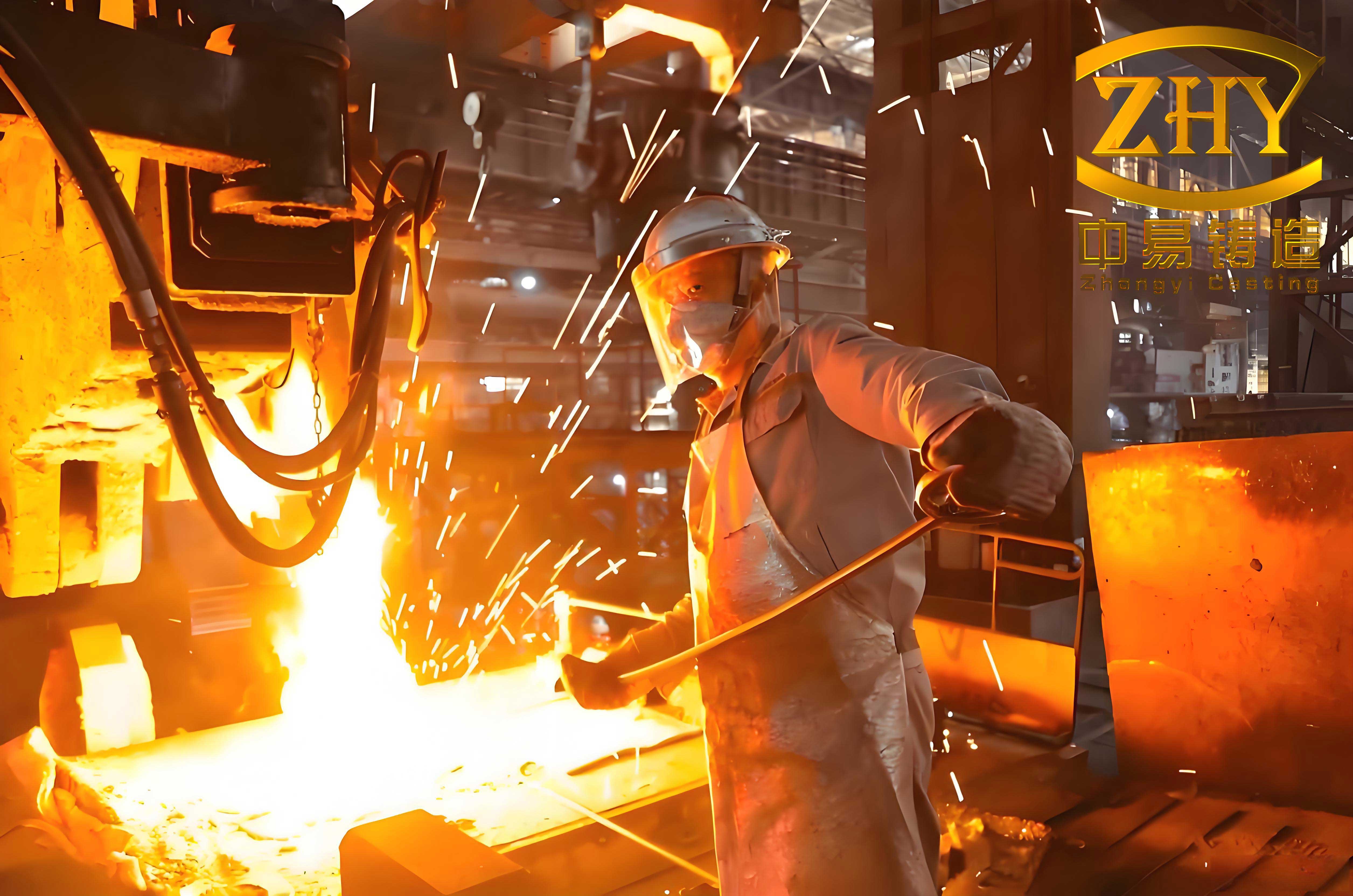
The shell-making process in investment casting typically involves sequentially dipping wax pattern assemblies (trees) into ceramic slurries, coating them with refractory stucco sand, and allowing each layer to dry and harden. This builds a multi-layered ceramic mold capable of withstanding the thermal shock and metallostatic pressure of molten metal. Defects introduced here are often replicated onto the cast metal, leading to scrap or costly rework. My experience underscores that a deep understanding of slurry rheology, drying dynamics, and thermal processing is paramount for defect-free shells in investment casting.
To systematically address these challenges, I have categorized the primary shell-related defects encountered in investment casting operations. The following table provides a consolidated overview, which will be elaborated in detail throughout this discourse.
| Defect Type | Primary Root Causes | Key Corrective Measures |
|---|---|---|
| Blurred Contours & Dimensional Loss | Excessive slurry viscosity and high yield stress; improper dipping and draining angles; slurry accumulation in recesses. | Optimize slurry rheology; control dipping sequence and angles; use mechanical aids (brushing, rotation) to eliminate drips. |
| Rough Surface Finish | Low slurry viscosity and poor coating thickness; coarse stucco for face coat; insufficient drying leading to micro-porosity; residual salts. | Increase face coat slurry density and viscosity; use fine-grade face coat stucco; ensure adequate drying and firing. |
| Metal Nodules (Pins, Beans) | Trapped wax residue in cavities; poor slurry wettability due to surface tension; air entrapment in corners and blind holes. | Thorough wax pattern cleaning; modify sharp corners to radii; employ assisted coating techniques (brushing, vacuum). |
| Shell Cracking & Failed Pouring | Insufficient shell thickness/strength; sharp pattern features; uneven shell thickness causing stress; short drying times. | Increase stucco layer count and coarseness; radius sharp edges; ensure uniform coating; extend drying cycles. |
| Non-Metallic Inclusions | Shell cracks leading to sand erosion; damaged pour cup edges; improper slurry viscosity or drying. | Prevent shell cracking; inspect and repair pour cups; adhere strictly to process parameters for slurry and drying. |
| Veining or Fin-like Projections | Cracks in the face coat filled by backup slurry; thermal/mechanical stress from uneven drying or humidity fluctuations. | Control drying room temperature and humidity; ensure uniform slurry application to avoid stress concentrators. |
| Surface Sinks or Protrusions | Poor slurry adhesion due to mold release agents; improper pattern orientation during dipping; stucco size mismatch causing delamination; differential thermal expansion. | Clean patterns thoroughly; orient large surfaces vertically for dipping; optimize stucco gradation between layers. |
| Gross Gas Porosity | Incomplete dewaxing and burnout of residual pattern material; insufficient shell pre-firing leaving moisture or salts; excessive shell thickness causing gas entrapment. | Ensure complete dewaxing and high-temperature burnout; control pre-firing atmosphere and time; optimize shell thickness for venting. |
Each of these defects in investment casting can be traced back to fundamental physical and chemical principles. Let us delve into a detailed analysis, incorporating quantitative relationships where possible to guide process control.
1. Blurred Contours and Loss of Definition
In my work with investment casting, I frequently encounter parts where fine details, especially in grooves and lettering, appear washed out or poorly defined. This defect stems primarily from the flow behavior of the ceramic slurry during the coating stage. The slurry, a suspension of ceramic flour (e.g., silica, zircon) in a binder (e.g., silica sol, ethyl silicate), must have optimal rheology. If the viscosity ($\eta$) is too high or the yield stress ($\tau_0$) is excessive, the slurry cannot flow freely off the pattern after dipping, leading to thick, uneven accumulations in recessed areas.
The rheology can be modeled for many investment casting slurries as a Bingham plastic:
$$ \tau = \tau_0 + \eta \dot{\gamma} $$
where $\tau$ is the shear stress, and $\dot{\gamma}$ is the shear rate. A high $\tau_0$ prevents the slurry from leveling under its own weight after dipping ceases. To promote flow and leveling, we aim to reduce both $\tau_0$ and $\eta$. This is achieved by adjusting the binder-to-powder ratio, using deflocculants, and controlling aging time. Furthermore, the draining angle of the pattern tree is critical. I recommend a controlled, slow rotation after dipping to allow uniform drainage. The time for drainage $t_d$ can be approximated for a Newtonian fluid on an inclined plane, but for our non-Newtonian slurry, empirical adjustment is key. A practical rule is to tilt the tree at multiple axes to prevent pooling.
2. Rough Surface Finish and Pitting
A smooth as-cast surface is a hallmark of quality investment casting. Roughness arises when the face coat is too thin, allowing stucco grains to protrude, or when micro-porosity forms during drying. The coating thickness $h$ after draining can be estimated by the Landau-Levich equation for dip coating:
$$ h \approx 0.94 \frac{(\eta U)^{2/3}}{\gamma_{lv}^{1/6} (\rho g)^{1/2}} $$
where $U$ is the withdrawal speed, $\gamma_{lv}$ is the liquid-vapor surface tension, $\rho$ is density, and $g$ is gravity. For investment casting slurries, a lower withdrawal speed $U$ and higher viscosity $\eta$ promote a thicker coat. If $h$ is less than the stucco grain diameter $d_s$, roughness ensues. Therefore, we select fine stucco (e.g., 120-200 mesh) for the face coat and ensure $h > d_s$.
Pitting or “orange peel” texture is often due to residual sodium salts from the binder system (e.g., in sodium silicate-based systems). During firing, if ammonia drying is incomplete, sodium oxide ($Na_2O$) can react with chlorides from hardeners:
$$ Na_2O + 2HCl \rightarrow 2NaCl + H_2O $$
The residual $NaCl$ volatilizes at pouring temperatures, causing localized metal oxidation. Extending ammonia drying time $t_{dry}$ and raising pre-fire temperature $T_{fire}$ above 850°C ensures complete decomposition. The rate of ammonia diffusion can be described by Fick’s law, but practically, monitoring weight loss until a plateau confirms sufficient drying.
3. Metal Nodules in Blind Holes and Corners
Small, unwanted metal protrusions, or “metal beans,” in features like blind holes are a persistent nuisance in investment casting. Two main mechanisms are at play: physical entrapment and surface tension effects. First, wax debris left during pattern assembly gets coated over. During dewaxing, it leaves a cavity that fills with metal. Second, and more fundamentally, the slurry may fail to wet sharp internal corners due to high contact angle $\theta$. The capillary pressure $P_c$ driving slurry into a corner of angle $\alpha$ is given by:
$$ P_c = \frac{\gamma_{lv} \cos \theta}{r} $$
where $r$ is the effective radius. For a sharp corner ($\alpha \rightarrow 0$), $r$ is very small, but if $\theta > 90^\circ$, $P_c$ becomes negative, preventing infiltration. Air is trapped. The solution is to modify the design to include a radius $R_{corner}$, which increases $r$ and improves wettability. I often specify a minimum radius of 0.5-1.0 mm for deep blind holes in investment casting patterns. During dipping, manually brushing these areas or applying a vacuum during slurry immersion can displace trapped air. The effectiveness of vacuum assistance can be quantified by the pressure differential $\Delta P$ achieved, which must overcome $P_c$.
4. Shell Cracking and Catastrophic Failure
Shell fracture during handling, dewaxing, or pouring renders the entire investment casting mold useless. This is a strength issue. The green strength of the shell depends on the interlocking of stucco grains bonded by the gelled binder. The tensile strength $\sigma_t$ of a porous ceramic layer can be approximated by:
$$ \sigma_t \propto \phi S \tau_b $$
where $\phi$ is the packing density of the stucco, $S$ is the specific surface area of bonds, and $\tau_b$ is the bond strength. Thin sections or sharp corners create stress concentrators. During dewaxing, the rapid expansion of wax exerts pressure $P_{wax}$ on the shell. If the shell’s modulus $E_{shell}$ is too low or uneven, cracking occurs. Increasing the number of backup coats and using a graded stucco sequence (finer to coarser) boosts $\phi$ and $E_{shell}$. For example, a typical shell system in investment casting might have 1 face coat with 120-mesh zircon, followed by 2-3 backup coats with 30-60 mesh fused silica. Furthermore, controlled drying between layers is essential to prevent differential shrinkage stresses. The drying stress $\sigma_{dry}$ can be related to the shrinkage strain $\epsilon$ and modulus: $\sigma_{dry} = E_{shell} \epsilon$. Slow, uniform drying minimizes $\epsilon$.
5. Non-Metallic Inclusions
Sand or slag inclusions near the cast surface in investment casting parts often originate from shell integrity loss. If the face coat has microcracks, high-velocity metal flow during pouring can erode the backup layers, introducing sand into the mold cavity. The probability of erosion is related to the metal flow velocity $v$ and the shell’s erosion resistance $R_e$. A key factor is the consistency of slurry viscosity between layers. A sudden change can cause poor interlayer adhesion. I monitor slurry parameters like density and viscosity daily using flow cups or rheometers. The table below summarizes critical control parameters for slurry in investment casting shell making.
| Parameter | Target Range (Typical) | Measurement Method | Impact on Defects |
|---|---|---|---|
| Density (g/cm³) | 1.80 – 2.00 (face coat) | Weight/volume cup | Directly affects coating thickness and surface finish. |
| Viscosity (cP) | 15 – 30 (Ford Cup #4, sec) | Flow cup, viscometer | High viscosity causes runs; low viscosity causes thin coat. |
| pH | 9.0 – 10.5 (for silica sol) | pH meter | Affects slurry stability and gelling behavior. |
| Binder Content (%) | 20 – 25 (SiO₂ in liquid) | Chemical analysis | Determines final shell strength and permeability. |
6. Veining or Fin Defects
These appear as thin, raised lines on the cast surface, mirroring cracks in the shell face coat. The cracks form due to tensile stresses during drying. If the relative humidity (RH) in the drying room fluctuates beyond ±5%, or temperature beyond ±4°C, the differential drying rates between thick and thin shell sections induce stress. The stress $\sigma$ due to moisture gradient can be modeled via diffusion equations. Maintaining a stable environment at, for example, 22±1°C and 50±3% RH, is crucial for investment casting shell production. Furthermore, the thickness ratio between layers should be controlled; a sudden jump can be problematic. I recommend that each subsequent slurry layer have a slightly higher viscosity to accommodate the underlying roughness without bridging gaps that lead to cracks.
7. Surface Distortion: Sinks and Swells
Large, flat areas on investment castings sometimes exhibit concave sinks or convex bulges. This is a shell deformation issue under metallostatic pressure $P_m = \rho_m g h$, where $\rho_m$ is metal density and $h$ is head height. The shell acts as a composite beam. Its deflection $\delta$ under uniform pressure depends on its flexural modulus $E_f$ and thickness $t$:
$$ \delta \propto \frac{P_m L^4}{E_f t^3} $$
where $L$ is the unsupported span. To reduce $\delta$, we increase $t$ (more coats) and $E_f$ (proper sintering). Also, the orientation of the pattern during dipping is vital. If a large flat surface is horizontal during coating, slurry sagging creates a thin center and thick edges, leading to non-uniform strength. Dipping such surfaces vertically ensures a more uniform thickness. Additionally, contamination from mold release agents on wax patterns reduces bond strength $\tau_b$, promoting delamination between layers. A rigorous cleaning protocol using neutral detergents is mandatory.
8. Gas Porosity and Blowholes
Subsurface or surface blowholes in investment castings often trace back to incomplete removal of pattern material or shell moisture. The dewaxing and burnout reactions are critical. For hydrocarbon waxes, the thermal decomposition during autoclaving or flash firing can be simplified as:
$$ C_nH_{2n+2} \rightarrow nC + (n+1)H_2 \uparrow $$
If oxygen access is limited during subsequent firing, this carbon residue can later react during pouring:
$$ 2C + O_2 \rightarrow 2CO \uparrow $$
$$ 2CO + O_2 \rightarrow 2CO_2 \uparrow $$
These gases cause porosity. To ensure complete burnout, the pre-fire cycle must include a sustained period above 500°C in an oxidizing atmosphere. The furnace atmosphere oxygen content $[O_2]$ should be >5%. Furthermore, shell permeability $k$ must be sufficient to allow gas escape. Permeability is a function of pore size and connectivity, influenced by stucco shape and packing. An overly thick shell reduces effective $k$. There exists an optimal shell thickness $t_{opt}$ that balances strength and venting, often found empirically for a given investment casting part geometry.
Integrative Process Control Considerations
Eliminating defects in investment casting shell making is not about addressing isolated parameters but managing a complex, interdependent system. Based on my experience, three overarching factors demand continuous attention: drying environment, slurry consistency, and thermal processing.
First, the drying room must be a controlled chamber. Air velocity, temperature, and humidity directly influence the rate of binder gelation and water evaporation. Too fast drying causes skin formation and cracks; too slow delays production. I use the following empirical relationship to guide drying time $t_{dry}$ for a layer:
$$ t_{dry} = k \cdot \left( \frac{\delta^2}{D} \right) $$
where $\delta$ is the coating thickness, $D$ is the effective diffusivity of moisture (dependent on T and RH), and $k$ is a safety factor (typically 1.5-2.0). Investing in robust HVAC with monitoring sensors is non-negotiable for quality investment casting.
Second, slurry composition and properties must be stable. The silica ($SiO_2$) content in the binder directly impacts fired strength. However, excess $SiO_2$ can lead to low-temperature fragility due to cristobalite formation. Additives like wetting agents reduce surface tension $\gamma_{lv}$, improving wettability but may lower green strength. Their use must be optimized. Regular titration and viscosity checks are part of my daily routine.
Third, dewaxing and firing are thermal processes that require load management. Overloading the autoclave or furnace reduces the effective heat transfer to each shell, leading to incomplete wax removal or burnout. The heat required $Q$ is proportional to the total surface area $A_{total}$ of shells in the batch:
$$ Q = h A_{total} \Delta T \Delta t $$
where $h$ is heat transfer coefficient. Thus, batch loading should be based on total surface area, not just part count. Furthermore, firing temperature and time must be sufficient to develop adequate fired strength through sintering. The sintering degree can be related to time and temperature via an Arrhenius-type equation:
$$ \text{Sintering Rate} \propto \exp\left(-\frac{E_a}{RT}\right) $$
where $E_a$ is activation energy for sintering, $R$ is gas constant, and $T$ is absolute temperature. For silica-based shells, firing above 1000°C is typical.
The interplay of these factors is summarized in the following holistic control matrix for investment casting shell production:
| Process Stage | Controlled Variables | Target/Standard | Monitoring Frequency | Linked Defects |
|---|---|---|---|---|
| Slurry Preparation | Density, Viscosity, pH, Binder Content | Per established specs (see previous table) | Each batch, before shift | All surface finish and contour defects |
| Dipping & Stuccoing | Dipping time, Drain angle, Rotation, Stucco size and moisture | Standardized work instructions; stucco dry and sifted | Continuous visual audit; periodic angle measurement | Metal nodules, uneven thickness, inclusions |
| Inter-layer Drying | Temperature, Humidity, Airflow, Drying time | 22±1°C, 50±3% RH, gentle airflow, time per thickness | Continuous datalogging; hourly checks | Cracking, veining, delamination |
| Dewaxing | Pressure, Temperature, Time, Load density | Autoclave: ~150-170°C, 6-8 bar, time based on mass | Each cycle chart review | Shell cracking, gas porosity |
| Shell Firing | Temperature profile, Soak time, Atmosphere, Load arrangement | Peak 1000-1100°C, >1 hr soak, oxidizing atmosphere | Furnace recorder for each firing | Low strength, gas porosity, metal oxidation |
Conclusion
Through meticulous analysis and hands-on refinement, I have demonstrated that the majority of defects in investment casting can be preemptively addressed at the shell-making stage. The journey to flawless shells in investment casting is a balance of science and disciplined artistry. It requires a deep understanding of materials science—rheology, colloidal chemistry, and thermodynamics—coupled with rigorous process control and operator training. Each defect, from blurred contours to gross porosity, tells a story of a specific deviation in slurry properties, environmental conditions, or thermal treatment. By implementing the corrective measures outlined—such as optimizing slurry rheology, controlling drying atmospheres, ensuring complete burnout, and adopting a holistic view of the entire shell-building sequence—manufacturers can significantly enhance the quality and yield of their investment casting operations. Ultimately, excellence in investment casting is built layer by layer, in the ceramic shell that faithfully replicates the designer’s intent into durable, precision metal components. Continuous improvement, rooted in data-driven analysis and a commitment to process stability, remains the key to unlocking the full potential of the investment casting process.