
In the competitive landscape of modern manufacturing, producing high-integrity, defect-free castings is paramount. Among various casting materials, gray iron remains a workhorse for countless industrial applications, prized for its excellent machinability, damping capacity, and good mechanical properties under compression. However, the production of sound gray iron castings, especially for complex, safety-critical components, presents significant challenges. Defects such as shrinkage porosity, oxide inclusions, and gas holes can severely compromise component performance, leading to scrapped parts, increased costs, and delayed deliveries. This article details my practical experience and methodological approach in leveraging advanced numerical simulation software to predict, analyze, and ultimately eliminate casting defects in a complex gray iron component, sharing insights broadly applicable to the production of gray iron castings.
The cornerstone of modern foundry engineering is the shift from trial-and-error methods to a science-based, predictive approach. Numerical simulation of the casting process has emerged as an indispensable tool. It allows engineers to visualize the entire process—filling, solidification, and cooling—within a virtual environment before a single mold is made. This capability is crucial for gray iron castings, where the unique solidification behavior involving graphite precipitation influences shrinkage behavior. Software tools enable the calculation of critical parameters like temperature fields, solidification sequences, feeding flow paths, and the prediction of defect-prone areas using various scientific criteria.
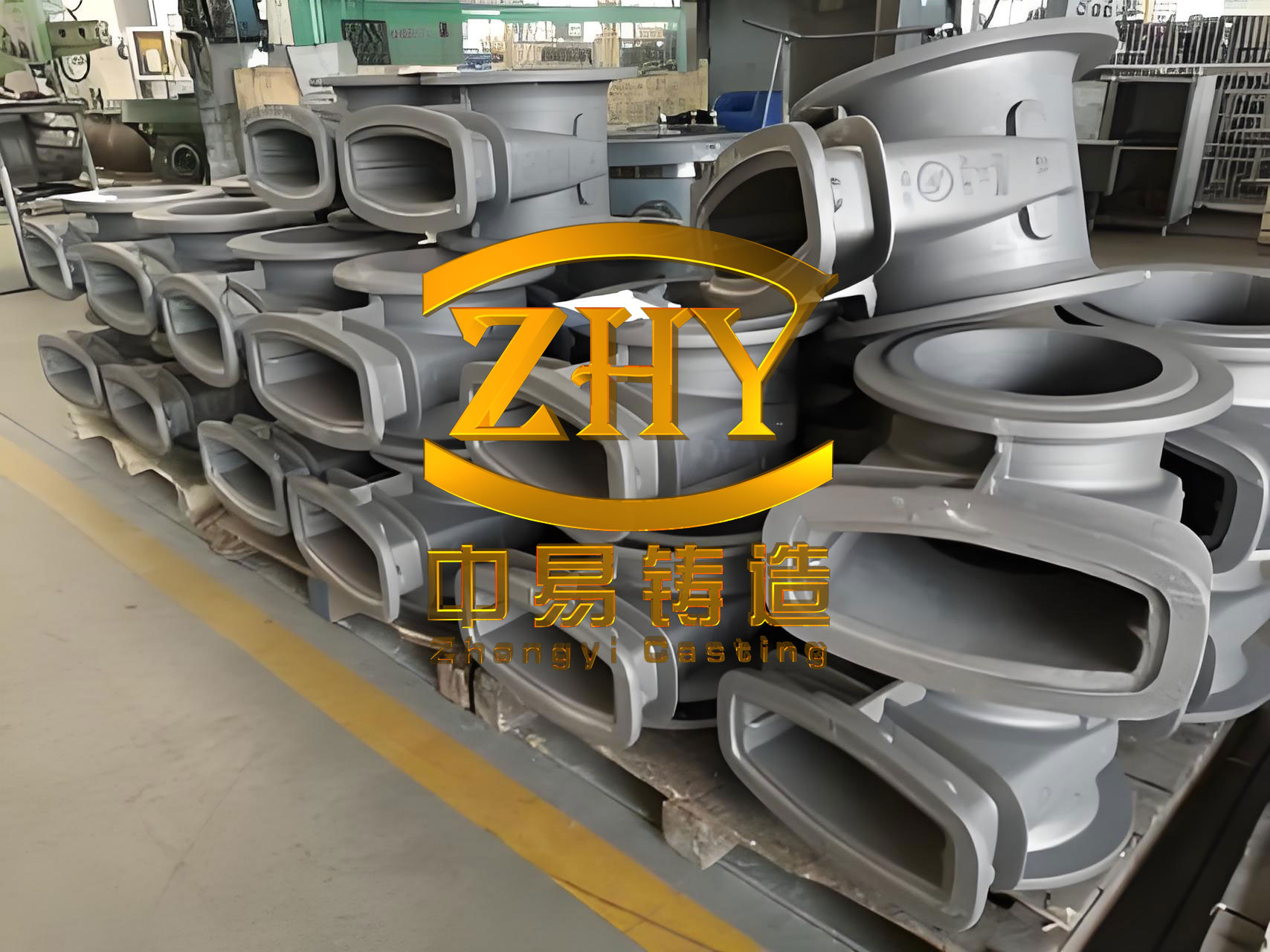
The subject of this study was a large rotor bracket, a critical component in compressor systems. This part demanded exceptional quality: it required pressure tightness, had to pass dynamic and static balance tests, and was absolutely intolerant of any shrinkage porosity or inclusions. The component, with a mass exceeding 700 kg, was to be produced in grade HT300 gray iron. The initial production process utilized a conventional top-gating system with chills placed in thick sections. Despite these measures, radiographic and machining inspections revealed significant shrinkage porosity in three specific locations, leading to a high scrap rate. This prompted the deployment of simulation-driven analysis and optimization.
1. Metallurgical Fundamentals and Defect Formation in Gray Iron Castings
Understanding the inherent behavior of gray iron castings during solidification is the first step in defect analysis. Unlike white iron or steel, gray iron solidifies with the precipitation of graphite flakes. This expansion due to graphite formation can, under ideal conditions, counteract the metallic contraction of the austenite, leading to a phenomenon known as “self-feeding.” However, this self-feeding is not always complete or perfectly timed, especially in sections with varying thicknesses (hot spots) or under unfavorable cooling conditions.
The primary defects encountered in gray iron castings are:
- Shrinkage Porosity (Microshrinkage): A network of small, interconnected cavities that form in the final freezing zones of a casting, often in isolated liquid pockets. In gray iron castings, it occurs when the graphite expansion is insufficient or poorly timed to compensate for shrinkage, or when the feeding path is blocked by premature solidification.
- Macroshrinkage (Pipe or Cavity): Larger, concentrated cavities typically associated with inadequate feeding from risers.
- Oxide Inclusions (Slag): Entrapped oxides formed due to turbulent metal flow during mold filling, leading to surface defects or weak points.
The tendency for shrinkage in a specific region can be predicted using solidification modeling criteria. One of the most widely used is the Niyama criterion, which is a function of local thermal conditions. It is expressed as:
$$ G / \sqrt{R} \leq C $$
where $G$ is the temperature gradient (°C/cm), $R$ is the cooling rate (°C/s), and $C$ is a threshold constant specific to the alloy. Locations where the calculated value falls below the threshold are flagged as potential shrinkage porosity sites. For gray iron castings, modifications to such criteria are often applied to account for graphite expansion.
2. Numerical Simulation Methodology and Model Setup
For this project, I employed a commercial finite-difference-based simulation package capable of modeling fluid flow, heat transfer, and solidification for castings. The process began with importing the 3D CAD model of the rotor bracket, the mold, and the initial gating/risering system. A critical task was the accurate meshing of the geometry—creating a computational grid fine enough to resolve critical features but coarse enough to allow for reasonable calculation times. A voxel size of approximately 3 mm was used for the casting and mold regions.
The material properties and boundary conditions are the foundation of an accurate simulation. The following data was defined for the HT300 gray iron casting:
- Thermal Properties: Temperature-dependent enthalpy and conductivity data were input. Key phase change temperatures were defined:
- Liquidus Temperature ($T_L$): 1235 °C
- Solidus Temperature ($T_S$): 1084 °C
- Physical Properties: Density and viscosity as functions of temperature and fraction solid.
- Boundary Conditions:
- Heat Transfer Coefficient (HTC) at metal-mold interface: $$ h_{interface} = 0.42 \text{ J/(cm²·s·°C)} $$
- HTC for free surfaces (metal-air, mold-air): $$ h_{air} = 0.0042 \text{ J/(cm²·s·°C)} $$
- Initial mold temperature: 25 °C
- Pouring temperature range: 1360-1370 °C
The simulation solves the fundamental equations of fluid dynamics and heat transfer. The energy equation, which governs solidification, is central:
$$ \rho c_p \frac{\partial T}{\partial t} = \nabla \cdot (k \nabla T) + \rho L \frac{\partial f_s}{\partial t} + Q_{other} $$
where $\rho$ is density, $c_p$ is specific heat, $T$ is temperature, $t$ is time, $k$ is thermal conductivity, $L$ is latent heat, $f_s$ is the solid fraction, and $Q_{other}$ represents other potential heat sources. For the fluid flow during filling, the Navier-Stokes equations are solved, often with a Volume-of-Fluid (VOF) method to track the free surface.
3. Analysis of Initial Process and Defect Correlation
Running the simulation for the initial top-gating process provided immediate visual and quantitative insight. The filling analysis revealed highly turbulent flow. Metal entered from the top, falling freely into the mold cavity, causing splashing and severe surface agitation. The oxide inclusion prediction module confirmed this, highlighting large areas of the casting surface as high-risk for slag entrapment.
The solidification analysis was even more revealing. By animating the progression of the solidus isotherm, I could identify the last areas to freeze—the thermal centers or hot spots. For the rotor bracket, three primary isolated liquid zones were clearly identified, corresponding almost exactly to the defect locations found in the physical castings.
| Defect Location (Fig.) | Simulation Prediction Method | Observation & Conclusion |
|---|---|---|
| Location 1 (Inner Hub) | Solidification Sequence, Niyama Criterion | An isolated liquid pool formed late in solidification. The Niyama value $G/\sqrt{R}$ in the surrounding area fell below the critical threshold, confirming high risk for shrinkage porosity. |
| Location 2 (Lower Rib Junction) | Solidification Sequence, Residual Liquid Modulus | A thermal center at a rib-wall junction. The residual liquid modulus, a measure of the feeding difficulty of the last liquid pocket, indicated a high risk for microshrinkage. |
| Location 3 (Upper Flange) | Solidification Sequence, Niyama Criterion | Another isolated liquid zone in a thickened flange section. The criterion again flagged the area as defect-prone. |
The powerful correlation between the simulation predictions and the real-world defects validated the model’s accuracy for this gray iron casting. It shifted the task from defect detection to proactive process redesign.
4. Iterative Process Optimization Strategy
The optimization followed a systematic, iterative approach: identify the root cause of the defect in the simulation, propose a design change, simulate the new design, and evaluate the improvement. This cycle was repeated until all defect indicators were eliminated.
4.1 First Iteration: Addressing Solidification Only
The initial focus was on correcting the solidification pattern. Based on the simulation, I made the following modifications using 3D CAD software:
- For Defect 1: Added an exothermic riser (Ø90 mm) adjacent to the hub to provide feed metal.
- For Defect 2: Added two external chills (90x50x40 mm) to increase the local cooling rate.
- For Defect 3: Added a larger external chill (100x80x40 mm).
The gating system remained a turbulent top-pour. Simulation of this revised design showed improvement for Locations 2 and 3—the chills effectively broke up the hot spots, promoting directional solidification towards the main casting body. However, for Location 1, the results were counterintuitive. The simulation predicted that the exothermic riser itself became a massive hot spot, solidifying last and actually drawing liquid away from the critical hub area, failing to perform its feeding function. A subsequent production test of this design confirmed the simulation: Defects 2 and 3 were reduced, but a new, severe shrinkage zone (Defect 4) appeared near the large riser, and Location 1 remained problematic.
4.2 Second Iteration: A Holistic Redesign
The first iteration taught a critical lesson: solving feeding problems in gray iron castings often requires a systems approach, balancing filling and solidification. The second redesign was more radical:
- Gating System: Completely abandoned the top-gating. Designed a bottom-filling system using four Ø35 mm ceramic tubes. This promotes laminar, quiescent mold filling from the bottom up, minimizing oxide formation and air entrainment.
- For Defect 1 & 4: Removed the ineffective exothermic riser. Instead, applied a strategic combination of a chill and a conventional riser on the nearby flange. The chill’s purpose was to “cut” the thermal connection to the hot spot, while the riser, placed adjacent to the now-isolated hot zone, could effectively feed it.
- Feeding Principle: The goal shifted from promoting only directional solidification to achieving “sequential” or “balanced” solidification, where sections freeze in a controlled order without creating isolated liquid pockets.
The simulation of this new design yielded excellent results. The filling analysis showed a calm, progressive rise of metal with negligible oxide inclusion risk. The solidification analysis was transformative. The synergy of chills and risers worked perfectly. The chills eliminated the major thermal centers, and the risers successfully fed the remaining smaller hot spots. The solidification time contour map showed a smooth, progressive front with no isolated liquid pools. The Niyama criterion plot was clear of critical warnings across the entire casting volume.
| Process Feature | Initial Design | First Optimization | Second (Final) Optimization | Impact on Gray Iron Castings |
|---|---|---|---|---|
| Gating Method | Top-pour, turbulent | Top-pour, turbulent | Bottom-fill via ceramic tubes, laminar | Virtually eliminated oxide/slag defects, improved yield. |
| Feeding Strategy | Chills only | Chills + Exothermic Riser | Chills + Conventional Riser (Combined) | Achieved balanced solidification; eliminated isolated hot spots and shrinkage. |
| Defect 1 Status | Severe Shrinkage | Severe Shrinkage | No Defect Predicted | Problem solved by chill/riser combo. |
| Defect 2 & 3 Status | Severe Shrinkage | Defect Eliminated | No Defect Predicted | Solved by chills, maintained in final design. |
| New Defect 4 | N/A | Severe Shrinkage | No Defect Predicted | Caused by poor riser design; solved by system redesign. |
5. Foundry Principles and Best Practices Derived
This case study crystallizes several key principles for producing high-quality gray iron castings:
1. The Primacy of Laminar Filling: For gray iron castings where surface quality and internal purity are critical, bottom or tilt-pouring systems that minimize turbulence are vastly superior to top-pouring. The energy equation during filling must consider not just temperature but fluid kinetic energy. Reducing velocity minimizes the term for viscous dissipation, $ \Phi_v $, which is related to turbulence and can be approximated in its contribution to local heating and oxide generation.
2. Strategic Use of Chills and Risers for Balanced Solidification: The most effective approach to eliminate shrinkage in gray iron castings is not to use risers or chills in isolation, but to employ them synergistically. The chill acts as a thermal catalyst, modifying the local solidification rate according to Fourier’s law: $$ q = -k \cdot A \cdot \frac{dT}{dx} $$ where a high-conductivity chill (high $k$) draws heat rapidly from the casting, increasing the temperature gradient ($\frac{dT}{dx}$). This action can redirect the solidification front, making an adjacent riser effective. The riser then acts as a liquid reservoir, its efficiency governed by its modulus: $$ M_{riser} > \eta \cdot M_{casting} $$ where $M$ is the volume-to-cooling-surface-area ratio (modulus) and $\eta$ is a feeding efficiency factor dependent on alloy and riser type.
3. Simulation as a Decision-Making Tool: Numerical simulation transforms the design process. It allows for quantitative comparison of different feeding efficiencies, prediction of exact chill sizing and placement, and most importantly, it visualizes the solidification sequence—the root cause of most shrinkage defects in gray iron castings. It moves the foundry from reactive problem-solving to proactive process assurance.
6. Industrial Application and Broader Implications
The final optimized process, derived from simulation, was put into production. The results were conclusive: the castings were sound, passing rigorous radiographic inspection (achieving quality levels better than ASTM E Grade 2) and subsequent machining without revealing any subsurface defects. The first-pass yield improved dramatically, delivering substantial cost savings and reliable supply.
The methodology demonstrated here is not limited to large rotor brackets. It is universally applicable to a wide range of gray iron castings, from engine blocks and cylinder heads to brake discs and machine tool beds. The core workflow remains consistent:
- Accurate Modeling: Create a faithful digital twin of the casting process.
- Defect Prediction: Use solidification and fluid flow algorithms to identify risk areas.
- Root Cause Analysis: Understand the thermal and fluid dynamic reasons for the defect formation.
- Virtual Experimentation: Test multiple solutions quickly and inexpensively in the software.
- Validation and Implementation: Confirm the final design with a simulation and then commit to tooling.
Future advancements will integrate more sophisticated material models that precisely capture the kinetics of graphite nucleation and growth in gray iron castings, further refining shrinkage predictions. Coupling microstructure simulation with mechanical property prediction is the next frontier, enabling the design of the casting process to achieve not just soundness but also tailored performance characteristics.
In conclusion, the journey from a defective casting to a robust production process for critical gray iron castings underscores a fundamental modern truth: computational power and scientific simulation are no longer luxuries but necessities. They empower foundry engineers to master the complex interplay of heat, flow, and phase change inherent in casting, ensuring quality, efficiency, and innovation in the production of essential metal components.