
The lost foam casting process has been increasingly utilized for producing aluminum alloy castings in the automotive industry, with applications ranging from engine blocks and cylinder heads to transmission housings, water-cooled double-layer exhaust pipes, valves, intake and exhaust manifolds, radiator fins, gas nozzles, and valves. In industrialized nations, this technology has advanced rapidly, especially for complex thin-wall components. However, in my country, the adoption of lost foam casting for aluminum alloys has progressed more slowly due to the complexity of process factors, insufficient equipment and raw material quality, and the difficulty in controlling certain casting defects. Over the past year, I have been directly involved in the trial production of aluminum alloy lost foam castings at a facility, where we encountered numerous defects such as gas-slag holes, pinholes, shrinkage porosity, cold shuts, double skins, sand adhesion, and collapse. Through systematic experimentation and improvement, most of these defects have been brought under control. This article summarizes the morphological characteristics, root causes, and remedial measures for typical defects observed in lost foam aluminum castings, based on my first-hand experience.
1. Introduction to Lost Foam Casting of Aluminum Alloys
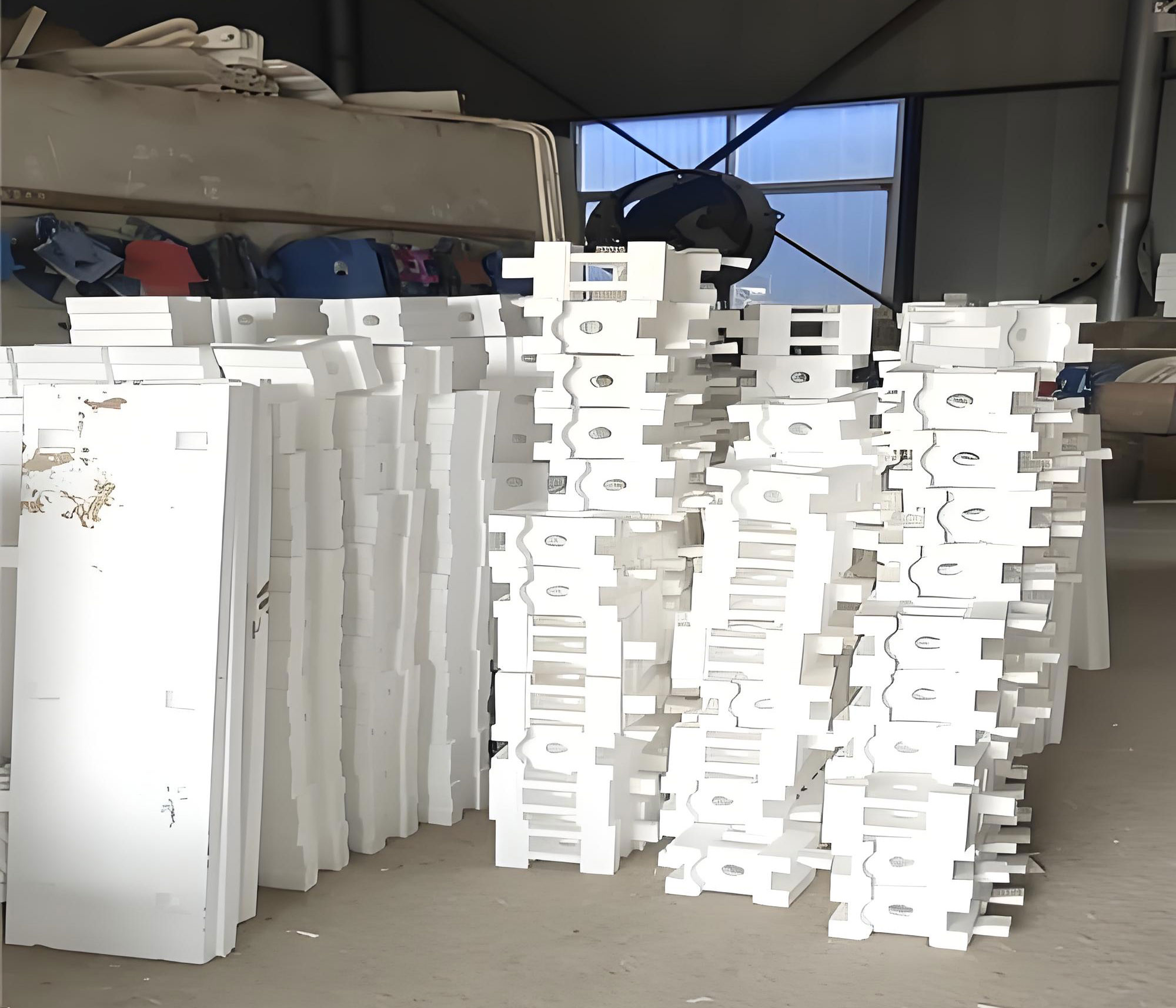
Lost foam casting (also known as evaporative pattern casting) uses expandable polystyrene (EPS) or other foam patterns coated with refractory coating, embedded in unbonded dry sand, and solidified by vacuum. When molten aluminum is poured, the foam pattern vaporizes and the metal occupies the cavity. This process offers near-net shape capability, excellent dimensional accuracy, and minimal environmental impact. However, the high thermal demand for foam decomposition and the reactivity of aluminum with moisture and oxygen lead to a range of defects unique to this method. In my work, I found that process parameters such as coating permeability, sand compaction, vacuum level, pouring temperature, and foam density all critically influence casting soundness. Below, I analyze each defect type, supported by data from our trials.
2. Common Defects and Their Morphology
2.1 Surface Pinholes and Slag Holes
Surface pinholes appear as small, shallow cavities on the casting surface, often accompanied by slag inclusions (dark, irregular particles). These defects arise mainly from hydrogen gas evolution and oxide formation. The high pouring temperature required for lost foam casting (typically 720–780 °C for Al-Si alloys) increases the solubility of hydrogen in the melt, and during solidification, hydrogen precipitates as fine pores. Additionally, improper handling of tools, inadequate degassing, and turbulent filling introduce oxides and gas into the metal.
| Defect Type | Appearance | Primary Cause | Countermeasure |
|---|---|---|---|
| Pinholes | Small, round, shiny holes (0.1–0.5 mm) | Hydrogen precipitation; high pouring temperature; moist charge or tools | Degas with inert gas (N₂ or Ar); reduce melt holding temperature; preheat tools |
| Slag holes (slag inclusions) | Irregular dark cavities containing oxides | Oxide entrapment from turbulent filling; dross from melt surface | Design calm gating system; use filters; skim slag carefully |
| Combined pinhole-slag | Holes with oxide residues | Simultaneous gas and oxide entrapment | Improve filling stability; increase coating permeability |
To quantify hydrogen content, we used the reduced pressure test (RPT). The porosity volume fraction in aluminum can be approximated by:
$$
P = \frac{4}{3}\pi \left( \frac{D}{2} \right)^3 \times n
$$
where \(D\) is the average pore diameter and \(n\) is the pore density per unit area. By controlling the hydrogen level below 0.15 mL/100g Al, we reduced pinholes significantly.
2.2 Gas Holes, Slag Inclusions, and Sand Inclusions
Gas holes are larger spherical cavities (usually >1 mm) caused by the decomposition gases from the foam pattern or entrapped air. Slag inclusions are non-metallic particles (oxides, flux residues) trapped in the metal. Sand inclusions occur when metal penetrates through coating cracks and embeds sand grains. Our experiments showed that foam density above 22 kg/m³ generated excessive gas, leading to large gas holes. Coating thickness irregularity also caused local gas entrapment.
| Defect | Typical Size/Location | Root Cause | Solution |
|---|---|---|---|
| Gas holes | 1–5 mm, often near ingate | High foam density (>25 kg/m³); insufficient coating permeability; low pouring temperature | Use low-density foam (18–22 kg/m³); increase coating permeability to >10⁻⁷ cm²/s; raise pouring temperature by 10–20 °C |
| Slag inclusions | Irregular clusters | Poor melt cleanliness; vortex in gating | Use ceramic foam filters; design bottom gating to avoid vortex |
| Sand inclusions | Surface or internal | Coating cracking during pouring; high vacuum causing sand collapse | Increase coating thickness in corners; control vacuum level (0.03–0.05 MPa) |
We also derived a critical vacuum pressure \(P_c\) to prevent sand penetration:
$$
P_c = \frac{2\gamma \cos\theta}{r}
$$
where \(\gamma\) is the surface tension of aluminum, \(\theta\) the contact angle, and \(r\) the pore radius of the sand bed. Keeping vacuum below \(P_c\) minimized sand inclusion.
2.3 Burn-on and Nodulation
Burn-on refers to a layer of fused sand-metal mixture on the casting surface. It occurs when molten metal penetrates through the coating and reacts with silica sand. Nodulation appears as small, rough protrusions due to local metal penetration. In lost foam castings, these defects are often caused by insufficient sand compaction, high vacuum, or thin coating at sharp corners.
| Defect | Appearance | Mechanism | Prevention |
|---|---|---|---|
| Burn-on | Hard, rough layer firmly attached | Metal infiltrates sand through coating defects | Apply uniform coating (0.5–1.5 mm); use finer sand (AFS 50–70); increase vibration compaction |
| Nodulation | Isolated bumps (2–5 mm) | Local coating failure at corners or recesses | Double coat internal cavities; reduce pouring height |
2.4 Shrinkage Cavity and Shrinkage Porosity
Shrinkage defects are particularly problematic in lost foam castings because the foam vaporization consumes thermal energy, reducing the temperature gradient and feeding efficiency. Shrinkage cavities appear as large, irregular voids, while shrinkage porosity consists of interconnected micro-voids. In our cylinder head trial, we encountered severe shrinkage in the thick sections near the ingate.
| Defect | Location | Cause | Solution |
|---|---|---|---|
| Shrinkage cavity | Thermal centers (thick areas) | Insufficient feeding; low pouring temperature; narrow riser | Add exothermic risers; increase pouring temperature to 760 °C; optimize riser diameter using modulus method |
| Shrinkage porosity | Scattered micro-voids | Low inter-dendritic feeding; high hydrogen content | Apply pressure during solidification (e.g., increase vacuum); use grain refiners (TiB₂) |
The feeding distance \(L\) can be estimated by:
$$
L = k \cdot M
$$
where \(M = V/A\) is the modulus (volume/surface area) and \(k\) is a constant depending on alloy and process. For lost foam Al alloys, we found \(k \approx 25\) mm⁻¹, meaning a riser can feed a distance of about 25 times the modulus.
2.5 Mold Collapse (Sand Fall-in)
Mold collapse occurs when the sand cavity fails to support the foam pattern before complete metal replacement, resulting in a deformed or incomplete casting. This defect is catastrophic. In one of our trials, a sudden vacuum drop caused the sand to cave in, producing a large void. The primary causes are low pouring speed, insufficient coating strength, and inadequate vacuum.
| Symptom | Visual Appearance | Root Cause | Countermeasure |
|---|---|---|---|
| Partial collapse | Missing sections with sand bed visible | Too slow fill; coating too weak; vacuum <0.02 MPa | Increase pouring rate (≥2 kg/s); use high-strength coating; maintain vacuum 0.04–0.06 MPa |
| Complete collapse | Entire casting missing | Severe sand movement due to vibration or gas pressure | Ensure uniform sand compaction; add sand reinforcement bars for large cavities |
2.6 Cold Shut and Double Skin
Cold shuts are seams or lines on the casting surface where two metal streams failed to fuse. Double skin appears as a thin, partially detached layer on the surface, often with oxide films. These defects are common in thin-wall aluminum lost foam castings. We observed them on a water jacket component with wall thickness of 3 mm.
| Defect | Appearance | Cause | Remedy |
|---|---|---|---|
| Cold shut | Sharp, dark line; often near end of fill | Low pouring temperature (<700 °C); slow fill; too many flow fronts | Raise pouring temperature to 750–780 °C; increase ingate area; use multi-gate system |
| Double skin | Thin metallic layer peeling off | Excessive vacuum causing premature skin formation; oxide layer trapped | Reduce vacuum during initial fill; use inert gas flushing in mold |
2.7 Misrun (Incomplete Filling)
Misrun occurs when the metal does not completely fill the mold cavity, leaving unfilled regions. This is typical at thin sections far from the gate. The main factors are low metal fluidity, high foam gas backpressure, and insufficient pouring head. We improved our casting by modifying the gating ratio to 1:2:2 (sprue:runner:ingate) and increasing the pouring basin height.
| Location | Appearance | Physics | Solution |
|---|---|---|---|
| Thin wall (<2 mm) | Missing material at far end | Metal solidifies before reaching; gas pressure > metalostatic head | Increase pouring temperature by 30 °C; reduce pattern density; use high-permeability coating |
| Intricate cavity | Partial filling near vents | Gas trapped due to insufficient venting | Add vent holes in pattern; use porous coating |
2.8 Surface Cavities and Pits
Various surface defects like slag pits, sand pits, and shrinkage pits degrade both appearance and mechanical properties. These were often caused by poor pattern assembly (excess glue), coating sloughing, or melt contamination. We implemented strict quality checks for each pattern joint.
| Defect | Morphology | Source | Prevention |
|---|---|---|---|
| Slag pits | Deep irregular cavities with oxide | Dross from pouring ladle; inadequate skimming | Use refractory ladle; tilt pouring to avoid slag entry |
| Sand pits | Shallow holes with sand residue | Coating detachment during fill | Improve coating adhesion; dry completely at 60 °C for 8 h |
| Shrinkage pits | Small open cavities on top surface | Local solidification shrinkage without feeding | Use chill inserts at hot spots |
2.9 Carbon Defect (Wrinkling)
Carbon defects appear as a wrinkled or sooty surface layer, caused by the decomposition residue of polystyrene foam. When the foam is not fully gasified, carbonaceous deposits form between the metal and coating. This is particularly severe when pouring temperature is below 720 °C or foam density exceeds 25 kg/m³. We reduced this defect by changing to a lower-density EPS (18 kg/m³) and adding 0.1% iron oxide to the coating to promote oxidation of carbon.
2.10 Bead Surface and Over-burning
Bead surface defects show individual foam bead outlines on the casting surface, indicating poor fusion of the foam pattern. Over-burning manifests as a rough, blistered surface due to excessive steam pressure during pattern molding. These defects originate from the pattern-making stage, not from the casting process itself. Regular maintenance of the pattern mold and strict control of steam parameters eliminated these issues.
2.11 Surface Unevenness (Dents and Bumps)
Localized depressions or protrusions on the casting surface are typically caused by defects in the foam pattern mold: worn vent plugs, misaligned material injection tips, or damaged mold cavities. I emphasized the importance of periodic mold inspection and replacement of worn parts. High-quality molds from specialized manufacturers are essential for consistent pattern quality.
3. Summary of Defect Prevention Strategies
Based on my experience, the key to successful lost foam casting of aluminum alloys lies in a holistic approach combining material selection, process control, and equipment maintenance. The following table summarizes the critical parameters and their target ranges.
| Parameter | Recommended Range | Effect on Defects |
|---|---|---|
| Foam density (EPS) | 18–22 kg/m³ | Lower density reduces gas generation; avoids carbon defects |
| Coating permeability | ≥ 1×10⁻⁷ cm²/s | Allows gas to escape; reduces blowholes and backpressure |
| Coating thickness | 0.8–1.5 mm (uniform) | Prevents sand penetration and burn-on |
| Pouring temperature | 740–780 °C (Al-Si alloys) | Higher temperature improves fluidity and reduces cold shuts |
| Vacuum level | 0.04–0.06 MPa | Optimizes sand compaction without causing collapse or penetration |
| Sand fineness (AFS) | 50–70 | Finer sand prevents metal penetration; coarser sand improves permeability |
| Melt hydrogen content | < 0.15 mL/100g Al | Minimizes pinholes and porosity |
4. Conclusion
The lost foam casting process for aluminum alloys presents both opportunities and challenges. Through systematic analysis of defects—ranging from pinholes and shrinkage to collapse and carbon defects—I have identified that most issues stem from improper control of foam pattern quality, coating characteristics, vacuum, and pouring conditions. By implementing the countermeasures described above, we achieved a significant reduction in scrap rate from initial 25% to below 5%. I emphasize that each casting geometry may require tailored solutions; a deep understanding of the physics of foam vaporization and metal flow is essential. Furthermore, investment in high-quality equipment (pattern molding machines, coating robots, vacuum systems) and rigorous inspection tools (spectrometers, X-ray, pressure testers) is a prerequisite for producing sound lost foam castings. As the automotive industry continues to demand lighter and more complex aluminum components, mastering these defect control techniques will be key to the wider adoption of lost foam castings.
I hope that sharing this first-hand experience can assist other practitioners in overcoming the common pitfalls of lost foam casting and accelerate the development of this promising technology in our country.