
As a lead engineer involved in the design and development of modern foundry facilities, I have overseen numerous projects aimed at enhancing casting quality and efficiency. One of the most significant endeavors was the design of a new resin sand casting workshop for a medium-sized enterprise specializing in pump manufacturing. This project was driven by the need to improve castings’ internal and external quality, which was constrained by the existing clay sand process. The transition to resin sand casting offered a promising solution, enabling higher precision, better surface finish, and reduced defects. In this article, I will elaborate on the design characteristics, process layout, equipment selection, and integration with existing facilities, emphasizing the critical role of resin sand casting in modern foundry operations. The insights shared here are based on firsthand experience, with a focus on practical implementation and optimization.
The decision to adopt resin sand casting was motivated by market demands for higher-quality castings, particularly for export-oriented products. The existing foundry relied solely on clay sand, which limited advancements in dimensional accuracy and material properties. After extensive research and visits to domestic and international resin sand casting equipment manufacturers, the project moved forward through a competitive bidding process. The overall design was a collaborative effort, involving mechanical engineering firms for equipment and our team for process planning, structural design, and utilities. The goal was to create a cost-effective, efficient, and environmentally friendly workshop capable of producing 3,000 tons of castings annually using resin sand casting techniques.
The workshop was situated in a limited area of approximately 2,400 square meters within the existing foundry complex. Given space constraints, innovative design choices were necessary. One key decision was to omit a new melting furnace in the resin sand casting workshop. Instead, molten iron was supplied from the existing 5-ton cupola in the adjacent workshop via electric flat cars. This approach not only optimized the use of existing infrastructure but also reduced capital investment and simplified production management. Additionally, space was reserved for future installation of an electric furnace for high-strength, thin-wall castings or steel melting. The layout prioritized workflow efficiency, with distinct sections for molding, core-making, sand regeneration, and cleaning, all interconnected through automated transport systems.
To minimize environmental impact, the sand regeneration department was isolated with walls and equipped with dedicated dust collection systems. Sand conveyance utilized pneumatic transport, which offered sealing benefits and reduced contamination. For dust-intensive operations like shakeout, high-power dust collectors with overhead hoods were implemented. These measures significantly improved the workshop’s air quality and ensured compliance with environmental standards. An electrical control room and sand testing laboratory were positioned in a two-story structure at the northeast corner, providing oversight and facilitating process control. The overall layout, as illustrated in the planning phase, emphasized compactness and functionality, with cranes for internal transport and electric flat cars for external logistics.
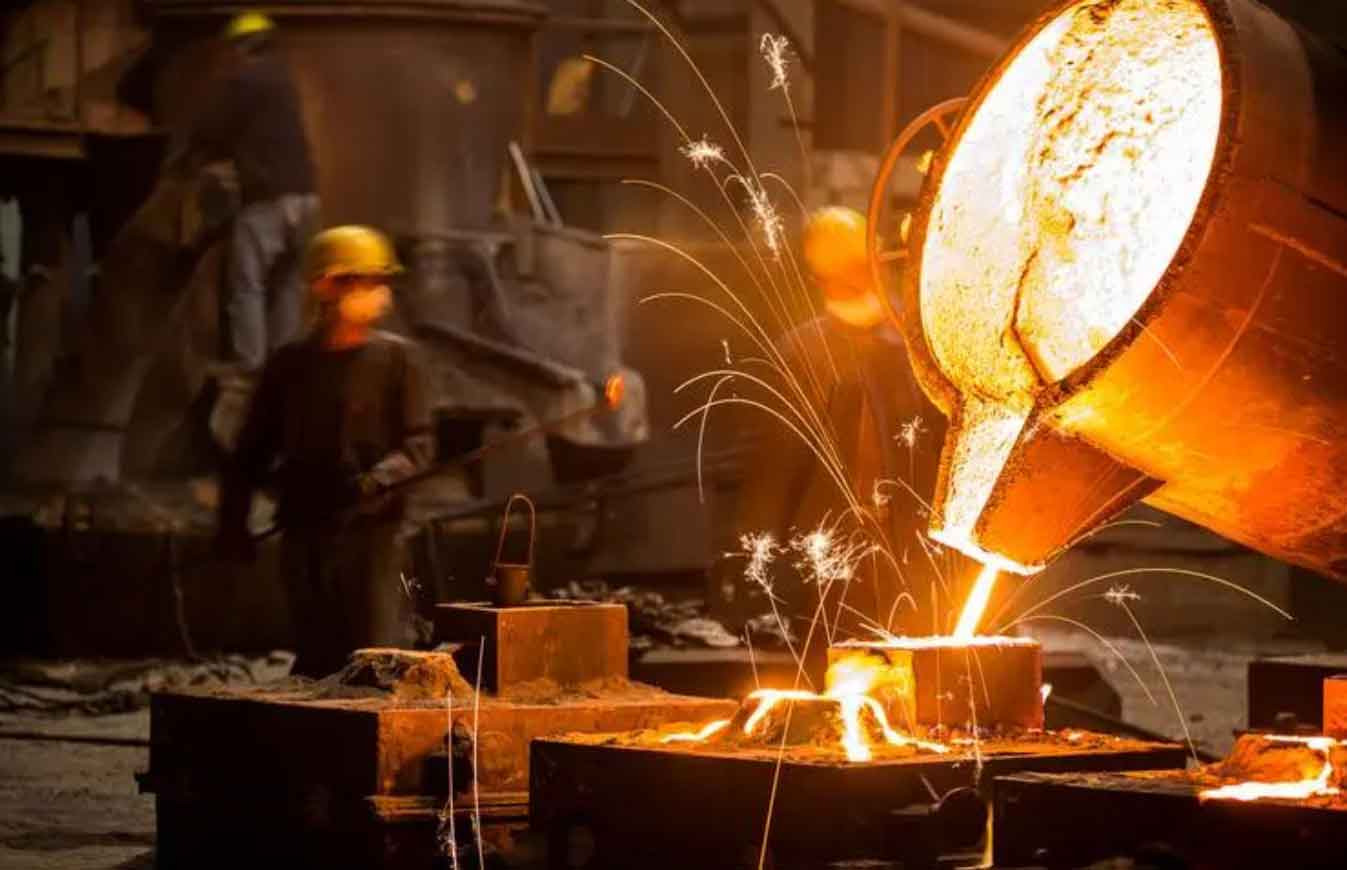
The equipment selection for this resin sand casting workshop was based on a hybrid strategy: primarily domestic machines with critical components imported to ensure reliability. This balanced cost-effectiveness with performance, as domestic equipment offered lower prices and easier maintenance, while imported parts addressed specific quality gaps. A total of 60 sets of equipment were deployed, all proven in industrial applications. Key devices included continuous mixers, sand regeneration units, and pneumatic transport systems. The design focused on achieving a balance between automation and manual operations, catering to the small-batch, high-variety production typical of the client’s needs. In the following sections, I will delve into the details of each department, supported by tables and formulas to summarize technical aspects.
Overall Process Flow and Integration
The resin sand casting process in this workshop follows a closed-loop system, emphasizing sand reclamation and reuse. The workflow begins with pattern and core production, followed by molding, pouring, cooling, shakeout, and finishing. Sand regeneration is central to sustainability, reducing waste and material costs. The integration with the existing foundry was achieved through shared molten metal supply and transportation networks, ensuring seamless material flow. The design prioritized flexibility, allowing for both manual and automated operations in molding and core-making. The table below outlines the major process stages and their key functions in the resin sand casting workshop.
| Process Stage | Key Functions | Equipment Used | Resin Sand Casting Relevance |
|---|---|---|---|
| Molding & Core-Making | Pattern assembly, sand mixing, curing | Continuous mixers, manual tools | High precision and surface finish enabled by resin sand |
| Melting & Pouring | Molten metal supply, ladle transfer | Cupola, electric flat cars | Integration with existing systems for efficiency |
| Shakeout & Sand Reclamation | Separation of castings from sand, initial processing | Vibratory shakeout machines, magnetic separators | Critical for sand reuse in resin sand casting |
| Sand Regeneration | Cleaning, cooling, and rejuvenation of used sand | Crushing units, pneumatic systems, classifiers | Reduces binder usage and maintains sand quality |
| Cleaning & Finishing | Grinding, shot blasting, inspection | Cranes, manual stations | Ensures final quality of resin sand castings |
The efficiency of the resin sand casting process can be quantified through various metrics, such as sand utilization ratio and binder consumption. For instance, the sand regeneration rate is crucial for cost savings. A simplified formula for regeneration efficiency is:
$$ \text{Regeneration Efficiency} (\eta) = \frac{M_r}{M_t} \times 100\% $$
where \( M_r \) is the mass of reclaimed sand suitable for reuse, and \( M_t \) is the total mass of sand used in casting. In this workshop, target efficiency exceeded 90%, thanks to advanced regeneration equipment. Another key parameter is the loss on ignition (LOI), which measures organic content in sand and affects binder demand. The LOI is calculated as:
$$ \text{LOI} = \frac{W_i – W_f}{W_i} \times 100\% $$
where \( W_i \) is the initial weight of sand before ignition, and \( W_f \) is the final weight after burning off organics. For effective resin sand casting, LOI must be maintained below 3%, as higher values increase resin and catalyst consumption, leading to higher costs and potential defects.
Molding and Core-Making Department
In the molding and core-making department, the resin sand casting process relied on manual operations tailored for small-batch production. Patterns and cores were produced using alcohol-based fast-drying coatings, with molding performed at fixed stations. For large castings that couldn’t be accommodated on automated lines, manual molding was conducted near mixing units or core-making areas. The centerpiece of this department was the S20 series continuous mixer, a dual-arm fixed machine incorporating German technology. Its design featured a fluidized bed at the discharge end to remove fines via dust extraction, reducing binder addition and improving sand quality. The mixer’s unique agitation mechanism eliminated head and tail sand waste, further lowering costs per casting.
The benefits of resin sand casting in molding include improved dimensional stability and reduced veining defects. The sand mixture typically consists of silica sand, resin binder, and catalyst, with proportions optimized through testing. A common formula for sand mixture strength in resin sand casting is:
$$ \sigma = k \cdot C_r \cdot e^{-\lambda t} $$
where \( \sigma \) is the compressive strength, \( k \) is a material constant, \( C_r \) is the resin concentration, \( \lambda \) is a decay factor, and \( t \) is time after mixing. This highlights the time-sensitive nature of resin sand casting, requiring efficient handling. The table below summarizes key parameters for the molding process in this workshop.
| Parameter | Target Value | Impact on Resin Sand Casting |
|---|---|---|
| Sand Temperature | 20-25°C | Optimal for curing and binder activation |
| Resin Addition Rate | 1.0-1.5% by weight | Balances strength and cost |
| Catalyst Addition Rate | 0.3-0.5% by weight | Controls setting time |
| Mixing Time | 60-90 seconds | Ensures homogeneity |
| LOI of Reclaimed Sand | < 3% | Minimizes binder demand |
Sand Regeneration Department: The Heart of the Workshop
The sand regeneration department was a focal point in the resin sand casting workshop, designed to maximize sand reuse while maintaining quality. It comprised several subsystems: used sand recovery, regeneration, new sand drying, pneumatic transport, dust collection, electrical control, and water treatment. The layout was optimized for space and workflow, as shown in the design diagrams. Used sand from shakeout passed through vibratory conveyors, magnetic separators, and bucket elevators before entering the regeneration loop. The shakeout machine was a vibratory conveyor type with front discharge, reducing pit depth and conveyor length for enhanced reliability.
The regeneration system featured a multi-stage approach, including a crushing regenerator, a disc-type regenerator (added as a design innovation), and a pneumatic impact friction unit. A transition pipe with solenoid valves allowed switching between two-stage and three-stage regeneration, enabling adjustment based on sand condition. This flexibility was key to controlling LOI levels. An additional magnetic separator in the air classifier protected mixer blades from metallic contaminants, reducing casting defects. The sand temperature regulator was placed at the final storage hopper to stabilize sand temperature before use, ensuring consistent curing in resin sand casting.
Sand conveyance predominantly used pneumatic transport, chosen for its sealing, low pollution, high reliability, and space efficiency. Spherical elbows made via CNC technology minimized maintenance and facilitated layout. The system blended new and reclaimed sand in proportional mixers before transport, saving equipment costs and simplifying management. However, this approach introduced a lag in ratio adjustments, requiring stable process parameters. Dust control involved three independent systems for new sand, shakeout, and regeneration, with local exhaust fans ventilating workshop air. The electrical control system used PLC-based automation with manual override options, featuring mimic displays for real-time monitoring.
The economic and technical benefits of sand regeneration in resin sand casting can be expressed through cost models. For example, the annual savings from sand reuse (\( S \)) is given by:
$$ S = (C_n – C_r) \cdot M_a – E_c $$
where \( C_n \) is the cost per ton of new sand, \( C_r \) is the cost per ton of reclaimed sand, \( M_a \) is the annual sand consumption, and \( E_c \) is the energy cost of regeneration. In this project, \( S \) was estimated to be significant due to high sand reuse rates. The table below details the equipment used in the sand regeneration department for this resin sand casting workshop.
| Equipment | Function | Specifications | Role in Resin Sand Casting |
|---|---|---|---|
| Vibratory Shakeout Machine | Separates castings from sand | 5-ton capacity, front discharge | Initial step in sand recovery |
| Magnetic Separator | Removes ferrous contaminants | Belt-type, multi-stage | Protects downstream equipment |
| Bucket Elevator | Vertical sand transport | Chain-type, heat-resistant | Handles hot sand from shakeout |
| Crushing Regenerator | Breaks down sand lumps | Impact mechanism | Prepares sand for further processing |
| Disc-Type Regenerator | Advanced attrition regeneration | Rotating disc design | Reduces LOI for resin sand casting |
| Pneumatic Transport System | Sand conveyance | Positive pressure, multiple points | Ensures clean and efficient flow |
| Sand Temperature Regulator | Cools and stabilizes sand | Water-cooled, with sensors | Maintains optimal sand temperature |
The performance of the regeneration system can be analyzed using mass balance equations. For a steady-state operation in resin sand casting, the sand flow rate (\( \dot{M} \)) through the system satisfies:
$$ \dot{M}_\text{in} = \dot{M}_\text{out} + \dot{M}_\text{loss} $$
where \( \dot{M}_\text{in} \) is the input sand from shakeout, \( \dot{M}_\text{out} \) is the output reclaimed sand, and \( \dot{M}_\text{loss} \) accounts for dust and waste. The regeneration ratio (\( R \)) is defined as:
$$ R = \frac{\dot{M}_\text{out}}{\dot{M}_\text{in}} \times 100\% $$
In this workshop, \( R \) was maintained above 95%, demonstrating the efficiency of resin sand casting processes.
Equipment Selection and Rationale
The selection of equipment for this resin sand casting workshop was guided by reliability, cost, and compatibility with resin sand casting requirements. Domestic manufacturers supplied most machines, but critical components like mixer blades and control sensors were imported to ensure longevity. The table below provides a comprehensive list of key equipment, highlighting their roles in resin sand casting. This approach balanced affordability with performance, as domestic equipment often offers better service support and faster spare parts delivery.
| Equipment Category | Quantity | Domestic/Imported | Key Features for Resin Sand Casting |
|---|---|---|---|
| Continuous Sand Mixers | 4 | Domestic with imported parts | Fluidized bed for fines removal, no waste sand |
| Sand Regeneration Units | 3 sets | Domestic | Multi-stage with disc regenerator, LOI control |
| Pneumatic Transport Systems | 5 lines | Domestic | Sealed design, spherical elbows, low maintenance |
| Dust Collectors | 6 units | Domestic | High-power, with hoods for shakeout and mixing |
| Electrical Control Systems | 1 set | Domestic with PLC imports | PLC-based automation, mimic display, interlocking |
| Cranes and Transport Cars | 10 | Domestic | For internal and external logistics integration |
The cost-effectiveness of this equipment strategy can be modeled using a total cost of ownership (TCO) formula. For each equipment item in resin sand casting, TCO is:
$$ \text{TCO} = C_p + \sum_{t=1}^{T} \frac{M_t + E_t + D_t}{(1+r)^t} $$
where \( C_p \) is the purchase cost, \( M_t \) is maintenance cost in year \( t \), \( E_t \) is energy cost, \( D_t \) is downtime cost, \( r \) is the discount rate, and \( T \) is the lifespan. By combining domestic and imported components, TCO was minimized while maximizing uptime for resin sand casting operations.
Production Outcomes and Identified Issues
The resin sand casting workshop commenced operations in early 2004, and after a six-month trial period, it largely met design expectations. Castings produced via resin sand casting showed marked improvements in surface quality, dimensional accuracy, and defect reduction, validating the transition from clay sand. However, due to tooling limitations, only a portion of castings initially utilized resin sand casting, with plans for gradual expansion. The performance demonstrated that domestic equipment could effectively replace imports in resin sand casting, provided critical components were sourced appropriately.
Several design shortcomings emerged during operation, offering lessons for future projects. First, the new sand hoist had a rail height of 12 meters, causing instability during sand lifting and rope twisting; a switch to single-rope or skip loader design was recommended. Second, the used sand conveyance system initially had only one magnetic separator; adding a second stage before the bucket elevator would improve iron removal and reduce regeneration load. Third, storage hoppers for used sand lacked access hatches, complicating cleaning and maintenance. These issues highlight the importance of iterative testing in resin sand casting workshop design.
The environmental benefits of resin sand casting were evident, with dust emissions reduced by over 80% compared to the old facility. The sand regeneration system achieved an LOI consistently below 3%, minimizing binder usage. The table below summarizes key performance indicators after the trial period for this resin sand casting workshop.
| Performance Indicator | Result | Target for Resin Sand Casting |
|---|---|---|
| Annual Casting Output | 2,800 tons (initial) | 3,000 tons |
| Sand Regeneration Rate | 92% | >90% |
| LOI of Reclaimed Sand | 2.5% | <3% |
| Resin Consumption Reduction | 15% vs. baseline | Minimize binder use |
| Defect Rate Reduction | 40% lower than clay sand | Improve quality |
The quality improvements in resin sand casting can be quantified using statistical models. For instance, the defect density (\( D \)) per ton of castings often follows a Poisson distribution in controlled processes:
$$ P(D = k) = \frac{\lambda^k e^{-\lambda}}{k!} $$
where \( \lambda \) is the average defect rate. In this workshop, \( \lambda \) decreased significantly after adopting resin sand casting, indicating process stability.
Conclusions and Future Directions
In conclusion, the design of this resin sand casting workshop emphasized integration, efficiency, and environmental sustainability. By leveraging existing melting capacity and focusing on advanced sand regeneration, the project achieved its goals of higher casting quality and cost savings. The use of domestic equipment with selective imports proved effective for resin sand casting, offering a model for similar medium-scale foundries. Key innovations included the disc-type regenerator for LOI control, pneumatic sand transport, and modular dust collection systems.
Looking ahead, the resin sand casting workshop is poised for expansion, with potential adoption of electric furnaces for alloy castings and increased automation. The experience underscores that resin sand casting is not merely a process change but a systemic upgrade requiring careful planning of layout, equipment, and control systems. Future designs could incorporate real-time sand quality monitoring and AI-based process optimization to further enhance resin sand casting outcomes. The success of this project reinforces the viability of resin sand casting as a cornerstone of modern foundry operations, driving quality and competitiveness in global markets.
The principles discussed here—from sand regeneration formulas to equipment selection criteria—are applicable broadly in resin sand casting. As foundries evolve, continuous improvement in resin sand casting techniques will remain essential for meeting rising quality standards and environmental regulations. This project serves as a testament to the power of thoughtful engineering in transforming traditional casting methods into advanced, sustainable manufacturing solutions.