
In the automotive industry, the demand for V-type engines has surged, particularly for mid to high-end cars, sports cars, and large buses. This growth has highlighted a critical bottleneck: insufficient casting production capacity. To address this, our company embarked on designing a flexible, automated molding line using the Pep-set resin sand process for manufacturing V-engine cylinder block castings. This line, tailored for a foundry division, emphasizes domestic sourcing for peripheral components and employs Siemens products for the entire electrical control system. Upon commissioning, it is projected to yield 30,000 qualified V-engine cylinder block castings annually. This article delves into the comprehensive design principles, process parameter determination, system configurations, and control strategies, with a focus on optimizing resin sand casting for high-volume production.
The design philosophy was anchored on safety, reliability, low operational cost, and environmental sustainability. We prioritized adaptability to the harsh foundry environment and the unique characteristics of castings production. Ensuring equipment robustness, minimizing the number of wear-prone parts, and reducing raw material consumption were key to enhancing economic efficiency. The system was configured to meet production quotas and quality standards while allowing for future scalability. A modular approach enabled selective operation of subsystems based on varying process requirements without disrupting overall functionality, thereby lowering production costs and simplifying management. Environmental considerations were integral, influencing every aspect from material selection to waste management.
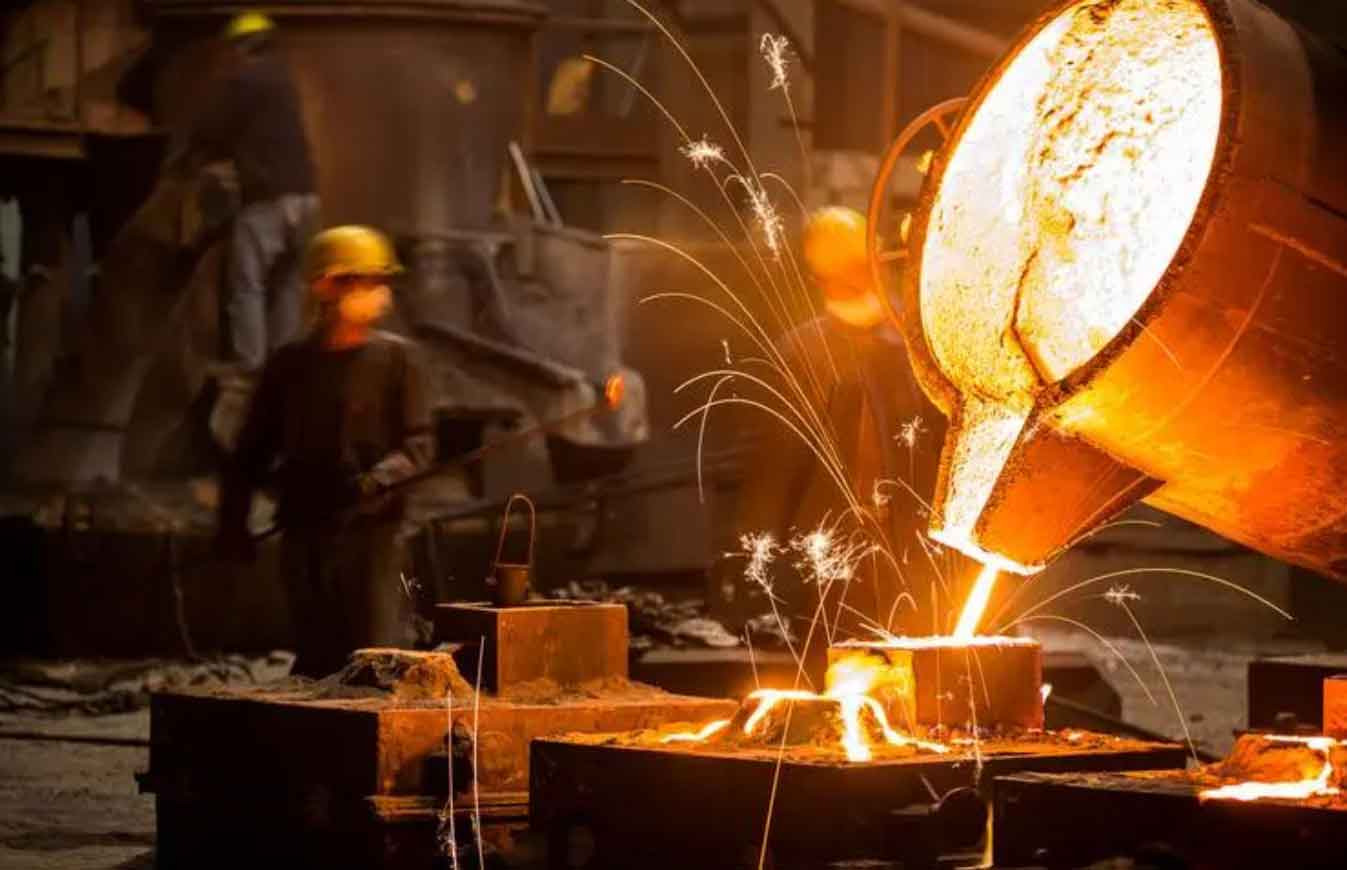
Determining precise process parameters was fundamental to the success of this resin sand casting line. The primary product is the V8 series engine cylinder block casting, with dimensions approximately 590 mm × 500 mm × 290 mm and a rough weight of around 130 kg. The line is also designed to accommodate six-cylinder engine blocks, ensuring versatility. The core process is Pep-set resin sand molding, a cold-box technique known for its rapid curing and dimensional accuracy.
| Parameter | Specification |
|---|---|
| Pattern Plate (Carrier Plate) Dimensions | 1200 mm × 950 mm × 100 mm |
| Production Efficiency | ≥ 10 complete molds per hour |
| Sand Mixing Method | Medium-speed, fixed, continuous mixer |
| Face Sand Composition | New sand: 0–10%, Regenerated sand: 90–100% |
| Backing Sand Composition | New sand: 0–10%, Regenerated sand: 90–100% |
| Component I (Phenolic Resin) | 0.8% by weight of sand |
| Component II (Polyisocyanate) | 0.8% by weight of sand |
| Catalyst (Mixed with Component II) | As required for curing |
The sand formulation is critical in resin sand casting. Let the total sand mass be $S$. For face sand, the proportion of new sand ($N_f$) and regenerated sand ($R_f$) can be expressed as:
$$ N_f + R_f = S_f \quad \text{where} \quad 0 \leq \frac{N_f}{S_f} \leq 0.1 \quad \text{and} \quad \frac{R_f}{S_f} = 1 – \frac{N_f}{S_f} $$
Similarly, for backing sand ($S_b$):
$$ N_b + R_b = S_b \quad \text{with} \quad 0 \leq \frac{N_b}{S_b} \leq 0.1 \quad \text{and} \quad \frac{R_b}{S_b} = 1 – \frac{N_b}{S_b} $$
The resin components are added as percentages of the sand weight. If $S_{total}$ is the sand weight for a mold, the weight of Component I (resin) is $0.008 \times S_{total}$, and Component II (including catalyst) is also $0.008 \times S_{total}$. This precise ratio ensures optimal curing and strength in the resin sand casting process.
The molding loop system is the heart of the operation, integrating several key components: a jolt-squeeze ramming station, powered roller conveyors, a turnover molding machine, and transfer cars. This loop concurrently handles sand mixing, filling, compaction, transportation, hardening, pattern drawing, coating, and surface drying. The workflow begins with resin sand discharged from the mixer into the pattern on the ramming station. After compaction, the mold is transferred via conveyors and cars to harden. It then enters the turnover molding machine, which automatically draws the pattern and ejects both the pattern and the finished mold. The mold proceeds to coating and drying stations, while the pattern returns to the ramming station for reuse. This closed-loop system maximizes efficiency in resin sand casting.
| Equipment | Key Parameters |
|---|---|
| Jolt-Squeeze Ramming Station | Max load: 5 tons; Equipped with powered rollers for synchronized transfer; Anti-deflection guides. |
| Turnover Molding Machine | Max load: 3 tons; 180-degree rotation with controlled acceleration/deceleration; Integrated vibration for pattern drawing. |
| Transfer Cars | Automated, interlinked with conveyor speeds for seamless transitions. |
The turnover molding machine’s operation can be modeled in phases. Let $\theta(t)$ represent the rotation angle over time $t$. The motion involves acceleration, constant velocity, and deceleration phases, governed by:
$$ \frac{d^2\theta}{dt^2} = \alpha \quad \text{for acceleration}, \quad \frac{d\theta}{dt} = v_c \quad \text{for constant velocity}, \quad \frac{d^2\theta}{dt^2} = -\beta \quad \text{for deceleration} $$
where $\alpha$ and $\beta$ are angular acceleration and deceleration, and $v_c$ is the constant angular velocity. Sensors trigger phase transitions at $\theta \approx 160^\circ$, ensuring precise positioning at $\theta = 180^\circ$ for pattern drawing. The drawing force $F_d$ required to separate the mold from the pattern depends on the adhesion stress $\sigma_a$ and contact area $A$:
$$ F_d = \sigma_a \times A $$
In resin sand casting, $\sigma_a$ is minimized by proper sand formulation and release agents, facilitated by the machine’s vibration during drawing.
Hardening stations are crucial for achieving sufficient mold strength. With a demolding time of 8 to 15 minutes, we allocated four hardening positions. Additionally, five surface-drying positions use electric heating hot-air ovens, with two preheating and three drying zones. The temperature profile $T(z)$ across zones can be approximated as:
$$ T(z) = T_0 + \Delta T \cdot f(z) $$
where $T_0$ is ambient temperature, $\Delta T$ is the temperature rise (adjustable between 150°C and 200°C), and $f(z)$ is a function describing the zone-dependent temperature distribution. This ensures thorough drying without thermal shock to the resin sand casting molds.
The pouring and cooling system is a complex network designed for high-throughput resin sand casting. It comprises a core-setting and mold-closing line with 12 casting cars, four pouring and cooling lines with 48 cars, a pouring fume extraction system, five stepping-type pushers, two transfer cars, a powered roller conveyor for car transfer, and a pusher for shakeout. The process flow begins with qualified molds from the molding loop being placed on casting cars for core setting and closing. Closed molds are pushed to transfer cars, which move them to the pouring station. After pouring, molds traverse the cooling lines for solidification, then transfer to a roller conveyor leading to the shakeout station, where a pusher discharges molds and castings into a vibration shakeout. Castings are then lifted for cleaning, while spent sand enters the regeneration system, and casting cars return to the start. This cyclic flow is optimized for continuous resin sand casting production.
| Component | Quantity/Description | Function |
|---|---|---|
| Casting Cars (Core Setting/Closing) | 12 | Hold molds for assembly operations |
| Casting Cars (Pouring/Cooling) | 48 (across 4 lines) | Transport molds through pouring and cooling stages |
| Stepping Pushers | 5 | Intermittently advance molds between stations |
| Transfer Cars | 2 | Move molds between different line sections |
| Fume Extraction System | 1 set | Remove fumes during pouring for environmental safety |
The cooling time $t_c$ required for a casting of mass $m_c$ and specific heat capacity $c_p$ can be estimated using Newton’s law of cooling:
$$ \frac{dT_c}{dt} = -h \cdot A_c \cdot (T_c – T_{\infty}) / (m_c \cdot c_p) $$
where $T_c$ is casting temperature, $h$ is heat transfer coefficient, $A_c$ is surface area, and $T_{\infty}$ is ambient temperature. Integrating this, we ensure the cooling lines provide sufficient residence time for castings to reach a safe handling temperature, a critical aspect of resin sand casting quality control.
The spent sand regeneration line is vital for sustainability in resin sand casting. It processes used sand to recover reusable material, minimizing waste and cost. Key technical parameters were established to guide the design.
| Parameter | Target Value |
|---|---|
| Shakeout Capacity | ≥ 20 tons/hour |
| Regeneration Capacity | ≥ 15 tons/hour |
| Total Resin Removal Rate | ≥ 28% |
| Dust Content (finer than 200 mesh) | ≤ 0.3% |
| Sand Reuse Rate | ≥ 95% |
| Dust Emission Concentration | ≤ 100 mg/m³ |
| Noise Level (excluding shakeout) | ≤ 85 dB(A) |
The regeneration process involves multiple stages: shakeout, magnetic separation, crushing, cooling, and classification. The resin removal efficiency $\eta_r$ is defined as:
$$ \eta_r = \frac{m_{r,i} – m_{r,o}}{m_{r,i}} \times 100\% $$
where $m_{r,i}$ and $m_{r,o}$ are the masses of resin in the input and output sand, respectively. Achieving $\eta_r \geq 28\%$ ensures adequate cleaning for reuse in resin sand casting. The sand reuse rate $R_s$ is:
$$ R_s = \frac{m_{reclaimed}}{m_{total \ sand \ input}} \times 100\% \geq 95\% $$
Design features include a blow-suction dust hood with an air curtain over the shakeout to contain particulates, a chain-type sand lump elevator with auto-tensioning for high capacity and low power, and a combined vibration fluidized cooling separator and sand temperature regulator using air and water cooling. Two-stage magnetic separation (suspended and through-type) ensures thorough metal removal. This comprehensive approach supports eco-friendly resin sand casting operations.
The cooling process in the regenerator can be modeled using heat exchange principles. The temperature drop $\Delta T_s$ of sand with mass flow rate $\dot{m}_s$ and specific heat $c_{p,s}$ is:
$$ \dot{Q} = \dot{m}_s \cdot c_{p,s} \cdot \Delta T_s = U \cdot A \cdot \Delta T_{lm} $$
where $\dot{Q}$ is heat removal rate, $U$ is overall heat transfer coefficient, $A$ is heat transfer area, and $\Delta T_{lm}$ is log-mean temperature difference. This ensures sand is cooled to an optimal temperature for reuse in resin sand casting, typically below 40°C to prevent premature resin curing.
The entire production line is governed by a centralized PLC-based control system with a mimic panel for visualization. A computer monitoring system enables real-time supervision of operational status, including dust collection pressure, sand temperature, material levels, and run-time data, with fault alarm capabilities. Control cabinets are centrally located indoors, while operator consoles allow full-line control, supplemented by local button boxes for individual equipment. This integrated control enhances reliability and efficiency in resin sand casting production.
The control logic can be represented using state equations. For each subsystem $i$, the state $x_i(t)$ (e.g., equipment status) evolves based on inputs $u_i(t)$ (e.g., commands) and disturbances $d_i(t)$ (e.g., material variations):
$$ \frac{dx_i}{dt} = f_i(x_i, u_i, d_i) $$
The PLC implements discrete control actions to maintain desired setpoints, ensuring synchronized operation across the resin sand casting line. For instance, the mixer’s sand discharge rate $\dot{m}_{sand}$ is regulated to match the molding cycle time $t_{cycle}$:
$$ \dot{m}_{sand} = \frac{m_{mold}}{t_{cycle}} $$
where $m_{mold}$ is the sand weight per mold. This precise control minimizes waste and maximizes throughput.
In summary, the design of this Pep-set resin sand casting line for V-engine cylinder blocks embodies a holistic approach to modern foundry engineering. By meticulously defining process parameters, integrating robust mechanical systems like the molding loop and pouring-cooling network, implementing an efficient sand regeneration line, and employing advanced automation controls, we have created a solution that addresses capacity shortages while emphasizing cost-effectiveness and environmental stewardship. The extensive use of regenerated sand, coupled with high reuse rates, underscores the sustainability of this resin sand casting process. Future enhancements could focus on predictive maintenance using IoT sensors and further optimizing energy consumption. This line not only meets current production demands but also provides a scalable platform for evolving needs in the competitive landscape of resin sand casting for automotive components.
The economic viability of such a resin sand casting line can be assessed through metrics like return on investment (ROI). If $C_{cap}$ is the capital cost, $R_{annual}$ is annual revenue from castings, and $C_{op}$ is annual operating cost, then:
$$ ROI = \frac{R_{annual} – C_{op}}{C_{cap}} \times 100\% $$
With an output of 30,000 castings per year, optimized material usage, and low maintenance, this line is projected to deliver a favorable ROI, demonstrating the financial soundness of investing in advanced resin sand casting technology.