
Our team has been dedicated to the research and development of ductile iron drainage inspection wells using the advanced lost foam casting process. This technology allows us to produce integral well chambers with superior mechanical properties and excellent corrosion resistance. The lost foam castings technique, also known as evaporative pattern casting, enables the production of complex geometries in a single pour, eliminating the need for multiple cores and subsequent assembly. In this article, we present the comprehensive development journey, the production methodology, the performance characteristics, and the extensive application benefits of these innovative inspection wells.
1. Introduction to Ductile Iron Inspection Wells
Drainage inspection wells serve as crucial junction points in urban pipeline networks, facilitating regular inspection, cleaning, and maintenance. Traditionally, these wells were constructed from brick, concrete, or plastic materials. However, each of these materials presents significant drawbacks: brick wells suffer from leakage and low strength; concrete wells are heavy and prone to cracking; plastic wells have limited load-bearing capacity and environmental degradation issues. To overcome these limitations, we pioneered the use of ductile iron (specifically QT450-5 or QT420-5) combined with the lost foam castings process. The resulting inspection wells exhibit high strength, excellent rigidity, strong load-bearing capacity, and exceptional resistance to foundation settlement. The lost foam castings process allows us to produce well chambers with various configurations—straight-through, three-way, four-way, bend, and sediment traps—all in one monolithic piece. This eliminates joints that could become weak points.
The inspection wells are designed to be compatible with T-type (sliding) joints, K-type (mechanical) joints, and flanged connections, ensuring leak-tight sealing and ease of assembly. The internal and external surfaces are coated with anti-corrosion layers, significantly extending service life. With diameters ranging from DN300 to DN2600, these lost foam castings meet the diverse needs of municipal drainage, river management, and utility tunnel projects.
2. The Lost Foam Castings Process for Inspection Wells
The production of ductile iron inspection wells via lost foam castings involves several critical steps: iron melt preparation, pattern fabrication, pattern assembly, coating, molding, pouring, shakeout, finishing, and coating. Below we describe each step in detail.
2.1 Iron Melt Preparation
We utilize a short-flow process combining blast furnace iron with medium-frequency induction furnaces. A 20-ton holding furnace stores the molten iron, while a 5-ton induction furnace is used for composition adjustment. The raw material ratio is: pig iron 50%–70%, steel scrap 10%–30%, and foundry returns 10%–30%. The base iron composition is carefully controlled within the ranges shown in Table 1.
| Element | C | Si | Mn | P | S |
|---|---|---|---|---|---|
| Range | 3.7–4.2 | 0.5–1.5 | ≤0.4 | ≤0.10 | ≤0.03 |
Nodularization is performed using the cored-wire feeding method. The feeding rate is 20–30 m/ton of molten iron, with the speed adjusted based on the iron output. The residual magnesium content after treatment must be within 0.035%–0.06%. Inoculation is carried out with Fe-Si added to the ladle at 5%–15% of the iron weight, depending on the silicon content in the base iron and the wire feed amount. The final composition after nodularization is given in Table 2.
| Element | C | Si | Mn | P | S | Mg | RE |
|---|---|---|---|---|---|---|---|
| Range | 3.1–3.7 | 2.2–2.8 | ≤0.4 | ≤0.10 | ≤0.02 | 0.035–0.06 | ≤0.02 |
2.2 Pattern Fabrication and Assembly for Lost Foam Castings
One of the key advantages of the lost foam castings process is the flexibility to create complex patterns by assembling modular foam sections. We utilize existing mold tools for standard pipe fittings (such as T-sockets, K-sockets, flanges, and straight cylinders) to produce foam segments. These segments are then glued together according to the design requirements—whether a straight-through, three-way, four-way, or specially angled bend well. Sediment traps and flow channels can be easily incorporated. The pattern assembly is shown in a representative schematic (Figure 1).
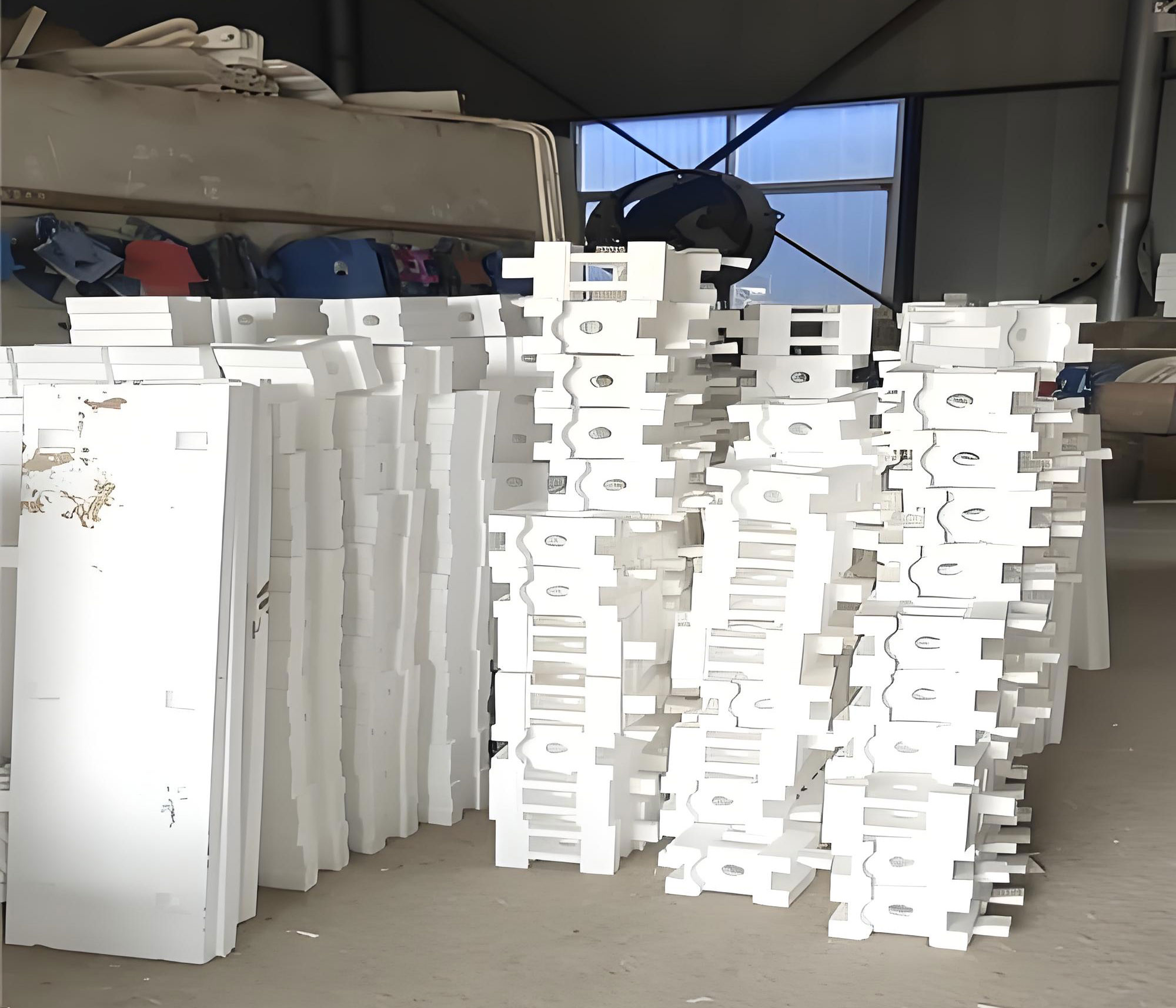
Figure 1. Pattern Assembly for Lost Foam Castings of an Inspection Well
Each foam pattern is coated with a refractory coating specifically designed for lost foam castings. The coating provides a barrier that prevents sand erosion and allows gas to escape during pouring. After coating, the patterns are dried in a controlled oven. The dried patterns are then attached to a gating system (also made of foam) and placed into a flask. For large wells (e.g., DN1600 with a well chamber height of 2.9 m and diameter 2.1 m), the total height including casting shrinkage allowance and pouring head can reach about 3.4 m.
2.3 Molding and Pouring
The sand used for lost foam castings is unbonded silica sand. The flask is filled with sand while the pattern is vibrated to ensure compaction. A vacuum is applied to the flask (typically 0.05–0.06 MPa) to stabilize the sand during pouring. Pouring temperature is controlled between 1450°C and 1520°C. Small parts use the upper temperature limit, while large parts use the lower limit. The pouring speed is carefully managed: start slow to burn off the gating system, then fast to fill the cavity, and finally slow again to minimize turbulence and ensure proper feeding. The vacuum is maintained throughout pouring to facilitate the removal of decomposition gases from the foam pattern. After solidification, the flask is shaken out, and the casting is cleaned.
2.4 Post-Processing and Finishing
The castings undergo gate removal, grinding, and shot blasting. Dimensional inspection is performed, and any out-of-round sockets are corrected using mechanical straightening. For flanged connections, the mating surfaces are machined to required tolerances. A hydrostatic test (closed water test) is conducted to verify leak tightness. Finally, internal and external anti-corrosion coatings are applied. For flow-through wells, a smooth guide channel is shaped in the bottom to minimize flow resistance. The finished inspection wells are inspected and stored as shown in Figure 2 (representative).
3. Mechanical Properties and Quality Control
The ductile iron used for these lost foam castings must meet the following mechanical requirements: tensile strength ≥ 420 MPa (or ≥ 450 MPa for higher grades), yield strength ≥ 270 MPa, elongation ≥ 5%, nodularity ≥ grade 3, and graphite size ≥ grade 6. The relationship between microstructure and properties is well established. The nodular graphite morphology contributes to high ductility and toughness, while the ferritic or ferritic-pearlitic matrix provides strength.
The strength of a cylindrical well chamber under external loading can be estimated using the formula for a thick-walled cylinder under radial pressure. For a pipe wall thickness t and outer diameter D, the hoop stress σ due to internal pressure p is given by:
$$ \sigma = \frac{p(D – 2t)}{2t} $$
However, the primary loading on underground wells is vertical earth pressure and traffic loads. The load capacity can be modeled as a ring under compression. The critical buckling pressure p_cr for a buried pipe is:
$$ p_{cr} = \frac{3E I}{(R)^3} \cdot \frac{1}{1 – \nu^2} $$
where E is the modulus of elasticity (typically 170 GPa for ductile iron), I is the moment of inertia per unit length, R is the mean radius, and ν is Poisson’s ratio (0.27). The lost foam castings process ensures consistent wall thickness, which directly impacts the moment of inertia and, consequently, the buckling resistance.
4. Interface Types and Sealing Performance
Our ductile iron inspection wells are designed with three types of connections:
- T-type (sliding) joint: A rubber gasket is fitted into a groove in the socket. The spigot end is pushed in, compressing the gasket to form a seal. This joint allows some angular deflection and axial movement, accommodating ground settlements.
- K-type (mechanical) joint: Uses a bolted gland that compresses a gasket against the spigot. This provides a stronger, leak-tight connection suitable for higher pressures and external loads.
- Flanged joint: Bolted flanges with a gasket provide a rigid connection. Suitable for above-ground or vaulted installations.
The sealing effectiveness is quantified by the allowable leakage rate. According to standards, after assembly, the well and pipe system must withstand a hydrostatic pressure of at least 0.2 MPa without leakage. The rubber gasket material (EPDM or NBR) is selected for long-term resistance to sewage and ground chemicals.
5. Performance Comparison with Conventional Materials
To demonstrate the advantages of our lost foam castings, we compare ductile iron inspection wells with plastic, reinforced concrete, and brick wells in terms of construction efficiency, cost, and durability. Table 3 summarizes the engineering efficiency comparison.
| Item | Ductile Iron (Lost Foam Castings) | Plastic | Reinforced Concrete | Brick |
|---|---|---|---|---|
| Supply lead time | Short (large batch capacity) | Moderate | Long | Long |
| Weather sensitivity | Low (all-weather installation) | Moderate | High | High |
| Installation speed (wells/day) | 20 | 20 | 2 | 1–2 |
| Footprint area | Small (monolithic) | Small | Large | Large |
| Application environments | All (buried, river, tunnel, landscape) | Only buried | Not for exposed landscape | Not for exposed landscape |
| Service life (years) | ≥50 | 20–30 | 30–40 | 15–25 |
Table 4 shows the economic comparison for a typical installation (one well).
| Item | Ductile Iron | Plastic | Concrete | Brick |
|---|---|---|---|---|
| Number of workers | 2 | 2 | 2 | 2 |
| Construction days | 0.5 | 0.5 | 5 | 5 |
| Excavation volume | Small | Small | Large | Large |
| Labor cost (USD/day) | ~180 | ~180 | ~1800 | ~1800 |
| Overall cost index | Low | Low | High | High |
6. Environmental and Social Benefits
Ductile iron is 100% recyclable. At the end of its long service life, the material can be remelted and reused, contributing to a circular economy. In contrast, plastic wells degrade slowly and cause microplastic pollution, while concrete and brick wells are difficult to recycle and often end up as landfill. The lost foam castings process itself is environmentally friendly: the foam pattern material (EPS) is fully vaporized during pouring, and the sand is reclaimed and reused. No cores or binders are required, reducing emissions.
The social impact is significant. With rapid urbanization, China alone requires more than 4 million new inspection wells annually. The demand for high-performance, long-life wells is urgent. Our ductile iron wells have been installed in over 20 provinces across various projects: river pollution control, utility tunnels, and buried pipeline systems. Their excellent anti-seepage, anti-corrosion, and high-strength properties have successfully replaced plastic, concrete, and steel wells. The rapid installation reduces traffic disruption and public inconvenience.
7. Application Cases and Future Prospects
One notable project involved a river pollution treatment scheme where traditional concrete wells would have required extensive dewatering and heavy equipment. Using our lost foam castings, the wells were assembled in one day and connected to ductile iron pipes using T-joints. The entire system was installed without dewatering, saving 40% in construction time and 30% in costs. Another application is in urban utility tunnels where space is limited. The compact design of the monolithic well chamber allows for easy placement and connection.
Looking ahead, we are developing larger diameter wells up to DN3000 and special shapes with multiple inlets and outlets. The lost foam castings process is ideal for these complex geometries as it eliminates the need for costly metal molds. Finite element analysis is used to optimize wall thickness and ribbing for further weight reduction while maintaining strength. We are also exploring advanced coatings such as epoxy and zinc-rich primers to enhance corrosion resistance in aggressive environments like seawater or industrial wastewater.
8. Conclusion
The development and application of ductile iron drainage inspection wells produced by lost foam castings represent a significant advancement in municipal infrastructure. The lost foam castings process enables the economical production of large, complex, monolithic well chambers with excellent mechanical properties. The wells offer high strength, superior sealing, easy installation, long service life, and full recyclability. With the increasing demands for sustainable and high-performance drainage systems, lost foam castings of ductile iron inspection wells will play an increasingly important role in urban water management worldwide.