
In the field of foundry engineering, grey cast iron has long been a cornerstone material due to its excellent castability, machinability, and damping capacity. However, conventional grey cast iron often exhibits limitations in mechanical strength, thermal fatigue resistance, and oxidation resistance, particularly in demanding applications such as ingot molds and engine components. To address these shortcomings, our research team embarked on a comprehensive investigation into the modification of grey cast iron using micro-additions of rare earth (RE) elements. This article presents our first-person account of the development, characterization, and industrial application of micro-rare earth treated grey cast iron, highlighting significant improvements over ordinary grey cast iron through extensive experimental data, tables, and theoretical formulations.
The fundamental premise of our work is that rare earth elements, owing to their high chemical affinity for oxygen and sulfur, can profoundly alter the microstructure and properties of grey cast iron. When added in trace amounts (typically less than 0.1 wt.%), rare earths act as powerful deoxidizers and desulfurizers. The resulting RE oxides and sulfides serve as potent heterogeneous nucleation sites, refining the as-cast structure. This refinement process enhances the mechanical properties and service life of grey cast iron components. Throughout this study, the term ‘grey cast iron’ will be used consistently to refer to the base material, emphasizing the transformative effect of rare earth treatment on this versatile alloy.
The influence of rare earths on the properties of grey cast iron is multifaceted. Firstly, rare earth treatment leads to a marked refinement of the graphite morphology. In ordinary grey cast iron, graphite typically exists as coarse, type A flakes. With micro-rare earth addition, the graphite structure transitions to a finer, more rounded type D or compacted form. This change is critical because the shape and distribution of graphite directly govern the mechanical behavior of grey cast iron. The refinement can be quantified by the increase in eutectic cell count. We observed that the number of eutectic cells per unit area, \( N \), increases linearly with the effective rare earth concentration, \( C_{RE}^{eff} \), remaining after deoxidation and desulfurization. This relationship can be expressed as:
$$ N = N_0 + \beta \cdot C_{RE}^{eff} $$
where \( N_0 \) is the eutectic cell count in untreated grey cast iron and \( \beta \) is a refinement coefficient dependent on the base iron composition and cooling rate. For our typical melt conditions, \( \beta \) was found to be approximately \( 150 \text{ cells/mm}^2 \text{ per 0.01 wt.% RE} \). This structural refinement is the primary reason for the enhanced mechanical properties observed in rare earth treated grey cast iron.
Let us now delve into the specific effects on mechanical and thermal properties. We conducted a series of comparative tests between ordinary grey cast iron and our developed micro-rare earth grey cast iron. The chemical compositions for the base iron were carefully controlled, and the rare earth addition was made via a rare earth-silicon-iron alloy (RE-Si-Fe) containing approximately 30% rare earth elements. The key mechanical properties are summarized in Table 1.
| Property | Ordinary Grey Cast Iron | Micro-Rare Earth Grey Cast Iron | Percentage Improvement (%) |
|---|---|---|---|
| Tensile Strength, \( \sigma_b \) (MPa) | 195 – 215 | 215 – 240 | 10 – 12 |
| Bending Strength (MPa) | 390 – 430 | 430 – 480 | 10 – 12 |
| Elongation, \( \delta \) (%) | 0.4 – 0.6 | 0.8 – 1.4 | 100 – 133 |
| Hardness, HB | 187 – 217 | 197 – 229 | 5 – 6 (Slight Increase) |
| Chill Depth (mm) in Wedge Test | 5 – 8 | 2 – 4 | 50 – 60 Reduction |
The data clearly indicates that micro-rare earth treatment significantly improves the tensile and bending strength of grey cast iron. More notably, the elongation, which is typically very low in grey cast iron, shows a dramatic increase of over 100%. This enhancement in ductility is a direct consequence of the refined graphite and reduced stress concentration sites. The reduction in chill depth confirms the strong graphitizing effect of rare earths, which suppresses carbide formation and improves machinability. The underlying strengthening mechanism can be partially described by a modified Hall-Petch type relationship for the yield strength \( \sigma_y \) of grey cast iron:
$$ \sigma_y = \sigma_0 + k_y \cdot (N)^{-1/2} + \sigma_{SS} $$
Here, \( \sigma_0 \) is the lattice friction stress, \( k_y \) is a constant, \( N \) is the eutectic cell count (related to grain/graphite size), and \( \sigma_{SS} \) represents solid solution strengthening from dissolved rare earth atoms. The increase in \( N \) leads to a lower \( (N)^{-1/2} \) term, thereby increasing \( \sigma_y \). Furthermore, rare earths purify the iron matrix by scavenging impurities, which enhances \( \sigma_0 \) and contributes to \( \sigma_{SS} \).
Beyond static mechanical properties, the performance of grey cast iron under thermal cycling is crucial for applications like ingot molds. We evaluated thermal fatigue and growth resistance by subjecting cantilever beam specimens to repeated heating and cooling cycles between 200°C and 900°C. The results, presented in Table 2, demonstrate the superior performance of rare earth treated grey cast iron.
| Material Type | Surface Crack Condition | Average Length Growth Rate (%) | Average Diameter Growth Rate (%) |
|---|---|---|---|
| Ordinary Grey Cast Iron | Severe axial cracks, pronounced oxidation and spalling | 0.45 | 0.38 |
| Micro-Rare Earth Grey Cast Iron | No cracks on ends, smooth sides, minimal oxidation | 0.18 | 0.15 |
The improved thermal fatigue resistance of micro-rare earth grey cast iron is attributed to its refined and more uniform microstructure, which better accommodates thermal stresses. The oxidation resistance was also quantitatively assessed through isothermal oxidation tests at 800°C. The oxidation kinetics often follow a parabolic rate law:
$$ (\Delta W/A)^2 = k_p \cdot t $$
where \( \Delta W/A \) is the weight gain per unit area, \( k_p \) is the parabolic rate constant, and \( t \) is time. Our measurements showed that the parabolic rate constant for micro-rare earth grey cast iron was only about 40-50% of that for ordinary grey cast iron. Table 3 provides a snapshot of the oxidation weight gain data after 50 hours.
| Material Designation | Si Content (wt.%) | RE Addition (wt.%) | Oxidation Weight Gain (mg/cm²) after 50h | Relative Oxidation Rate (Ordinary = 1.0) |
|---|---|---|---|---|
| Ordinary Grey Cast Iron A | 1.8 | 0 | 52.3 | 1.00 |
| Micro-Rare Earth Grey Cast Iron B | 1.8 | 0.08 | 26.1 | 0.50 |
| Micro-Rare Earth Grey Cast Iron C | 2.2 | 0.08 | 21.7 | 0.42 |
The synergy between silicon and rare earths in forming a more protective, adherent oxide scale is evident. The rare earth treatment not only reduces the initial oxidation rate but also improves scale adhesion, preventing spalling during thermal cycling. This is a vital attribute for grey cast iron components exposed to high temperatures.
Having established the property benefits, we will now detail the development process for this advanced grey cast iron. The base grey cast iron was melted in a standard cupola furnace with a tapping temperature exceeding 1420°C to ensure adequate fluidity and reactivity. The target chemical composition range for the micro-rare earth grey cast iron was designed as follows: Carbon (C): 3.3 – 3.7%, Silicon (Si): 1.6 – 2.0%, Manganese (Mn): 0.6 – 0.9%, Phosphorus (P): < 0.15%, Sulfur (S): < 0.12%. The rare earth addition was made using a pre-heated RE-Si-Fe alloy with a particle size of 5-20 mm. Two primary inoculation methods were employed. In the first method, suitable for larger batches (around 500 kg), the alloy was added into the metal stream during tapping into the ladle. In the second method, for smaller batches, the alloy was placed at the ladle bottom and the molten grey cast iron was poured over it. The recommended addition level of the RE-Si-Fe alloy is 0.3 – 0.5% of the total iron weight, which translates to an effective rare earth addition of approximately 0.08 – 0.15%. After addition, the slag was skimmed, and the ladle was covered with insulating materials. The entire process from treatment to pouring was completed within 10 minutes to prevent fading of the inoculation effect.
The effectiveness of the treatment was immediately assessed via wedge tests (triangular test pieces). A comparative analysis is shown in Table 4, which illustrates the reduction in chill tendency, a key indicator of improved castability and reduced carbide risk in thin sections.
| Sample Set | Material Type | Chill Observation (Number of white edges / mottled edges) | Interpretation |
|---|---|---|---|
| Set 1 | Ordinary Grey Cast Iron | 3 white, 0 mottled | High chill tendency |
| Set 2 | Ordinary Grey Cast Iron | 2 white, 1 mottled | Moderate chill tendency |
| Set 3 | Micro-Rare Earth Grey Cast Iron | 1 mottled, 0 white | Very low chill tendency |
| Set 4 | Micro-Rare Earth Grey Cast Iron | 0 white, 0 mottled (fully grey) | Excellent inoculation, no chill |
Metallographic examination revealed that the micro-rare earth grey cast iron exhibited a finer pearlite matrix with a significantly increased amount of ferrite. The graphite was uniformly distributed as fine, type D flakes. The phosphorus eutectic network was broken and spheroidized. These microstructural changes are the direct cause of the property enhancements documented earlier. The role of rare earths in reducing the dissolved oxygen content in grey cast iron is also noteworthy. We measured that the oxygen content in ordinary grey cast iron melt was typically in the range of 30 – 50 ppm. After adding 0.1% effective rare earth, the oxygen content dropped to 10 – 20 ppm. This purification effect contributes to the increased density and integrity of the cast grey cast iron components.
The application potential for this improved grey cast iron is vast. A major successful implementation is in the production of ingot molds for the steel industry. Ordinary grey cast iron ingot molds suffer from thermal fatigue cracking and oxidation, leading to high consumption rates. Field trials with micro-rare earth grey cast iron ingot molds have consistently shown a service life improvement of 15-30%, corresponding to a reduction in mold consumption per ton of steel by 10-20%. For such applications, we recommend an optimized composition: C: 3.4 – 3.6%, Si: 1.7 – 1.9%, Mn: 0.7 – 0.8%, P: < 0.10%, S: < 0.10%, with a rare earth addition (via RE-Si-Fe) of 0.4%. This composition provides an optimal balance of strength, thermal conductivity, and thermal shock resistance for grey cast iron molds.
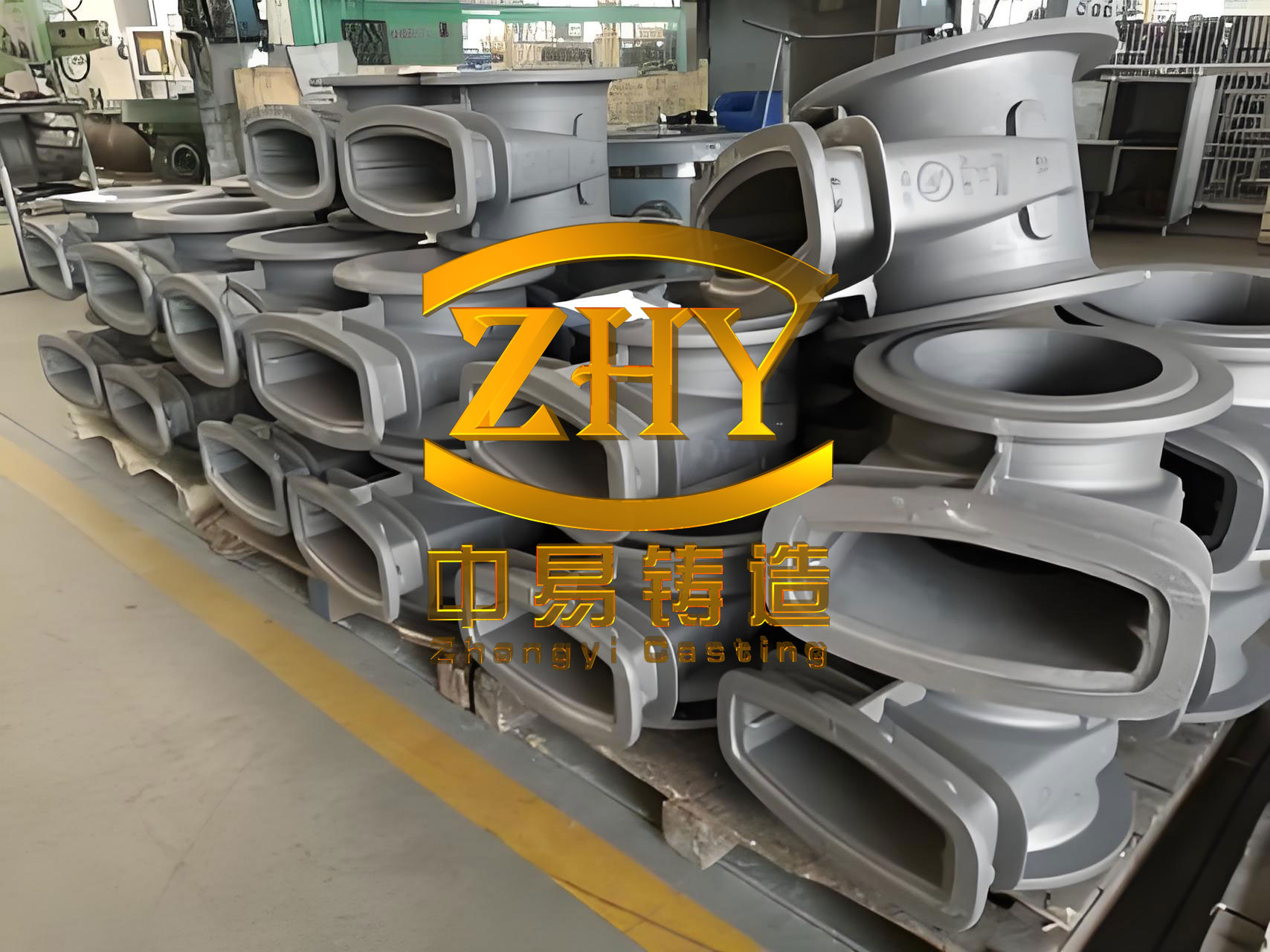
Beyond ingot molds, micro-rare earth grey cast iron has found excellent use in various engineering castings. These include cylinder blocks and heads for internal combustion engines, brake drums, pump housings, and heavy-duty machine tool beds. In engine components, the improved fatigue strength and thermal stability of the rare earth treated grey cast iron contribute to reduced deformation under service loads and better sealing performance. For wear-resistant parts, the refined graphite and harder matrix improve the abrasion resistance. The cost increment associated with the rare earth addition is minimal, often less than 5% of the total material cost, making it an economically viable upgrade for enhancing the performance and longevity of grey cast iron parts.
To generalize the effect of rare earths on the properties of grey cast iron, we can propose a comprehensive performance index, \( \Pi \), which encompasses key service parameters:
$$ \Pi = \frac{(\sigma_b \cdot \delta)_{RE}}{(\sigma_b \cdot \delta)_{Ordinary}} \cdot \frac{(1/GrowthRate)_{RE}}{(1/GrowthRate)_{Ordinary}} \cdot \frac{(1/k_p)_{RE}}{(1/k_p)_{Ordinary}} $$
For our developed micro-rare earth grey cast iron, this index \( \Pi \) typically ranges from 2.5 to 4.0, indicating a multi-fold improvement in overall performance compared to ordinary grey cast iron. This formula succinctly captures the synergistic benefits across mechanical, thermal, and oxidative domains.
In conclusion, our extensive research and development work unequivocally demonstrates that the micro-addition of rare earth elements is a highly effective method for enhancing the comprehensive properties of grey cast iron. The treatment refines the microstructure, improves tensile strength and notably ductility, enhances thermal fatigue and oxidation resistance, and reduces chilling tendency. The production process is simple and easily integrated into existing foundry operations for manufacturing grey cast iron. The resultant micro-rare earth grey cast iron offers a superior and cost-effective alternative to ordinary grey cast iron for critical applications, extending component life and improving operational efficiency. The future development of grey cast iron alloys will undoubtedly continue to leverage the unique capabilities of rare earth modification to meet ever-increasing industrial demands.
Further research directions could involve optimizing rare earth compositions for specific cooling rates or exploring combined inoculation with other elements like bismuth or strontium. The fundamental interactions between rare earths and the complex solidification process of grey cast iron also warrant deeper theoretical study to enable predictive modeling of final properties. Nonetheless, the present work solidifies the position of rare earth-treated grey cast iron as a high-performance engineering material with broad applicability.