
In my extensive experience within the valve manufacturing industry, I have consistently encountered the significant challenges associated with producing large-diameter gate valve bodies. These castings are critical components in sectors such as petroleum, chemical, and power generation, where they must withstand severe pressure, temperature, and corrosion conditions. Traditional foundry methods, including sand casting and conventional sodium silicate-based precision investment casting, often fall short for these applications. They frequently lead to issues like dimensional inaccuracies, poor surface finish, internal shrinkage porosity, and inconsistent quality, which severely impact subsequent machining and the final valve’s performance. Driven by escalating market demands for higher quality, shorter delivery cycles, and intense cost competition, my team and I embarked on a project to develop a robust and economical casting process. This article details our successful development and implementation of a hybrid precision investment casting process, integrating silica sol and sodium silicate binders, complemented by advanced computer simulation, for manufacturing a 16″-150LB WCB steel gate valve body.
The core of our approach lies in the strategic adoption of precision investment casting. This method, known for producing components with excellent dimensional accuracy, superior surface finish, and sound internal integrity, is ideally suited for complex, thin-walled geometries. However, for a large casting like the 16″ valve body (approximately 750 mm x 420 mm x 600 mm, with a main wall thickness of 17.5 mm), standard processes presented cost and performance dilemmas. A full silica sol process, while offering outstanding shell strength and refractoriness, was prohibitively expensive for a carbon steel casting. On the other hand, a traditional water glass (sodium silicate) process, though cheaper, often lacks the necessary high-temperature strength and resistance to metal penetration for the required high pouring temperatures, leading to surface burning and sand inclusion defects. Therefore, we pioneered a composite shell system. This system utilizes a silica sol face coat for superior surface finish and refractoriness where it contacts the molten metal, followed by reinforced layers built with the more economical sodium silicate binder. This innovative combination effectively balances performance and cost, making high-quality precision investment casting viable for large steel valve bodies.
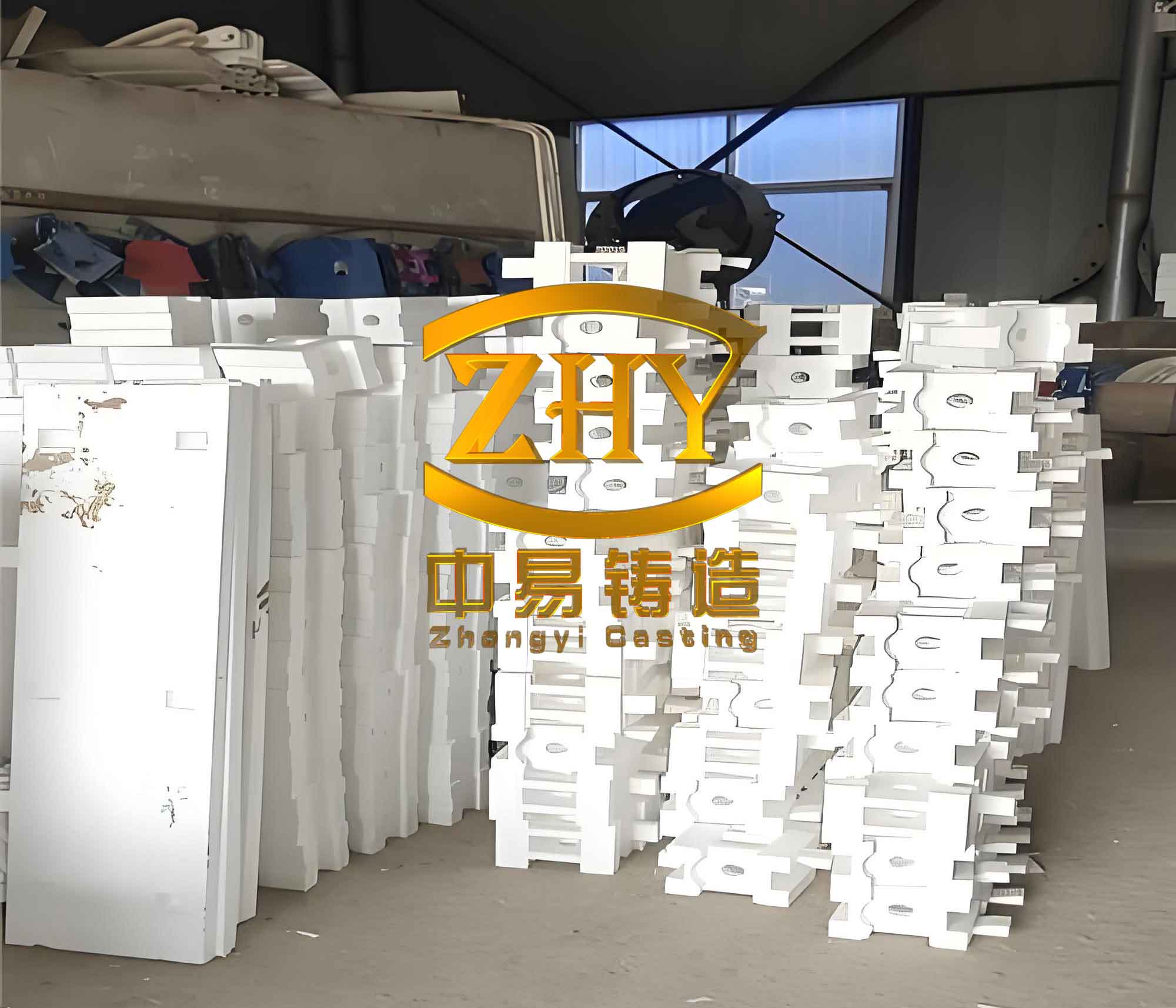
The initial and most crucial phase was meticulous process design, centered on the principles of directional solidification to eliminate shrinkage defects. The valve body casting features several thermal centers or hot spots, primarily at the three flanges (two end flanges and one top bonnet flange) and the central seat area. To ensure soundness, these regions must be effectively fed by risers. We employed a top-gating system where the risers also serve as pouring cups, a common and effective practice in precision investment casting. This setup promotes a favorable temperature gradient from the hot riser down into the casting. The size and placement of these risers were not arbitrary; they were determined using the “hot spot circle” method to ensure adequate feed metal volume and proper feeding paths. For a cylindrical hot spot of diameter \(d\), the required riser neck diameter \(D_n\) and the feeder dimension can be initially estimated by applying a feeding modulus. The modulus \(M\) is defined as the volume \(V\) to the cooling surface area \(A\) ratio: $$M = \frac{V}{A}$$. A riser must have a larger modulus than the casting section it feeds to remain liquid longer. For our valve body sections, we designed riser pads (chills) beneath the risers to further enlarge the effective feeding zone, following an empirical taper ratio derived from the hot spot circle. If the hot spot circle diameter is \(d_h\), the pad’s dimensions were designed with a taper angle \(\theta\) such that: $$\tan(\theta) \approx \frac{1}{1.1}$$, ensuring a smooth transition for feeding.
| Parameter | Value | Description |
|---|---|---|
| Overall Dimensions | 750 mm x 420 mm x 600 mm | Length x Width x Height |
| Main Wall Thickness | 17.5 mm | Nominal thickness of body walls |
| Flange Machining Allowance | 1.5 mm (per side) | Added material for finish machining |
| Seat Face Allowance | 2.0 mm | Added material for seat machining |
| Linear Shrinkage Allowance | 2.5% | Pattern expansion factor for WCB steel |
| Casting Weight (approx.) | 300 kg | Weight of the finished casting |
| Total Metal Poured (approx.) | 385 kg | Including gating and riser system |
| Process Yield | ~78% | Casting weight / Total poured weight |
Computer-aided engineering (CAE) simulation was indispensable in validating and optimizing our initial design. We used commercial casting simulation software to model the filling and solidification processes. The simulation clearly showed that the pouring sequence significantly impacted flow dynamics. Starting pouring from the central flange riser caused turbulent, dispersed metal flow, which could entrap oxides and slag. Conversely, initiating the pour from one of the end flange risers produced a more stable, progressive filling front, minimizing turbulence. The solidification simulation confirmed the establishment of a clear thermal gradient. The temperature field \(T(x,y,z,t)\) showed that the risers remained the hottest zones, with the casting body cooling first, perfectly adhering to directional solidification principles. The fraction of solid \(f_s\) over time \(t\) for any point in the casting could be tracked, confirming that the feed paths remained open until the risers solidified last. This virtual verification gave us high confidence before committing to costly physical trials and is a cornerstone of modern precision investment casting development.
The shell-making process is where our composite precision investment casting approach materialized. We constructed a multi-layered ceramic shell with varying compositions and properties. The face layers, which directly define the casting surface, used a silica sol binder with fused silica flour and stucco. Silica sol provides excellent green strength, high fired strength, and exceptional surface finish. Fused silica has a very low coefficient of thermal expansion, enhancing shell stability and crack resistance during dewaxing and firing. The subsequent transition and backup layers switched to a sodium silicate binder reinforced with mullite and high-alumina sands. This hybrid construction drastically reduces shell material cost and building time compared to a full silica sol shell, while the robust backup layers provide the necessary mechanical strength to support the large, heavy casting during handling and pouring. The hardening process for the sodium silicate layers used an ammonium chloride-based solution, which reacts to form a silica gel, ensuring good layer bonding.
| Layer Sequence | Binder System | Slurry Viscosity (Ford Cup, sec) | Refractory Flour | Stucco Sand (Mesh) | Number of Layers | Primary Function |
|---|---|---|---|---|---|---|
| Face Coat (1 & 2) | Silica Sol | 55-65 | Fused Silica | Fused Silica (50-100) | 2 | Surface finish, metal penetration resistance |
| Transition Layer (3 & 4) | Silica Sol | 60-70 | Mullite | Mullite (30-60) | 2 | Interfacial bonding, thermal shock absorption |
| Backup Layers (5-8) | Sodium Silicate | 50-60 | Alumina-Silicate | High Alumina (10-20) | 4 | Mechanical strength, support, cost reduction |
After shell building and drying, the wax pattern assembly is removed via high-pressure steam or hot water dewaxing. The shell is then fired in a furnace at temperatures exceeding 1000°C. This firing process burns out any residual wax, removes chemically bound water, and sinters the ceramic particles, transforming the shell into a strong, porous, and thermally stable mold ready for pouring. The high-temperature strength of the composite shell is critical, as it must withstand the metallostatic pressure and thermal shock of nearly 1600°C molten steel without deformation or cracking. The success of this composite shell system is a testament to the adaptability and innovation possible within the realm of precision investment casting.
Melting and pouring operations require precise control to realize the benefits of the well-designed mold. We used a medium-frequency induction furnace with a capacity of 1 ton to melt the WCB grade steel. The charge consisted of 70% returns (gates, risers, scrap castings) balanced with steel scrap and necessary ferroalloys. Chemical composition was tightly controlled to meet both ASTM A216 standards and our internal specifications for optimal mechanical properties and weldability. Deoxidation practice is vital to prevent gas porosity. We employed a combination of pre-deoxidation in the furnace using ferrosilicon and ferromanganese, followed by final deoxidation with aluminum wire just before tapping. A secondary aluminum addition was made in the ladle to ensure thorough deoxidation. The target pouring temperature was set at approximately 1580°C, a balance between ensuring fluidity to fill the thin sections and minimizing thermal stress on the shell and metal segregation.
| Element | ASTM A216 Standard Max. | Internal Control Range | Purpose of Control |
|---|---|---|---|
| Carbon (C) | 0.30 | 0.18 – 0.21 | Controls strength and hardness; lower range enhances weldability. |
| Silicon (Si) | 0.60 | 0.35 – 0.55 | Deoxidizer, strengthens ferrite. |
| Manganese (Mn) | 1.00 | 0.80 – 1.00 | Deoxidizer, combats sulfur brittleness, increases strength. |
| Phosphorus (P) | 0.04 | ≤ 0.035 | Impurity; kept low to prevent cold brittleness. |
| Sulfur (S) | 0.045 | ≤ 0.030 | Impurity; kept low to prevent hot tearing and improve ductility. |
The pouring strategy was executed as per the simulation guidance. We began pouring slowly into the designated end-flange riser to establish a calm, progressive metal front. Once the mold cavity was filled and metal rose to about one-third of the riser height, we shifted pouring to the other risers to top them up. A crucial step involved a “touch pour” several minutes later: after the casting skin had formed, we added additional hot metal to each riser, bringing them to near full capacity and topping with exothermic covering compound. This practice maintains a large, hot reservoir of liquid metal, maximizing feeding pressure and efficiency. The feeding pressure \(P_f\) can be conceptually related to the riser height \(h_r\) and metal density \(\rho\): $$P_f = \rho g h_r$$, where \(g\) is gravity. Maintaining a full, hot riser directly increases \(h_r\) and the temperature differential, driving feeding throughout the solidification interval \(\Delta T_s\). The solidification time \(t_s\) for a simple shape is often estimated by Chvorinov’s rule: $$t_s = B \left( \frac{V}{A} \right)^n$$, where \(B\) is the mold constant and \(n\) is an exponent (often ~2). Our riser design ensured its \(t_s\) was greater than that of the casting sections it fed.
Following shakeout and cleaning, the castings undergo heat treatment to achieve the required metallurgical structure and mechanical properties. The as-cast microstructure of steel is typically coarse and non-uniform, with potential for segregation and residual stresses. We applied a full normalizing treatment. Normalizing involves heating the castings to a temperature sufficiently above the \(Ac_3\) transformation point (for hypoeutectoid steel like WCB, typically 50-100°C above the \(Ac_3\), which is around 900°C), holding for adequate time to achieve complete austenitization, followed by cooling in still air. This process refines the grain structure, homogenizes the microstructure (forming a fine pearlite-ferrite mix), relieves casting stresses, and improves mechanical properties, particularly toughness and ductility. The heating rate, holding time \(t_h\), and cooling rate are controlled to prevent distortion or cracking. The hold time is often determined by the section thickness \(S\), with a common rule of thumb being \(t_h (minutes) \approx k \cdot S (inches)\) or its metric equivalent.
The success of this composite precision investment casting process was unequivocally demonstrated by the results. The produced 16″-150LB valve body castings exhibited excellent dimensional conformity, with all machining allowances adequately present. The surface finish was significantly superior to typical sand or water glass castings, requiring minimal cleaning before machining. Non-destructive testing, including magnetic particle inspection, revealed no surface defects like cracks or cold shuts. Most importantly, the internal soundness was confirmed; sectioning of sample castings or process qualification blocks showed dense, shrinkage-free structures in the critical flange and seat areas. The mechanical properties of separately cast test coupons, heat-treated alongside the production castings, consistently met and exceeded the ASTM A216 standards for WCB material.
| Mechanical Property | ASTM A216 Minimum Requirement | Average Value Achieved | Remarks |
|---|---|---|---|
| Tensile Strength, \(\sigma_b\) | 485 – 655 MPa | 512 MPa | Well within the specified band. |
| Yield Strength, \(\sigma_{0.2}\) | ≥ 250 MPa | 324 MPa | Substantial margin above minimum. |
| Elongation, \(A\) (%) | ≥ 22 % | 42 % | Excellent ductility achieved. |
| Reduction of Area, \(Z\) (%) | ≥ 35 % | 51 % | Indicates good material toughness. |
In conclusion, the integration of advanced computer simulation with a novel silica sol and sodium silicate composite shelling technique has enabled the successful and economical production of large-diameter, high-integrity gate valve bodies via precision investment casting. This hybrid approach leverages the surface quality and refractoriness of silica sol where it matters most, while utilizing the cost-effectiveness of sodium silicate for structural support. The process has proven its reliability in mass production, consistently delivering castings that meet stringent quality standards, reduce machining difficulties, and ensure predictable delivery schedules. The principles and methodologies developed here—from CAE-guided riser design and controlled melting practice to composite shell engineering—provide a scalable framework. This framework can be adapted to other challenging large-scale steel castings, pushing the boundaries of what is achievable with precision investment casting and offering foundries a competitive edge in the high-performance valve market. The continual refinement of such processes, perhaps exploring other binder combinations or additive manufacturing for pattern production, remains a key focus for advancing the capabilities of precision investment casting further.
The economic implications of this development are substantial. By bringing the production of such components in-house with a reliable process, manufacturers can reduce dependence on external suppliers, gain greater control over quality and lead time, and potentially lower overall costs despite the initial investment in technology. The precision investment casting process minimizes post-casting machining, saving on tool wear, energy, and labor. Furthermore, the consistency and reliability of the process reduce scrap rates and rework, contributing to more sustainable manufacturing practices with less material waste. The formulas and relationships used in designing the process, such as those for modulus calculation \(M=V/A\) and solidification time estimation \(t_s = B (V/A)^n\), become powerful tools for rapidly developing new casting designs, shortening the time from concept to production. This project underscores that innovation in precision investment casting is not merely about new materials but about intelligent, integrated system design combining simulation, metallurgy, and ceramic engineering to solve complex industrial manufacturing challenges.